Is Heavy Equipment Operator a Good Job in Renewable Energy?
Wondering is heavy equipment operator a good job? Compare solar and wind farm roles against traditional construction salaries and growth.
The Core Question: Is Heavy Equipment Operator a Good Job in Renewables?
When evaluating career paths in the dirt-moving and lifting industries, a common question among prospective tradespeople is: is heavy equipment operator a good job compared to other blue-collar alternatives? Historically, operators looked toward commercial real estate, highway infrastructure, or mining. However, the 2026 energy transition has fundamentally altered the career landscape. The renewable energy sector—specifically utility-scale solar and onshore wind—now offers some of the most lucrative, technologically advanced, and stable heavy equipment operator roles available.
This analysis compares renewable energy heavy equipment operations against traditional commercial construction and mining, breaking down the specific machinery, compensation structures, physical toll, and certification requirements you need to know before making a career pivot.
Executive Summary: The Green Energy Advantage
- Higher Total Compensation: Renewable operators frequently earn 20-35% more than traditional construction peers due to aggressive per diem structures and remote project bonuses.
- Technological Edge: Solar grading requires mastery of 3D GPS machine control, future-proofing your skill set against automation.
- Career Longevity: Wind and solar projects generally expose operators to less severe whole-body vibration and toxic silica dust compared to hard-rock mining or heavy demolition.
Solar Farm Operations: Precision Mass Grading
Utility-scale solar farms require hundreds of acres of land to be graded to exacting specifications. Unlike traditional site prep where rough grading suffices, solar tracker systems (the motorized mounts that follow the sun) demand extreme precision. If the terrain deviates beyond a +/- 0.1-foot tolerance, the tracker rows will bind, causing mechanical failure across the array.
The Machinery and Technology
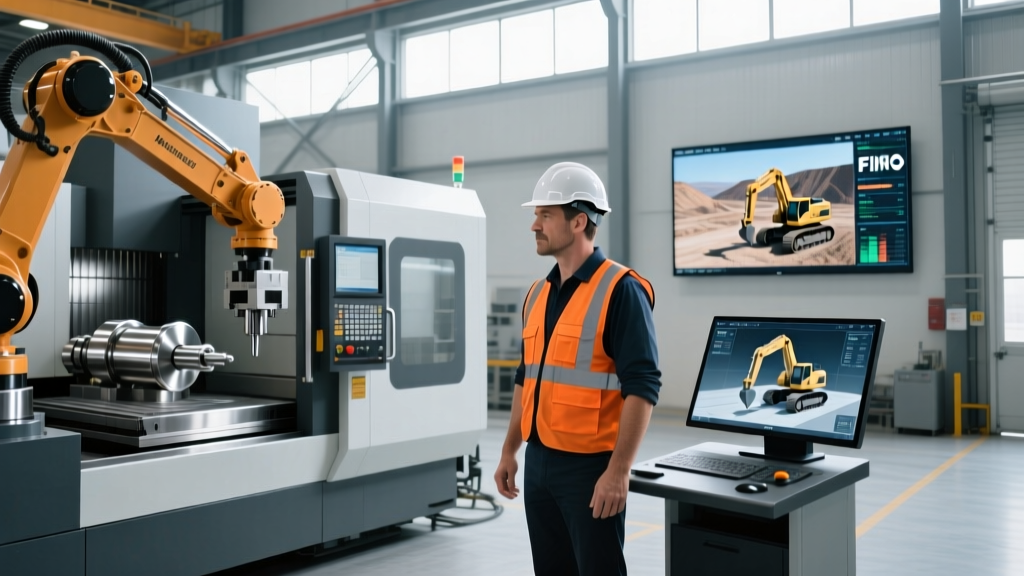
Operators in the solar sector primarily run medium-to-large crawler dozers equipped with dual-GPS 3D machine control systems, such as the Caterpillar D6 XE or John Deere 850L paired with Trimble Earthworks or Topcon MC-X software. The GPS masts mounted on the blade corners read RTK (Real-Time Kinematic) correction signals from local base stations or satellite networks, allowing the operator to cut and fill to the digital design model within millimeters.
Beyond dozing, solar sites rely heavily on vibratory pile drivers for mounting the steel H-piles that hold the panels. Operators running equipment like the Vermeer PD10 or custom excavator-mounted hammer attachments must maintain strict plumb tolerances (typically within 1 degree of vertical) while driving piles into varying soil densities.
Wind Farm Operations: Heavy Lifting and Remote Logistics
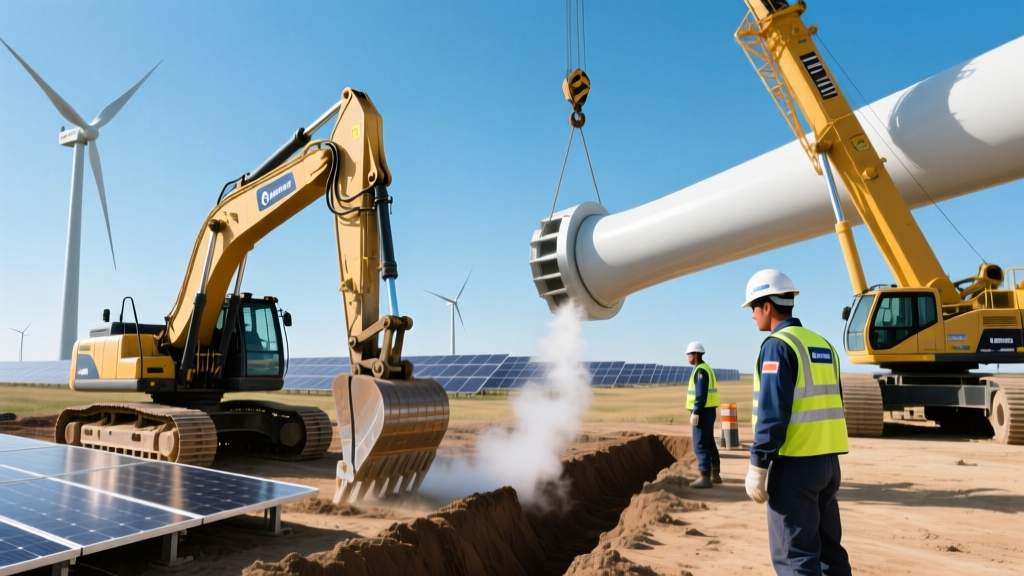
While solar is about horizontal precision, wind energy is about vertical mass and logistical brute force. A modern onshore wind turbine nacelle can weigh over 100 tons, with blade spans exceeding 250 feet. This requires specialized heavy lift crane operators and skilled excavator operators for access road and crane pad construction.
Crane Pad Engineering and Crawler Cranes
Before a turbine can be erected, operators must build the crane pad—a compacted earth or gravel platform capable of supporting immense ground-bearing pressures, often exceeding 3,000 pounds per square foot (psf). Excavator and dozer operators must meticulously compact and grade these pads, as a settling of even an inch under load can cause a catastrophic crane tip-over.
The primary lifting equipment includes massive crawler cranes like the Liebherr LR 11300 or Manitowoc MLC300. Operating these machines requires an advanced understanding of load charts, ground-bearing capacities, and wind-speed limitations. According to OSHA crane and derrick standards, operators must be certified to handle the specific complexities of assembly, disassembly, and blind lifts common in wind turbine erection.
Sector Comparison Matrix: Renewables vs. Traditional vs. Mining
To determine if heavy equipment operator a good job in your specific context, review this head-to-head comparison of the three primary sectors employing operators in 2026.
| Feature | Renewable Energy (Solar/Wind) | Traditional Commercial Construction | Surface Mining / Quarry |
|---|---|---|---|
| Primary Equipment | GPS Dozers, Crawler Cranes, Pile Drivers | Excavators, Backhoes, Articulated Haulers | Ultra-Class Haul Trucks, Hydraulic Shovels, Blasthole Drills |
| Avg Base Salary (2026) | $75,000 - $95,000 | $55,000 - $75,000 | $80,000 - $110,000 |
| Per Diem & Bonuses | High ($100-$165/day tax-free) | Low to None (mostly local work) | Moderate (camp life or FIFO bonuses) |
| Travel Requirements | Extensive (6-12 months on the road) | Minimal (home nightly) | Variable (FIFO or remote relocation) |
| Physical Toll | Moderate (ergonomic cabs, GPS reduces strain) | Moderate to High (tight spaces, utility work) | High (severe vibration, dust, night shifts) |
Compensation Deep Dive: The Power of Per Diem
When analyzing salary data from the Bureau of Labor Statistics, the base hourly wage for heavy equipment operators often appears capped between $30 and $45 per hour. However, this data frequently obscures the true earning potential in the renewable sector due to the structure of travel per diems.
Because solar and wind farms are built in remote, rural areas with limited local workforces, EPC (Engineering, Procurement, and Construction) companies rely on traveling operators. To attract talent, they offer daily per diem rates ranging from $100 to $165. Because this per diem is classified by the IRS as a reimbursement for living expenses rather than taxable income (provided the operator maintains a tax home), it drastically increases take-home pay.
Financial Scenario: The Wind Crane Operator
Base Pay: $45/hour × 2,080 hours = $93,600 (Taxable)
Per Diem: $140/day × 250 travel days = $35,000 (Tax-Free)
Total Gross Cash Flow: $128,600
Effective Tax Advantage: The tax-free per diem effectively acts as a 30%+ raise compared to a local commercial construction job paying the exact same hourly base rate.
Certifications Required for the Green Transition
You cannot simply transition from running a skid steer on a residential housing site to erecting wind turbines or grading solar arrays. The renewable sector demands specialized, verifiable credentials.
- NCCCO Certification (Wind): If you aim to operate cranes on wind sites, the National Commission for the Certification of Crane Operators (NCCCO) Crawler Crane (CCO) or Telescopic (TSS) certifications are mandatory. You must pass both written and practical exams demonstrating knowledge of load dynamics, rigging, and ground bearing pressure.
- Machine Control Proficiency (Solar): While there is no universal 'GPS license,' top-tier solar contractors require operators to pass in-house practical tests on Trimble Earthworks or Topcon systems. You must demonstrate the ability to calibrate the rover, troubleshoot RTK signal loss, and execute a finish grade without staking.
- OSHA 30-Hour Construction: Standard for all utility-scale sites, covering hazard communication, fall protection (crucial for crane work), and heavy equipment blind-spot protocols.
- First Aid/CPR & MSHA Awareness: Even if not working in a mine, many remote wind sites require Mine Safety and Health Administration (MSHA) awareness training due to the proximity of aggregate quarries providing road base for turbine access roads.
Career Longevity: Saving Your Body
A critical, often overlooked factor when asking if heavy equipment operator a good job long-term is the physical degradation associated with the work. Traditional trenching and mining expose operators to severe whole-body vibration (WBV), which is clinically linked to chronic lower back degeneration and spinal disc herniation.
The renewable sector offers a distinct ergonomic advantage. Modern solar grading relies on automated blade control, meaning the operator spends less time aggressively wrestling the control levers to achieve grade. Furthermore, wind farm road building, while rugged, generally involves moving earth and gravel rather than the bone-jarring impact of ripping solid bedrock or loading blasted ore. Combined with the latest generation of air-ride, heated, and acoustically dampened cabs found on 2025 and 2026 model equipment, the renewable sector is vastly superior for operators looking to protect their physical health into their 50s and 60s.
Final Verdict: Making the Pivot
Is heavy equipment operator a good job in the renewable energy sector? For operators willing to travel, adapt to advanced GPS technology, and secure specialized crane certifications, the answer is an unequivocal yes. The sector provides a rare combination of high, tax-advantaged compensation, cutting-edge technological engagement, and a more sustainable physical toll than traditional extraction industries. To break in, focus your training on 3D machine control systems for solar, or pursue NCCCO crawler crane certifications for wind, and target major EPC contractors like Mortenson, Quanta Services, or Blattner Energy who dominate the 2026 utility-scale market.