Heavy Construction Equipment Operator vs Mechanic: Career Guide
Compare the heavy construction equipment operator and mechanic career paths. Explore diagnostic duties, salary data, tools, and transition steps.
The Core Divide: Seat Time vs. Wrench Time
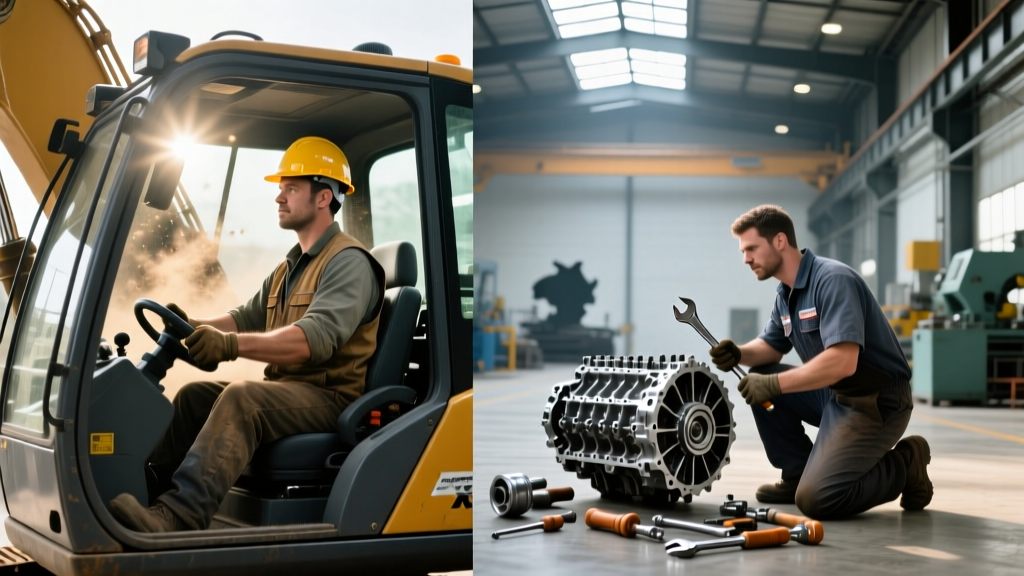
Choosing between the cab and the shop floor is one of the most significant decisions in the heavy equipment industry. While both roles are essential to keeping earthmoving and lifting projects on schedule, the daily realities, diagnostic responsibilities, and long-term career trajectories of a heavy construction equipment operator and a heavy duty mechanic diverge sharply. Operators are the first line of defense, relying on sensory feedback and operational intuition to identify failing components before they cause catastrophic downtime. Mechanics, conversely, are the surgical responders, utilizing advanced telematics, hydraulic flow meters, and proprietary ECM (Engine Control Module) software to execute complex repairs.
Understanding the technical and financial nuances of both paths is critical for anyone entering the heavy equipment sector or considering a pivot from the dirt to the bay.
Diagnostic Responsibilities: Operator vs. Mechanic
The troubleshooting mindset differs fundamentally between the two roles. An operator diagnoses based on feel, sound, and operational behavior. A mechanic diagnoses based on data, schematics, and measured tolerances.
| Symptom / Fault | Heavy Construction Equipment Operator Action | Heavy Duty Mechanic Action |
|---|---|---|
| Sluggish Hydraulic Response | Checks hydraulic fluid sight glass; inspects suction lines for cavitation; notes if the issue is temperature-dependent (cold oil vs. hot oil). | Installs Webtec flow meters to test pump volumetric efficiency; checks ECM spool currents; performs deadhead pressure tests to identify internal valve bypassing. |
| Intermittent Engine Derate | Monitors dash DEF/DPF indicators; performs active regen if prompted; checks for physical exhaust leaks or damaged NOx sensors. | Downloads snapshot data via CAT ET or John Deere Service Advisor; analyzes SPN/FMI fault codes; tests DEF dosing module and checks SCR catalyst efficiency. |
| Final Drive / Planetary Noise | Feels vibration through the joystick or pedals; checks planetary hub oil for brass glitter using a magnetic dipstick. | Drains oil for spectrometric analysis; measures bearing end-play with dial indicators; tears down the hub to inspect sun gears and needle bearings. |
Tooling and Technology: What You Will Actually Use
The barrier to entry and the cost of tooling represent a massive divergence between these two career paths.
The Operator's Troubleshooting Toolkit
Modern operators are not just pulling levers; they are managing mobile data centers. However, their physical troubleshooting toolkit remains relatively lean and focused on preventative maintenance and field-expedient repairs.
- FLIR Thermal Cameras: Used to spot overheating bearings, blocked hydraulic coolers, or failing electrical connections before they trip a sensor.
- DEF Refractometers: Essential for testing Diesel Exhaust Fluid purity in the field to prevent SCR system poisoning.
- Basic Hand Tools & Grease Guns: Battery-powered purgative grease guns (like the Lincoln 18V) and standard wrench sets for track tensioning, bucket pin replacement, and daily undercarriage inspections.
The Mechanic's Diagnostic Arsenal
A heavy equipment mechanic's toolkit is a massive financial investment and requires continuous updating as OEMs shift toward software-locked components.
- Diagnostic Laptops & Interfaces: Ruggedized Panasonic Toughbooks paired with NEXIQ USB-Link 3 or inline 7 adapters to communicate with J1939 and J1708 CAN bus networks.
- OEM Software Subscriptions: Access to Caterpillar Electronic Technician (CAT ET), Cummins INSITE, or Volvo VCADS. These licenses can cost thousands of dollars annually.
- Precision Measurement Tools: Fluke 87V industrial multimeters for tracing PWM (Pulse Width Modulation) signals to hydraulic solenoids, and hydraulic pressure test kits with 6,000 PSI gauges.
Financial Breakdown: Earning Potential and Certification Costs
According to the latest data from the U.S. Bureau of Labor Statistics (BLS), the compensation structures for operators and mechanics reflect their different training requirements and liability levels. Furthermore, the BLS data for heavy vehicle and mobile equipment service technicians highlights a significant premium for advanced diagnostic skills.
| Metric | Heavy Equipment Operator | Heavy Duty Mechanic |
|---|---|---|
| Entry-Level Salary (Bottom 10%) | $45,000 - $52,000 | $50,000 - $58,000 |
| Median Annual Salary | $62,000 - $74,000 | $72,000 - $85,000 |
| Master Tech / Top 10% | $95,000+ (Specialized/Union) | $110,000 - $135,000+ (OEM Field Techs) |
| Initial Training Cost | $3,000 - $8,000 (NCCER / CDL) | $15,000 - $40,000 (Diesel Tech School) |
| Tool Investment (First 3 Yrs) | $500 - $1,500 | $10,000 - $25,000+ |
| Overtime Availability | Seasonal / Project-dependent | High (Breakdowns happen 24/7) |
Career trajectories in the Association of Equipment Management Professionals (AEMP) network show that mechanics who obtain OEM master certifications and transition into Equipment Management or Field Service roles can easily surpass $140,000 annually by their late 30s.
Transitioning: From Operator to Master Mechanic
For the heavy construction equipment operator looking to transition into the shop, the path requires shifting from macro-level machine management to micro-level component repair. Here is the strategic roadmap for making the jump:
- Leverage Your Operational Baseline: When interviewing for mechanic apprentice roles, emphasize your ability to perform operational tests. Shops desperately need techs who can safely and accurately operate a 40-ton articulated dump truck or a 50-ton excavator in a confined test yard to verify repairs.
- Master Electrical Schematics: Hydraulics and mechanics are intuitive; electricity is not. Spend your off-hours learning to read OEM wiring diagrams. Understand the difference between a switch-to-ground and a switch-to-power circuit, and learn how to test a proportional solenoid coil for internal shorts.
- Pursue ASE T-Series Certifications: While not always mandatory for yellow iron, the ASE Medium/Heavy Truck certifications (specifically T6 Electrical/Electronic Systems and T8 Preventive Maintenance) prove to employers that you understand standardized diagnostic procedures.
- Volunteer for Telematics Reviews: Modern machines broadcast fault codes via cellular networks (e.g., Cat Connect, JDLink). Ask your fleet manager to show you how to read the VisionLink or JDLink dashboards. Understanding how to triage incoming fault codes before the machine even returns to the shop is a highly lucrative skill.
Many new mechanics gravitate toward emissions systems because they generate constant fault codes. However, Tier 4 Final and Stage V emissions systems (DPF, DOC, SCR) are notoriously complex and heavily regulated by the EPA. Focusing solely on emissions will pigeonhole you. Ensure you build a rock-solid foundation in powertrain, hydraulics, and undercarriage systems before specializing in aftertreatment.
Physical Toll and Longevity
Both careers are physically demanding, but the type of wear and tear differs drastically.
The Operator's Physical Reality
Operators face whole-body vibration, prolonged sitting, and repetitive stress from joystick manipulation. Modern cabs feature air-ride, heated, and cooled seats with advanced suspension, but 12-hour shifts in a dozer or scraper still lead to chronic lower back and cervical spine degradation. The operator's longevity relies heavily on ergonomics, cab isolation technology, and off-hour physical conditioning.
The Mechanic's Physical Reality
Mechanics endure acute physical trauma: crushed fingers, chemical burns from hot hydraulic oil, and joint degradation from working on uneven, muddy terrain. Crawling inside the frame of a 793F mining truck to rebuild a steering cylinder requires extreme flexibility and brute force. However, mechanics have more control over their physical environment and can utilize overhead cranes, hydraulic presses, and automated welding positioners to mitigate heavy lifting as they age.
The Final Verdict
If you thrive on immediate visual results, enjoy the adrenaline of moving massive quantities of earth, and prefer a lower barrier to entry, the heavy construction equipment operator route is highly lucrative, especially in unionized pipeline or mining sectors. If you possess an analytical mind, enjoy solving high-stakes mechanical puzzles, and are willing to invest heavily in continuous education and tooling, the mechanic path offers a higher financial ceiling, greater job security during construction downturns, and a clearer trajectory into six-figure management roles.