CAL FIRE Heavy Equipment Operator to Private Mitigation Contractor
Transition from a CAL FIRE heavy equipment operator to a self-employed mitigation contractor. Master fleet selection, OES rates, and WUI safety protocols.
The Blueprint: From State Firelines to Private Defensible Space
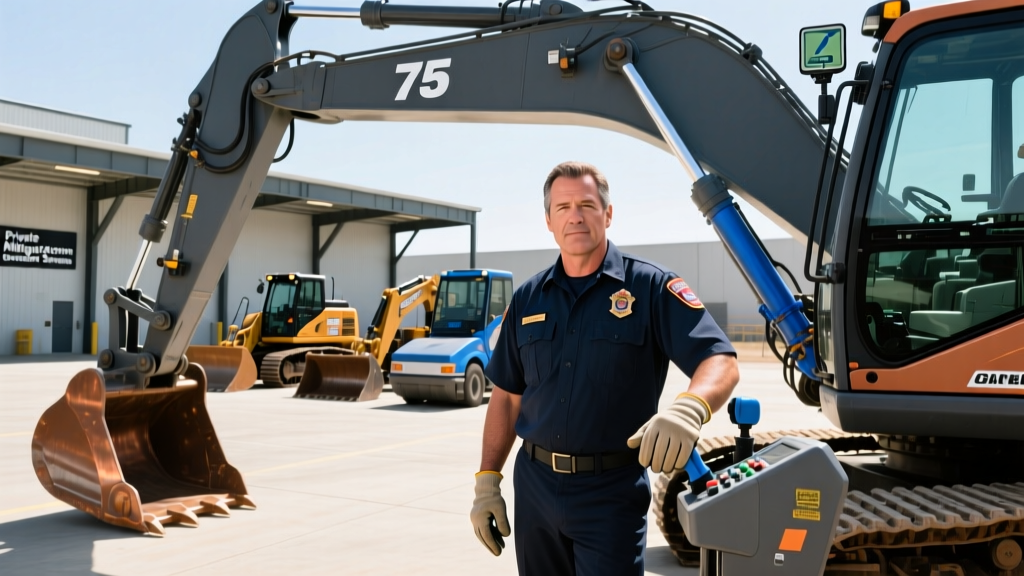
Transitioning from a state-employed CAL FIRE heavy equipment operator to running a self-employed wildland mitigation business is one of the most lucrative career pivots in the California construction sector. The Wildland-Urban Interface (WUI) is expanding, and private landowners, utility companies, and municipalities are under immense regulatory pressure to maintain defensible space. As a former state operator, you already possess the most expensive asset in this industry: the muscle memory to cut indirect fireline, manage steep-grade dozer operations, and read topographical fire behavior. However, operating a private contracting business requires a fundamental shift from executing state directives to managing fleet economics, liability, and private client acquisition.
The State-to-Private Advantage
Private mitigation contractors with state fireline experience command a 20% to 35% premium over standard landscaping firms. Utility companies like PG&E and SCE actively seek contractors who understand NWCG (National Wildfire Coordinating Group) standards for spark arrestor compliance, slope limitations, and escape route planning.
Navigating the CSLB, Insurance, and CAL FIRE Vendor Registration
Before you can bid on private WUI mitigation or register for emergency standby, your administrative foundation must be bulletproof. The regulatory environment in California demands strict adherence to both construction and forestry standards.
- Contractors State License Board (CSLB) Classification: Most brush clearing falls under the C-61 / D-49 (Tree and Palm Removal) or A (General Engineering) license if your scope includes grading, road widening, and heavy earthmoving for firebreaks. If you are cutting timber over a specific diameter, a C-61 / D-41 (Timber Felling) may also be required.
- WCIRB Classification Codes: Workers' compensation is your largest overhead variable. Standard brush clearing typically falls under WCIRB Code 0042 (Landscaping). However, if you are performing active fireline construction or emergency fire suppression support, you may be reclassified into higher-hazard codes. Work with a broker who specializes in wildland forestry to avoid audit penalties.
- Cal OES Emergency Equipment Registration: To be called out during mutual aid events, you must register your fleet with the California Governor's Office of Emergency Services (Cal OES). This requires proving your equipment meets state dispatch standards, including functioning radios (VHF/Fire frequencies), GPS tracking, and certified spark arrestors.
- CAL FIRE Vendor Status: While you are no longer a state employee, becoming an approved vendor for localized CAL FIRE unit fuel reduction projects requires registering through the state's procurement portal and maintaining a minimum of $1 million in general liability insurance.
Fleet Selection: Fireline Dozers vs. WUI Mulchers
The equipment you used on state firelines is not always the most profitable machinery for private defensible space contracts. State agencies prioritize raw earthmoving and line scraping; private clients prioritize aesthetic fuel reduction, biomass disposal, and minimal soil disturbance.
| Equipment Configuration | Primary Application | Capital Cost (Est. 2026) | Private Hourly Rate | Pros & Cons for Contractors |
|---|---|---|---|---|
| CAT D6 XE (215 HP) w/ VPAT & Winch | Indirect fireline, road repair, heavy scraping | $450,000 - $520,000 | $185 - $240/hr | Pro: Unmatched grading and winch-assist capability. Con: High transport costs; overkill for residential Zone 1/2 clearing. |
| John Deere 850L + FAE 300/U-400 Mulcher | WUI fuel reduction, mastication, orchard clearing | $580,000 - $650,000 (Tractor + Head) | $225 - $285/hr | Pro: Eliminates slash piles; high client satisfaction. Con: High wear on carbide teeth ($40/ea); slower on pure dirt line. |
| Skid Steer (e.g., Bobcat T86) + Rayco Stump Cutter | Residential defensible space, stump removal, tight access | $110,000 - $140,000 | $145 - $175/hr | Pro: Low transport cost; highly maneuverable. Con: Limited to flat/moderate slopes; cannot cut fireline. |
For a self-employed contractor starting out, the tracked skid steer with a mulching head and a separate small dozer (like a CAT D3 or D4) offers the highest versatility. The mulcher handles the biomass in the WUI zones, while the small dozer handles access road maintenance and dirt firebreaks without the massive lowboy transport costs associated with a D6.
2026 Pricing Frameworks and Profit Margins
Pricing wildland mitigation requires understanding the difference between private aesthetic work and emergency utility work. According to CAL FIRE's Defensible Space guidelines, the 100-foot perimeter is mandatory, but private clients often want the full 200-foot reduced fuel zone treated.
Private Landowner Mitigation
- Mastication/Mulching: Billed at $225 to $285 per machine hour, or $1,800 to $3,500 per acre depending on stem density and terrain.
- Hand Crew Integration: If you employ a 4-person hand crew for ladder fuel pruning and slash piling, bill hand labor at $85 to $110 per hour, per person.
- Minimum Mobilization Fees: Always charge a $1,500 to $2,500 mobilization fee to cover lowboy transport, fuel caching, and site setup.
Utility and Cal OES Emergency Standby
When Cal OES activates private contractors during Red Flag Warnings or active incidents, rates are pre-negotiated. In 2026, the benchmark rate for a Type 2 Dozer (approx. 200-300 HP) with an operator hovers around $195 to $235 per hour. Crucially, portal-to-portal pay applies, meaning you bill from the moment your equipment leaves your yard until it returns. Fuel is typically reimbursed separately or provided by the agency at the incident base.
Crew Training: Translating NWCG Standards to Private Efficiency
As a former CAL FIRE heavy equipment operator, you know that a dozer is only as effective as the swamper and the fallers working ahead of it. In the private sector, you must institutionalize the safety culture that the state enforces.
The Swamper Liability Gap
Private contractors frequently face lawsuits when ground personnel are injured by rolling rocks or snapped winch cables. Never allow an untrained laborer to act as a dozer swamper. Mandate that all ground crew maintain a minimum 50-foot buffer from the dozer's blind spots unless direct eye contact and radio communication are established.
Implement the following training protocols to bridge the gap between state rigor and private efficiency:
- Job Hazard Analysis (JHA): Require a signed, site-specific JHA every morning. Document slope percentages, escape routes, and identified snags (widow-makers). This is your primary legal shield in the event of an OSHA investigation.
- RT-130 Equivalents: While the NWCG RT-130 (Annual Fireline Safety Refresher) is designed for federal/state firefighters, adopting its curriculum for your private crew ensures they understand LCES (Lookouts, Communications, Escape Routes, Safety Zones).
- Daily Equipment Inspections: Implement a strict 15-minute morning checklist focusing on undercarriage tension, hydraulic hose weeping, and spark arrestor carbon buildup. A blown hydraulic line in dry cheatgrass can ignite a multi-million dollar liability event in seconds.
'The difference between a state operator and a successful private contractor isn't stick time; it's the ability to look at a 40-degree slope and instantly calculate the machine's center of gravity, the client's budget, and the insurance adjuster's worst nightmare.'
— Former CAL FIRE Dozer Boss & Current WUI Mitigation Firm Owner
Risk Management in the WUI
Operating heavy machinery in dry California brush carries immense risk. To protect your business, invest heavily in preventative technology. Equip all tractors and dozers with thermal imaging cameras mounted to the rear and sides; these allow operators to spot subterranean root fires or hot stumps immediately after mastication. Furthermore, mandate the use of fire-retardant Nomex clothing for all equipment operators, even on private jobs where it is not legally required. The cost of outfitting a crew in Nomex ($150 per suit) is negligible compared to the workers' compensation premium reductions and the sheer survival value during an unexpected wind shift.
By leveraging your state-trained instincts and pairing them with sharp business acumen, precise fleet selection, and rigorous private-sector safety protocols, you can build a highly resilient heavy equipment contracting business in California's most critical environmental sector.