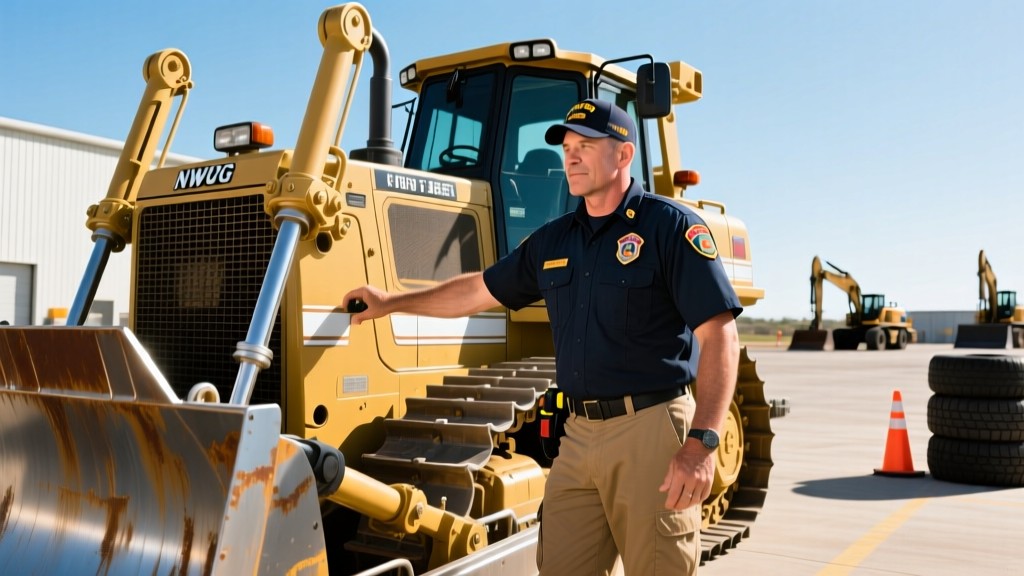
How to Become a Fire Heavy Equipment Operator Instructor
Discover the career path from fire heavy equipment operator to NWCG-certified instructor, including salary data, training frameworks, and case studies.
The Critical Gap in Wildland Fire Training
Wildland fire suppression relies heavily on massive earthmoving capabilities to construct indirect firelines, clear brush, and create safety zones. The frontline fire heavy equipment operator is one of the most vital roles on the fireline, navigating 60-degree grades and zero-visibility smoke in machines weighing over 50,000 pounds. However, as veteran operators retire and fire seasons grow more erratic, federal agencies and private forestry contractors are facing a severe shortage of qualified heavy equipment instructors. Transitioning from an active operator to a specialized instructor requires mastering not just machine control, but adult education, fire behavior science, and federal credentialing frameworks.
This guide breaks down the exact career pathway, salary expectations, and industry case studies for heavy equipment professionals looking to enter the training and instruction sector within the wildland firefighting industry.
Case Study: Structuring a Heavy Equipment Fire Academy
To understand the instructor's role, we must look at how modern training academies operate. Agencies like the US Forest Service (USFS) and CAL FIRE do not simply hand over the keys to a bulldozer. They utilize a blended learning approach combining high-fidelity simulation with live-dirt exercises.
Integrating Simulator Technology
Before a trainee touches a $650,000 Caterpillar D6 XLT dozer, they must prove blade control and spatial awareness in a simulator. Instructors at regional academies utilize systems like the CM Labs Vortex Simulator equipped with dozer and excavator attachments. These simulators cost approximately $120,000 per rig and replicate the physics of soil displacement, track slippage on ash-covered slopes, and machine rollover dynamics. An instructor's primary task here is designing custom scenarios that mimic specific fireline hazards, such as hidden stump holes obscured by burn scars or sudden wind shifts requiring rapid machine evacuation.
Live-Dirt Application and LCES
Once in the field, the instructor evaluates the trainee's adherence to LCES (Lookouts, Communications, Escape Routes, and Safety Zones). Teaching a fire heavy equipment operator how to anchor a fireline to a natural barrier (like a rock outcropping or river) while maintaining a safe escape route requires the instructor to have extensive Dozer Boss (DOZB) experience. The instructor must physically walk the line, radio the operator, and critique the blade angle, track tension management, and situational awareness in real-time.
⚠️ SAFETY CALLOUT: The Burnover RealityHeavy equipment operators are highly vulnerable to burnovers due to the slow evacuation speed of tracked machines compared to engines or hand crews. Instructors must dedicate a minimum of 20% of their curriculum to emergency bail-out procedures, cab pressurization checks, and recognizing the signs of an impending wind-driven crown fire run. Reference the NIFC Safety protocols for the latest entrapment avoidance data.
Equipment Specifics: Teaching the Fire Package
A standard construction dozer is useless on the fireline. Instructors must teach operators how to maintain and utilize specialized "fire packages." For example, when training on the Caterpillar D6 XLT, the instructor must cover:
- Pressurized Cabs: Ensuring the HVAC system maintains positive pressure to keep toxic smoke and carbon monoxide out of the operator's lungs.
- Brush Racks and Winch Systems: Teaching operators how to use front-mounted brush rakes to clear heavy fuels without damaging the radiator core.
- Undercarriage Protection: Inspecting heavy-duty belly pans and Kevlar-reinforced hydraulic hose guards that prevent snagging on burnt root wads.
- Track Tensioning: Adjusting track tension daily, as ash and fine particulate matter act as an abrasive grinding paste that accelerates sprocket and chain wear.
Career Progression and Salary Matrix
Compensation for heavy equipment instructors varies wildly depending on whether you work for a federal agency (using the GS pay scale) or a private wildland firefighting contractor. Below is a comparative breakdown of the career tiers.
| Role / Tier | Typical Base Salary (2026) | Total Comp w/ Hazard & OT | Primary Requirement |
|---|---|---|---|
| Heavy Equipment Operator (HEOP) | $55,000 - $72,000 (GS-5/7) | $85,000 - $110,000+ | NWCG HEOP Task Book |
| Heavy Equipment Instructor (Federal) | $75,000 - $98,000 (GS-9/11) | $100,000 - $135,000+ | NWCG Instructor + DOZB |
| Private Contractor Lead Trainer | $45 - $65 / hour | $120,000 - $160,000+ | 5+ Yrs Fireline, CDL, OSHA |
| Regional Training Program Manager | $105,000 - $130,000 (GS-12/13) | $140,000+ | Curriculum Dev, Admin Exp. |
Note: Federal salaries are highly dependent on locality pay adjustments and the accumulation of Hazard Pay (25% of base) and Overtime during active fire deployments.
Step-by-Step: NWCG Instructor Credentialing Pathway
You cannot simply declare yourself an instructor in the wildland fire community. The National Wildfire Coordinating Group (NWCG Course Catalog) maintains strict credentialing standards. To legally sign off on trainee evaluations, you must complete the following progression:
- Achieve Operational Mastery: First, you must be fully qualified as a Heavy Equipment Operator (HEOP) and subsequently as a Dozer Boss (DOZB) or Heavy Equipment Supervisor. This requires completing the NWCG Position Task Books (PTBs) and surviving multiple complex fire deployments.
- Complete the M-1 Facilitator Course: This foundational NWCG course teaches adult learning theories, how to manage group dynamics, and how to facilitate discussions rather than just lecturing.
- Complete the M-2 Basic Instructor Course: This course focuses on lesson plan delivery, classroom management, and the evaluation of student performance in both academic and field settings.
- Teach as a Unit Instructor: You must co-teach a heavy equipment course (such as the S-232 Heavy Equipment Operations or agency-specific equivalents) under the supervision of a Senior Instructor.
- Earn the NWCG Instructor Credential: Once your teaching hours are logged and evaluated, your home agency certifies you as an NWCG Instructor, allowing you to lead academies and sign federal PTBs.
Private vs. Public Sector Training Careers
While federal agencies offer stability and pensions, the private sector offers agility and higher hourly rates. Private wildland fire contractors (who lease dozers and operators to the government during peak fire season) are increasingly building in-house training divisions.
"The bottleneck in modern fire suppression isn't the availability of Caterpillar D8s or John Deere excavators; it's the lack of seasoned Dozer Bosses who have the patience and pedagogical skills to teach a 22-year-old operator how to read the topography and anticipate a fire's run. Private contractors are now paying premium retainers just to keep dedicated in-house trainers on staff year-round."
— Regional Fleet Manager, Pacific Northwest Forestry Contractor
Decision Framework: Which Path Should You Choose?
- Choose Federal (USFS, BLM, BIA) if: You value comprehensive benefits, federal retirement (FERS), structured curriculum development, and the opportunity to shape national training standards.
- Choose Private Contracting if: You prefer hands-on, dirt-moving instruction, want to maximize seasonal overtime income, and enjoy the flexibility of working across different geographic regions and machine fleets.
Actionable Next Steps for Aspiring Instructors
If you are currently a fire heavy equipment operator looking to pivot into training, start by volunteering to lead your local unit's "refresher" training. Every spring before fire season, crews must complete annual RTG (Red Card Refresher) training. Volunteer to design and teach the heavy equipment module focusing on machine recovery, winching techniques in steep terrain, and emergency cab evacuation. Document your teaching hours meticulously in a personal log. Approach your agency's Training Officer and request enrollment in the next available M-1 Facilitator course. By bridging the gap between heavy iron operations and adult education, you secure a highly respected, lucrative, and vital career in wildland fire management.