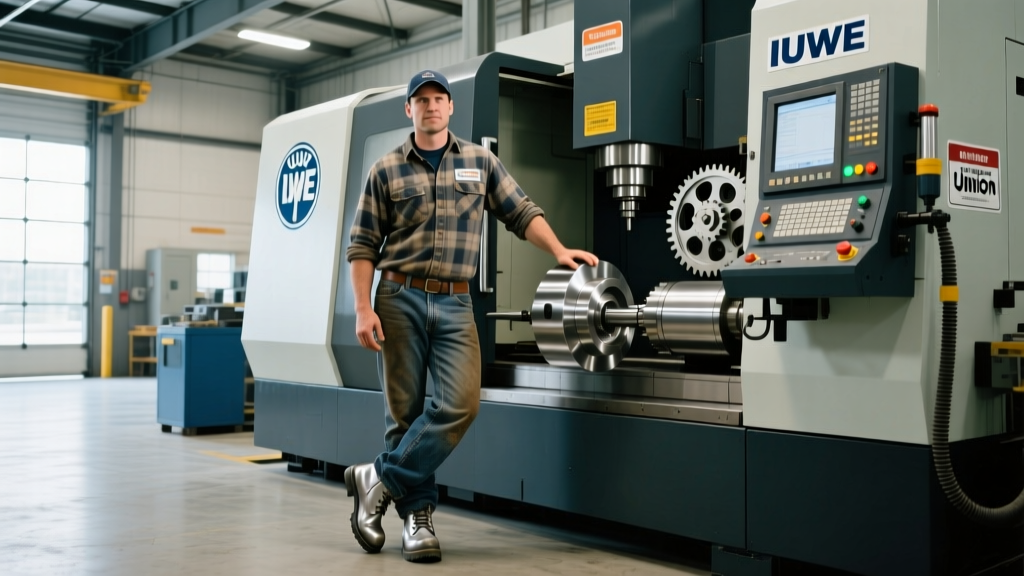
Air Force Heavy Equipment Operator to Fleet Manager: Buying Guide
Learn how to transition from an Air Force heavy equipment operator to a fleet manager, mastering civilian equipment procurement and buying strategies.
The 3E2X1 Pivot: From Air Force Heavy Equipment Operator to Fleet Procurement
Transitioning from a USAF 3E2X1 (Pavements and Construction Equipment) specialist to a civilian heavy equipment fleet manager requires a fundamental shift in evaluation criteria. As an air force heavy equipment operator, your primary metrics were mission readiness, tactical durability, and operational precision. In the civilian sector, fleet procurement is governed by Total Cost of Ownership (TCO), residual depreciation curves, and telematics integration.
According to the U.S. Bureau of Labor Statistics (BLS), construction and fleet management roles require a deep understanding of cost estimation and resource allocation. When you move from the cab to the procurement office, you are no longer evaluating a machine by its joystick response or trenching speed; you are evaluating it by its lifecycle cost, dealer support network, and software ecosystem.
⚠️ Military-to-Civilian Procurement Trap
Do not over-specify civilian fleets for tactical durability. Military contracts often mandate MIL-STD environmental hardening that adds 15-20% to the acquisition cost of a standard excavator or dozer. In civilian earthmoving, this premium yields zero ROI. Specify machines based on local dealer support density and standard commercial warranty structures instead.
The Fleet Manager’s Procurement Matrix: Selecting the Right Iron
Building a heavy equipment fleet from scratch or replacing aging assets requires a structured decision matrix. The 'Big Three' OEMs (Caterpillar, John Deere, Volvo) dominate the North American market, but their value propositions differ significantly based on your operational geography and tech-stack requirements.
| OEM | Primary Telematics (2026) | EV Compact Availability | Dealer Network & Parts Velocity | Best Fleet Application |
|---|---|---|---|---|
| Caterpillar | VisionLink (5G/Cellular) | 301.9 EV, 323 EV (Pilot) | Highest density; independent dealer model ensures rapid local parts. | High-utilization earthmoving, mining, heavy civil. |
| John Deere | JDLink (Satellite/Cellular) | 19E EV, 5068E EV | Strong agricultural crossover; excellent rural coverage. | Site development, forestry, rural infrastructure. |
| Volvo CE | Volvo Co-Pilot / CareTrack | ECR25 Electric, L20 Electric | Concentrated in urban/suburban hubs; direct-sales in some regions. | Urban utility, indoor demolition, emission-restricted zones. |
Evaluating Telematics and API Integration
In 2026, buying heavy iron without evaluating its API capabilities is a critical error. Modern fleet management software like HCSS HeavyJob or Fleetio relies on OEM telematics to automate maintenance triggers. When negotiating a purchase, require the dealer to demonstrate how their native telematics (e.g., Cat VisionLink) push fault codes directly into your third-party CMMS (Computerized Maintenance Management System) via ISO 15143-3 (AEMP 2.0) API standards.
2026 Acquisition Realities: Battery-Electric and Tier 5 Diesel
The heavy equipment market is currently navigating the transition from Tier 4 Final to anticipated Tier 5 emission standards, alongside the rapid expansion of Battery Electric Vehicles (BEVs) in the compact segment. As a fleet manager, your buying guide must account for the 'EV Premium' and the charging infrastructure required to support it.
💡 The EV Total Cost of Ownership (TCO) Crossover Point
While a diesel Volvo ECR25 compact excavator costs approximately $55,000, the ECR25 Electric commands a base price of $68,000 to $75,000. However, at commercial electricity rates of $0.15/kWh versus off-road diesel at $4.20/gallon, the electric model achieves fuel-cost parity at roughly 2,400 operating hours. For urban utility fleets operating in idle-heavy environments, the BEV crossover point is reached in under 18 months.
Procuring for EPA Compliance
When buying mid-to-large tonnage equipment (e.g., Cat 320 or Deere 350 P-Tier), you are purchasing complex aftertreatment systems. The EPA Nonroad Diesel Engine Standards dictate strict particulate matter (PM) and NOx limits. When specifying these machines, always include the cost of Diesel Exhaust Fluid (DEF) bulk storage and automated dosing systems in your initial capital expenditure (CapEx) request. Failing to budget for DEF infrastructure adds an unbudgeted $0.12 to $0.18 per operating hour to your fleet's running costs.
Negotiating Dealer Agreements and CVA Structures
Military procurement relies on rigid federal contracting (FAR). Civilian fleet procurement relies on relationship-based dealer negotiations and Customer Value Agreements (CVAs). A CVA is a customized maintenance contract that locks in parts pricing and scheduled maintenance intervals.
Anatomy of a Heavy Equipment CVA
When buying a $280,000 Caterpillar 330 Excavator, do not accept the base machine warranty. Negotiate a 5-year / 5,000-hour CVA. A comprehensive CVA should include:
- Scheduled Maintenance Kits: All filters, O-rings, and fluids shipped directly to your yard at 500-hour intervals.
- SOS (Scheduled Oil Sampling) Analysis: Pre-paid lab kits for hydraulic, engine, and swing drive oil. This is your primary predictive maintenance tool.
- Undercarriage Protection: Some premium CVAs offer pro-rated replacement for track chains and rollers if they fail before the 4,000-hour mark, provided you submit monthly undercarriage wear measurements.
"The biggest mistake new fleet managers make is treating the OEM dealer as an adversary. In heavy equipment, the dealer's parts department is your lifeline. Negotiate pricing on the initial CapEx, but prioritize guaranteed 24-hour parts delivery SLAs (Service Level Agreements) in your CVA. A $10,000 savings on a wheel loader is instantly erased if a failed hydraulic pump grounds the machine for four days waiting on a seal kit."
— Regional Fleet Director, Kiewit Corporation
Building the Fleet: A Step-by-Step Buying Guide
To systematize your transition into fleet procurement, follow this standardized acquisition workflow for any asset over $100,000.
- Define the Utilization Profile: Use historical data to determine if the machine will run 800 hours/year (rent or buy used) or 2,500+ hours/year (buy new with CVA).
- Issue a Multi-OEM RFP: Never sole-source without leverage. Request bids from Cat, Deere, and Komatsu for the exact same payload/capacity class.
- Specify the Tech Stack: Mandate that the machine includes factory-installed 3D GPS machine control (e.g., Cat Grade with 3D or Deere SmartGrade) if your operators are trained. Retrofitting grade control post-purchase costs $35,000+ and voids hydraulic warranties.
- Evaluate the Residual Curve: Consult equipment valuation guides to project the machine's auction value at year 5. Brands with higher initial costs often retain 15-20% higher residual values, lowering the actual TCO.
- Finalize the Delivery Protocol: Require the dealer to perform a Pre-Delivery Inspection (PDI) and a 50-hour break-in oil analysis before the machine is released to your operators.
Leveraging Your Air Force Background in Civilian Procurement
Your background as an Air Force Civil Engineer and Construction specialist provides a distinct advantage in fleet management: rigorous adherence to Preventative Maintenance (PM) schedules and safety protocols. Civilian yards often suffer from deferred maintenance and chaotic fluid tracking. By applying military-grade Technical Order (TO) discipline to your civilian CMMS, you can extend major overhaul intervals by 20% to 30%.
Ultimately, the shift from operating a single piece of iron to procuring and managing a fleet of 50+ units is a shift from tactical execution to strategic capital allocation. Master the TCO models, enforce strict telematics integration, and build symbiotic relationships with your OEM dealers to ensure your fleet remains profitable, compliant, and operationally ready.