Heavy Equipment Driver Job Description: Operator vs Mechanic Fixes
Explore the heavy equipment driver job description vs mechanic roles. Learn troubleshooting limits, field repair boundaries, and career salary data.
The Troubleshooting Boundary: Where the Cab Ends and the Shop Begins
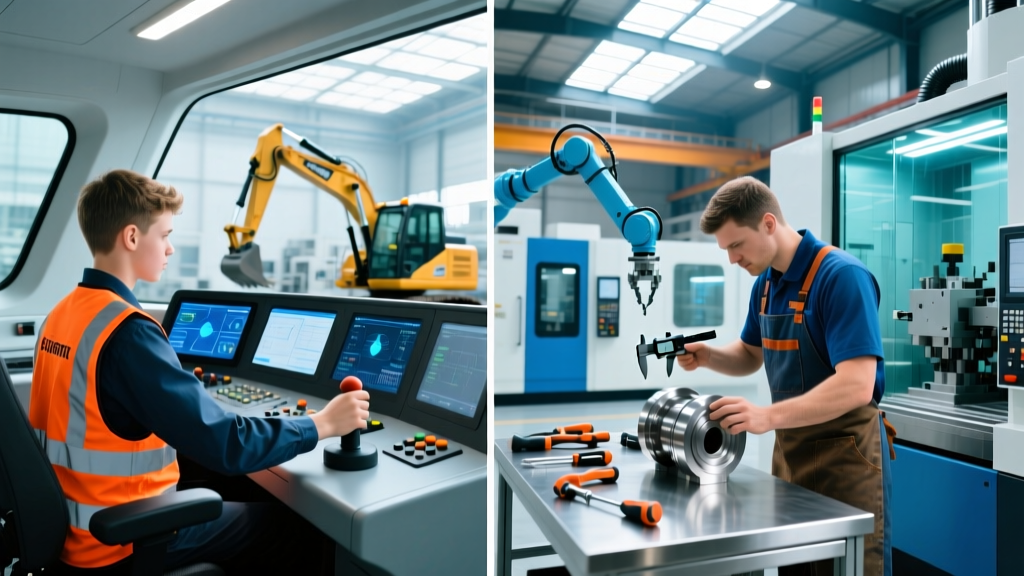
When a Tier 4 Final excavator throws an active derate code on a remote job site, the immediate question is not just what is broken, but who is legally and technically authorized to fix it. The modern heavy equipment driver job description has evolved far beyond pulling levers; today's operators are expected to be frontline diagnosticians. However, a critical boundary exists between operator-level field troubleshooting and mechanic-level component repair. Blurring this line results in voided OEM warranties, corrupted Engine Control Module (ECM) snapshot data, and catastrophic secondary failures.
This guide breaks down the exact troubleshooting responsibilities, field repair limits, and career trajectories separating heavy equipment operators from heavy duty mechanics in the current industrial landscape.
Decoding the Heavy Equipment Driver Job Description: Diagnostic Limits
Under OSHA Standard 1926.1412 and general industry best practices, the operator's primary troubleshooting duty is the pre-operation inspection and real-time fault monitoring. Operators are trained to identify symptoms, read basic dashboard Service Parameter Numbers (SPNs), and perform fluid-level corrections. They are not authorized to perform invasive hydraulic system teardowns or ECM parameter resets.
⚠️ WARRANTY WARNING: Operators using cheap, third-party Bluetooth OBD2 scanners to clear active Diesel Particulate Filter (DPF) codes without performing a proper parked regeneration can permanently corrupt the ECM's fault history. This prevents OEM technicians from accessing the 'snapshot' data required for warranty claims, potentially leaving the fleet owner with a $12,000+ out-of-pocket repair bill for a failed Diesel Oxidation Catalyst (DOC).The Troubleshooting Matrix: Operator vs. Mechanic Responsibilities
The following matrix outlines how specific machine faults are divided between the operator's daily scope and the mechanic's shop scope, using common industry machinery like the Caterpillar 336 Excavator and John Deere 350G LC as baselines.
| Fault Symptom | Example SPN / Code | Operator Action (Field) | Mechanic Action (Shop) |
|---|---|---|---|
| DPF Soot Accumulation (Derate) | SPN 3719 FMI 15 | Initiate stationary parked regen via dash switch; monitor exhaust temp. | Perform ash cleaning; replace DOC/DPF assembly; flash ECM. |
| Hydraulic Pump Cavitation (Whine) | Low Flow / Audible | Check hydraulic tank sight glass; inspect suction strainer for debris. | Test case drain flow; replace main hydraulic pump; flush system. |
| Track Tension Loss (Dozer/Excavator) | Visual / Slack Track | Pump grease into the track adjuster valve to extend the idler. | Rebuild track adjuster cylinder; replace recoil spring and seals. |
| DEF System Quality Fault | SPN 1761 FMI 20 | Verify DEF level; check for crystallization around the nozzle. | Test DEF concentration with a refractometer; replace NOx sensors. |
Field-Repair Limits: What the Operator Can Legally Fix
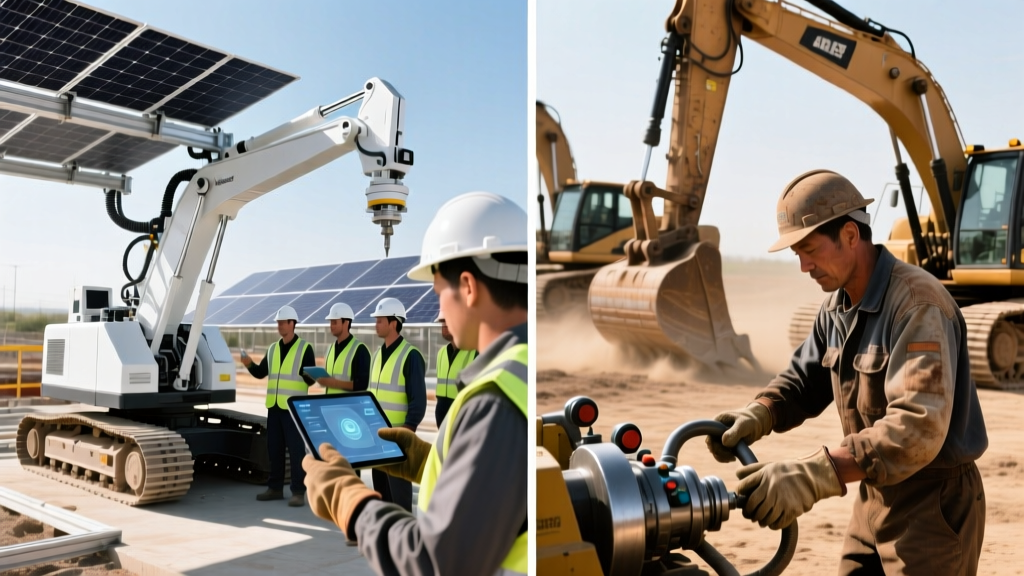
While the core heavy equipment driver job description prioritizes machine operation, experienced operators are expected to handle specific 'bolt-on' or external field repairs to minimize downtime. These are strictly limited to components that do not require system depressurization or software calibration.
Approved Operator Field Repairs:
- Hydraulic Hose Replacement (Quick Couplers Only): Replacing a blown hose on an attachment quick-coupler (e.g., a hydraulic thumb or breaker) using pre-crimped hoses and JIC fittings. Operators must carry specific wrenches, typically 1-1/16' and 1-5/16', to torque these connections properly without rounding the flats.
- Air Filter Restriction Clearing: Removing the primary radial seal air filter, tapping out dust (never blowing it out with compressed air, which tears the micro-fibers), and reinstalling. Operators must check the dust ejector valve for debris.
- Battery Isolation and Terminals: Cleaning corroded battery terminals and resetting tripped battery disconnect switches after a voltage spike.
- Grease Line Flushing: Clearing blocked auto-lube distribution blocks by manually cycling the system and tracing the physical grease lines to the pivot points.
The Tooling Divide: Dash Displays vs. OEM Software
The most significant barrier between operator and mechanic troubleshooting is access to proprietary diagnostic software. Operators are limited to the machine's LCD dash display, which provides translated, plain-English fault descriptions (e.g., 'Engine Power Derate').
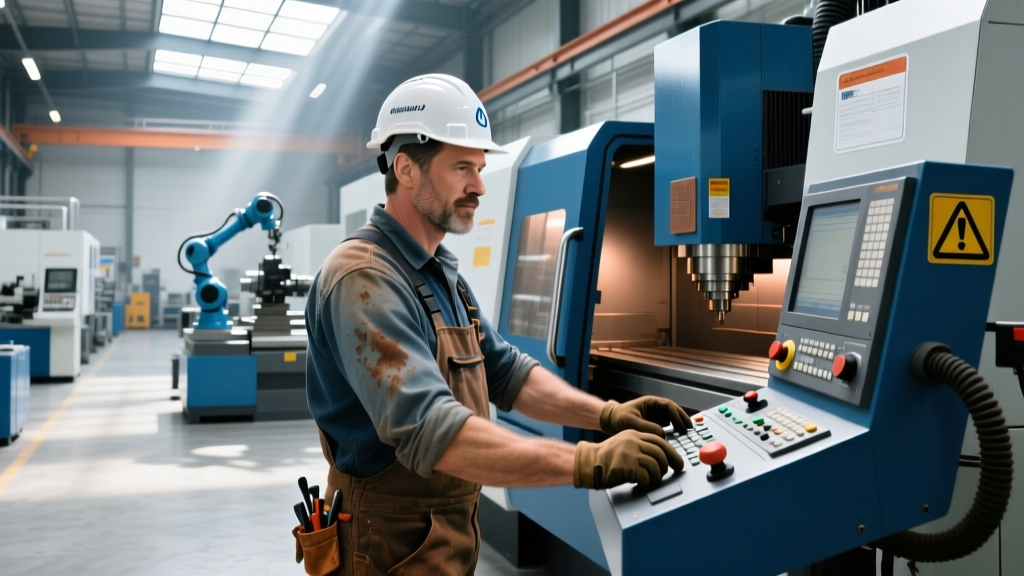
Mechanics, however, utilize OEM-specific diagnostic suites like Caterpillar Electronic Technician (Cat ET) or John Deere Service Advisor. These laptop-based systems allow mechanics to:
- View live data streams (e.g., fuel rail pressure measured in PSI vs. the ECM's commanded pressure).
- Perform 'cut-out tests' on individual fuel injectors to identify a misfiring cylinder.
- Override solenoids to test hydraulic valve spools without moving the machine's physical joysticks.
- Execute forced DPF regens and reset soot accumulation models after physical filter replacements.
'An operator feels the machine through the seat of their pants—they know a torque converter is failing because they recognize the exact RPM stall sound. A mechanic proves it by hooking up a pressure transducer to the turbine shaft and mapping the pressure drop on a graph. Both are vital, but they speak entirely different diagnostic languages.' — Senior Field Service Manager, Heavy Highway Division
Career Trajectory and Compensation: Mechanic vs. Operator
Choosing between the cab and the shop floor requires understanding the long-term physical toll, certification requirements, and earning ceilings of both paths.
Heavy Equipment Operator Path
Operators rely on certifications from bodies like the National Commission for the Certification of Crane Operators (NCCCO) or standard CDL requirements for mobilization. According to the Bureau of Labor Statistics (BLS), the median annual wage for construction equipment operators hovers around $50,000 to $65,000, with specialized roles (like tower cranes or pipeline sidebooms) pushing well past $90,000. The physical toll is primarily spinal and vibrational, requiring strict adherence to ergonomic cab setups.
Heavy Duty Mechanic Path
Mechanics pursue ASE T-Series (Medium/Heavy Truck) or off-highway equipment certifications, often supplemented by OEM-specific programs like Cat's ThinkBIG or John Deere's TECH program. The BLS reports that heavy vehicle and mobile equipment service technicians earn a median wage of $58,000 to $72,000. However, field service mechanics (those driving service trucks to remote sites) routinely clear $95,000 to $120,000+ annually due to overtime, dispatch bonuses, and the premium placed on rapid, on-site ECM diagnostics. The physical toll is joint and back strain from working in confined engine bays and undercarriages.
Crossing the Aisle: Transitioning from Operator to Mechanic
For operators looking to transition into the repair side, 'seat time' is an invaluable, unteachable asset. Mechanics who have spent 5,000+ hours operating excavators or dozers possess an intuitive understanding of machine kinematics. They know exactly how much side-load a final drive can take before the planetary hub cracks, because they have felt the machine shudder under those exact conditions.
To bridge the gap, operators should:
- Shadow the Lube Tech: Spend off-hours assisting with 500-hour and 1,000-hour PM (Preventative Maintenance) services to learn fluid sampling protocols and filter locations.
- Study Schematics: Request hydraulic and electrical schematics from the shop manager. Learning to trace a pilot signal from the joystick proportional valve to the main control spool is the first step toward electrical diagnostics.
- Invest in Basic Tooling: Start building a professional-grade toolkit, focusing on high-torque 1/2' and 3/4' drive impact sockets, specialized JIC/ORB wrench sets, and a high-quality digital multimeter for tracing 24-volt electrical gremlins.
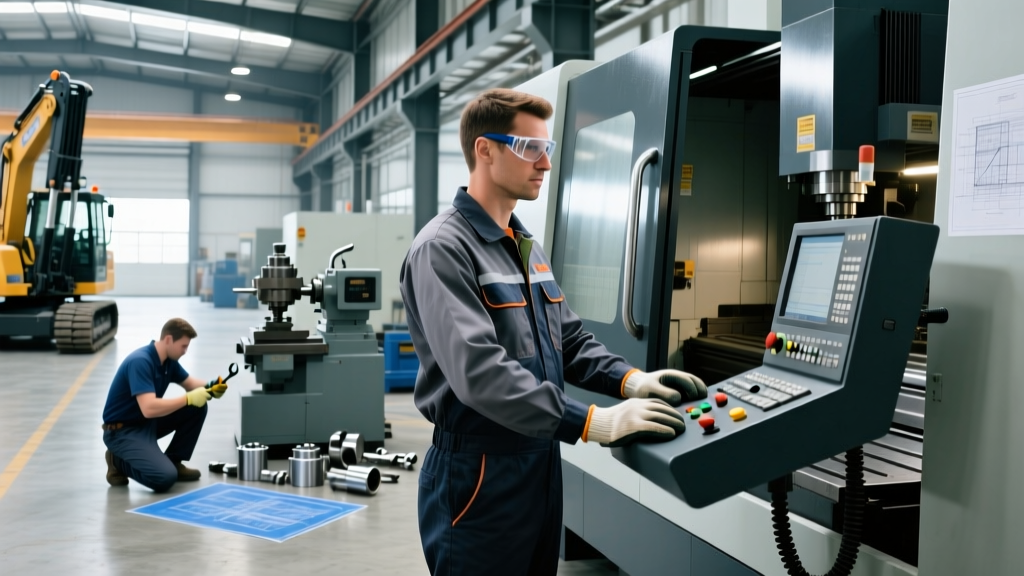
Ultimately, the most effective heavy equipment teams are those where the operator and the mechanic maintain a mutual respect for each other's diagnostic boundaries. The operator acts as the machine's central nervous system, detecting anomalies the moment they occur, while the mechanic acts as the surgeon, utilizing advanced tooling to execute the precise repair required to get the iron back to the dirt.