How to Choose the Right Grinding Tool Machine in 2026
Compare CNC and manual grinding tool machine options for 2026. Expert specs, pricing, and decision matrices for job shops and high-volume manufacturers.
The Core Dilemma: CNC vs. Manual Tool Grinders
Selecting the correct grinding tool machine requires aligning your shop's production volume, tool complexity, and budget with the machine's kinematic capabilities. The market has bifurcated into two distinct tiers: high-precision 5-axis CNC systems designed for batch manufacturing and complex geometry generation, and manual or semi-automatic machines optimized for quick end-mill resharpening and low-volume job shop maintenance. According to industry analysis from Modern Machine Shop, the shift toward micro-grain carbide and advanced PVD coatings in 2026 means that spindle runout and thermal stability are no longer optional upgrades—they are baseline requirements for maintaining tool life and surface finish integrity.
Quick Decision Framework: If your shop produces more than 500 complex rotary tools per month or requires profile tolerances tighter than ±0.005 mm, a 5-axis CNC grinding tool machine is mandatory. If you primarily resharpen standard 4-flute end mills and drill bits for internal use, a manual or 3-axis semi-auto machine will yield a faster ROI.Production Volume Decision Matrix
Use the following matrix to map your operational requirements to the appropriate machine class before requesting quotes from OEMs.
| Production Profile | Recommended Machine Type | Estimated Capital Cost (2026) | Required Skill Level |
|---|---|---|---|
| Internal Maintenance (1-50 tools/week) | Manual / Benchtop (e.g., Oliver, Deckel S22) | $5,000 - $25,000 | Master Toolmaker / Manual Grinder |
| Job Shop / Custom Prototyping (50-200 tools/month) | 3-Axis CNC or Hybrid (e.g., ANCA TGX, Walter Helitronic Basic) | $85,000 - $160,000 | CNC Operator / CAM Programmer |
| High-Volume Production (>1,000 tools/month) | 5-Axis CNC with Auto-Loader (e.g., ANCA FX7, Walter Helitronic Micro) | $195,000 - $350,000+ | Advanced Manufacturing Engineer |
Evaluating CNC Grinding Tool Machines (The $150k+ Tier)
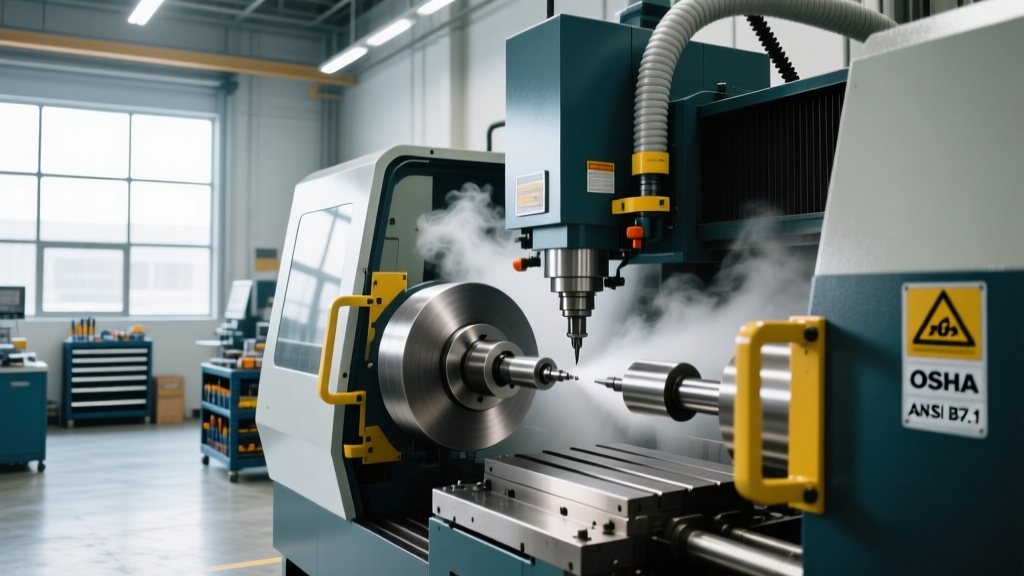
When investing in a 5-axis CNC grinding tool machine, you are primarily paying for kinematic rigidity, direct-drive spindle technology, and advanced software ecosystems. The leading platforms in 2026, such as the ANCA FX7 and the Walter Helitronic series, utilize linear motor drives on the X, Y, and Z axes to eliminate backlash and ball-screw wear.
Spindle and Power Specifications
Do not settle for peak power ratings; evaluate continuous torque curves. A high-quality grinding tool machine in this tier features a direct-drive spindle with a peak power of 10 kW to 31 kW (13 to 41 HP). For heavy-duty roughing of 1-inch diameter carbide blanks, look for a spindle that maintains high torque at lower RPMs (2,000–4,000 RPM) to prevent stalling when using large-diameter vitrified CBN or resin-bond diamond wheels.
Thermal Stability and Coolant Delivery
Thermal growth in the Z-axis is the silent killer of tool profile accuracy. Premium machines integrate liquid-cooled spindle housings and temperature-controlled machine beds. Furthermore, coolant filtration is critical. Standard paper band filters operating at 20 microns will allow fine carbide swarf to load your grinding wheels, increasing cutting forces and degrading surface finish (pushing Ra above 0.4 µm). Demand a centrifugal or advanced magnetic filtration system capable of 5 to 10-micron separation, coupled with programmable, high-pressure coolant nozzles (up to 70 bar) that automatically adjust their position based on the wheel diameter and grind angle.
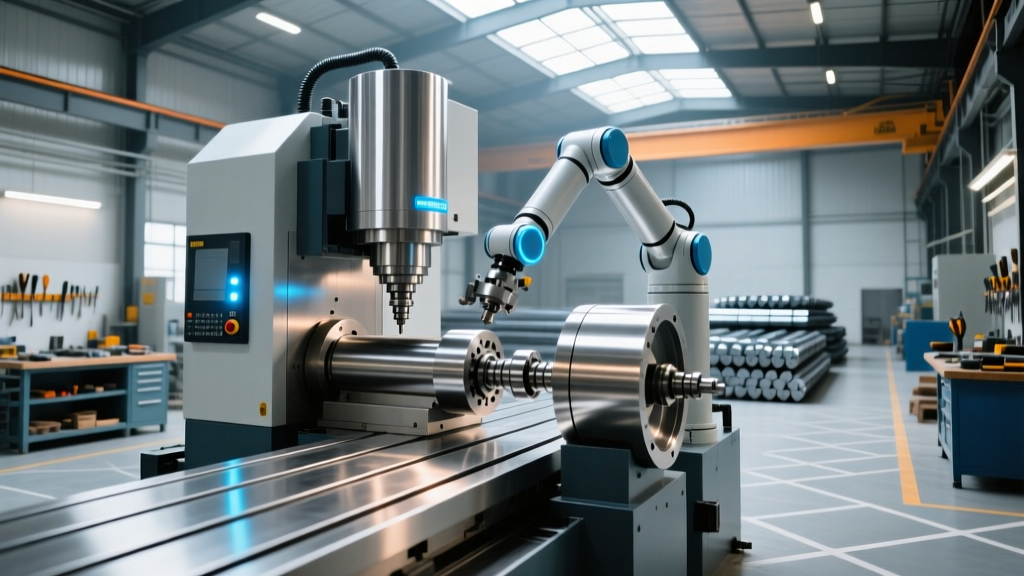
"The integration of in-process probing and post-process optical measurement, such as Marposs or Zoller systems, has transformed CNC tool grinding from a subtractive process into a closed-loop manufacturing cell. This is non-negotiable for unattended overnight batch runs." — Insights derived from SME Machining Technology reports on automated manufacturing cells.
Manual and Semi-Automatic Options (The $5k–$30k Tier)
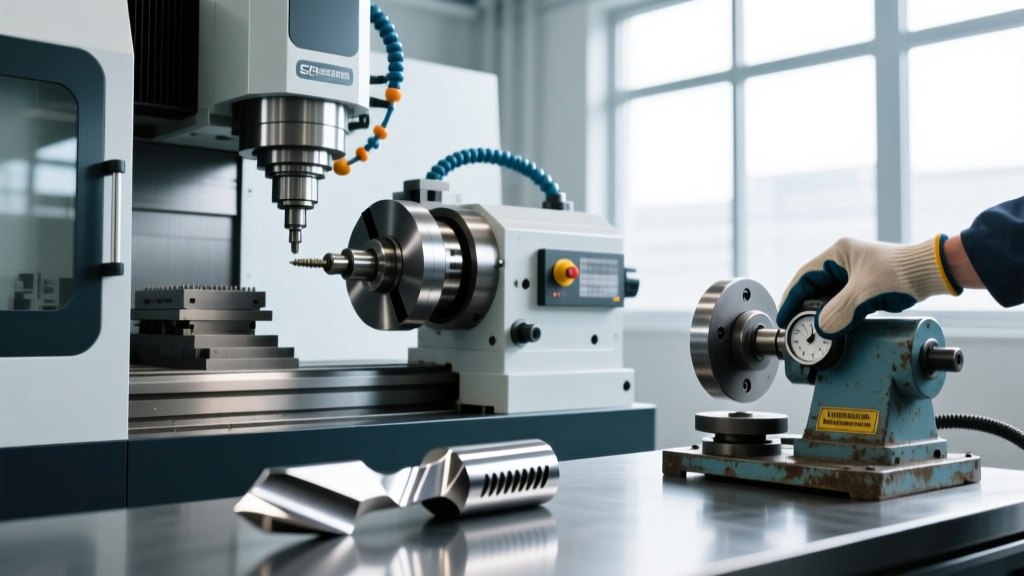
For job shops and maintenance departments, a full CNC system is often overkill. The manual grinding tool machine market remains robust, anchored by legendary platforms like the Deckel S22 and various Oliver models. These machines rely on precision-ground dovetails, universal workheads, and optical comparators for wheel dressing.
Warning on Used Manual Grinders: When purchasing a used Deckel or similar manual machine, inspect the universal workhead spindle for runout. Acceptable runout for tool grinding is less than 0.0001 inches (2.5 microns). If the spindle requires rebuilding, expect to pay an additional $3,500 to $6,000, which can easily eclipse the purchase price of an older, unmaintained machine.Semi-automatic machines bridge the gap by offering motorized axis feeds and basic digital readouts (DROs) without the overhead of full 5-axis CAM programming. They are ideal for standard operations like primary and secondary relief grinding on straight-shank end mills and spot-drills.
Software Ecosystem: The Hidden Bottleneck
Hardware is only half the equation. The software interface dictates your machine's actual throughput. The two dominant ecosystems in the CNC grinding tool machine space are NUMROTOplus and ANCA's proprietary ToolRoom software.
- NUMROTOplus: Highly versatile, widely used across multiple machine brands (like Walter and Rollomatic). It excels in complex 3D simulations and collision detection but requires a steeper learning curve and dedicated training.
- ANCA ToolRoom: Optimized specifically for ANCA hardware. It features intuitive, wizard-driven interfaces for standard tools (end mills, ball nose, drills) and integrates seamlessly with the machine's iMeasure in-process probing routines.
When negotiating your purchase, clarify software licensing. Some OEMs charge annual fees for advanced modules (e.g., proprietary compressor or turbine blade root-form grinding packages), which can add $5,000 to $10,000 to your annual operating costs.
Used Market Inspection Checklist
If capital constraints dictate purchasing a refurbished or used CNC grinding tool machine, conduct the following non-negotiable inspections before wiring funds:
- Ballbar Testing: Run a Renishaw QC20-W ballbar test on the X-Y and X-Z planes. Circular interpolation errors greater than 5 microns indicate worn linear guides or degraded servo tuning.
- Spindle Runout & Vibration: Use a calibrated test arbor. Radial runout at the nose must not exceed 2 microns. Vibration analysis should show no abnormal spikes at the spindle's operating frequencies.
- Wheel Changer Pneumatics: Cycle the automatic wheel pack changer 50 times. Watch for hesitation or misalignment in the HSK-50 or proprietary arbor clamping mechanisms. A failing pneumatic actuator or worn collet will cause catastrophic crashes during unattended runs.
- Software Dongles and IP: Ensure all physical USB security dongles or network licenses are transferred. Replacing a lost NUMROTO license can cost upwards of $12,000.
Final Sourcing and ROI Considerations
A grinding tool machine is a long-term asset that dictates the quality of every subsequent machining operation in your facility. Do not compromise on axis resolution or filtration to save 10% on the initial capital expenditure. Request sample tool grinds from the OEM using your specific CAD models and blank materials. Measure the sample tools on a Zoller or Walter Helicheck optical machine to verify profile tolerances against your ISO 13399 tool data standards. By prioritizing kinematic rigidity, advanced filtration, and a robust software ecosystem, your investment will maintain sub-micron accuracy and deliver consistent ROI well into the next decade.