Safety Compliance for CNC Tool & Cutter Grinding Machine Ops
Ensure OSHA and ANSI B7.1 compliance for your CNC tool & cutter grinding machine. Master guarding, mist extraction, and fire suppression standards.
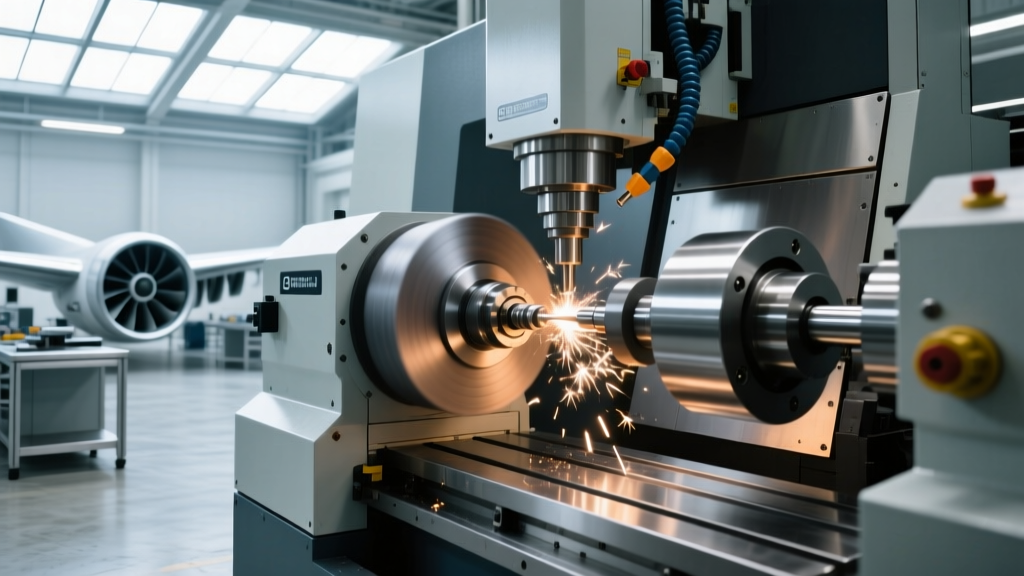
Operating a 5-axis CNC tool & cutter grinding machine—such as the ANCA FX7, Walter Helitronic Power, or Vollmer VGrind 360—involves extreme spindle speeds exceeding 12,000 RPM and high-pressure coolant systems delivering up to 70 bar. While these machines consistently achieve sub-micron tolerances on solid carbide end mills and complex reamers, they simultaneously introduce severe mechanical, respiratory, and fire hazards. Compliance is not merely a legal safeguard; it is a critical operational baseline. In 2026, regulatory scrutiny regarding shop-floor air quality, automated fire suppression, and abrasive wheel integrity has intensified, making strict adherence to established industrial standards mandatory for any modern toolroom or production facility.
The Core Regulatory Framework: OSHA and ANSI
Safety compliance for a tool & cutter grinding machine is governed primarily by two overlapping frameworks in the United States: OSHA regulations and ANSI consensus standards. While OSHA sets the legal enforceable limits, ANSI provides the granular engineering specifications required to meet those laws.
- OSHA 29 CFR 1910.215: This standard dictates the legal requirements for abrasive wheel machinery, covering guard design, spindle speed verification, and flange dimensions. You can review the full text of OSHA 1910.215 on the official Department of Labor portal.
- ANSI B7.1: Administered by the Unified Abrasives Manufacturers Association (UAMA), this standard details the safety requirements for the use, care, and protection of abrasive wheels. It specifies exact guard exposure angles, ring testing protocols, and mounting procedures. The ANSI B7.1 standard remains the definitive industry reference for wheel safety.
Abrasive Wheel Guarding and Clearance Tolerances
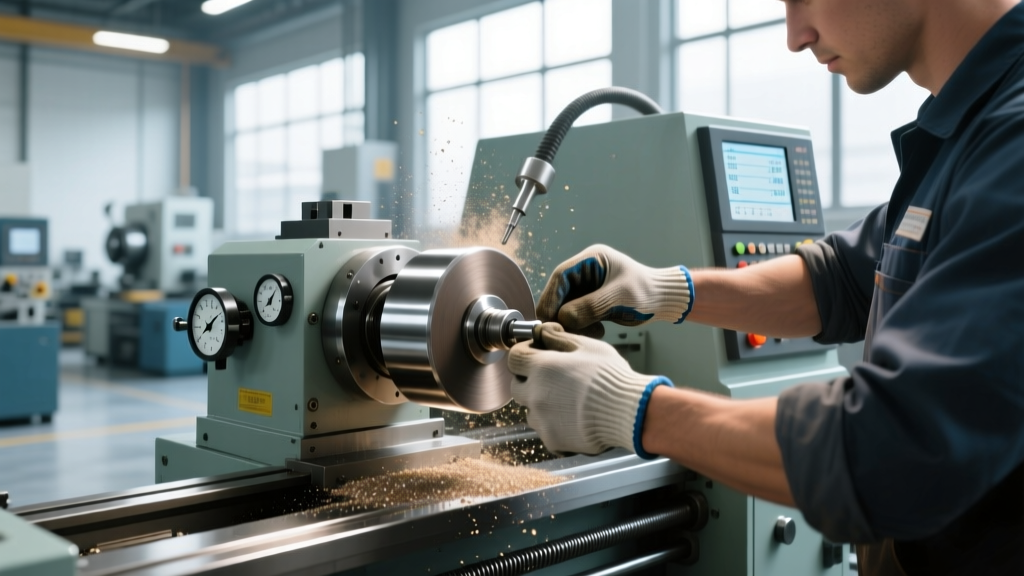
The most frequent OSHA citation issued to tool and cutter grinding operations involves improper wheel guarding. CNC tool grinders utilize enclosed work envelopes, but manual setup, wheel changing, and maintenance access points remain vulnerable.
⚠️ CRITICAL WARNING: The 1/4-Inch Tongue Guard RuleUnder OSHA 1910.215(a)(2), the adjustable tongue guard on the top side of the grinding wheel must be maintained at a maximum clearance of 1/4 inch (6 mm) from the wheel surface. As a 6-inch diamond or CBN wheel wears down during helical flute grinding, the operator or automated probing system must adjust the guard. Failure to maintain this 1/4-inch clearance during manual dressing or setup operations is an immediate citable offense and a primary cause of catastrophic wheel burst injuries.
Flange Dimensions and Blotter Requirements
When mounting vitrified CBN wheels for high-speed steel (HSS) tool grinding, the flange diameter must be no less than one-third the diameter of the wheel. Furthermore, ANSI B7.1 mandates the use of compressible blotters (typically 0.015 to 0.040 inches thick) between the wheel and the metal flange to distribute clamping pressure evenly. Omitting blotters to save setup time induces uneven stress concentrations, leading to latent wheel fractures that manifest only when the spindle ramps to 10,000 RPM.
Coolant Mist Extraction and Respiratory Compliance
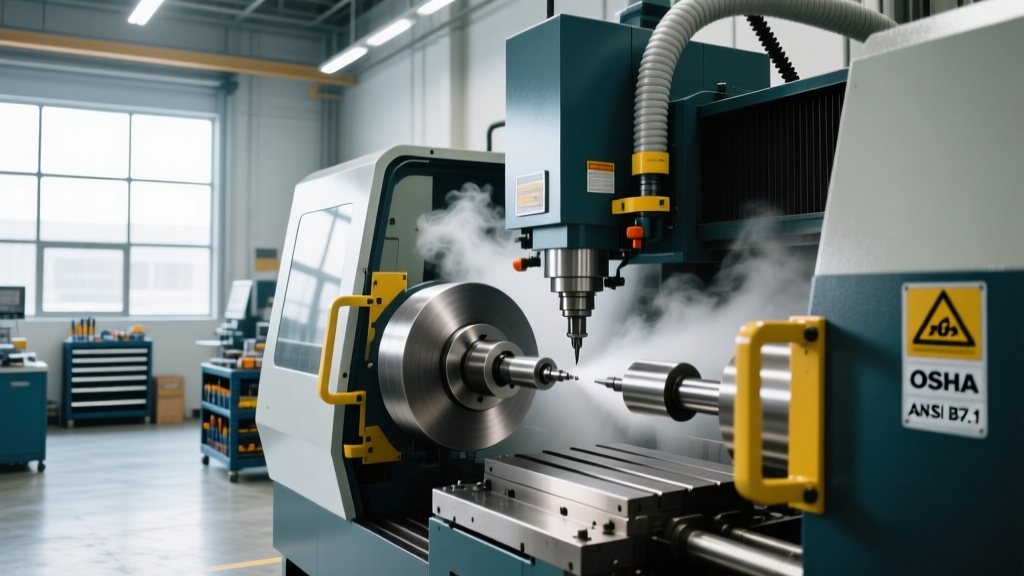
Modern CNC tool & cutter grinding machines rely heavily on oil-based or semi-synthetic coolants to prevent thermal damage to the carbide substrate during deep-flute grinding. The high-pressure application of these fluids generates dense sub-micron aerosol mists. Managing this mist is a complex compliance challenge involving both OSHA and NIOSH guidelines.
The NIOSH criteria document on metalworking fluids highlights the severe respiratory risks associated with prolonged exposure to coolant mist, including occupational asthma and hypersensitivity pneumonitis. Below is a comparison of regulatory limits and required engineering controls.
| Contaminant | OSHA PEL (8-hr TWA) | NIOSH REL (10-hr TWA) | Required Extraction Setup |
|---|---|---|---|
| Mineral Oil Mist | 5.0 mg/m³ | 0.4 mg/m³ | Centrifugal separator + HEPA after-filter |
| Synthetic/Semi-Synthetic | 5.0 mg/m³ (Particulate) | 0.5 mg/m³ (Thoracic) | Multi-stage media filtration (95% DOP) |
| Cobalt/Tungsten Dust | 0.1 mg/m³ (Cobalt) | 0.05 mg/m³ (Cobalt) | Wet scrubber or specialized dry cartridge |
Information Gain: Many shops attempt to meet OSHA's 5.0 mg/m³ Permissible Exposure Limit (PEL) using basic centrifugal mist collectors (e.g., standard Filtermist units). However, because NIOSH recommends a much stricter 0.4 mg/m³ limit, and state-level OSHA plans (like Cal/OSHA) often adopt stricter thresholds, relying solely on centrifugal separation is insufficient. For a fully compliant 2026 setup, you must route the exhaust of your centrifugal collector through a secondary HEPA filtration module (capable of capturing 0.3-micron particles at 99.97% efficiency) before returning the air to the shop floor.
Automated Fire Suppression in 5-Axis CNC Cells
Tool & cutter grinding machines process highly combustible materials. Carbide grinding generates sparks that can easily ignite oil-based coolants, which typically have flash points between 300°F and 350°F (149°C - 177°C). When a grinding wheel fractures or a tool blanks slips in the collet, the resulting spark shower inside an enclosed, mist-filled work envelope can trigger a flash fire in milliseconds.
Integration Standards for Suppression Systems
Standard building sprinklers are entirely inadequate for protecting the internal work envelope of a CNC grinder. Compliance and insurance underwriters (such as FM Global) require machine-specific, automated fire suppression systems. The most common compliant configurations include:
- CO2 Flooding Systems: Systems like Firetrace or Kidde utilize optical or thermal sensors placed inside the grinding chamber. Upon detecting a flame or rapid temperature spike (>150°F in 2 seconds), the machine's E-stop is triggered, the coolant pump shuts off, and the enclosure is flooded with CO2 to displace oxygen.
- Clean Agent (FM-200 / Novec 1230): Preferred for high-value 5-axis machines like the Rollomatic GrindSmart, these agents extinguish fires without leaving a residue that could destroy high-precision linear scales or glass optical encoders.
During annual safety audits, inspectors will test the fire suppression interlock. If the suppression system discharges, the CNC controller must instantly halt spindle rotation and disable the coolant pump. If the spindle continues to coast while the suppressant sprays, the system fails the compliance audit. Ensure your machine's PLC ladder logic includes a hardwired safety relay connecting the suppression control panel to the spindle drive's safe torque off (STO) circuit.
Electrical Safety and NFPA 79 Compliance
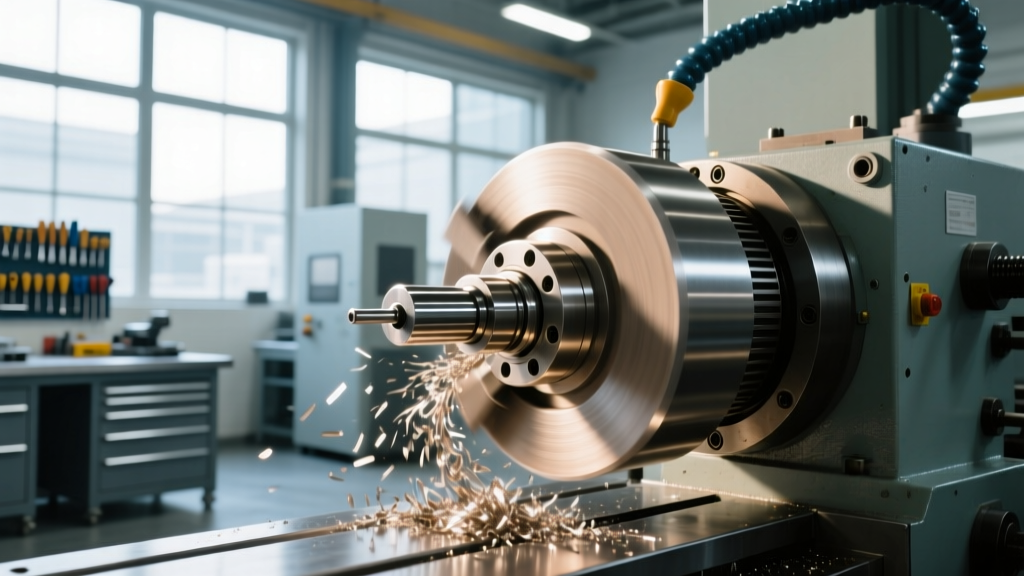
The electrical panels of CNC tool & cutter grinding machines are uniquely vulnerable due to the conductive nature of carbide and HSS grinding swarf. Fine metallic dust can bypass standard enclosure seals, infiltrate contactors, and cause short circuits or arc flashes. NFPA 79 (Electrical Standard for Industrial Machinery) dictates the electrical compliance requirements for these machines.
Key compliance mandates for grinder electrical cabinets include:
- NEMA 12 or IP54 Enclosures: Minimum rating for cabinets exposed to fine metallic dust and oil mist. Positive-pressure purging systems are highly recommended for cabinets located within 3 meters of the grinding envelope.
- Ground Fault Circuit Interrupters (GFCI): Required for all 120V receptacles inside the machine enclosure used for maintenance tools or dial indicators.
- Emergency Stop (E-Stop) Hardwiring: E-stop buttons must be hardwired in series with the main safety contactor. Software-based E-stops routed solely through the CNC controller's logic board are non-compliant and pose a severe risk if the controller experiences a fatal OS crash during a crash event.
Daily Pre-Shift Compliance Audit Checklist
Compliance is maintained through rigorous daily verification. Post this checklist at the operator console of every tool & cutter grinding machine on your floor.
- Wheel Integrity: Perform a visual inspection for micro-cracks on vitrified wheels. Execute a ring test on newly mounted wheels to confirm structural integrity before initial spin-up.
- Guard Clearances: Verify tongue guards are within 1/4 inch of the wheel periphery. Ensure work rests are adjusted to within 1/8 inch of the wheel.
- Mist Collector Functionality: Check the differential pressure gauge on the HEPA filters. If the pressure drop exceeds the manufacturer's threshold (typically 2.5 inches of water column), replace the filters immediately to maintain NIOSH air quality RELs.
- Fire Suppression Arming: Verify the fire suppression system control panel shows a green 'Armed' status and that optical sensors inside the chamber are free of coolant film.
- Spindle Runout Verification: Use a dial indicator to confirm spindle runout is within 0.0002 inches (5 microns). Excessive runout causes uneven wheel wear and increases the risk of wheel fracture due to harmonic vibration.
By treating OSHA, ANSI B7.1, and NFPA 79 not as bureaucratic hurdles but as core engineering parameters, toolroom managers can ensure their CNC tool & cutter grinding machines operate safely, efficiently, and without the risk of catastrophic regulatory fines or workplace injuries.