Top Bottling Equipment Manufacturers Compared: 2026 Buyer Guide
Compare top bottling equipment manufacturers including Krones, Sidel, and Sacmi. Analyze capex, rPET compatibility, and high-speed aseptic alternatives.
The 2026 Bottling Machinery Landscape: Scale vs. Sustainability
Selecting among top bottling equipment manufacturers in 2026 requires navigating a bifurcated market. On one side, mega-producers demand ultra-high-speed aseptic Combi blocks exceeding 80,000 bottles per hour (BPH). On the other, regional beverage brands require flexible, mid-speed lines capable of rapid changeovers between glass, PET, and emerging paper-based substrates. Furthermore, the universal shift toward 100% recycled PET (rPET) and tethered caps has fundamentally altered the mechanical requirements for preform heating and capping torque.
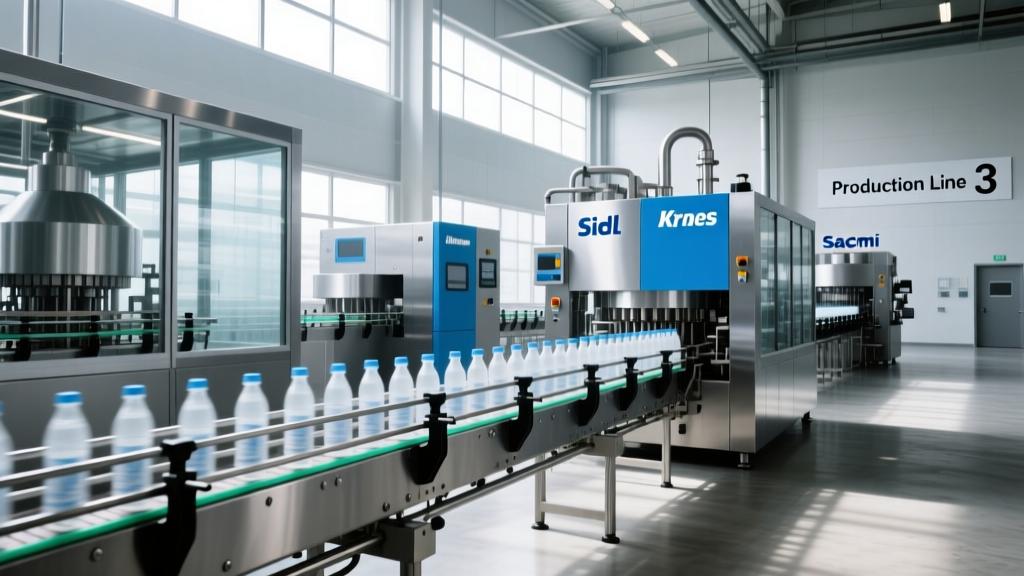
This comparison analyzes the three dominant tiers of bottling equipment manufacturers—Krones, Sidel, and Sacmi—evaluating their flagship 2026 platforms, capital expenditure (Capex) realities, and specific edge-case troubleshooting for sustainable packaging transitions.
Procurement Decision Tree
- If your target speed is >60,000 BPH and you run sensitive dairy/juice: Evaluate Krones Contiform 3 Pro or Sidel Aseptic Combi Predis.
- If your target speed is 30,000 - 60,000 BPH with frequent SKU changeovers: Evaluate Sidel EvoBLOW or Krones Contiform S.
- If your target speed is <30,000 BPH (craft beverage, regional dairy, scaling startups): Evaluate Sacmi FBF series or Serac mid-tier rotary fillers.
Tier 1: Krones AG (High-Volume & Aseptic Dominance)
Krones remains the benchmark for ultra-high-speed, continuous-motion bottling lines. Their engineering heavily favors minimal footprint (Combi technology) and advanced IoT integration via their Metris X platform, which uses machine learning to predict preform heater lamp failures before they cause line stops.
Flagship Models & Capex
- Contiform 3 Pro (Blow-Molder): Capable of 81,900 BPH. Features a 14-sec cooling station and optimized stretch rod kinematics for ultra-lightweight preforms (down to 7.5g for 500ml water).
- Aseptron XD (Filler): Uses wet sterilization (peracetic acid - PAA) for high-acid and low-acid sensitive beverages.
- Estimated Capex (Full Combi Block): $3.5M – $5.8M USD, depending on aseptic requirements and downstream packaging integration.
Pros & Cons
- Pros: Unmatched throughput stability; lowest reject rates for ultra-lightweight PET; highly integrated digital twin simulations prior to installation.
- Cons: Highest initial Capex; spare parts ecosystem is proprietary and expensive; requires highly specialized in-house technicians for maintenance.
Tier 1 Alternative: Sidel (Flexibility & Eco-Design)
Sidel competes directly with Krones at the high end but differentiates through its Predis™ dry sterilization technology and aggressive eco-design packaging engineering. Sidel’s systems are often preferred by manufacturers running a high mix of bottle shapes, as their mold changeover times on the EvoBLOW series are industry-leading.
Flagship Models & Capex
- EvoBLOW (Blow-Molder): Reaches up to 81,000 BPH. Features the Ecoven heating module, which reduces electrical consumption by up to 45% compared to legacy ovens.
- Aseptic Combi Predis: Sterilizes preforms and caps using vaporized hydrogen peroxide (VHP) rather than liquid PAA. This eliminates water usage for sterilization and reduces chemical handling risks.
- Estimated Capex (Full Combi Block): $3.0M – $5.2M USD.
Pros & Cons
- Pros: Dry sterilization (Predis) drastically cuts water and chemical Opex; superior mold changeover speed (under 15 minutes for format changes); excellent support for complex, non-round bottle geometries.
- Cons: VHP sterilization requires strict HVAC and humidity controls in the cleanroom; slightly higher energy draw on the blow-molder compressors.
Tier 2 Alternative: Sacmi (Mid-Speed & Craft Beverage)
For manufacturers who do not need 80,000 BPH, paying the premium for Krones or Sidel is financially unjustifiable. Sacmi (specifically their FBF and GBE series) dominates the 10,000 to 36,000 BPH range, offering robust, mechanically simpler machines that are easier for mid-sized engineering teams to maintain.
Flagship Models & Capex
- FBF Series (Rotary Filler): Speeds up to 36,000 BPH. Features electronic filling valves with flow meters, ideal for viscous liquids, craft beers, and cold-pressed juices.
- Capex Profile: $950,000 – $1.8M USD for a standalone blow-fill-cap block.
Pros & Cons
- Pros: Excellent ROI for mid-tier volumes; mechanical simplicity reduces reliance on proprietary software diagnostics; highly competitive pricing on spare parts.
- Cons: Not viable for ultra-high-speed water lines; aseptic capabilities lag behind the proprietary dry-sterilization tech of Sidel and Krones.
Head-to-Head Comparison Matrix
| Manufacturer | Max Speed (BPH) | Aseptic Tech | rPET Readiness | Est. Capex (Combi) |
|---|---|---|---|---|
| Krones | 81,900 | Wet (PAA) / Aseptron | High (Advanced NIR Ovens) | $3.5M - $5.8M |
| Sidel | 81,000 | Dry (VHP) / Predis | High (Ecoven Profiling) | $3.0M - $5.2M |
| Sacmi | 36,000 | ESL / Ultra-Clean | Medium (Standard IR) | $950k - $1.8M |
Edge Case Troubleshooting: The 100% rPET Transition
The most common failure mode reported by plant engineers in 2026 occurs when transitioning a line from virgin PET to 100% rPET without adjusting the thermal profile. According to FDA guidelines on recycled plastics, food-contact rPET must meet stringent purity thresholds, but the physical properties of the resin also change drastically.
Engineering Insight: 100% rPET preforms suffer from a lower Intrinsic Viscosity (IV) and higher acetaldehyde (AA) scavenger loads. If blown at standard virgin PET temperatures (105°C core), the bottles will exhibit severe pearlescence (micro-fissures) and fail top-load compression tests.
Thermal Profiling Fixes for rPET
- Increase Core Temperature: You must achieve a core temperature of 108°C to 112°C before blowing. Standard IR lamps will burn the outer surface of the preform before the core reaches this threshold.
- Adjust Lamp Wavelengths: Swap standard short-wave IR lamps for specialized Near-Infrared (NIR) or medium-wave lamps that penetrate deeper into the preform wall without overheating the surface.
- Optimize Exhaust Ventilation: Increase oven exhaust airflow by 15-20% to strip surface heat, allowing the lamps to run hotter and push thermal energy into the preform core.
- Preform Conditioning: Store rPET preforms in climate-controlled silos (20°C - 25°C) for 24 hours prior to blowing. Cold preforms pulled directly from a winterized warehouse will shatter under standard blow pressures.
Navigating Tethered Cap Torque Variations
With global mandates enforcing tethered caps (where the cap remains attached to the bottle neck ring after opening), capping equipment manufacturers have had to redesign application heads. Tethered caps feature modified thread pitches and bridge structures that are more prone to deformation during high-speed application.
When auditing bottling equipment manufacturers, demand proof of servo-driven capping heads with dynamic torque limiting. Magnetic clutch cappers, which were standard in 2018, frequently snap the tether bridges on modern eco-caps due to the sudden kinetic shock at the end of the torque cycle. Servo heads apply a smooth, programmable torque curve, reducing tether bridge failure rates from 4% down to less than 0.05%.
Final Procurement Checklist for 2026
Before Signing the PO:
- Verify the OEM’s Site Acceptance Test (SAT) includes a 72-hour continuous run using your specific 100% rPET preforms, not standard virgin PET test preforms.
- Ensure the filler valves are equipped with Coriolis mass flow meters rather than volumetric probes if you plan to co-pack products with varying densities (e.g., switching from water to cold-brew coffee).
- Confirm that the cleanroom HVAC design complies with ISO 22000 food safety management standards for positive pressure and HEPA filtration, particularly if utilizing dry VHP sterilization.
- Request a localized spare parts consignment agreement to mitigate ongoing global supply chain delays on proprietary servo motors and PLC boards.