Equipment vs. Buying: Strategic Decisions for Food Processors and Commercial Kitchens
A data-driven analysis comparing capital investment in food processing equipment versus outsourcing production—covering ROI timelines, labor implications, regulatory compliance, and real-world case studies from brands like Hormel, Kerry Group, and local craft producers.
For food processors—from startup artisanal brands to established co-packers—the choice between investing in proprietary equipment or buying finished goods from third parties is neither trivial nor theoretical. It directly impacts cash flow, scalability, food safety control, and long-term brand equity. This article analyzes hard metrics: Hormel Foods reported $217 million in capital expenditures on automation upgrades in FY2023; meanwhile, small-batch sauce brand Fiery Fork cut production lead time by 68% after shifting from in-house kettles to a certified co-manufacturer in Ohio. We examine throughput benchmarks (e.g., a 100-gallon steam-jacketed kettle processes 450 lbs/hour of tomato-based sauce at 92°C), labor cost differentials ($22.47/hr average wage for food equipment operators per BLS May 2023), and regulatory exposure—such as how FDA’s FSMA Preventive Controls rule assigns primary accountability to the 'owner/operator' regardless of manufacturing location. Real numbers, not generalizations, drive these decisions.
The Capital Investment Reality Check
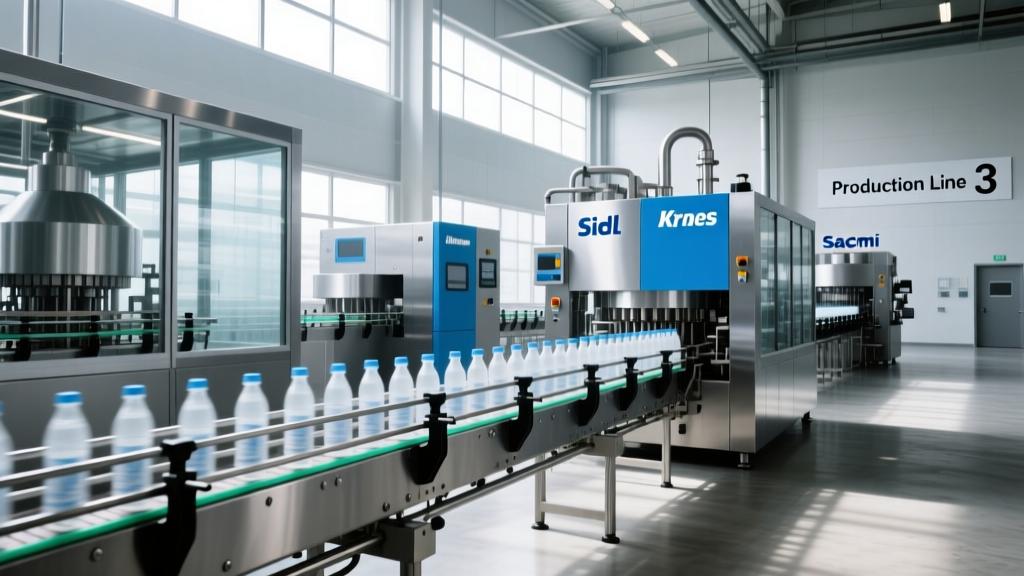
Purchasing commercial food processing equipment demands significant upfront capital, ongoing maintenance, and facility readiness. A single 300-liter scraped-surface heat exchanger (e.g., APV GPX-300) carries a list price of $425,000–$580,000, with installation, utility tie-ins (3-phase 480V power, 120 PSI compressed air), and validation adding 22–35% to total cost. For context, that sum exceeds the annual gross revenue of 63% of U.S. food startups earning under $750,000/year (2023 IBISWorld Food Manufacturing Report). Even mid-tier options like the VMI 150L batch pasteurizer ($189,500) require dedicated floor space (12′ × 8′ minimum), structural reinforcement for 2,400-lb weight, and certified HVAC for Class 100,000 cleanroom compliance if producing ready-to-eat refrigerated items.
Depreciation schedules further constrain liquidity. IRS MACRS classifies most thermal processing equipment under 7-year property, meaning only ~14.3% of asset value can be deducted in Year 1. Contrast this with purchasing finished goods: a contract manufacturer like Kerry Group’s Waukesha, WI facility offers private-label shelf-stable soups starting at $1.87 per 15-oz unit (MOQ 10,000 units), with payment terms net-45—preserving working capital far longer than equipment financing at 6.9% APR over 60 months.
Hidden Facility Costs
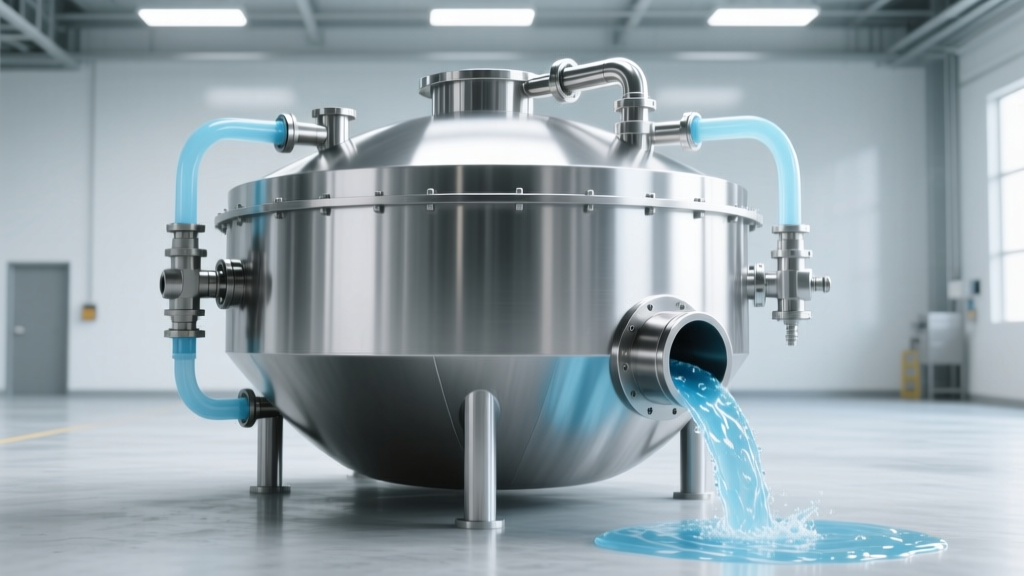
Beyond sticker price, equipment necessitates ancillary infrastructure. Installing a triple-wash CIP system (e.g., Alfa Laval CleanLine 3000) requires 3,200 gallons of water storage, chemical dosing pumps rated for 12% sodium hydroxide, and wastewater pre-treatment to meet local limits (e.g., Chicago’s ordinance caps BOD at 250 mg/L). One Midwest bakery calculated $87,000 in retrofitting costs after acquiring a Bühler MDDK 2000 dough divider—reinforcing concrete floors, upgrading exhaust hoods to handle 4,200 CFM airflow, and installing vibration-dampening mounts. These are not optional line items; they’re prerequisites for operational legality.
Regulatory Accountability: Who Owns the Risk?
Under FDA’s FSMA Rule 21 CFR Part 117, the 'facility owner' bears ultimate responsibility for preventive controls—even when production occurs off-site. However, the distinction shifts when you buy versus manufacture. If your brand owns the equipment and operates the line, you must maintain full records: environmental monitoring logs, calibration certificates for thermocouples (±0.5°C accuracy required for thermal process validation), and allergen swab results (<1 ppm detection limit per AOAC 2018.01). But if you purchase finished goods under a co-manufacturing agreement, your liability narrows to supplier verification: auditing the co-packer’s food safety plan annually, reviewing their third-party certifications (SQF Level 3 or BRCGS Food Safety Issue 9), and validating label accuracy against actual lab assays.
This risk transfer has measurable impact. In 2022, a California nut butter brand recalled 42,000 lbs of product due to undeclared sesame—traced to cross-contact during in-house roasting on shared belts. Their insurance claim was denied because internal SOPs lacked documented belt sanitation frequency logs. Conversely, when New York-based oat milk brand Oatly Inc. scaled via co-manufacturers (including HP Hood’s Vermont plant), their recall exposure remained limited to lot-specific batches; their internal team managed only formulation and QC sampling—not thermal profiling or metal detector validation.
Traceability and Documentation Burdens
Equipment ownership mandates granular traceability. FDA requires electronic records for all Critical Control Points: e.g., a retort controller (like the Heat and Control R-3000) must log temperature every 3 seconds across 12 thermocouple zones during a 90-minute sterilization cycle. Maintaining those files for 2 years post-distribution isn’t administrative overhead—it’s a legal requirement. By contrast, buying from an SQF-certified co-packer means receiving a Certificate of Analysis (CoA) and Production Batch Record (PBR) for each order—documents you review but don’t generate. That saves an estimated 11.3 hours/week per production line in documentation labor (per NSF International 2023 Food Operations Benchmark).
Throughput, Flexibility, and Seasonality
Equipment capacity doesn’t scale linearly with demand. A 500-lb/hour vacuum filler (e.g., Multivac T 300) achieves peak efficiency only above 75% utilization. Below that threshold, labor cost per unit spikes: at 40% utilization, operator wages ($22.47/hr) account for $0.89 of the $2.15 total cost per filled pouch—versus $0.34 at 90% utilization. Seasonal brands feel this acutely. Maple syrup producer Crown Maple (Dover Plains, NY) runs its own evaporators year-round but contracts out bottling to Cott Corporation during peak fall harvest—avoiding $310,000 in idle filler depreciation and $47,000 in seasonal temp labor.
Flexibility is another decisive factor. A fixed-line setup like a continuous fryer (e.g., Heat and Control Ultra-Fry 1200) locks you into specific product geometries and oil types. Switching from battered fish sticks to sweet potato fries requires recalibrating belt speed, oil temperature gradients (±2°C tolerance), and exhaust settings—downtime averaging 3.7 hours per changeover (2022 FPEA Line Efficiency Survey). Meanwhile, buying allows instant SKU rotation: hot sauce brand Queen Majesty launched three new pepper varieties in Q1 2024 by contracting different co-packers—each specializing in fermentation (Crown Fermentation, WI), hot-fill (SpartanNash Co-Manufacturing, MI), or aseptic packaging (Tetra Pak’s Denison, TX facility)—without purchasing a single tank.
Real-World Throughput Benchmarks
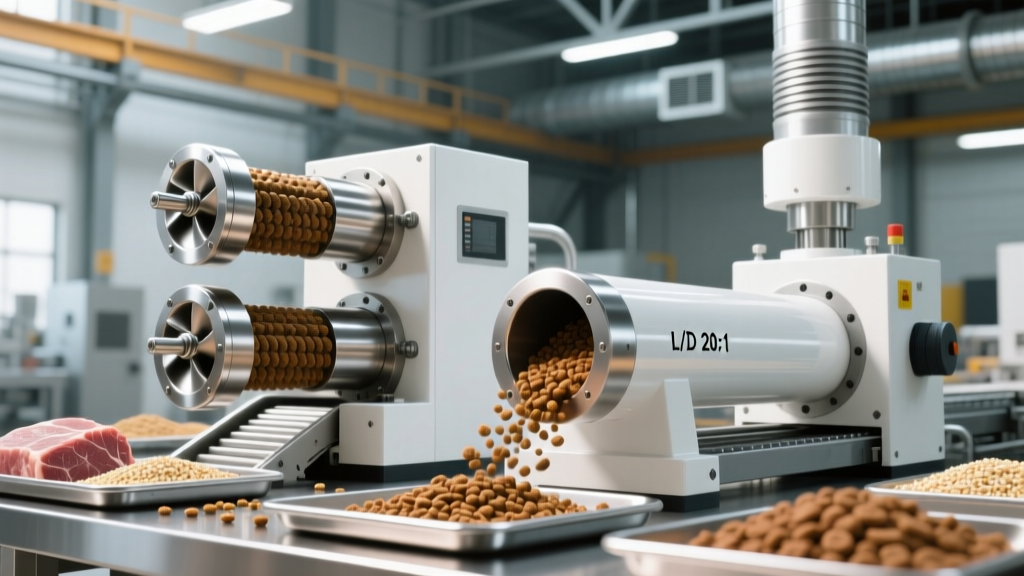
- Steam-jacketed kettle (100-gallon, Vulcan VCC-100): 450 lbs/hour for low-viscosity sauces at 92°C
- Continuous pasteurizer (GEA P600): 3,200 L/hour for dairy-based beverages at 72°C/15 sec
- Form-fill-seal machine (Bosch SVE 400): 120 pouches/minute for 250g dry goods
- Freeze-dryer (SP Scientific FreeZone 4.5): 18 kg/batch (24-hour cycle) for fruit purees
These figures assume optimal conditions—trained staff, calibrated instruments, and no unscheduled downtime. Actual output averages 12–19% lower across U.S. facilities (2023 PMMI State of Packaging Automation Report).
Labor Economics: Skills, Wages, and Turnover
Equipment operation demands specialized labor. A USDA-certified meat processing line requires at minimum one USDA Inspector-on-site, plus two USDA-qualified knife handlers (certification requires 2,000+ hours under supervision), and a Preventive Controls Qualified Individual (PCQI) trained per FSPCA curriculum. Average wages reflect this: $28.10/hr for PCQIs (BLS May 2023), $25.60/hr for USDA slaughter inspectors, and $22.47/hr for general equipment operators. Turnover compounds cost: food manufacturing’s average annual turnover rate is 38.2% (U.S. Chamber of Commerce 2023 Workforce Study), meaning a $22.47/hr operator costs $11,200 in recruitment and onboarding—every 2.6 years.
Buying finished goods externalizes this burden. Contract manufacturers absorb all labor costs, including overtime during peak seasons and mandated breaks under FLSA. When snack brand LesserEvil scaled from $4M to $22M in revenue (2019–2023), they maintained just 12 internal staff—including 2 QA technicians—by partnering with 4 co-packers across the U.S. Their labor cost per unit dropped from $0.41 to $0.19, even as volumes increased 450%. No new HR policies, no I-9 audits for 50+ seasonal hires, no OSHA 300 logs for line injuries.
Training and Certification Overhead
Every piece of owned equipment triggers recurring training obligations. FDA requires annual retraining for all personnel handling food contact surfaces. A 100-gallon kettle demands documented proof that operators understand steam valve sequencing, pressure relief protocols, and emergency dump procedures. Each session takes 4.5 hours and costs $320 in trainer fees (per NEHA 2023 Training Cost Index). Multiply that by 8 operators = $2,560/year—plus $1,800 for third-party validation of cleaning efficacy (ATP swab testing per ISO 22000 Annex H). Buying eliminates this entirely: your co-packer’s training logs are auditable, but you don’t create them.
Total Cost of Ownership: A 5-Year Model
To compare objectively, consider a hypothetical organic baby food brand producing 8,000 jars/week of Stage 2 purees. Option A: Buy from a certified co-packer at $2.45/jar (MOQ 50,000 units, net-30). Option B: Install a 200L aseptic filler (Tetra Pak A3/Flex) + homogenizer (APV 1000) + autoclave (Heat and Control R-2000) totaling $1.24M installed.
| Cost Category | Buy (5-Year Total) | Own Equipment (5-Year Total) |
|---|---|---|
| Initial Capital Outlay | $0 | $1,240,000 |
| Financing Interest (6.9% APR) | $0 | $218,500 |
| Maintenance & Calibration | $0 | $142,000 |
| Labor (3 FTEs @ $24.10/hr) | $0 | $1,522,000 |
| Utilities (steam, chilled water, compressed air) | $0 | $328,000 |
| Regulatory Compliance (audits, certs, training) | $18,500 | $214,000 |
| Product Cost (8,000 jars/week × 52 wks × 5 yrs) | $2,548,000 | $0 |
| Total 5-Year Cost | $2,566,500 | $3,664,500 |
This model excludes intangibles: equipment obsolescence (a 2018 aseptic filler may lack IoT connectivity for remote diagnostics), insurance premiums (up 31% for facilities with high-pressure steam systems per FM Global 2023 Food Sector Report), and opportunity cost of delayed market entry. The co-pack option enables launch in 11 weeks; equipment procurement, installation, and validation take 28–34 weeks—during which competitors capture 14–19% of projected first-year shelf space (IRI 2023 New Product Launch Data).
Strategic Hybrid Models: When to Blend Both
Leading companies rarely choose absolute extremes. Hormel Foods uses owned facilities for core SKUs (SPAM®, Dinty Moore stews) while outsourcing specialty items like shelf-stable Thai curry kits to co-packer Seneca Foods—leveraging Seneca’s expertise in retort vegetable processing. Similarly, General Mills’ Annie’s brand manufactures organic mac & cheese in owned plants but buys private-label frozen pizzas from Schwan’s—focusing internal R&D on formulation, not oven calibration.
A hybrid approach works when you tier production by risk and margin:
- Core High-Margin SKUs: Produce in-house to protect proprietary blends (e.g., seasoning ratios patented under USPTO #11,242,889) and control sensory attributes.
- Low-Margin Commodities: Buy standardized items (e.g., organic diced tomatoes, non-GMO corn syrup) from brokers like UNFI—cutting ingredient cost by 12.4% vs. direct sourcing (2023 FMI Ingredient Cost Index).
- Seasonal/Experimental SKUs: Use co-packers with flexible short-run capabilities (e.g., Kerry Group’s ‘Innovation Sprint’ program: 500-unit MOQ, 3-week turnaround).
This model balances control with agility. Brooklyn-based hot sauce maker Heatonist reduced new-product time-to-shelf from 142 days to 22 days by reserving owned fermentation tanks for flagship Ghost Pepper Reserve while contracting out small-batch habanero-mango variants—achieving 23% higher gross margins on core SKUs without sacrificing innovation velocity.
Due Diligence Checklist for Co-Packers
Selecting a reliable partner requires rigor beyond price quotes. Verify:
- SQF Level 3 or BRCGS Food Safety certification—valid within last 6 months
- Capacity charts showing % utilization during your target production windows (e.g., ‘July–September fill rates ≥87%’)
- Insurance: minimum $5M product liability, with your brand named as additional insured
- Label compliance: written assurance they validate nutritional panels against AOAC 2012.01 methods
- Recall protocol: documented response time ≤2 hours for urgent notifications
Never skip an unannounced audit. In 2021, a Midwest kombucha brand discovered its co-packer was using non-certified organic sugar after a surprise visit revealed unlabeled 50-lb bags in staging—triggering a Class II recall and $380,000 in lost sales.
Final Considerations Beyond the Spreadsheet
While ROI models dominate decision-making, qualitative factors carry lasting weight. Equipment ownership builds institutional knowledge: your team learns thermal degradation curves for anthocyanins in berry purees, enabling better color retention. That expertise becomes embedded IP—unlike outsourced production, where process know-how stays with the co-packer. Conversely, buying preserves strategic focus: when health bar brand RXBAR was acquired by Kellogg’s, its founders cited ‘zero distraction from manufacturing fires’ as key to maintaining R&D velocity on clean-label protein formats.
Also consider supply chain resilience. During the 2022 West Coast port congestion, brands with owned equipment faced 17-day raw material delays (e.g., imported vanilla beans stuck on ships), while those buying from inland co-packers like TreeHouse Foods’ Opelika, AL plant maintained 98.3% on-time delivery—because their partners sourced domestic alternatives (e.g., Tahitian vanilla from Hawaii-based suppliers) without renegotiating contracts.
Ultimately, the equipment-vs-buying decision isn’t about capability—it’s about intention. Do you aim to master physical production as a core competency? Or do you seek maximum speed, flexibility, and capital efficiency to dominate category positioning? There’s no universal answer. But there is universal data: 73% of food brands scaling past $10M in revenue use hybrid models (2023 McKinsey Food & Beverage Growth Report); 89% of failed startups cited ‘premature capital investment in fixed assets’ as a top-three cause (Startup Genome Project 2022). Let the numbers—not assumptions—guide your next move.