Heavy Equipment Roller Case Studies: Highway & Rail Compaction
Analyze real-world heavy equipment roller applications in highway and rail embankments. Review lift thickness, passes, and density metrics for modern builds.
Precision Compaction in 2026 Mega-Projects
Large-scale infrastructure projects demand uncompromising soil and asphalt density to prevent premature subsidence and structural fatigue. Selecting the right heavy equipment roller for a 40,000-cubic-yard embankment or a 12-mile highway expansion is no longer just about matching machine weight to material type. Modern compaction relies on dynamic energy transfer, precise frequency modulation, and real-time telemetry. In this analysis, we examine two distinct field applications—a major interstate highway base course and a high-speed rail clay embankment—to demonstrate how specific roller configurations achieve target densities while minimizing operational costs.
Key Compaction Metrics Snapshot
- Target Density: 98% Modified Proctor (ASTM D1557) for structural fills.
- Optimal Lift Thickness: 6 to 8 inches for granular base; 4 to 6 inches for cohesive clays.
- Standard Rolling Speed: 1.5 to 2.5 mph (vibratory); 3.0 to 4.0 mph (static/pneumatic).
- 2026 Fleet Benchmark: 11-ton tandem vibratory rollers average $220-$250 per operating hour.
Case Study 1: Interstate Highway Base Course Stabilization
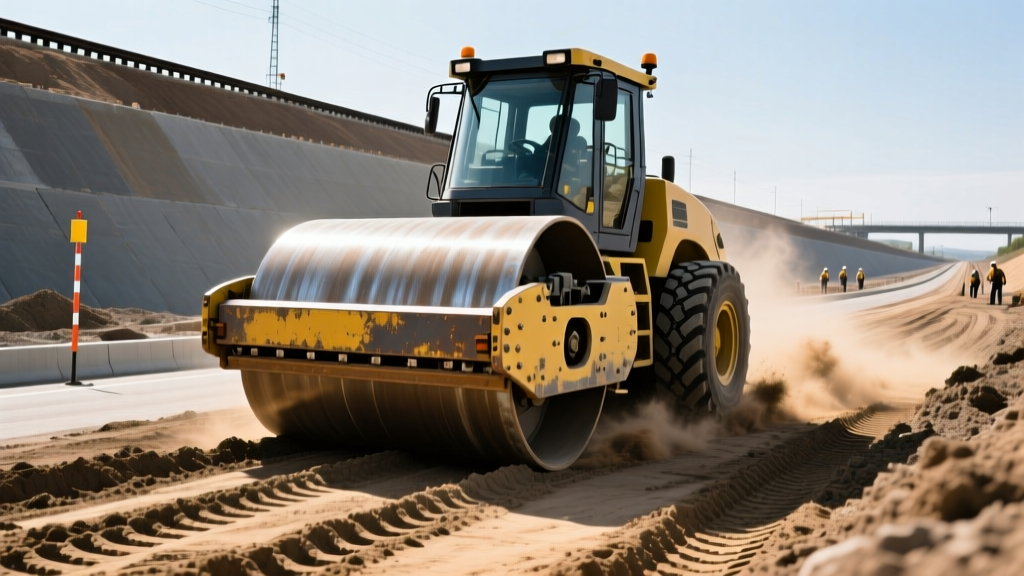
During a recent 14-mile expansion of a major midwestern interstate corridor, the primary contractor faced a strict 98% Modified Proctor (ASTM D1557) density requirement for the aggregate base course (ABC). The material was a well-graded crushed limestone with a 1.5-inch maximum nominal size. To achieve this without over-breaking the aggregate particles, the fleet deployed the Volvo DD110, an 11-ton (23,589 lbs) heavy equipment roller featuring a dual-amplitude, dual-frequency vibratory system.
Equipment Selection: Tandem Vibratory vs. Pneumatic
While pneumatic tire rollers (like the Caterpillar CW34) are excellent for sealing asphalt mats and kneading cohesive soils, they lack the high-impact vertical force required to interlock angular crushed stone in deep base lifts. The Volvo DD110 was selected for its high-frequency (67 Hz) and low-amplitude (0.016 in) settings, which deliver rapid, shallow impacts ideal for granular interlock without fracturing the stone edges. For the initial breakdown of the 8-inch loose lift, the operator switched to low-frequency (51 Hz) and high-amplitude (0.035 in) to drive the compaction energy deeper into the subgrade interface.
Pass-by-Pass Density Progression
Field nuclear density gauge readings (Troxler 3440) were taken after every two passes to map the compaction curve. The data below illustrates the diminishing returns of excessive passes, a critical factor in preventing aggregate degradation.
| Pass Sequence | Roller Mode | Speed | Avg. Density Achieved |
|---|---|---|---|
| Pass 1 (Breakdown) | Static (No Vibe) | 2.0 mph | 88% |
| Pass 2-3 | Low-Freq / High-Amp | 1.8 mph | 94% |
| Pass 4-5 | High-Freq / Low-Amp | 2.2 mph | 98.2% (Target Met) |
| Pass 6 (Finish) | Static | 3.0 mph | 98.4% (Diminishing Return) |
By capping the operation at five vibratory passes and one static finish pass, the project saved an estimated 14% in fuel and machine hour costs compared to the original six-pass vibratory specification.
Case Study 2: High-Speed Rail Embankment Core Compaction
Compacting cohesive soils for high-speed rail corridors introduces severe edge cases, primarily related to moisture sensitivity and shear failure. On a recent 8-mile embankment build utilizing high-plasticity clay (CH), the contractor utilized the Bomag BW 226 D-5, a 57,000-lb single-drum vibratory heavy equipment roller equipped with a padfoot (sheepsfoot) drum shell.
Managing Moisture and Lift Thickness in Clay Subgrades
Cohesive clays require kneading action rather than pure vertical impact. The padfoot drum concentrates the machine’s weight onto small surface areas, punching through the top layer to compress the underlying material and expel trapped air. However, the Federal Highway Administration (FHWA) guidelines and geotechnical engineering principles dictate that rolling clay at or above Optimum Moisture Content (OMC) can lead to pore water pressure buildup, resulting in a “spongy” subgrade that fails density tests.
“When compacting high-plasticity clay with a heavy padfoot roller, if the soil moisture exceeds OMC by even 1.5%, the shearing force of the drum will smear the clay rather than compact it. We mandate a strict 2% below OMC tolerance for the initial three passes before allowing moisture conditioning.”
— Lead Geotechnical Engineer, Regional Rail Authority
The contractor maintained the clay at 1.5% to 2.0% below the 18% OMC target during the initial breakdown passes. The Bomag BW 226 was operated at a maximum speed of 1.8 mph. Rolling faster than 2.0 mph with a padfoot drum on cohesive soil creates a horizontal shearing wave in front of the drum, which tears the top 2 inches of the lift and destroys the soil structure. Lift thickness was strictly limited to 6 inches loose, yielding a 4.5-inch compacted depth.
Cost & ROI Analysis: Heavy Equipment Roller Fleet Deployment
Understanding the true operating cost of a heavy equipment roller is vital for accurate project bidding. Below is a breakdown of the hourly operational costs for an 11-ton class tandem vibratory roller in the 2026 market, factoring in current fuel prices, Tier 4 Final/Stage V emissions fluid, and standard wear components.
- Fuel Consumption (Tier 4 Final Diesel): 3.2 gallons/hr @ $4.10/gal = $13.12
- DEF (Diesel Exhaust Fluid): 0.15 gallons/hr @ $3.50/gal = $0.52
- Operator Burdened Rate: $65.00/hr
- Depreciation & Financing (5-year term): $85.00/hr
- Wear Parts (Drum scrapers, shock mounts, filters): $18.50/hr
- Preventative Maintenance & Lube: $12.00/hr
- Total Estimated Hourly Cost: $194.14
When a contractor bids a project at $240/hr for compaction, the margin is heavily dependent on minimizing non-productive idle time and avoiding rework. A single failed nuclear density test requiring a 100-foot section to be scarified, re-moisturized, and re-rolled can wipe out 12 hours of machine profit.
Edge Cases & Troubleshooting Field Failures
Even with advanced telemetry and GPS pass-counting systems, heavy equipment rollers are subject to mechanical and environmental edge cases that compromise compaction quality. Field superintendents must train operators to identify these physical warning signs before density tests fail.
The “Bowling Alley” Effect and Drum De-glazing
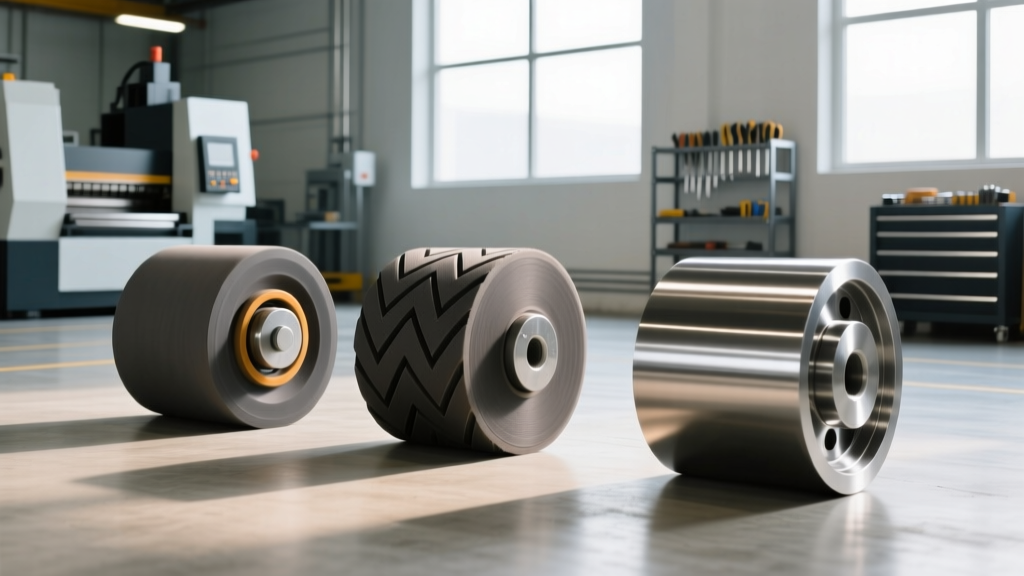
When rolling granular materials with high silica content (like river gravel or quartz-heavy crushed stone), the steel drum can become polished or “de-glazed” over hundreds of hours of operation. A smooth, polished drum loses up to 15% of its tractive effort and vibratory energy transfer efficiency. The material begins to push in front of the drum rather than compressing beneath it, creating a “bowling alley” effect.
The Fix: Operators must inspect the drum surface weekly. If the steel reflects light like a mirror, the drum must be scarified using a manual grinder or replaced with a bolt-on padfoot shell for the duration of the granular lifts. Furthermore, ensure the drum scraper bars are adjusted to within 1/16th of an inch of the drum surface to prevent material buildup that causes flat-spotting.
Vibration Isolation Mount Degradation
The vibratory drum is isolated from the machine frame by heavy-duty rubber shock mounts. Over time, exposure to UV light, diesel spills, and extreme cyclic loading causes these mounts to degrade or tear. If the mounts fail, the high-frequency vibration transfers directly into the roller’s chassis and the operator’s cab.
The Fix: If the operator reports excessive cab vibration or the machine’s telematics system flags an irregular eccentric shaft RPM, immediately halt operations. A torn isolation mount not only damages the frame bearings but also alters the resonant frequency of the drum, meaning the machine is no longer delivering the calibrated centrifugal force (e.g., 30,800 lbf) to the soil. Replacing the four primary isolation mounts takes approximately 3 hours and costs around $1,200 in parts and labor—a minor expense compared to the cost of replacing a fractured frame weld caused by unchecked harmonic resonance.
Summary of Best Practices
Deploying a heavy equipment roller effectively requires matching the machine’s dynamic forces to the specific geotechnical properties of the site. Whether utilizing a high-frequency tandem drum for highway base interlock or a heavy padfoot for clay embankment kneading, success relies on strict adherence to lift thickness limits, precise moisture management, and rigorous machine maintenance. By monitoring pass-count data and understanding the mechanical limits of the equipment, contractors can consistently hit 98%+ density targets while protecting their profit margins.