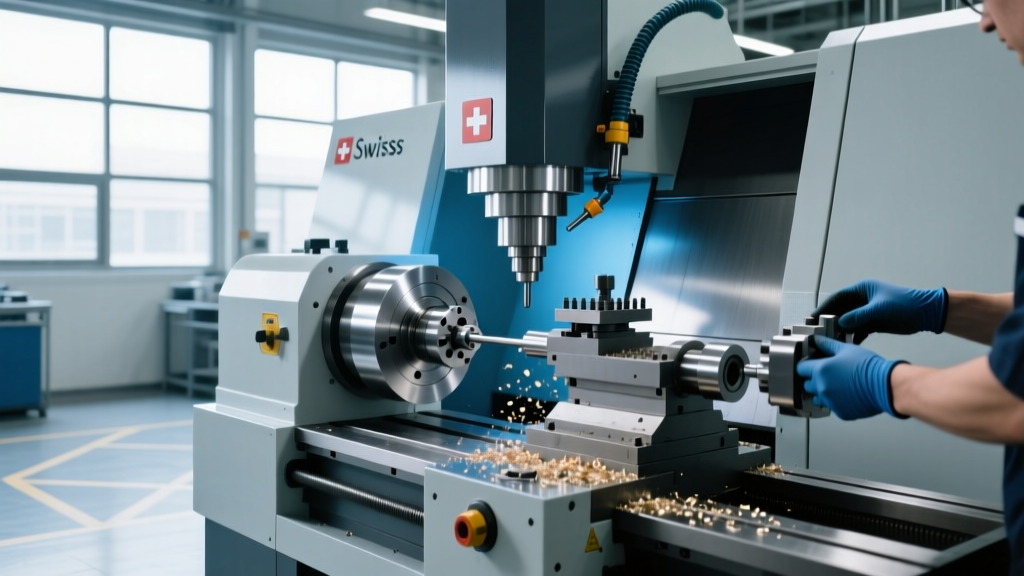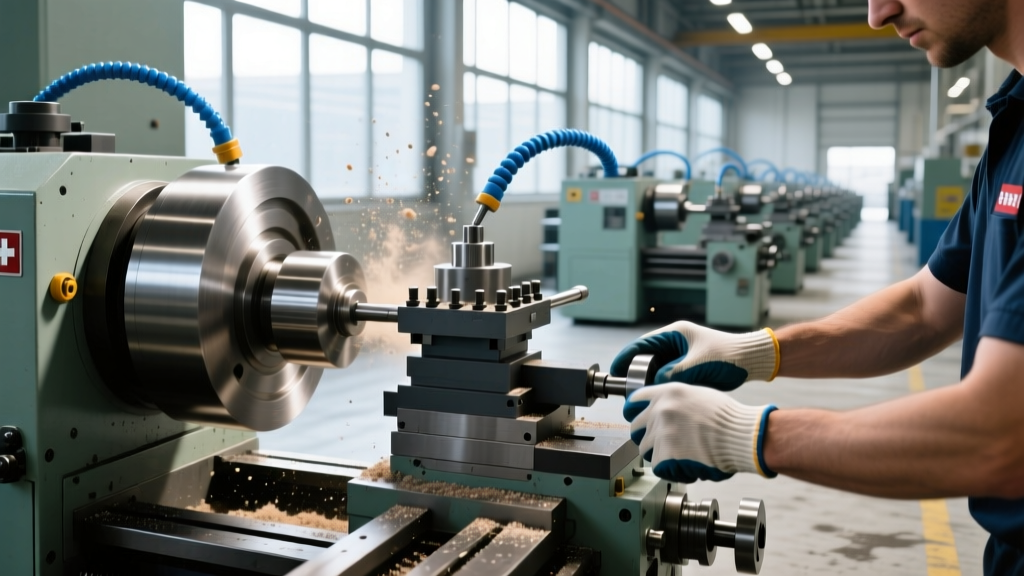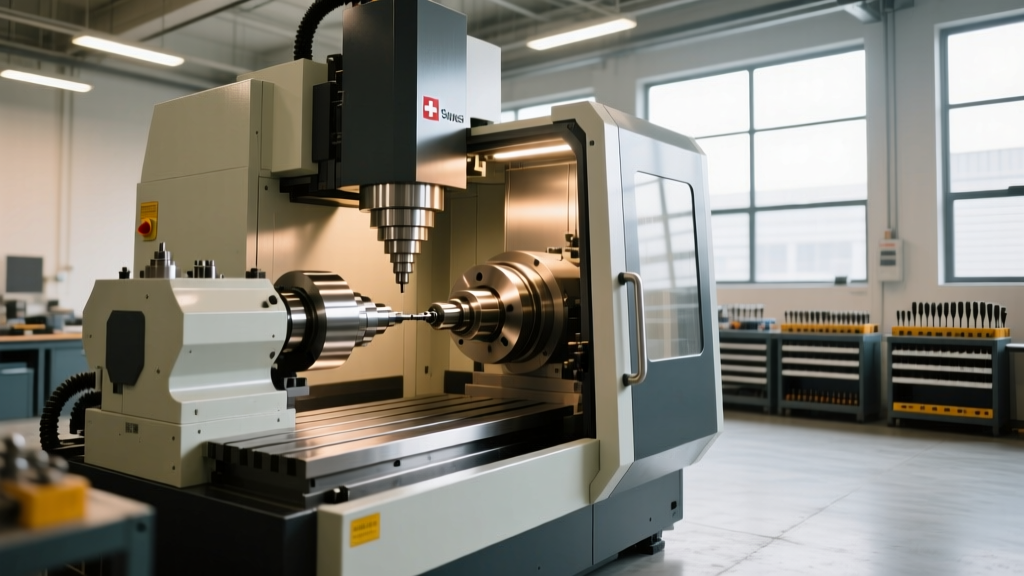
Equipment Selection Guide for a CNC Turning Machining Supplier
Strategic equipment buying guide for a CNC turning machining supplier. Compare 2-axis, Y-axis, and mill-turn lathes, pricing, and automation ROI.
Operating as a contract manufacturer requires a fundamentally different capital expenditure strategy than running a captive OEM production facility. While an OEM might purchase a dedicated CNC lathe to run a single part number for five years, a CNC turning machining supplier must navigate the high-mix, low-volume reality of modern job shops. The objective is to maximize spindle utilization across wildly varying geometries, materials, and batch sizes while minimizing setup times and work-in-progress (WIP) bottlenecks.
Selecting the right iron is the most critical decision a shop owner or operations manager will make. According to industry data tracked by AMT - The Association For Manufacturing Technology, the average lead time for customized turning centers has stabilized, but the cost of advanced mill-turn platforms continues to climb. This guide breaks down the exact equipment configurations, specific machine models, and peripheral automation required to build a profitable, resilient fleet in the current market.
The High-Mix Mandate: Why Job Shops Need Different Iron
In a contract turning environment, the 80/20 rule is heavily skewed. Typically, 80% of a shop's revenue is generated by 20% of its part numbers, but the remaining 80% of part numbers (the high-mix, low-volume prototypes and short runs) dictate the required flexibility of the machine fleet. If a supplier equips their floor strictly with basic 2-axis lathes, they will lose bids on complex components requiring off-center milling, cross-drilling, or back-working. Conversely, over-investing in 5-axis mill-turn centers for simple bushing work will destroy hourly margins due to excessive depreciation costs.
A mature CNC turning machining supplier structures their floor into three distinct tiers of capability, ensuring that parts are routed to the most cost-effective spindle available.
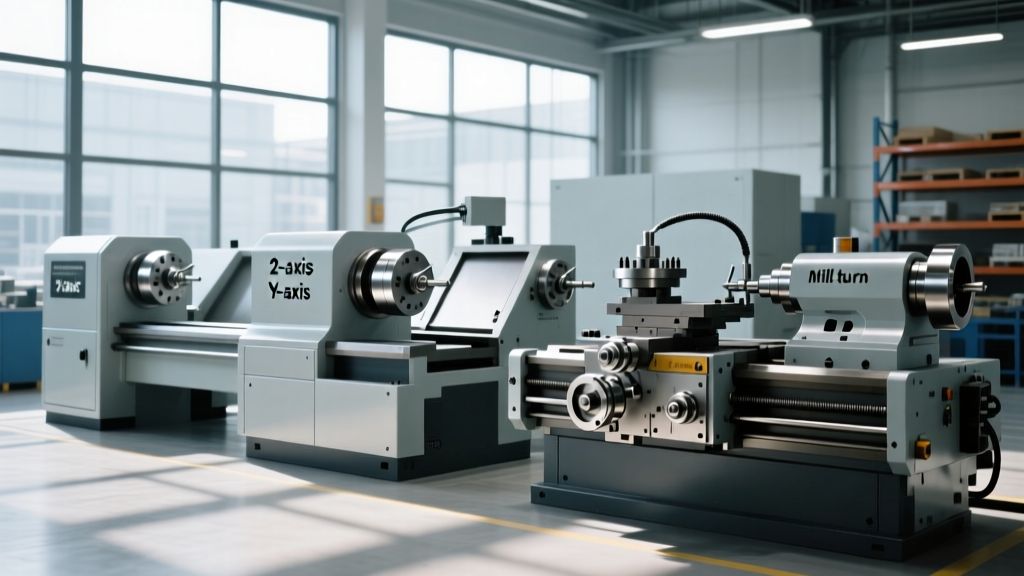
Core Fleet Matrix: Matching the Machine to the Contract
The following matrix outlines the strategic deployment of turning platforms based on part complexity and batch size. Shop rates are estimated based on 2026 regional averages for fully burdened machine hours.
| Machine Configuration | Target Part Profile | Avg. Setup Time | Capital Cost Range | Justified Shop Rate |
|---|---|---|---|---|
| Standard 2-Axis Lathe | Simple shafts, bushings, high-volume basic turns | 45 - 90 mins | $85,000 - $130,000 | $45 - $60 / hr |
| Y-Axis Turning Center | Flats, off-center holes, moderate mill-turn features | 90 - 150 mins | $140,000 - $220,000 | $65 - $85 / hr |
| B-Axis Mill-Turn (Done-in-One) | Complex aerospace/medical fittings, deep contouring | 3 - 6 hours | $350,000 - $600,000+ | $110 - $160 / hr |
Tiered Machine Platforms: Specific Models and Pricing
Rather than relying on generic specifications, suppliers must evaluate specific platforms that have proven their rigidity, thermal stability, and control architecture in job shop environments.
Tier 1: The High-Mix Workhorse (Haas DS-20Y)
For shops processing a high volume of secondary operations or complex sub-spindle parts, the Haas DS-20Y remains a dominant force. Featuring a Y-axis and full C-axis contouring on both the main and sub-spindles, it allows a supplier to complete parts with off-center features without moving them to a vertical machining center (VMC).
Base Price: ~$135,000 (equipped with high-pressure coolant and chip conveyor).
Supplier Advantage: The Haas NGC control allows for incredibly fast G-code edits at the machine, a critical feature when a job shop machinist needs to tweak a dimension on the fly based on first-article CMM feedback.
Tier 2: The Precision Mover (DMG MORI NLX 2500)
When a CNC turning machining supplier begins securing long-term contracts in the medical or aerospace sectors (e.g., machining 17-4 PH stainless or Inconel), thermal growth and vibration become primary failure modes. The NLX 2500 utilizes a built-in motor turret (BMT) and a symmetrical bed design that mitigates thermal displacement.
Base Price: ~$310,000 - $340,000.
Supplier Advantage: The BMT turret interface provides significantly higher milling rigidity than traditional VDI turrets, allowing the lathe to aggressively rough out titanium features without chatter, effectively replacing a secondary VMC operation.
Tier 3: The Done-in-One Heavyweight (Nakamura-Tome NTY3-100)
For high-value, low-volume contracts where WIP tracking and secondary operation bottlenecks are destroying margins, a 3-turret, 3-spindle architecture is required. The NTY3-100 allows simultaneous machining: the upper turret works the main spindle, the lower turret works the sub-spindle, and the third turret handles back-working.
Base Price: ~$480,000 - $550,000.
Supplier Advantage: Cycle time reduction of 40% to 60% compared to twin-spindle setups. While the initial capex is steep, the elimination of part handling, deburring between ops, and secondary fixture setups yields an ROI of 18 to 24 months for shops running 24/5 lights-out operations.
Tooling Interfaces: The Hidden Margin Killer
A common mistake made by expanding suppliers is ignoring the tooling interface when purchasing a new turning center. The interface dictates milling capability and setup speed.
- VDI (DIN 69880): Excellent for quick tool changes and standard turning. However, it lacks the face-contact rigidity required for heavy interrupted milling cuts. Best for Tier 1 and basic Tier 2 machines.
- BMT (Base Mount Turret): The tool holder bolts directly to the turret face with a large curvic coupling. This provides up to 30% more rigidity than VDI. Rule of thumb: If your shop bids on parts requiring 1/2-inch end mills in steel, mandate BMT on your new purchase orders.
- Capto (C6/C8): A polygonal taper interface that excels in quick-change scenarios and high-torque transmission. Ideal for suppliers utilizing automated tool-changing systems or managing massive tool cribs across multiple machine brands.
Automation Peripherals and ROI Calculations
According to manufacturing research published by the Society of Manufacturing Engineers (SME), integrating automated material handling is no longer optional for shops attempting to maintain margins amid skilled labor shortages. For a turning supplier, automation takes two primary forms:
1. Hydrodynamic Bar Feeders
Pairing a 2.5-inch capacity lathe with an Iemca Boss 542 or LNS Super Hydrobar feeder reduces cycle downtime caused by manual bar pulling.
The Math: If a supplier runs 12L14 steel shafts with a 45-second cycle time, manual bar pulling adds 15 seconds of dead time per bar. Over a 24-hour period, a bar feeder reclaims roughly 3.5 hours of spindle time. At a $65/hr shop rate, a $35,000 bar feeder pays for itself in under 6 months of continuous operation.
2. High-Pressure Coolant (HPC) Systems
Standard 300 PSI flood coolant is insufficient for modern contract turning. Suppliers must spec 1,000 to 1,500 PSI HPC systems directly from the OEM. HPC breaks chips in gummy materials like 304 Stainless Steel and Aluminum 6061-T6, preventing bird-nesting around the sub-spindle. This is a mandatory requirement for unattended nighttime running.
Supplier Due Diligence Checklist: Before Signing the PO
- Way Cover Validation: Demand telescoping steel way covers over standard accordion covers if machining cast iron or abrasive composites.
- Control Memory: Ensure the CNC control (e.g., Fanuc 31i-B) has at least 2GB of internal memory to handle complex 3D contouring programs generated by modern CAM software without requiring DNC drip-feeding.
- Thermal Compensation: Verify the machine includes spindle and ball-screw thermal growth compensation algorithms, critical for holding ±0.0002" tolerances on morning cold-starts.
- Service Level Agreement (SLA): Negotiate a guaranteed 24-hour spindle replacement SLA in the purchase contract; a down spindle costs a job shop upwards of $1,200 per day in lost billing.
Strategic Fleet Deployment
A successful CNC turning machining supplier does not simply buy the newest machine on the market; they buy the machine that solves a specific bottleneck in their current routing architecture. By mapping out the shop's historical part geometries and aligning them with the correct tier of Y-axis or B-axis turning centers, suppliers can drastically reduce WIP, eliminate secondary operation queues, and justify premium shop rates to their most demanding clients. For further baseline standards on machining tolerances and advanced manufacturing integration, suppliers should regularly consult resources provided by NIST Advanced Manufacturing to ensure their equipment specs align with emerging federal and aerospace quality requirements.