CNC Swiss Screw Machine Costs: 2026 Budget & ROI Guide
Analyze true CNC Swiss screw machine costs for 2026. Explore base pricing, bar feeder peripherals, tooling investments, and ROI frameworks for job shops.
The True Capital Expenditure: Base Machine vs. Turnkey System
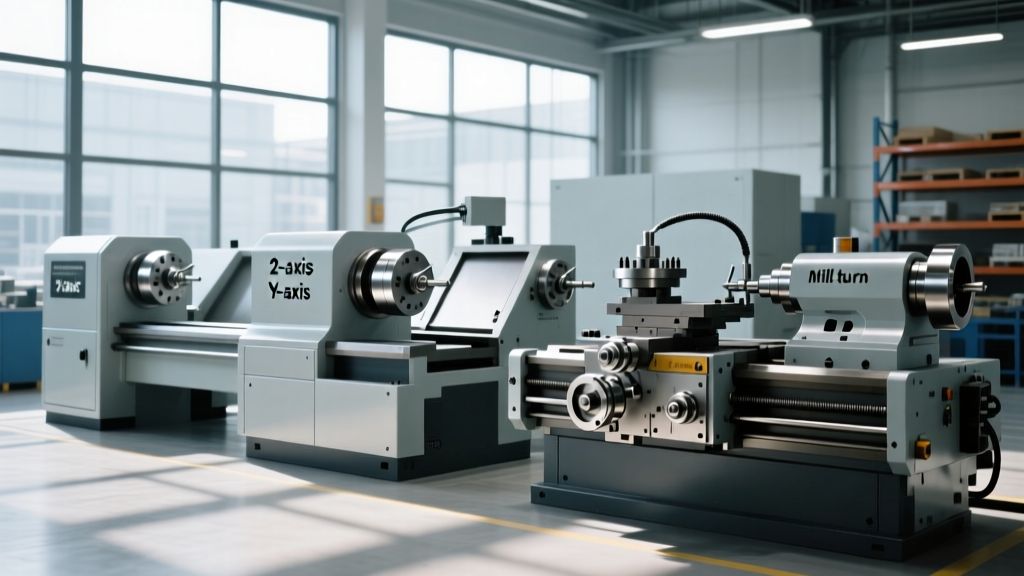
Transitioning from standard CNC turning to Swiss-type machining represents a fundamental shift in capital expenditure and operational strategy. While a standard 2-axis CNC lathe typically ranges from $65,000 to $110,000, a multi-axis CNC Swiss screw machine commands a significantly higher premium due to its complex kinematics, overlapping toolpaths, and integrated sub-spindle capabilities.
For 2026 machine shop budgets, base pricing for Swiss-type lathes is strictly tiered by capability and origin. Entry-level models, such as the Tsugami B0125 series or comparable Hanwha machines, generally start between $145,000 and $185,000. Mid-tier workhorses like the Citizen M32-V or Star SR-32J, which offer B-axis contouring and extensive live tooling stations, range from $230,000 to $310,000. High-end, multi-channel Swiss centers from Tornos (e.g., the EvoDeco line) or Willemin-Macodel easily exceed $450,000 before any peripherals are added.
Budgeting Rule of Thumb: Never budget for the base machine alone. A bare CNC Swiss screw machine cannot run production parts. You must allocate an additional 25% to 35% of the base machine price for mandatory peripherals, initial tooling, and CAM software to achieve a functional, turnkey cell.Breaking Down the Peripheral Costs (The Hidden 30%)
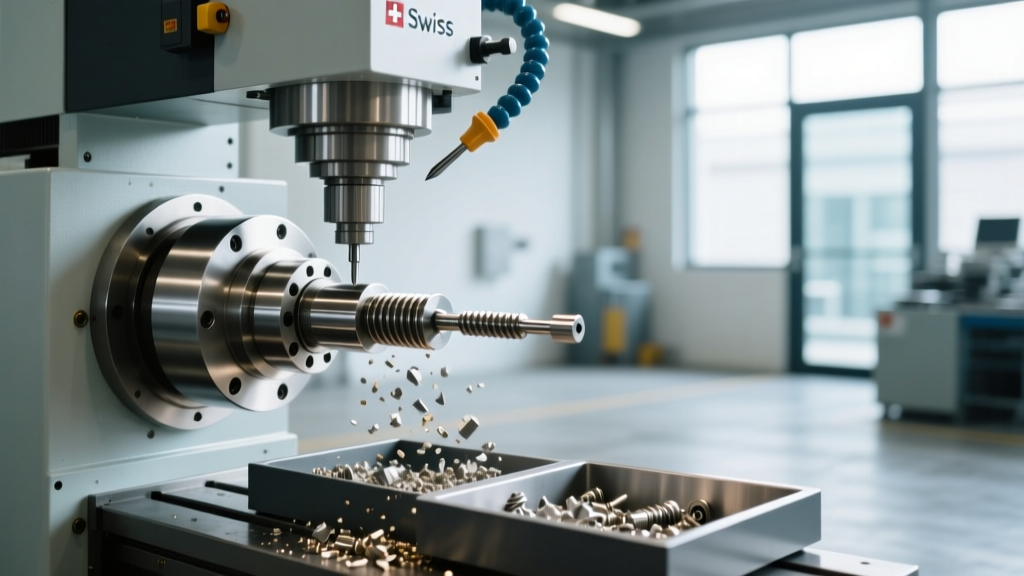
Swiss machining relies on the guide bushing to support the material millimeters away from the cutting tool. This requires a hydrodynamic bar feeder to push the bar stock with extreme precision and consistent force. Standard gravity or hydraulic feeders used on conventional lathes will cause vibration and scrap rates to skyrocket on a Swiss machine.
| Equipment Category | Industry Standard Brands | 2026 Estimated Cost | Operational Necessity |
|---|---|---|---|
| Hydrodynamic Bar Feeder | LNS Hydrobar, Iemca Boss | $18,000 - $34,000 | Mandatory for vibration dampening and precision feed. |
| High-Pressure Coolant (HPC) | MP Systems, ChipBLASTER | $9,500 - $16,000 | Critical for chip evacuation in deep-cavity and exotic alloys. |
| Oil Skimmer / Coolant Clarifier | Abanaki, Keller | $3,500 - $6,500 | Required to separate guide bushing oil from water-soluble coolant. |
| Chip Conveyor | Mayfran, Hennig | $4,000 - $7,500 | Essential for high-volume, stringy chip materials like 303 SS. |
Tooling, Workholding, and CAM Software Investments
The tooling ecosystem for a CNC Swiss screw machine is highly specialized. Unlike standard VDI or BMT turrets on conventional lathes, Swiss machines require modular tooling setups that fit into dense gang slides or specialized rotary stations.
Live Tooling and Guide Bushings
Live tooling stations from manufacturers like Eppinger or BMT range from $1,200 to $2,800 per holder. If your shop frequently machines abrasive materials or requires extreme rigidity for micro-drilling, investing in BMT (Base Mount Tooling) over standard cylindrical shank holders is non-negotiable, despite the 20% price premium.
Furthermore, the guide bushing itself is a consumable wear item. Standard steel bushings cost around $150, but if you are turning 303 stainless steel, titanium, or Inconel, you must purchase carbide-tipped or ceramic-lined guide bushings from Schaublin or Royal Products, which cost between $350 and $800 each and require precise honing to match your specific bar stock diameter tolerance (typically +0.0002" / -0.0000").
The CAM Software Premium
Programming a Swiss machine manually is virtually impossible for modern, complex geometries due to the need for sub-spindle synchronization, cross-drilling, and overlapping toolpaths to reduce cycle times. You must budget for advanced Swiss-capable CAM software. Licenses for ESPRIT or PartMaker (by Autodesk) typically cost between $15,000 and $22,000 per seat, plus annual maintenance fees of roughly $2,500. According to industry analyses featured in Modern Machine Shop's Swiss Machining zone, shops that attempt to use basic 2-axis CAM post-processors for Swiss centers experience a 40% higher crash rate during initial setup.
Operational Expenditures: The Guide Bushing Lubrication Dilemma
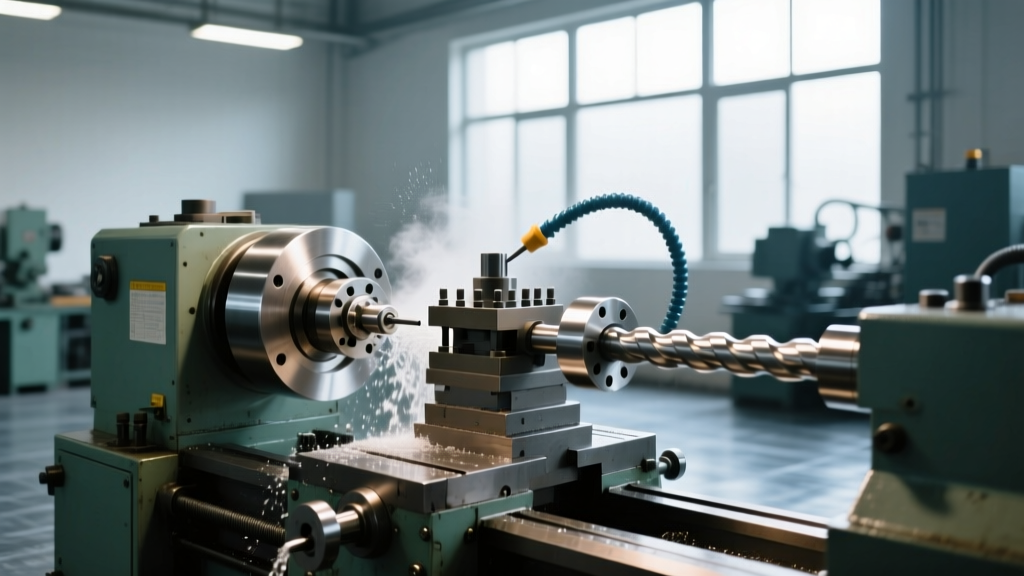
A frequently overlooked operational cost in Swiss machining is the lubrication of the guide bushing. The bar stock must rotate at high RPMs (often 4,000 to 8,000 RPM) inside the bushing, generating immense friction. Traditionally, this requires a dedicated, high-viscosity way oil.
The problem? This oil inevitably leaks past the bushing seals and contaminates the machine's water-soluble cutting fluid. This contamination degrades the coolant's pH balance, promotes bacterial growth, and ruins surface finishes on secondary operations. Shops must either purchase expensive oil skimmers and replace coolant twice as often, or invest in modern "water-soluble compatible" guide bushing systems. While water-soluble compatible bushings cost roughly 30% more upfront and require specialized synthetic coolants, they eliminate the tramp oil problem entirely, saving an estimated $4,000 to $6,000 annually in coolant disposal and machine downtime.
ROI Decision Matrix: When Does a CNC Swiss Screw Machine Make Sense?
Purchasing a Swiss machine is not a universal upgrade; it is a targeted solution for specific part geometries and volume requirements. Use the following framework to determine if the ROI justifies the capital outlay.
Ideal Use Cases (High ROI)
- Diameter: Under 1.25 inches (32mm).
- Length-to-Diameter Ratio: Greater than 3:1 (e.g., a 3-inch long shaft that is 0.25 inches in diameter).
- Complexity: Requires back-working, cross-drilling, and off-center milling in a single setup.
- Volume: Runs of 5,000+ parts where eliminating secondary operations (like milling or grinding) offsets the higher hourly machine rate.
Poor Use Cases (Negative ROI)
- Diameter: Over 1.5 inches (Swiss machines lose their rigidity advantage over standard slant-bed lathes at larger diameters).
- Length-to-Diameter Ratio: Less than 2:1 (stubby parts do not require guide bushing support).
- Material: Extremely soft plastics or heavily scaled hot-rolled steel (which destroys guide bushings rapidly).
- Volume: Prototyping or runs under 500 parts (setup time and bar feeder remnant scrap destroy margins).
The Remnant Scrap Factor: When calculating your material costs, remember that every bar feeder leaves a remnant (drop) at the end of the bar. On a Swiss machine, this remnant is typically 6 to 12 inches long. If you are machining $40/foot aerospace-grade titanium, that remnant represents significant lost capital. Budget for a remnant retrieval system or factor a 4% material scrap rate into your quoting software.
Budgeting Framework for 2026 Shop Expansion
If your shop is quoting an increasing volume of medical bone screws, aerospace fasteners, or complex hydraulic fittings, the transition to Swiss is inevitable. To accurately forecast your 2026 capital requirements, build your budget using this sequence:
- Base Machine + Options: $250,000 (Includes B-axis, high-frequency spindle, and sub-spindle C-axis).
- Material Handling: $28,000 (LNS Hydrobar feeder + chip conveyor).
- Fluid Management: $14,000 (MP Systems 2,000 PSI HPC + Abanaki skimmer).
- Initial Tooling Package: $22,000 (Eppinger live tools, Schaublin collets, carbide guide bushings, and custom boring bars).
- Software & Training: $18,000 (ESPRIT license + 2 weeks of OEM applications engineering training).
- Rigging & Floor Prep: $6,000 (Swiss cells require 14+ feet of linear space and reinforced flooring to handle the combined 10,000+ lb footprint of the machine and feeder).
Total Turnkey Investment: $338,000. While steep, a fully optimized Swiss cell running 24/7 lights-out with a bar feeder can easily generate $1.2 million to $1.8 million in annual revenue, yielding a payback period of 18 to 24 months in high-margin sectors like medical device manufacturing.