Navigating Affordable CNC Machining Vietnam for Medical Devices
Sourcing affordable CNC machining in Vietnam for medical devices? Learn the critical ISO 13485, FDA, and material traceability compliance requirements.
The unit economics of medical device manufacturing are forcing original equipment manufacturers (OEMs) to aggressively restructure their supply chains. As domestic machine shop rates in North America and Western Europe push past $95 to $120 per hour for 5-axis milling, procurement teams are increasingly evaluating affordable CNC machining in Vietnam, where comparable 5-axis capabilities operate in the $28 to $38 per hour range. However, producing implantable devices, surgical robotics components, or diagnostic equipment requires strict adherence to global safety standards. A low spindle rate is irrelevant if a production lot fails regulatory audits or triggers a biocompatibility failure.
Offshoring medical component manufacturing to Southeast Asia introduces complex compliance variables. Vietnamese machine shops frequently excel in aerospace and automotive subcontracting, but the transition to medical-grade production requires a fundamentally different quality management system (QMS). This guide details the exact regulatory, material, and metrological frameworks required to safely source medical CNC parts from Vietnam.
The Core Regulatory Hurdle: ISO 13485 and FDA Alignment
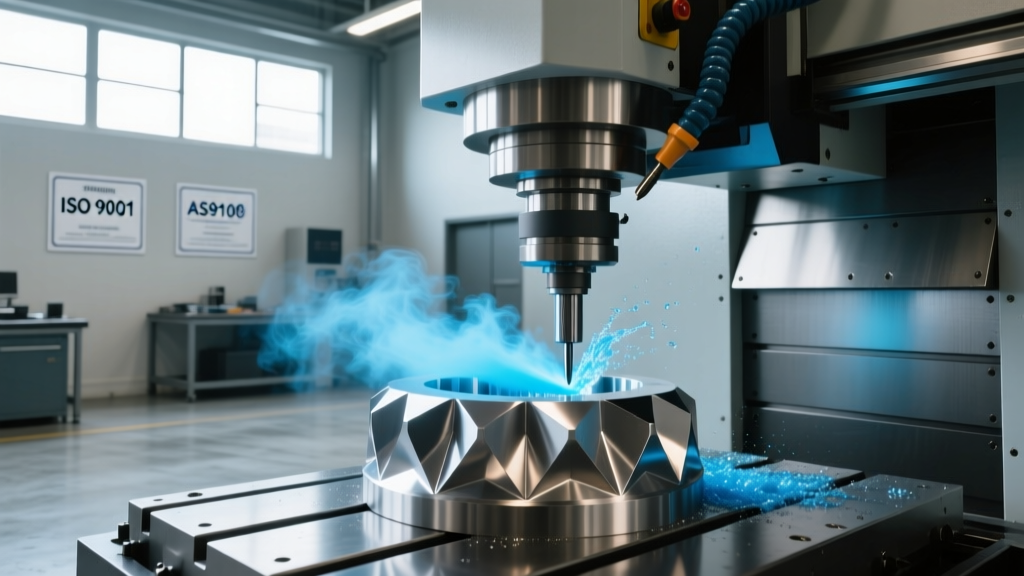
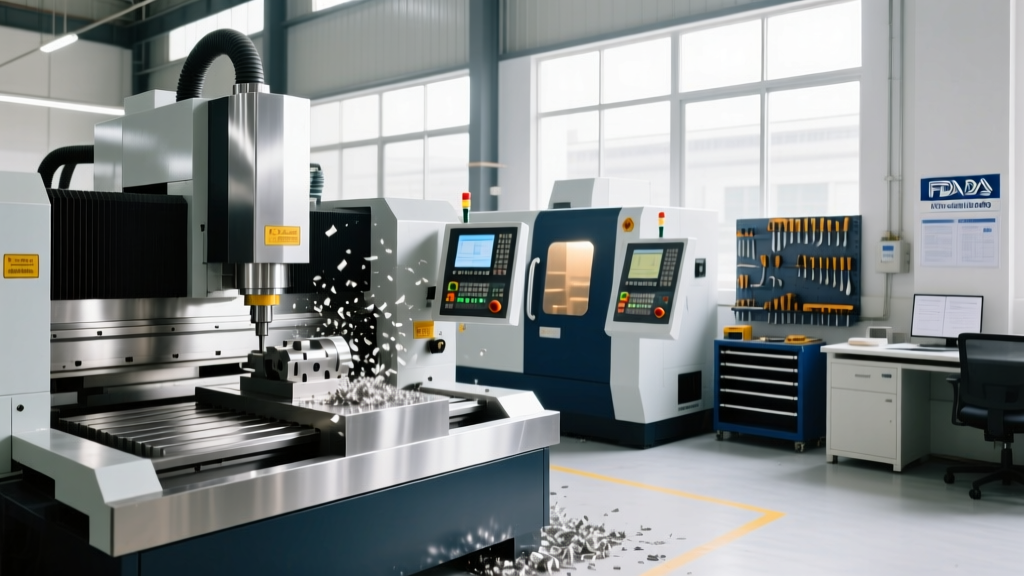
The foundational requirement for any medical device contract manufacturer is ISO 13485:2016. Unlike ISO 9001, which focuses on general continuous improvement, ISO 13485 mandates rigorous risk management (aligned with ISO 14971), strict design transfer protocols, and absolute traceability. Furthermore, if the final device will be sold in the United States, the facility must comply with the FDA Quality System Regulation (21 CFR Part 820).
⚠️ Compliance Warning: The 'Certificate Broker' TrapMany offshore brokers market 'ISO certified' machining in Vietnam without clarifying the standard. A shop holding ISO 9001:2015 is not legally cleared to manufacture Class II or Class III implantable medical devices without a secondary, validated medical QMS. Always request the actual ISO 13485 certificate and verify its authenticity via the issuing registrar's database (e.g., BSI, TÜV SÜD, SGS) before signing a master service agreement.
Process Validation Requirements
Under FDA 21 CFR Part 820.75, any CNC machining process where the output cannot be fully verified by subsequent inspection and testing must be validated. For medical parts, this includes:
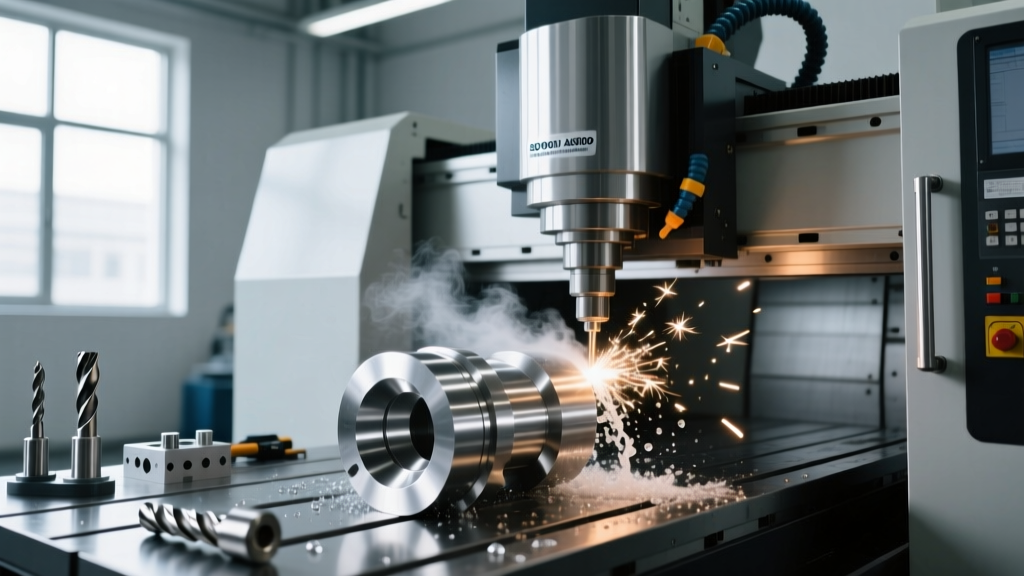
- Cutting Fluid Management: Verification that water-soluble coolants do not leave cytotoxic residues. Shops must document fluid concentration, pH levels, and bioburden testing schedules.
- Deburring and Edge Breaking: Micro-burrs on orthopedic implants can cause severe tissue irritation. Validation must prove that automated or manual deburring consistently achieves edge radii specified in the CAD model (typically 0.1mm to 0.3mm).
- Cleaning Protocols: Ultrasonic cleaning parameters (frequency, temperature, solvent type, and time) must be documented and validated to remove all machining oils and particulates prior to cleanroom packaging.
Material Traceability: From Mill to Implant
Medical devices demand specific alloy grades engineered for biocompatibility and corrosion resistance. Standard commercial-grade titanium or stainless steel will fail USP Class VI biocompatibility testing. When sourcing affordable CNC machining in Vietnam, buyers must enforce strict material procurement protocols, requiring Mill Test Reports (MTRs) for every raw billet.
| Material | Medical Standard | Primary Application | Required Verification |
|---|---|---|---|
| Titanium Ti-6Al-4V ELI | ASTM F136 | Orthopedic implants, spinal cages | MTR, ELI certification (low oxygen) |
| Stainless Steel 316L | ASTM F138 | Surgical instruments, bone screws | MTR, Passivation validation (ASTM A967) |
| Cobalt Chrome (CoCr) | ASTM F75 | Dental frameworks, joint bearings | Spectrographic analysis, grain structure |
| PEEK (Medical Grade) | ASTM F2026 | Trauma fixation, radiolucent parts | Resin lot traceability, moisture content |
Information Gain: A common failure mode when offshoring to Southeast Asia is the substitution of standard Ti-6Al-4V (Grade 5) for the ELI (Extra Low Interstitial) variant. Standard Grade 5 has higher oxygen content, which increases strength but drastically reduces fracture toughness and fatigue life—fatal flaws for load-bearing implants. Buyers must mandate that the Vietnamese shop performs Positive Material Identification (PMI) using X-ray fluorescence (XRF) upon raw material receipt.
Surface Finish and Cleanroom Constraints
The surface topography of a CNC-machined medical part directly dictates its biological response. For implantable devices, a rough surface can harbor bacteria and promote biofilm formation, leading to catastrophic post-operative infections.
Surface Roughness (Ra) Specifications
- Bone-Interfacing Implants: Often require a specific roughness (e.g., Ra 1.5 - 3.0 µm) achieved via specialized blasting or EDM texturing to promote osseointegration.
- Soft-Tissue and Blood-Contacting Devices: Require ultra-smooth finishes (Ra < 0.2 µm) to prevent thrombosis and bacterial adhesion. Achieving this on a CNC mill requires diamond turning, precise toolpath optimization, and secondary electropolishing.
Passivation and Post-Processing
For 316L stainless steel instruments, CNC machining embeds free iron into the surface layer from the cutting tools. If not removed, this iron will rust inside the human body or during autoclave sterilization. Vietnamese shops must perform passivation strictly according to ASTM A967 (Nitric or Citric acid treatments) and verify the passivation layer using the Copper Sulfate test (ASTM B912) or electrochemical testing.
Metrology and Inspection Validation
Medical components, particularly those used in robotic surgery arms or minimally invasive endoscopic tools, feature micro-tolerances often held to ±0.005 mm. Standard calipers and micrometers are insufficient for First Article Inspection (FAI) and lot release.
When auditing an affordable CNC machining partner in Vietnam, verify their metrology lab is climate-controlled to 20°C ± 1°C and equipped with the following:
- Coordinate Measuring Machines (CMM): Look for recognized brands like Zeiss (e.g., Contura or O-INSPECT) or Hexagon, equipped with scanning probe heads for complex organic implant geometries.
- Optical Comparators and Vision Systems: Keyence or Mitutoyo quick-measure systems are essential for non-contact measurement of delicate, thin-walled surgical staples or clips.
- Surface Profilometers: Contact or white-light interferometry tools to validate Ra surface finish requirements, rather than relying on subjective visual comparison patches.
Vendor Audit Matrix: Evaluating a Vietnamese Machine Shop
Before awarding a production contract, conduct a comprehensive audit focusing on these specific compliance vectors. Use this matrix to score potential partners in manufacturing hubs like Ho Chi Minh City, Hanoi, or Da Nang.
| Audit Category | Compliance Requirement | Red Flag Indicators |
|---|---|---|
| Document Control | Version-controlled CAD/CAM files; ECO (Engineering Change Order) tracking. | Operators using printed, uncontrolled drawings on the shop floor. |
| Tooling Management | Tracked tool life; automatic offsets for wear; dedicated medical tooling. | Mixing tools used for machining carbon steel with titanium medical lots. |
| Non-Conformance (CAPA) | Formal Corrective and Preventive Action system with root cause analysis. | Scrapped parts thrown in a bin without logging or investigation. |
| Packaging & Labeling | Cleanroom bagging; UDI (Unique Device Identification) label verification. | Parts packed in standard, non-lint-free cardboard boxes without desiccants. |
Cleaning and Sterilization Preparation
While the final sterilization (Ethylene Oxide per ISO 11135 or Gamma Radiation per ISO 11137) is usually handled by specialized third-party facilities, the CNC machine shop is responsible for the critical pre-sterilization cleaning and packaging. Parts must be cleaned in an ISO 14644-1 Class 7 or Class 8 cleanroom to remove all machining bioburden. If a Vietnamese shop lacks an in-house cleanroom, they must have a validated, enclosed transfer protocol to move parts from the CNC floor to a partnered cleanroom facility without exposing them to ambient humidity and particulate contamination.
Sourcing affordable CNC machining in Vietnam for medical devices is highly viable and offers significant margin advantages, provided the buyer acts as the regulatory gatekeeper. By enforcing strict ISO 13485 adherence, mandating ELI-grade material traceability, and validating micro-metrology capabilities, OEMs can secure world-class medical components without compromising patient safety or regulatory standing.