Sourcing Tight Tolerance CNC Machining Services for Scale
Learn how to evaluate equipment, metrology, and pricing when sourcing tight tolerance CNC machining services for high-volume production.
Transitioning a precision component from prototyping to high-volume production (10,000 to 100,000+ units) exposes the severe limitations of standard machine shops. When sourcing tight tolerance CNC machining services—defined in modern aerospace and medical manufacturing as holding ±0.0002" (5µm) or tighter across complex geometries—buyers must look beyond basic ISO 9001 certifications. Evaluating a potential manufacturing partner requires a rigorous audit of their machine tool rigidity, thermal management protocols, and automated metrology infrastructure.
2026 Tolerance Threshold Definitions
- Standard Machining: ±0.005" to ±0.010" (Typical commercial parts)
- Precision Machining: ±0.001" to ±0.0005" (Hydraulics, automotive fuel systems)
- Ultra-Precision / Tight Tolerance: ±0.0002" to ±0.00005" (Medical implants, optical housings, aerospace actuators)
Auditing the Machine Tool Arsenal for Volume
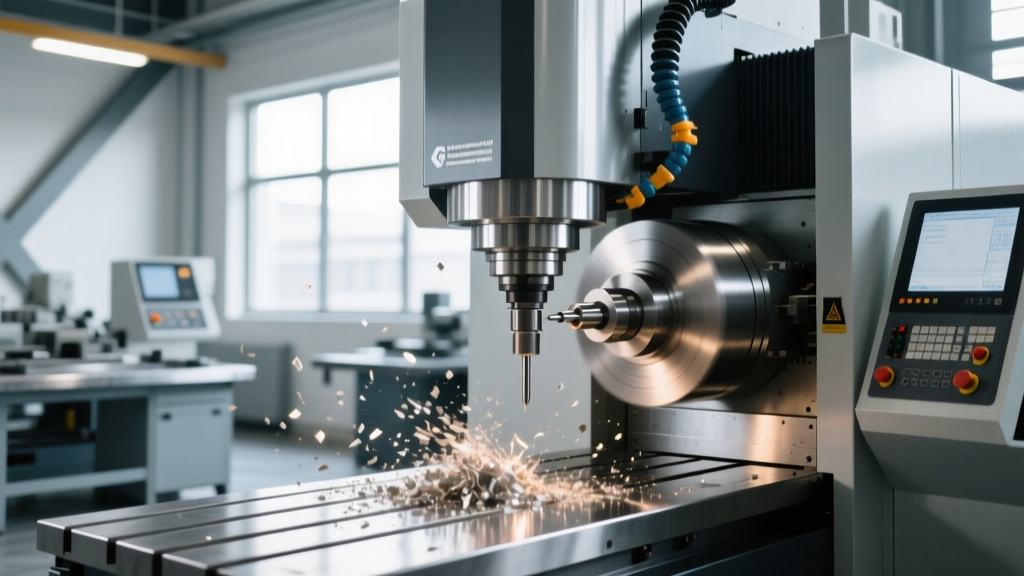
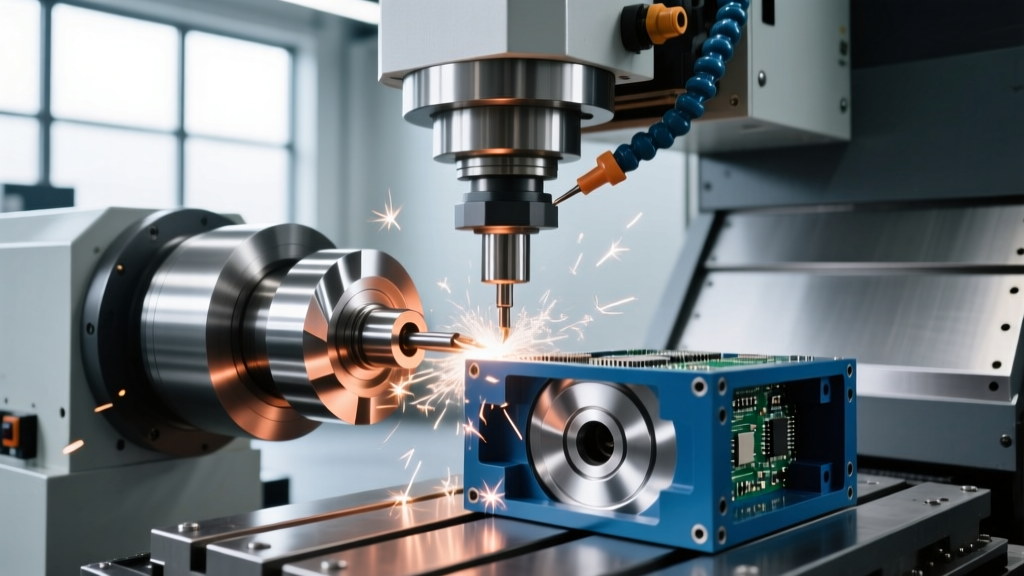
High-volume production of tight-tolerance parts fails when secondary operations are required. Every time a part is moved from a lathe to a mill, you introduce stacking errors and lose concentricity. For rotational parts requiring complex milled features, the shop must utilize multi-axis mill-turn centers. Machines like the DMG MORI NTX series or Mazak INTEGREX platforms allow complete part-off in a single setup, maintaining geometric dimensioning and tolerancing (GD&T) integrity.
When evaluating a shop's equipment list, request the spindle thermal displacement specifications. In high-volume runs lasting 72+ hours, standard spindles experience thermal growth that shifts the Z-axis by 0.001" or more. Top-tier precision shops invest in machines with integrated spindle cooling circuits and thermal displacement compensation algorithms that keep runout under 2µm regardless of ambient shop temperature or continuous RPM loads.
High-Pressure Coolant and Chip Evacuation
Tight tolerances are routinely destroyed by recutting chips. For high-volume runs of materials like Inconel 718 or 17-4 PH stainless steel, the machine shop must utilize high-pressure coolant systems operating at 1,000 PSI (70 bar) or higher. This pressure fractures chips at the shear zone and clears the cutting envelope, preventing micro-welding and surface finish degradation that forces parts out of the ±0.0002" tolerance band.
Automated Metrology: Eliminating the CMM Bottleneck
The greatest bottleneck in high-volume tight tolerance CNC machining services is inspection. A standard Coordinate Measuring Machine (CMM) might take 15 minutes to fully inspect a single complex part. If a shop is producing 500 parts a day, a CMM cannot keep pace, leading to batch-inspection delays and the risk of scrapping hundreds of parts before a drift is detected.
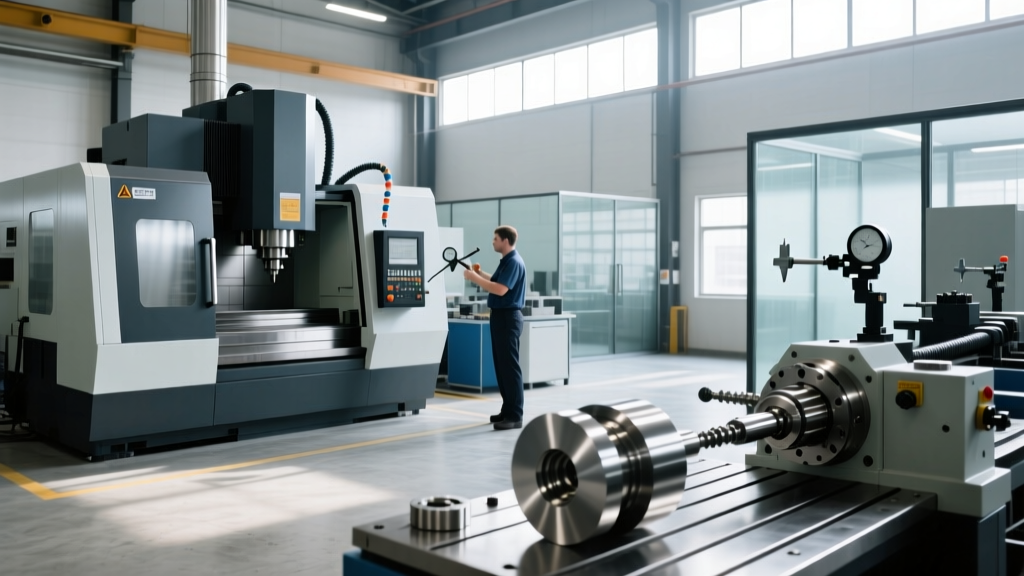
Instead, look for shops that deploy programmable comparative gauging systems directly on the shop floor. The Renishaw Equator 300, for example, allows operators to inspect parts in seconds with high repeatability. Because these systems use a master part for comparison, they bypass the need for temperature-controlled metrology labs, enabling 100% in-line inspection or aggressive 1-in-10 sampling rates without halting production.
Capability Matrix: Standard Job Shop vs. High-Volume Precision Partner
| Evaluation Metric | Standard CNC Job Shop | High-Volume Precision Partner |
|---|---|---|
| Inspection Methodology | Manual calipers, micrometers, batch CMM | In-line automated gauging, laser scanning, 100% optical sorting |
| Environmental Control | Standard HVAC, open bay doors | Climate-controlled zones (68°F / 20°C ± 1°), positive air pressure |
| Tool Wear Management | Operator changes tools based on time/part count | Acoustic emission sensors, spindle load monitoring, automated tool breakage detection |
| GD&T Compliance | Basic interpretation of ASME Y14.5 | Certified GD&T professionals, advanced datum simulation fixtures |
Thermal Stability and Environmental Controls
At the ±0.0002" level, thermal expansion is the primary enemy of yield. Aluminum expands at roughly 13 µm/m·°C. A 10-inch aluminum part will grow by 0.0013" if the shop temperature fluctuates by just 10°F from morning to afternoon. Sourcing tight tolerance CNC machining services for scale requires verifying that the shop maintains a strict 68°F (20°C) ± 1° environment in both the machining and inspection areas.
Furthermore, the cutting fluid temperature must be actively chilled. High-volume machining generates massive amounts of heat into the coolant sump. Precision shops utilize inline coolant chillers that maintain the cutting fluid at exactly 68°F, preventing the workpiece from expanding during the cut and shrinking out of tolerance once it cools on the inspection table.
Cost Realities: Pricing High-Volume Precision
Buyers must adjust their financial models when moving to high-volume tight tolerance production. The per-part cost will eventually drop, but the upfront Non-Recurring Engineering (NRE) and fixture costs are substantial.
Expected NRE and Tooling Costs (2026 Estimates)
- Custom Soft-Jaw / Tombstone Fixturing: $4,500 – $12,000
- Automated Metrology Programming (Equator/CMM): $3,000 – $8,500 per part number
- Thermal Compensation & Process Validation Runs: $8,000 – $15,000
- Total Initial NRE Investment: $15,500 – $35,500+ before production begins
While the baseline per-part cost for tight tolerance work is typically 2.5x to 4x higher than standard machining, scaling past 10,000 units utilizing lights-out (unmanned) manufacturing with automated part catchers can reduce the marginal per-part cost by 40% to 60%.
Step-by-Step Vendor Vetting Framework
- Request the Machine Asset List: Filter out shops relying on manual lathes or 3-axis mills for complex tight-tolerance parts. Look for 5-axis and mill-turn centers with documented thermal compensation.
- Audit the Metrology Lab: Verify they possess ISO 17025 accredited calibration records for their CMMs and use automated comparative gauging for high-volume throughput.
- Review GD&T Expertise: Ensure their engineering team is certified in the ASME Y14.5 standard. Misinterpreting datum reference frames is a leading cause of batch rejection.
- Demand a Process Capability Study (Cpk): For high-volume contracts, require a minimum Cpk of 1.67 during the First Article Inspection (FAI) and initial production run, proving the process is statistically capable of holding the tolerance long-term.
Frequently Asked Questions
What is the maximum volume a tight tolerance CNC shop can handle without quality degradation?
With automated tool changers, high-pressure coolant, and in-line Renishaw Equator gauging, top-tier shops can run 24/7 lights-out manufacturing, producing 50,000 to 250,000+ parts annually per machine cell without statistical process drift, provided preventative maintenance schedules are strictly adhered to.
Does material selection impact high-volume tight tolerance pricing?
Significantly. Free-machining alloys like 303 stainless steel or 6061 aluminum allow for higher spindle speeds and longer tool life, reducing per-part costs. Difficult-to-machine alloys like Titanium Ti-6Al-4V or Hastelloy require slower feeds, frequent tool changes, and expensive carbide tooling, which can increase the per-part cost by 200% to 300% compared to aluminum.
How do shops handle post-machining stress relief for tight tolerances?
For high-volume precision parts, machining induces residual stress that causes warping days or weeks after production. Reputable shops integrate sub-contracted or in-house thermal stress relief (baking) or cryogenic treatment between the roughing and finishing CNC passes to ensure the final dimensions remain stable in the field.