Quick CNC Machining Costs: Budgeting Complex 5-Axis Parts
Learn how to budget for quick CNC machining of complex 5-axis geometries. Discover cost drivers, setup fees, and strategies to reduce multi-axis expenses.
The Economics of Quick CNC Machining for Multi-Axis Parts
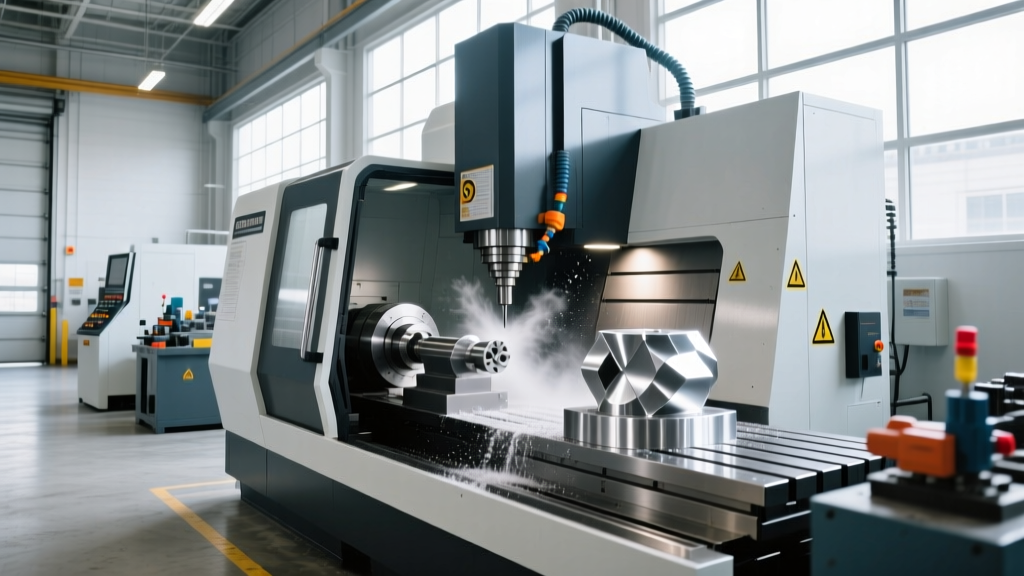
Procuring complex aerospace, medical, or automotive components on an accelerated timeline requires a precise understanding of multi-axis cost dynamics. When you request quick CNC machining for 5-axis or 4-axis parts, you are not merely paying for machine time; you are paying for the computational and mechanical agility to bypass multiple setups. In 2026, the baseline hourly rate for a fully loaded 5-axis machining center (such as a DMG MORI DMU 50 or Haas UMC-750SS) ranges from $140 to $195, compared to $85 to $110 for a standard 3-axis vertical machining center (VMC).
However, the machine rate is only a fraction of the total invoice. The true financial friction in rapid multi-axis manufacturing lies in Non-Recurring Engineering (NRE) costs. Because quick turnaround jobs do not allow for batch amortization, the buyer absorbs 100% of the CAM programming, collision simulation, and custom workholding expenses upfront.
The 5-Axis Quick-Turn Premium: For a batch of 10 complex impellers, a 5-axis single-setup approach may cost 40% more per part than a 3-axis multi-setup approach. However, the 5-axis method reduces lead time from 14 days to 4 days and eliminates cumulative tolerance stacking errors inherent in flipping parts.Deconstructing the Multi-Axis Cost Matrix
To budget accurately, procurement teams must isolate the variables that drive multi-axis pricing. Below is a comparative cost breakdown for a complex 7075-T6 aluminum aerospace bracket featuring compound curves and deep, undercut cavities.
| Cost Category | 3-Axis (3 Setups) | 5-Axis (Single Setup) |
|---|---|---|
| CAM Programming & Verification | $450 (Mastercam 3D) | $1,400 (HyperMill 5-Axis + Vericut) |
| Workholding & Fixturing | $300 (Custom soft jaws x3) | $650 (Schunk zero-point + vacuum) |
| Setup & Calibration Time | $480 (4 hours @ $120/hr) | $180 (1 hour @ $180/hr) |
| Spindle Time (Machining) | $360 (3 hrs @ $120/hr) | $270 (1.5 hrs @ $180/hr) |
| CMM Inspection (Zeiss Contura) | $250 (Requires re-fixturing) | $120 (Single datum reference) |
| Total Per-Part Cost (Qty 5) | $368 / part | $524 / part |
| Estimated Lead Time | 9-12 Days | 3-5 Days |
The Hidden Cost of 5-Axis CAM and Collision Avoidance
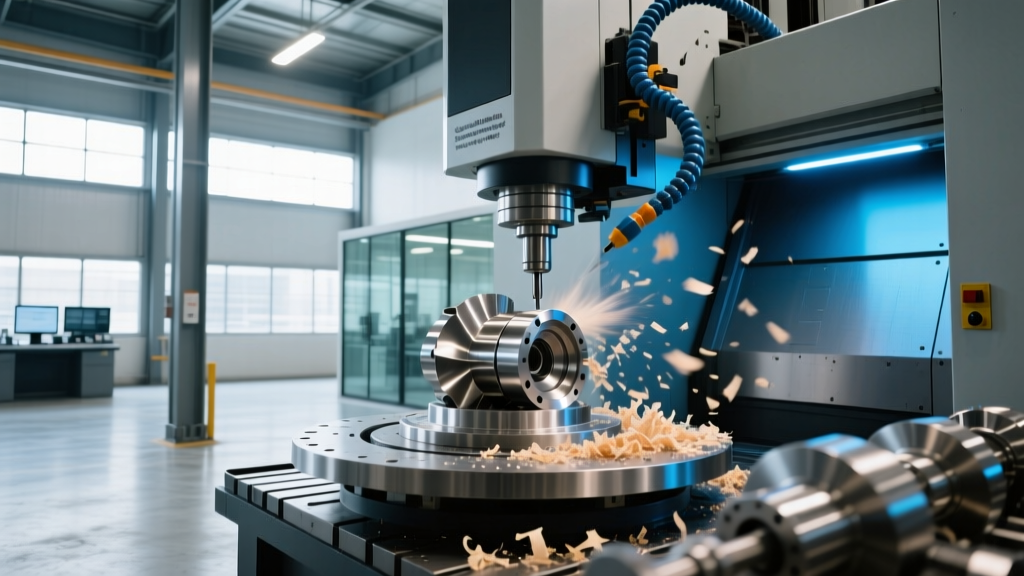
The most significant budget overrun in quick CNC machining for complex geometries occurs in the digital twin phase. Generating toolpaths for a 3-axis VMC is largely automated. In contrast, programming simultaneous 5-axis toolpaths requires managing the tool shank, holder, and spindle nose clearances against the part geometry and the trunnion table simultaneously.
According to manufacturing productivity data tracked by organizations like NIST's Advanced Manufacturing program, the integration of advanced CAM simulation reduces physical scrap rates but significantly increases front-end engineering hours. Shops utilizing premium software suites charge $120 to $175 per hour for CAM engineering. Furthermore, running the G-code through a kinematic simulation software like Vericut adds an additional $150 to $300 per part program to ensure the machine does not crash into the workpiece during rapid traverse moves.
Tooling Overhead for Deep Cavities and Undercuts
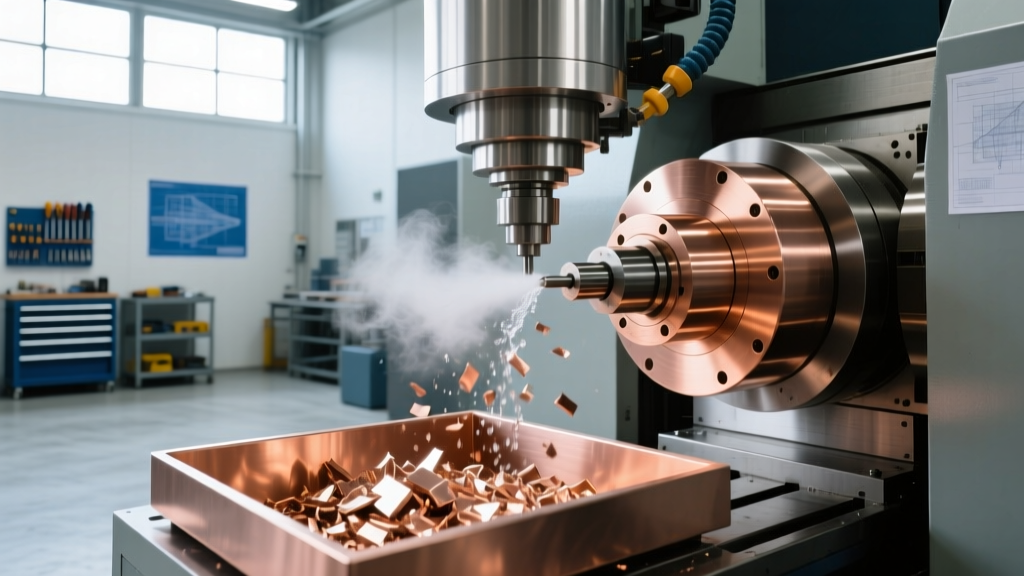
Complex geometries often require reaching into deep pockets or machining undercuts. Standard 3-flute carbide endmills cost $45 to $80. However, accessing a complex 5-axis internal cavity might require a custom long-reach, reduced-shank endmill from a supplier like Sandvik Coromant or Harvey Tool. These specialized tools easily cost $250 to $400 each and wear out 30% faster due to the extended stick-out and resulting harmonic vibration (chatter). When budgeting for quick turnarounds, always request a tooling breakdown from your machine shop; if your CAD model requires three different custom long-reach tools, your NRE costs will spike by over $1,000 before the first chip is cut.
Design for Multi-Axis Machining (DFM): Budget Defense Strategies
To protect your budget when ordering quick CNC machined parts, you must design specifically for the kinematics of 5-axis machines. Applying standard 3-axis DFM rules to a 5-axis part leaves money on the table.
- Standardize Corner Radii: Instead of specifying sharp internal corners (which require slow, small-diameter endmills and multiple step-downs), design internal radii that match standard tooling. A 0.250-inch or 0.375-inch radius allows the use of standard 1/2-inch or 3/4-inch endmills, drastically reducing spindle time and tool wear.
- Optimize Depth-to-Diameter Ratios: Keep cavity depths within a 4:1 ratio of the tool diameter. If a pocket is 2 inches deep, ensure the geometry allows for a 1/2-inch endmill. Ratios exceeding 6:1 require specialized anti-vibration toolholders, which carry premium rental or purchase costs and mandate slower feed rates.
- Provide Adequate Workholding Land: 5-axis machines require the part to be elevated above the trunnion table so the spindle can access all five sides without colliding with the table. Design a sacrificial lip or tab at the base of the part specifically for a vise or zero-point clamping system. This eliminates the need for expensive, custom-machined soft jaws or complex epoxy fixturing.
- Tolerance Realism: Holding ±0.0002 inches across a 12-inch 5-axis part requires the machine to operate in a temperature-controlled metrology room and requires the operator to map the machine's volumetric error. Restrict ultra-tight tolerances only to critical mating surfaces (like bearing bores), leaving the rest of the complex geometry at a standard ±0.005 inches.
Strategic Sourcing: When is the 5-Axis Premium Justified?
Not every complex part requires simultaneous 5-axis machining. Machine shops frequently utilize 3+2 (positional 5-axis) machining, where the trunnion table locks into a specific angle, and the machine performs standard 3-axis milling. 3+2 machining is significantly cheaper to program and does not require expensive kinematic collision simulation, yet it still reduces the number of setups required.
“The decision between paying for simultaneous 5-axis quick CNC machining versus 3+2 positional machining hinges on surface finish requirements. If the complex geometry features aerodynamic profiles or fluid-flow surfaces that cannot have witness lines from tool repositioning, simultaneous 5-axis is mandatory. If the geometry is merely complex for structural light-weighting, 3+2 will save you 30% on the NRE budget.”
The Assembly Alternative
For bridge production (quantities of 20 to 50 parts), the fastest and most cost-effective route is sometimes to split the complex CAD model into two or three simpler 3-axis components. Utilizing advanced joining techniques—such as vacuum brazing, friction stir welding, or high-strength aerospace epoxies (like 3M Scotch-Weld DP460)—can result in a final assembly that is cheaper and faster to produce than forcing a monolithic 5-axis quick turnaround. Always consult with your contract manufacturer's DFM engineering team to evaluate monolithic versus assembled cost models before locking in a purchase order.
Actionable Procurement Checklist for Multi-Axis RFQs
- Attach both the native STEP file and a fully dimensioned 2D PDF drawing highlighting critical tolerances.
- Explicitly state if cosmetic surface finish (e.g., 32 Ra) is required on complex contoured faces, as this dictates simultaneous vs. positional 5-axis routing.
- Request a line-item breakdown separating NRE (Programming/Fixturing) from per-part piece price to understand cost scaling for future volumes.
- Ask the shop to identify if your design requires custom long-reach tooling, and if so, request a modified CAD model with optimized depth-to-diameter ratios.