Multi-Axis CNC Machining Portland Oregon: Cost & Budget Guide
Analyze 2026 costs for multi-axis CNC machining in Portland, Oregon. Breakdowns for 5-axis milling, mill-turn setup, CAM programming, and CMM inspection.
The True Cost of Complex Geometries: Portland Market Overview
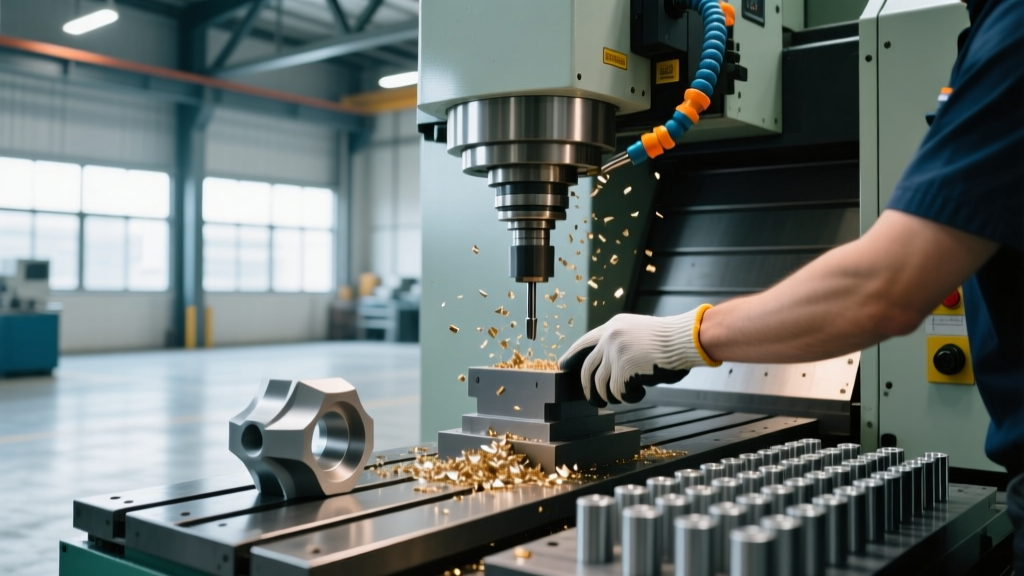
Sourcing precision components with complex geometries requires navigating the specific economic landscape of the Pacific Northwest. When evaluating cnc machining portland oregon providers for 5-axis and mill-turn contracts, procurement teams often encounter significant variance in quoting. Unlike standard 3-axis prismatic parts, multi-axis components—such as aerospace turbine blisks, medical orthopedic implants, and semiconductor vacuum chambers—demand simultaneous toolpath generation, advanced workholding, and rigorous metrology.
In the Portland metropolitan area, the transition to advanced manufacturing has been accelerated by the local aerospace and tech-hardware sectors. According to industry benchmarking data tracked by Modern Machine Shop, shops investing in full 5-axis simultaneous capabilities operate with higher overhead but deliver vastly superior cycle times on complex contours. Understanding where your budget is actually going is the first step in optimizing your production spend.
💡 Budgeting Insight: Never evaluate a multi-axis quote solely on the hourly machine rate. A shop charging $165/hour on a Mazak VARIAXIS i-800 NEO may finish a complex aerospace bracket 40% faster than a shop charging $110/hour on an older, retrofitted 3-axis machine with a manual indexer, resulting in a lower total part cost.Hourly Rates vs. Fixed Bidding: Navigating PNW Shop Pricing
Portland machine shops typically utilize a hybrid pricing model for multi-axis work: time-and-materials for prototyping and low-volume runs, and fixed-price bidding for production volumes exceeding 50 pieces. Below is the current 2026 rate matrix for multi-axis equipment in the Oregon market.
| Machine Configuration | Typical Hourly Rate | Avg. Setup Time | Ideal Application |
|---|---|---|---|
| 3-Axis VMC (e.g., Haas VF-4SS) | $85 - $115 / hr | 1.5 - 3 hours | Prismatic brackets, enclosures |
| 5-Axis Simultaneous (e.g., Haas UMC-750SS) | $135 - $175 / hr | 3 - 6 hours | Impellers, aerospace structural nodes |
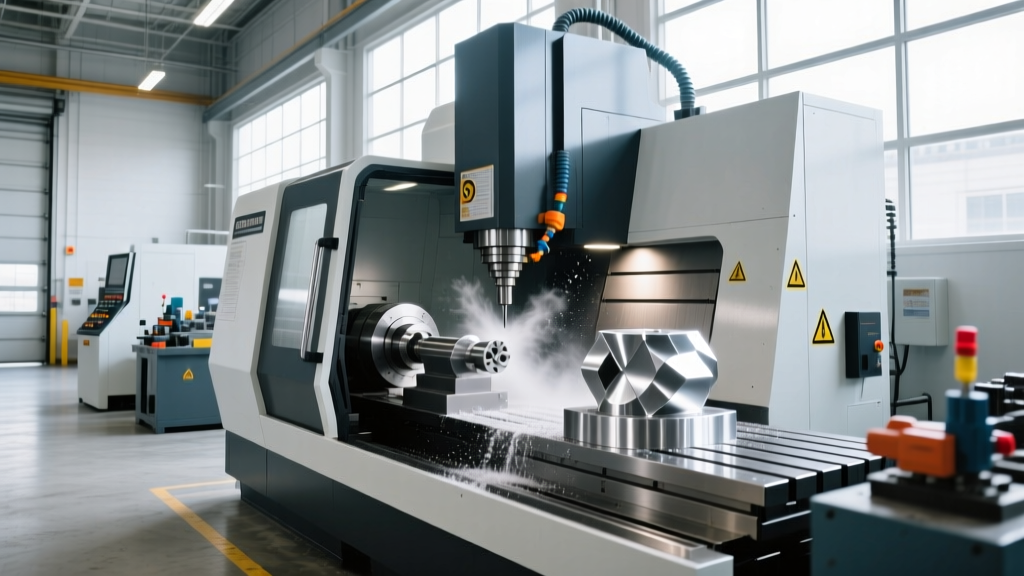
| 9-Axis Mill-Turn (e.g., DMG MORI NTX 2000) | $180 - $240 / hr | 6 - 12 hours | Complex medical bone screws, fluid valves |
CAM Programming and Simulation Overheads
The most frequently overlooked cost in multi-axis budgeting is the non-recurring engineering (NRE) required for CAM programming. Generating collision-free, simultaneous 5-axis toolpaths for deep-cavity geometries requires premium software suites like hyperMILL or Mastercam 5-Axis. In the Portland market, senior 5-axis CAM programmers command between $110 and $145 per hour.
The Cost of VERICUT Simulation
When machining high-value aerospace forgings (e.g., a $4,000 Ti-6Al-4V billet), a spindle crash is financially catastrophic. Reputable Portland shops utilize VERICUT or similar machine simulation software to verify G-code before the first chip is cut. Expect simulation and verification to add $150 to $350 per unique part number to your initial NRE budget. While this increases upfront costs, it mitigates the risk of scrapped material and damaged $80,000 spindle assemblies.
'Shops that do not factor dedicated machine simulation into their 5-axis quotes are either absorbing the risk into their margin (making them less competitive) or skipping verification entirely, which exposes the buyer to severe lead-time delays if a crash occurs during the first article run.' — Pacific Northwest Manufacturing Consortium Lead Engineer
Tooling Degradation and Material Yield in Exotic Alloys
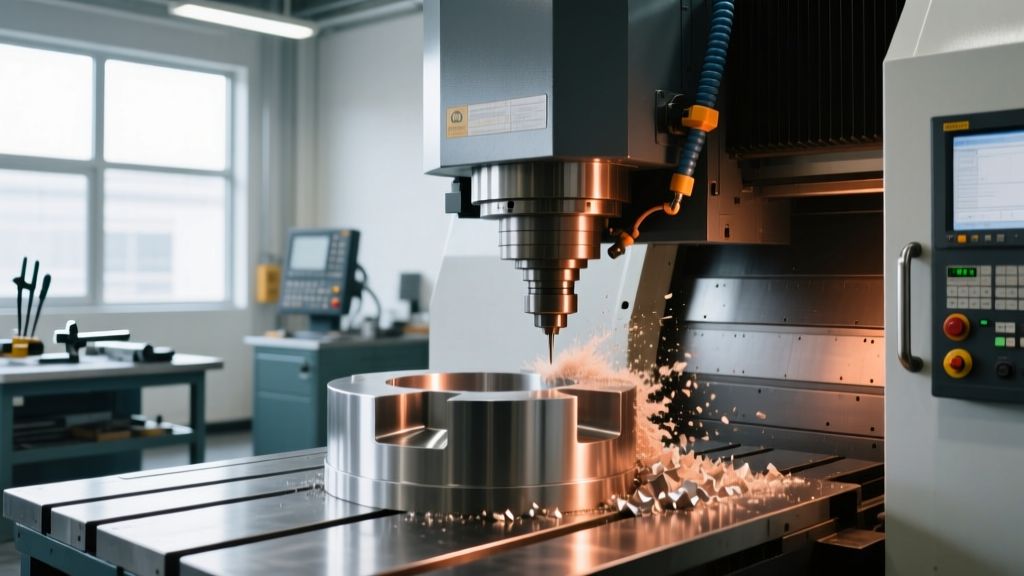
Complex geometries often dictate the use of long-reach tooling and small-diameter endmills to access deep pockets and tight internal radii. When machining work-hardening materials like Inconel 718 or 17-4 PH Stainless Steel, tool wear accelerates exponentially.
- Trochoidal Milling Requirements: To maintain constant tool engagement and prevent thermal shock in titanium, shops must employ dynamic milling strategies. This requires specialized variable-helix endmills (e.g., Kennametal HARVI or Harvey Tool specialty profiles), which cost $80 to $150 each.
- Tool Life Expectancy: In 5-axis contouring of Inconel, a $120 carbide ball-nose endmill may only yield 45 minutes of effective cutting life before requiring replacement to maintain a 32 Ra surface finish.
- Material Yield Loss: Complex 5-axis parts often start as oversized forgings or billets. For a 10 lb finished aerospace node, the starting billet may weigh 45 lbs. At current aerospace-grade titanium pricing, the scrapped swarf represents a significant sunk material cost that must be factored into the piece-price.
Metrology: CMM Inspection and GD&T Tolerancing
Multi-axis machining is only as valuable as the ability to verify the resulting geometry. Complex contoured surfaces and compound angles cannot be inspected with standard hand tools. The National Institute of Standards and Technology (NIST) emphasizes that advanced manufacturing requires commensurate advancements in metrology to ensure part interchangeability and safety.
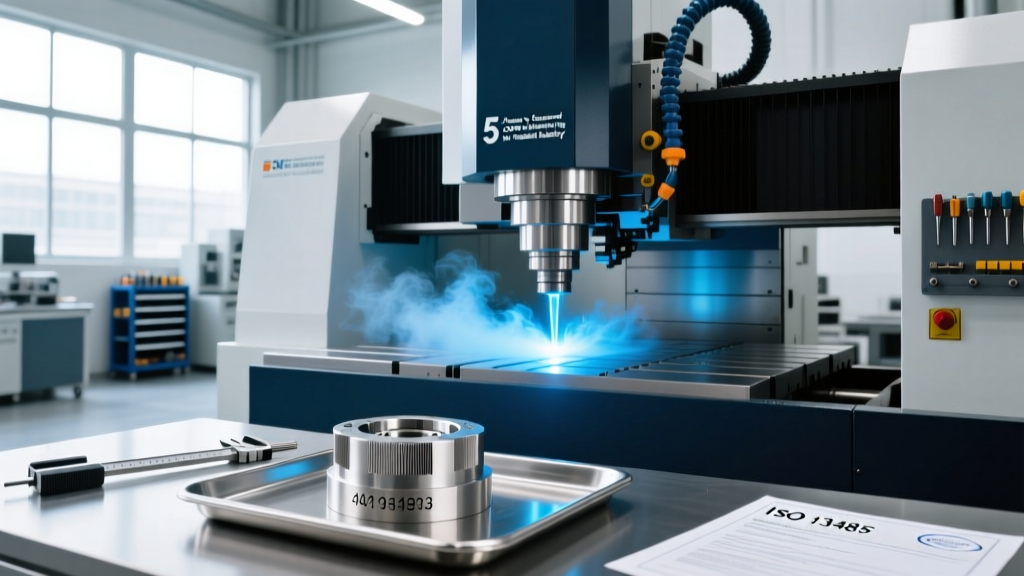
Portland shops equipped with 5-axis Continuous Wrist CMMs (such as the Zeiss CONTURA G3 RDS or Renishaw REVO systems) charge a premium for inspection, but they are mandatory for AS9102 First Article Inspection Reports (FAIR).
⚠️ Warning: The 'Low-Cost' Inspection TrapIf a vendor quotes a complex 5-axis impeller but does not include line-item costs for CMM programming and FAIR generation, they are likely relying on surface plates and height gauges. This guarantees you will receive parts with out-of-tolerance compound profiles that will fail during assembly.
Inspection Cost Breakdown
- CMM Programming: $120 - $150 / hr (Creating the digital twin inspection routine using Calypso or PC-DMIS).
- Fixture Design: Custom 3D-printed or machined holding fixtures to allow the CMM probe to access undercut features without collision ($300 - $800 flat fee).
- Run Time: $90 - $110 / hr for the physical execution of the inspection and FAIR documentation.
Decision Matrix: Outsourcing vs. In-House Multi-Axis
For OEMs based in Oregon and Washington, deciding whether to bring multi-axis capabilities in-house or rely on local contract machinists requires a strict financial analysis. The Society of Manufacturing Engineers (SME) notes that the utilization rate of 5-axis machines is the primary determinant of ROI.
| Factor | Outsource to Portland Shop | In-House Capital Investment |
|---|---|---|
| Capital Expenditure | $0 (Pay per part) | $450,000 - $1.2M (Machine + Tooling) |
| Software & Training | Absorbed by vendor NRE | $25,000/yr (CAM) + $15,000 (Training) |
| Scalability | High (Vendor shifts to other machines) | Low (Bottlenecked by single spindle) |
| IP & Lead Time Control | Moderate (Subject to vendor queue) | Absolute (Immediate priority shifts) |
Strategic RFQ Checklist for Multi-Axis Buyers
To ensure accurate budgeting and avoid change-order surprises when requesting quotes for complex geometries, procurement engineers must provide the following data package to Portland machine shops:
- Native CAD and STEP Files: Ensure surface continuity. Shops will reject quotes if imported IGES files show broken surfaces that require manual CAM patching.
- Explicit GD&T Callouts: Do not apply blanket profile tolerances to non-critical surfaces. Restrict tight profile tolerances (e.g., 0.0005 in.) strictly to mating aerodynamic or sealing surfaces to reduce CMM inspection time.
- Material Certification Requirements: Specify if DFARS compliance or specific heat-lot traceability is required, as sourcing certified aerospace billets in the PNW carries a 15-20% premium over commercial-grade stock.
- Volume Breakpoints: Request pricing at 1-5, 10-25, and 50-100 quantities. Multi-axis setup costs are heavily amortized; the piece price at 50 units should be 30-45% lower than the prototype run.
By aligning your budget expectations with the technical realities of simultaneous 5-axis and mill-turn machining, you can effectively leverage the advanced manufacturing ecosystem in the Pacific Northwest without compromising on precision or financial predictability.