Optimizing CNC Machining Lead Time for Medical Device Compliance
Discover how FDA and ISO 13485 compliance impacts CNC machining lead time for medical devices, with strategies to accelerate production safely.
The Compliance-Time Paradox in Medical CNC Machining
Manufacturing components for medical devices—ranging from orthopedic hip stems to surgical robotic end-effectors—operates under a fundamentally different paradigm than standard commercial machining. While a conventional job shop might quote a cnc machining lead time of 10 to 14 days for a batch of aluminum brackets, producing FDA-regulated, implant-grade titanium components routinely extends that timeline to 6 through 10 weeks. This discrepancy is not a result of slower spindle speeds or inefficient toolpaths; it is the direct consequence of rigorous safety standards, material traceability mandates, and process validation requirements.
⚠️ Compliance Warning: Attempting to compress medical device lead times by bypassing First Article Inspection (FAI) or skipping lot-specific material certifications violates the FDA Quality System Regulation (21 CFR Part 820). The resulting regulatory holds can delay market entry by months, far exceeding the time saved in production.Core Regulatory Frameworks Dictating Production Timelines
Medical machine shops must maintain certification to the ISO 13485:2016 standard, which mandates a comprehensive Quality Management System (QMS) specifically for medical devices. Unlike ISO 9001, which focuses on general customer satisfaction and continuous improvement, ISO 13485 emphasizes risk management, regulatory compliance, and absolute traceability. Every chip removed from a workpiece must be documented against a specific traveler routing sheet.
Furthermore, the FDA’s Design Controls require that the manufacturing process itself be validated if the results cannot be fully verified by subsequent inspection and testing. For CNC machined implants, where internal porosity or sub-surface micro-cracks cannot be seen without destructive testing, process validation is mandatory. This requirement triggers the IQ/OQ/PQ (Installation, Operational, and Performance Qualification) protocol, which inherently adds 2 to 4 weeks to the initial cnc machining lead time for any new part number.
Material Traceability and Procurement Bottlenecks
The most significant variable in medical machining schedules is material procurement. Standard commercial alloys are readily available from local metal service centers. Medical-grade alloys, however, require vacuum melting, specific thermomechanical processing, and exhaustive lot testing to meet ASTM Committee F04 specifications for surgical materials.
| Material Specification | Standard Commercial Equivalent | Medical Certification Requirements | Typical Procurement Lead Time Adder |
|---|---|---|---|
| Ti-6Al-4V ELI (ASTM F136) | Grade 5 Titanium (ASTM B265) | Reduced interstitial elements, ultrasonic inspection, biocompatibility lot testing | +2 to 3 weeks |
| 316L VM Stainless (ASTM F138) | 316L Stainless Steel | Vacuum melted, restricted delta ferrite, strict inclusion limits | +1 to 2 weeks |
| Implantable PEEK (ASTM F2026) | Industrial PEEK | Lot-specific biocompatibility (USP Class VI), heavy metal screening | +3 to 5 weeks |
| CoCrMo Alloy (ASTM F1537) | Stellite / Commercial CoCr | Controlled carbide distribution, MRI compatibility verification | +2 to 4 weeks |
To mitigate these delays, top-tier medical contract manufacturers maintain a bonded, climate-controlled raw material inventory of pre-certified medical alloys, effectively absorbing the procurement lead time into their operational overhead.
First Article Inspection (FAI) and Metrology Constraints
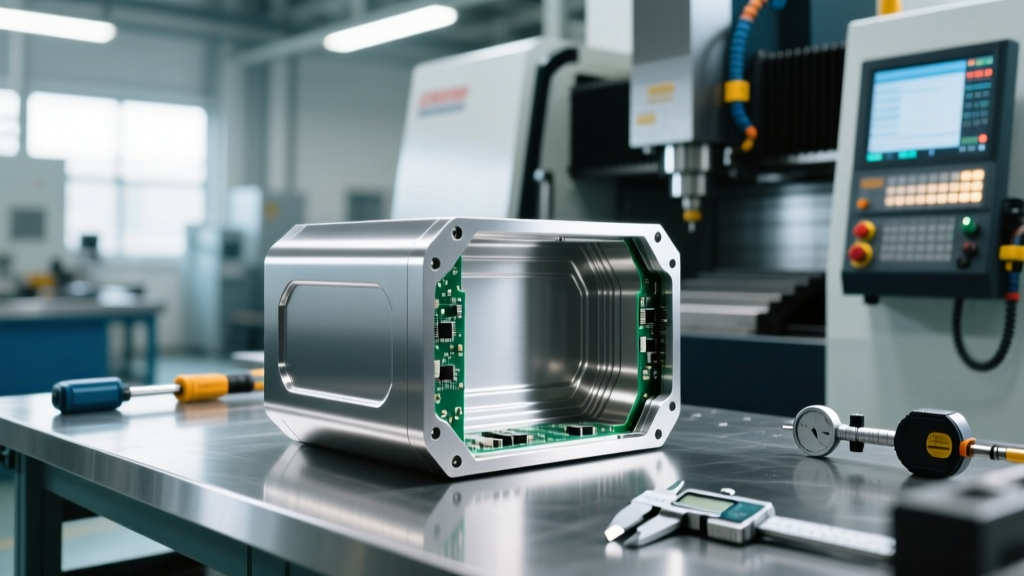
When a new orthopedic component enters production, the first batch undergoes a rigorous First Article Inspection (FAI) per AS9102 or equivalent medical QMS protocols. Medical parts often feature complex, organic geometries. 5-axis simultaneous milling is frequently employed to machine the compound curvatures of femoral knee components. Verifying these freeform surfaces requires CMM scanning with SP25 continuous contact probes, which adds significant inspection time.
Metrology Bottlenecks
- Dimensional Tolerances: Bearing surfaces on joint replacements routinely demand tolerances of ±0.0002 inches (5 microns). Verifying this requires multi-axis Coordinate Measuring Machines (CMM) with scanning probe heads, which can take 4 to 8 hours per part.
- Surface Finish Verification: Implantable surfaces often require an Ra of 8 µin or better to prevent bacterial adhesion and fatigue crack initiation. Profilometer mapping adds significant inspection time.
- Non-Destructive Testing (NDT): Fluorescent Penetrant Inspection (FPI) or Digital Radiography (DR) is frequently required to ensure no micro-fissures were introduced during the CNC turning or milling of high-stress components.
"In medical CNC machining, the part isn't truly finished until the Device History Record (DHR) is closed. A machined component sitting on a pallet without its corresponding CMM data, material cert, and operator sign-off is essentially scrap from a regulatory standpoint."
— Director of Quality Assurance, Tier 1 Orthopedic Contract Manufacturer
Cleanroom Machining and Post-Processing Realities
Standard machine shops utilize flood coolants and compressed air blow-offs. Medical device manufacturing, particularly for Class II and Class III implantables, requires stringent contamination control. Parts must be machined using biocompatible, water-soluble coolants that leave no toxic residue. Following machining, components undergo multi-stage ultrasonic cleaning in heated deionized water, followed by passivation per ASTM A967. While nitric acid passivation has been the historical standard, many medical shops are transitioning to citric acid passivation (Citric 4 or Citric 5 formulations) to eliminate hazardous waste disposal delays and accelerate the post-machining workflow.
Finally, packaging must occur in an ISO Class 7 or Class 8 cleanroom. The parts are double-bagged in medical-grade polyethylene, heat-sealed, and labeled with lot-specific UDI (Unique Device Identification) barcodes. This post-processing and cleanroom workflow reliably adds 5 to 7 days to the overall cnc machining lead time.
Strategic Framework: Compressing Lead Times Safely
Procurement and engineering teams can optimize timelines without compromising compliance by implementing the following strategies:
Actionable Lead-Time Reduction Tactics
- Design for Regulatory Compliance (DFRC): Avoid specifying tighter tolerances than functionally necessary. A tolerance of ±0.005" on a non-bearing structural rib is vastly faster to machine and inspect than ±0.0005", reducing CMM time by 60%.
- Standardize Tooling and Fixturing: Utilize the machine shop's existing library of validated medical-grade soft jaws and mandrels. Designing custom fixtures triggers a new tooling validation cycle (OQ/PQ), adding weeks to the schedule.
- Pre-Agreed FAI Sampling: Negotiate the FAI sample size during the quoting phase. For low-risk Class I surgical instruments, a 3-piece FAI may be acceptable, whereas Class III spinal implants may require a 30-piece statistical validation run.
- Consolidate Post-Processing: Select a CNC partner with in-house passivation, electropolishing, and cleanroom packaging capabilities. Outsourcing these steps to third-party vendors introduces transit times and additional incoming quality inspections (IQC).
Frequently Asked Questions
Can a medical CNC machine shop expedite an order in 48 hours?
Only if the part is a previously validated design, the specific medical-grade material is in-stock and certified, and the shop has open capacity on a validated machine cell. For new part numbers requiring IQ/OQ/PQ and comprehensive FAI, a 48-hour turnaround is physically and legally impossible under FDA guidelines.
Does prototyping require the same lead time as production?
Prototype runs for design verification (often run under a controlled, non-commercial R&D protocol) can have a cnc machining lead time of 2 to 3 weeks. However, transitioning that exact same part into commercial, implantable production requires full QMS integration, adding 4 to 6 weeks for process validation and supply chain auditing.
How does UDI compliance affect machining schedules?
Unique Device Identification (UDI) requires direct part marking (DPM) via laser etching on many reusable surgical instruments and implants. Integrating laser marking into the CNC cell, verifying the mark's contrast and depth, and logging the serial number into the DHR adds approximately 2 to 4 minutes per part, which scales significantly across high-volume production runs.