Selecting Multi-Axis CNC Machining Services for Low Volume Production
Learn how to select multi-axis CNC machining services for low volume production of complex geometries. Compare 4-axis vs 5-axis costs and tolerances.
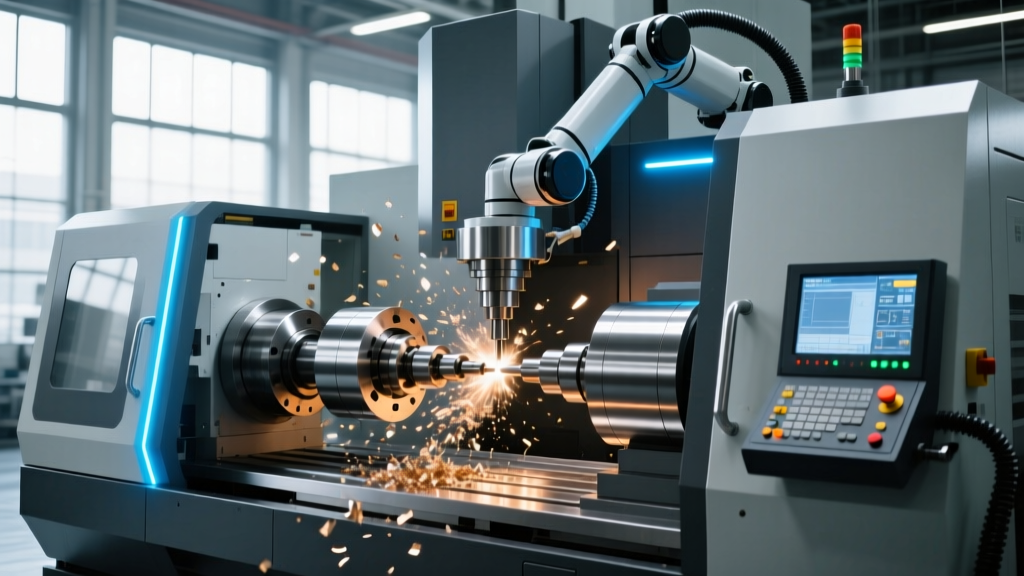
Producing 10 to 500 units of parts with complex, organic, or multi-planar geometries requires a strategic departure from standard 3-axis milling. When sourcing CNC machining services for low volume production, buyers often face a critical decision: absorb the higher hourly rates of multi-axis equipment or pay for the extended lead times and cumulative tolerance stack-up of multiple 3-axis setups. For components like aerospace impellers, medical orthopedic implants, and custom robotics housings, multi-axis machining is not a luxury—it is a geometric and economic necessity.
The Economics of Multi-Axis for Low-Volume Runs
The prevailing myth in procurement is that 5-axis machining is exclusively for high-volume, high-budget aerospace contracts. In reality, low-volume production (under 500 parts) is where multi-axis technology yields the highest return on investment regarding setup reduction.
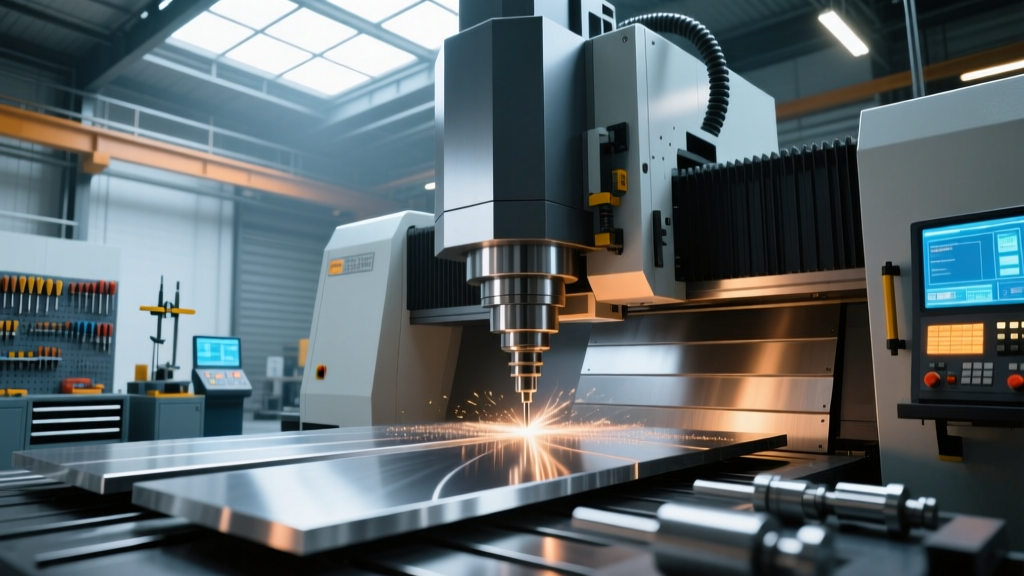
Consider a complex titanium bracket requiring features on five distinct planes. On a 3-axis vertical machining center (VMC), this part requires five separate setups. Each setup demands custom soft-jaw milling, edge-finding, and work coordinate system (WCS) alignment. At an average 3-axis shop rate of $95/hour, the 12 hours of fixturing and setup per operation quickly erode any hourly savings. Conversely, a 5-axis machine running at $185/hour can complete the part in a single setup using a standard dovetail fixture or vacuum chuck, reducing total lead time by up to 60% and eliminating the ±0.001" tolerance stack-up inherent in re-fixturing.
4-Axis vs. 5-Axis: A Technical Decision Matrix
Not all complex geometries require simultaneous 5-axis interpolation. Selecting the correct service tier prevents over-engineering your production costs. Use this matrix to align your part geometry with the appropriate machine configuration.
| Feature / Metric | 4-Axis Indexing | 5-Axis (3+2 Positional) | 5-Axis Simultaneous |
|---|---|---|---|
| Ideal Geometry | Cylindrical parts, helical gears, camshafts | Angled bores, multi-face prismatic housings | Impellers, turbine blades, organic medical implants |
| Setup Complexity | Single setup (rotary table) | Single setup (locked rotary/tilt) | Single setup (continuous toolpath) |
| Average Tolerance | ±0.0005" (True position to centerline) | ±0.0003" (Feature to feature) | ±0.0002" (Complex surface profiles) |
| Typical Hourly Rate | $120 - $140 | $160 - $190 | $190 - $250+ |
| CAM Programming Time | Low (2.5D toolpaths) | Medium (3D toolpaths, tilted planes) | High (Collision avoidance, surface finish optimization) |
Evaluating Machine Shop Equipment Fleets
When vetting CNC machining services for low volume production, scrutinize the vendor's equipment list. The presence of modern, rigid multi-axis machines dictates their ability to hold tight tolerances on complex parts without chatter or tool deflection.
Trunnion Table vs. Swivel Head Configurations
For low-volume runs of dense materials like Inconel 718 or Ti-6Al-4V, look for shops utilizing DMG MORI DMU 50 3rd Generation or similar swivel-head machines. These configurations keep the heavy workpiece stationary on a robust table while the spindle head tilts, maintaining maximum rigidity and torque during heavy roughing passes.
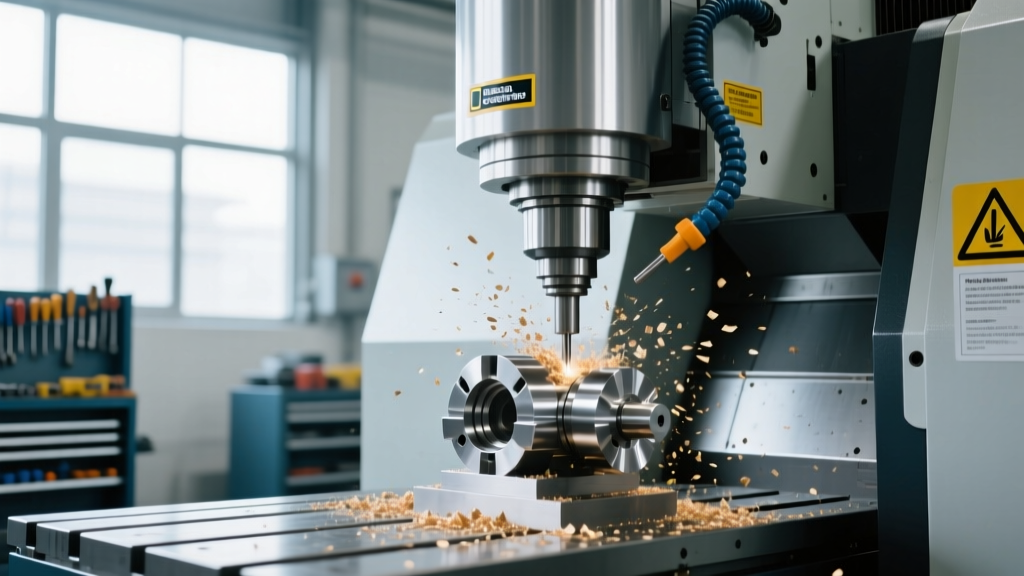
Conversely, for high-speed machining of aluminum aerospace components or complex medical enclosures, trunnion-table machines like the Haas UMC-750 are highly effective. The UMC-750's integrated trunnion table allows for excellent chip evacuation and access to deep pockets, provided the part weight does not exceed the rotary axis load limits (typically around 600 lbs for this class).
⚠️ The "Fake 5-Axis" Trap: Many machine shops market "5-axis capabilities" but only possess 3+2 positional machines. While 3+2 is excellent for drilling angled holes or milling multi-sided prismatic blocks, it cannot machine complex, continuously curving aerodynamic surfaces without leaving scallop marks. If your part requires continuous surface blending (e.g., a centrifugal impeller), explicitly require simultaneous 5-axis interpolation in your RFQ.Material-Specific Multi-Axis Considerations
Complex geometries often intersect with difficult-to-machine materials. A shop's expertise is proven by their tooling and coolant strategies, not just their machine kinematics.
- Titanium (Ti-6Al-4V): Multi-axis machining of titanium generates immense heat at the cutting edge due to the material's low thermal conductivity. Require vendors to use high-pressure coolant systems (minimum 700 PSI through-tool) and AlTiN-coated solid carbide endmills to prevent work-hardening and tool welding.
- PEEK and Ultem (Medical/Aerospace Plastics): Machining complex organic shapes in PEEK requires ultra-sharp, polished-flute tooling to prevent burring and melting. Multi-axis shops must utilize compressed air blast or mist coolant rather than flood coolant, which can cause dimensional swelling in hygroscopic polymers.
- 17-4 PH Stainless Steel: When machining complex hydraulic manifolds in 17-4 PH, shops should utilize trochoidal milling toolpaths to maintain constant tool engagement, preventing the rapid notch wear common in interrupted cuts on multi-axis contours.
Vendor Qualification Checklist for Complex Geometries
To ensure your low-volume production run meets engineering specifications, mandate the following capabilities from your CNC machining partner:
- Advanced Metrology: Complex 5-axis parts cannot be verified with calipers and micrometers. The shop must possess a 5-axis scanning Coordinate Measuring Machine (CMM), such as a Zeiss Contura or Hexagon Global S, equipped with a continuous scanning probe head to validate complex surface profiles (GD&T Profile of a Surface).
- In-Process Probing: Verify the machines are equipped with Renishaw OMP60 or Blum Novotest touch probes. In-process probing allows the machine to automatically re-center the part and update the WCS if the raw casting or billet shifts slightly during heavy roughing.
- CAM Software Proficiency: Ask which CAM software they utilize. Top-tier multi-axis shops rely on Mastercam, hyperMILL, or Siemens NX to generate collision-free, gouge-checked toolpaths. Shops using entry-level or outdated CAM software will struggle with the kinematic limits of simultaneous 5-axis movements.
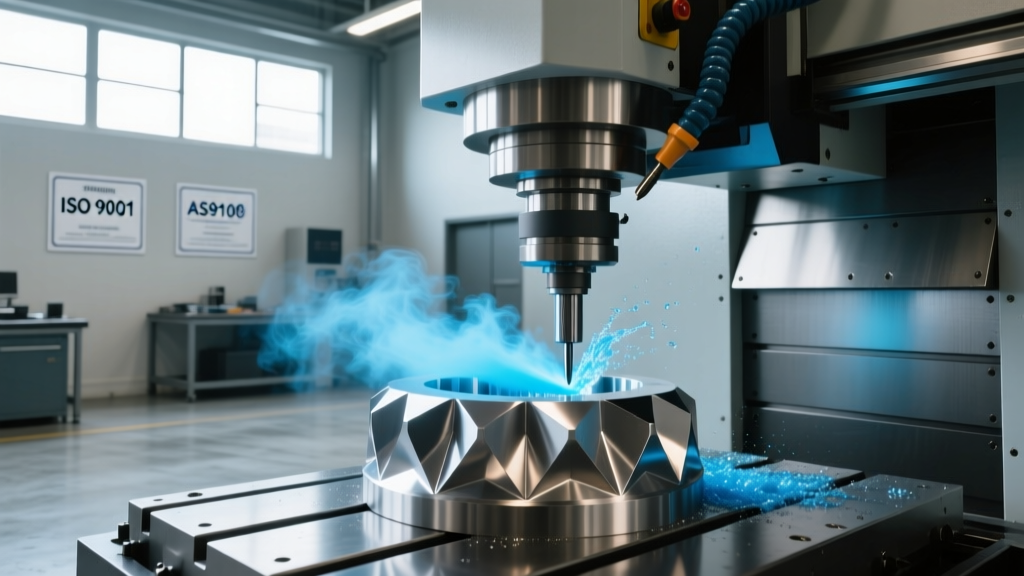
- Quality Certifications: For aerospace geometries, AS9100D is mandatory. For medical implants, ISO 13485 is required. These certifications ensure the shop has documented processes for tool life management and material traceability, which are critical when producing safety-critical complex parts.
By aligning your specific geometric requirements with the correct multi-axis configuration and rigorously vetting the shop's equipment and metrology, you can secure CNC machining services for low volume production that deliver precision parts on time and within budget. For deeper insights into cutting tool strategies for complex milling, refer to the Sandvik Coromant Milling Guide to understand the tooling your vendor should be deploying.