Lean Workflow: Precision Aerospace CNC Machining Parts Manufacturers
Explore how precision aerospace CNC machining parts manufacturers use lean workflows, 5-axis cell design, and AS9100 traceability to cut setup times.
Machining aerospace components from exotic alloys like Inconel 718 and Ti-6Al-4V requires holding tolerances within ±0.0002 inches while maintaining 100% material traceability. Historically, this level of rigor created bloated, slow-moving production floors. Today, top-tier precision aerospace cnc machining parts manufacturers have resolved this tension by integrating lean manufacturing principles directly into their CNC cell architecture. The result is a workflow that satisfies AS9100 Rev D compliance without sacrificing Overall Equipment Effectiveness (OEE).
The Architecture of an Aerospace CNC Lean Cell
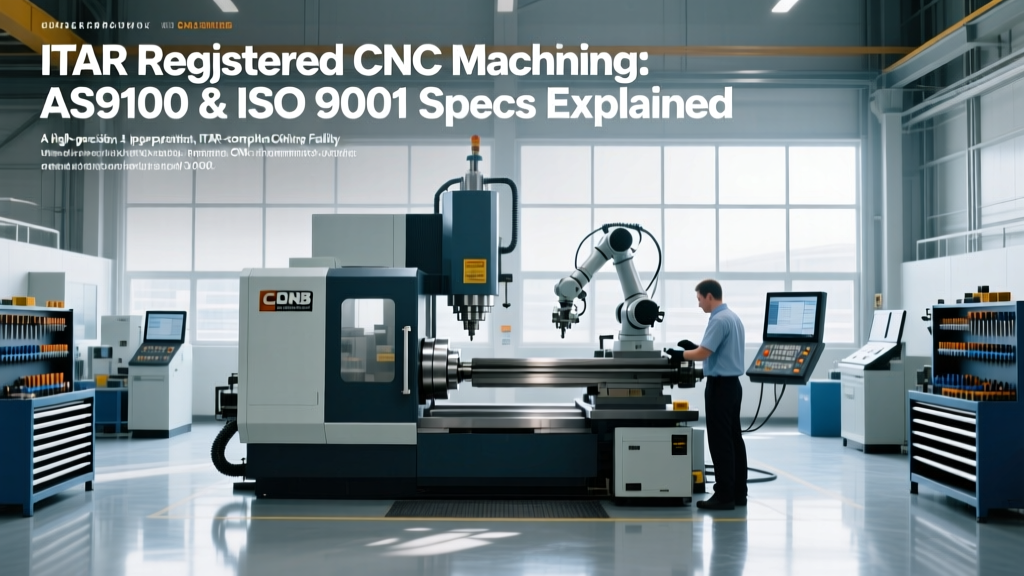
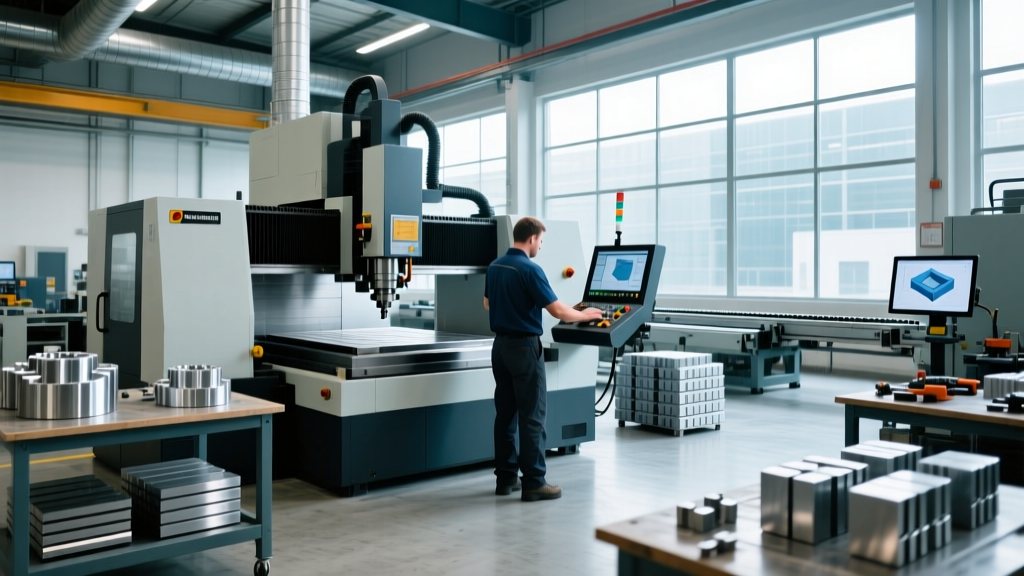
Traditional machine shops arrange equipment by function (all mills in one row, all lathes in another). Lean aerospace facilities utilize a U-shaped cellular layout centered around a shared pallet pool or robotic part loader. This design minimizes the physical distance a raw forging travels from the bandsaw to the CMM (Coordinate Measuring Machine).
Cell Footprint Optimization: A standard 5-axis aerospace cell utilizing a machine like the Hermle C42U with an IHAC (Integrated Handling Automation Center) requires roughly 400 square feet. By clustering the raw material staging, 5-axis mill, and inline washing station within a 15-foot radius of the operator's primary standing zone, shops eliminate up to 3.2 miles of unnecessary operator walking distance per year, per cell.Material flow in these cells is strictly single-piece or small-batch. Work-in-Progress (WIP) is capped using a Kanban system tied directly to the shop's ERP. If the downstream Zeiss Contura CMM is backlogged with first-article inspections, the CNC cell's pallet queue automatically halts new raw material loading, preventing the accumulation of unverified, potentially scrapped aerospace parts.
SMED Implementation on 5-Axis Trunnion Tables
Single-Minute Exchange of Die (SMED) is critical when machining low-volume, high-mix aerospace parts. Setup reduction on a 5-axis trunnion table requires converting internal setup tasks (done while the spindle is stopped) into external tasks (done while the machine is cutting).
Step-by-Step Aerospace SMED Protocol
- Standardize Zero-Point Clamping: Manufacturers deploy pneumatic zero-point clamping systems (e.g., Schunk Vero-S or Erowa). The tombstone or trunnion remains permanently mounted. Fixtures are swapped in under 45 seconds with a repeatability of 0.0002 inches.
- Pre-Stage Tooling and Presetting: Cutting tools are assembled and measured offline using a Zoller presetter. Tool data (length, radius, wear offsets) is transmitted via RFID chips in the toolholder directly to the machine's CNC controller (e.g., Heidenhain TNC7) before the setup begins.
- Kit Carts for MRP Routing: All raw forgings, custom soft jaws, deburring tools, and AS9100 travelers are placed on a shadow-board kit cart and rolled to the cell 30 minutes before the current cycle finishes.
- Macro-Driven Probing: Instead of manually indicating a part, the operator loads the fixture and triggers a Renishaw OMP60 spindle probe macro. The machine automatically maps the part datum and updates the work coordinate system (WCS) in 18 seconds.
By applying this SMED framework, setup times for complex titanium bulkheads drop from an average of 55 minutes to just 8 minutes. At an aerospace shop rate of $165 per hour, a $14,000 investment in zero-point clamping yields a positive ROI in under three months.
Integrating AS9100 Traceability Without Workflow Friction
Aerospace manufacturing mandates strict adherence to SAE International AS9100 standards, which require full lot traceability from raw melt to finished part. In a non-lean environment, this means stopping the machine, walking to a terminal, and manually logging serial numbers. Lean manufacturers automate the 'digital thread' to maintain workflow velocity.
Direct Part Marking (DPM) via laser etching is integrated into the final CNC operation. As the machine finishes the final chamfer, a secondary laser head etches a Data Matrix code onto a non-critical surface. An overhead vision system instantly reads this code, linking the part's specific G-code revision, tool life data, and in-machine probing results to the facility's quality database. This eliminates manual paperwork and reduces administrative quality-assurance time by 40%.
Traditional vs. Lean Aerospace CNC Cell Metrics
| Metric | Traditional Job Shop | Lean Aerospace Cell |
|---|---|---|
| Average Setup Time (5-Axis) | 45 - 60 minutes | 6 - 12 minutes |
| Overall Equipment Effectiveness (OEE) | 38% - 45% | 72% - 81% |
| First-Pass Yield (FPY) | 82% | 96.5% |
| WIP Inventory (Days on Hand) | 14 - 21 days | 2 - 4 days |
| Traceability Logging Time | 12 mins / part | 0.5 mins / part (Auto) |
Waste Reduction in Exotic Alloy Chip & Coolant Management
Lean manufacturing targets the elimination of 'Muda' (waste). In aerospace CNC machining, a massive hidden waste stream is coolant degradation and chip recycling inefficiency, particularly when machining stringy titanium alloys or work-hardening Inconel.
High-Pressure Coolant Specifications
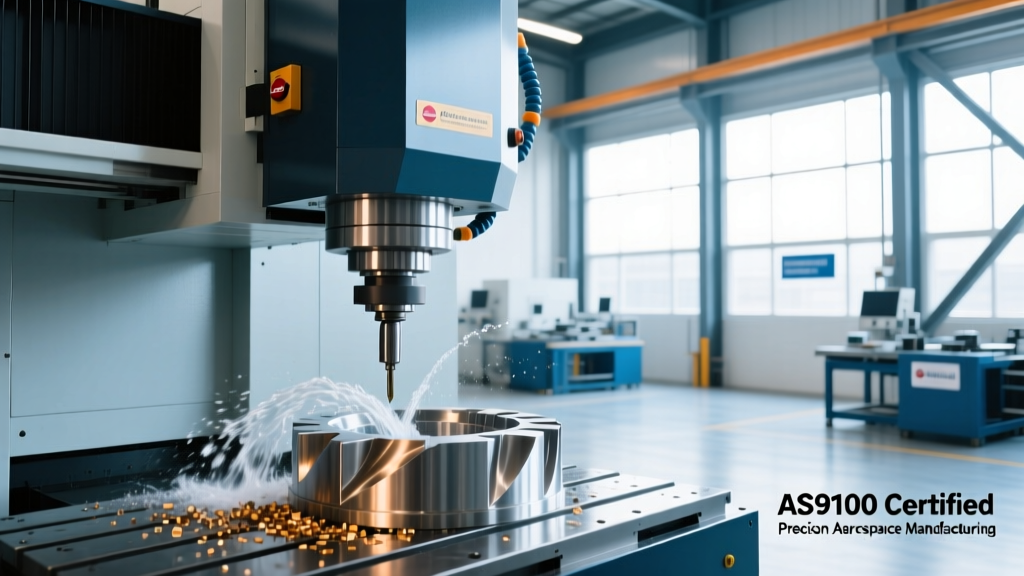
Standard flood coolant (20 bar) fails to penetrate the cutting zone when milling Ti-6Al-4V, leading to built-up edge (BUE) and premature tool failure. Lean aerospace cells utilize through-tool, high-pressure coolant systems operating at 70 to 150 bar (1,000 to 2,175 psi). This pressure physically shears the chip at the shear zone, preventing chip welding to the carbide insert. While the initial capital expenditure for a 150-bar pump system is approximately $28,000 per machine, it extends Sandvik Coromant CoroMill insert life by up to 300%, drastically reducing tooling waste and machine downtime for tool changes.
Warning on Chip Stringing: When machining 15-5 PH stainless steel or titanium, long, stringy chips can wrap around the trunnion table and foul the zero-point clamping seals. Lean facilities mandate the use of chip-breaking geometries on all roughing end mills and install specialized hinge-belt conveyors with scrapers to prevent chip nesting at the base of the machine enclosure.Continuous Improvement via the Lean Enterprise Model
Adopting lean principles is not a one-time installation; it requires a cultural framework for continuous improvement (Kaizen). According to methodologies championed by the Lean Enterprise Institute, machinists must be empowered to halt production and initiate root-cause analysis when a tolerance drift occurs. Furthermore, resources provided by the NIST Manufacturing Extension Partnership emphasize that small-to-medium aerospace suppliers can leverage federal and state grants to fund the transition to lean, automated CNC cells, offsetting the capital costs of pallet pools and CMM automation.
'In aerospace machining, the cost of a scrapped $40,000 titanium forging dwarfs the cost of a $50,000 inline probing system. Lean workflow isn't just about moving faster; it's about engineering the process so that making a bad part is mechanically impossible.'
— Director of Manufacturing Engineering, Tier 1 Aerospace Supplier
By rethinking cell layout, enforcing SMED protocols, automating AS9100 data capture, and optimizing coolant delivery, precision aerospace cnc machining parts manufacturers achieve a rare operational duality: the agility to handle high-mix prototyping and the relentless consistency required for high-rate production.