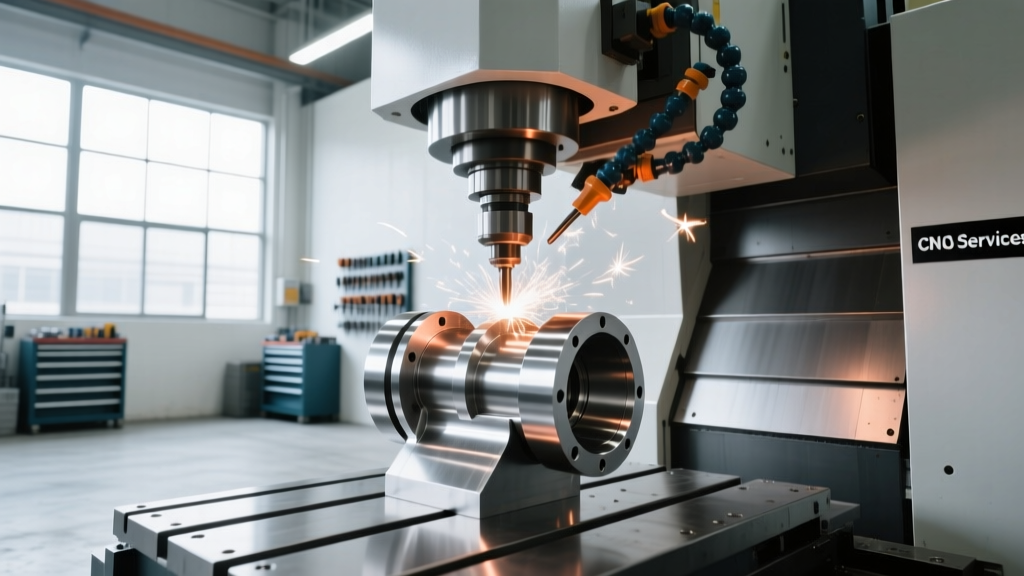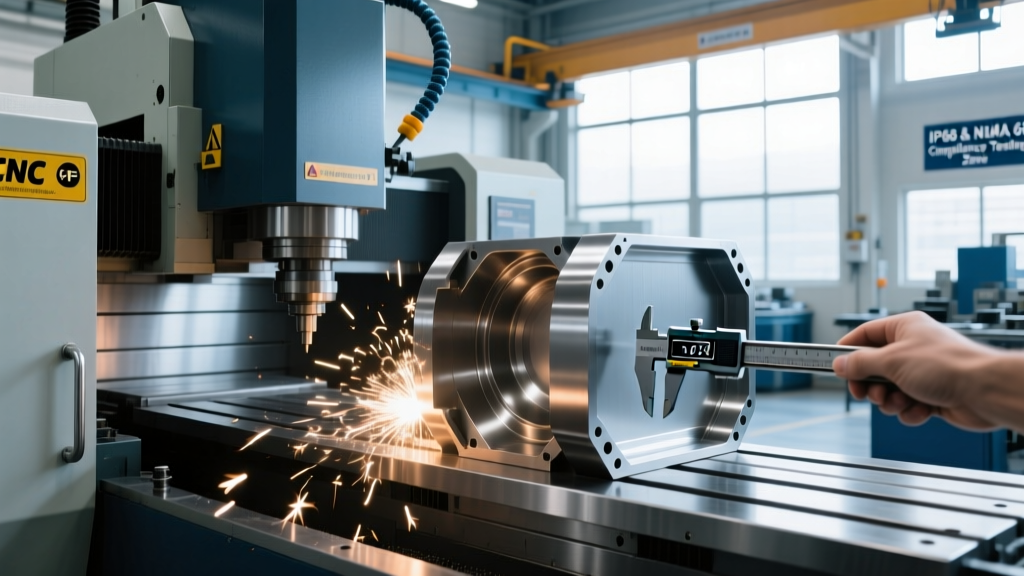
Lean Workflow Integration for High Speed CNC Machining
Discover how integrating lean manufacturing workflows with high speed CNC machining maximizes spindle uptime, reduces setup times, and boosts ROI.
A 24,000 RPM spindle operating in a legacy batch-processing machine shop is a financial liability. High speed CNC machining (HSM) fundamentally alters the physics of metal removal, allowing surface speeds (SFM) exceeding 3,000 in aluminum and drastically reducing cycle times. However, if the surrounding shop floor workflow relies on manual tool changes, centralized tool cribs, and batch-and-queue material handling, the spindle spends more time idle than cutting. Realizing the ROI of HSM requires a complete synchronization of lean manufacturing principles with high-velocity machining dynamics.
The Spindle Utilization Paradox
In traditional machining, a 12-minute cycle time paired with a 4-minute load/unload sequence yields a spindle utilization rate of 75%. When high speed CNC machining reduces that cycle time to 4 minutes through aggressive chip thinning and high-feed toolpaths, the same 4-minute load/unload sequence drops utilization to 50%. The bottleneck shifts entirely from the machine's cutting capacity to the operator's material handling speed.
Data Highlight: The Cost of Idle Spindles
An HSM center equipped with a 24,000 RPM, 40-taper spindle and high-pressure coolant options typically costs between $350,000 and $650,000. At a standard shop rate of $150/hour, every minute the spindle is idle during setup or loading costs $2.50 in lost revenue. In a two-shift operation, reducing non-cutting time by just 15 minutes per shift recovers over $22,000 in annual machine capacity.
Lean Cell Architecture for HSM Operations
Integrating lean workflow into an HSM environment requires abandoning the traditional 'machine farm' layout in favor of U-shaped manufacturing cells. This layout minimizes operator travel time and enables one-piece flow, which is critical when HSM cycle times drop below three minutes.
Automated Pallet Changers (APC) and Tombstone Configurations
To decouple the operator's load/unload time from the spindle's cutting time, lean HSM cells mandate Automated Pallet Changers. Modern APC systems, such as those on the Makino a61nx or the Haas UMC-500SS with twin-pallet options, execute pallet swaps in 6 to 8 seconds. By utilizing customized tombstone fixtures with standardized locating pins (such as the System 3R or Erowa zero-point clamping systems), operators can stage the next workpiece on Pallet B while Pallet A is undergoing high-speed milling. This pushes spindle utilization back above 85%.
Offline Tool Presetting and ISO 1940-1 Compliance
High speed CNC machining places extreme centrifugal loads on tool holders. At 24,000 RPM, an unbalanced tool assembly generates destructive radial forces that degrade surface finish, accelerate spindle bearing wear, and cause chatter. Tool assemblies must be balanced to ISO 1940-1:2003 Grade G2.5 or better at maximum operating speed.
In a lean workflow, balancing and measuring tools inside the machine control (internal setup) is considered waste. Instead, shops must invest in offline optical and contact presetters (e.g., Haimer or Zoller units, costing $35,000 to $60,000). These units measure tool length, diameter, and runout, and automatically balance the assembly using integrated balancing rings. The tool data is then transmitted directly to the CNC control via RFID chips embedded in the tool holder (like the Balluff system) or via networked DNC software, reducing internal setup time by up to 80%.
| Workflow Metric | Traditional Batch Workflow | Lean HSM Integrated Workflow |
|---|---|---|
| Tool Measurement & Balancing | On-machine probing (4-8 mins/tool) | Offline presetter with RFID (0 mins on-machine) |
| Material Load/Unload | Manual clamping inside work envelope | Zero-point clamping on APC pallet outside envelope |
| Spindle Utilization | 45% - 60% | 85% - 92% |
| Tool Holder Standard | CAT40 / BT40 (V-Flange) | HSK-A63 (Face and Taper Contact) |
HSK Tooling Management and 5S Integration
A critical technical reality of high speed CNC machining is the failure of standard V-flange (CAT/BT) tool holders at high RPM. Centrifugal force causes the spindle nose to expand radially. A CAT40 holder, which relies solely on taper friction, will pull upward into the spindle, losing Z-axis accuracy and clamping force. HSM requires HSK (Hohl-Schaft-Kegel) tool holders, which utilize a 1:10 taper with simultaneous face-and-taper clamping.
From a lean perspective, HSK holders require strict 5S methodology. The hollow shank and spindle taper must be immaculately clean; a single 10-micron chip trapped between the face contact surfaces will induce severe runout at 24,000 RPM. Lean HSM cells incorporate automated HSK cleaning stations at the presetter and point-of-use pneumatic taper cleaners on the machine, standardizing the cleaning motion to prevent catastrophic spindle crashes.
High-Pressure Coolant and Chip Evacuation Logistics
High speed machining generates exponentially higher chip volumes in shorter timeframes. A lean workflow must account for chip evacuation to prevent recutting, which destroys tool life and compromises part tolerances. HSM centers utilize through-spindle coolant (TSC) systems operating at 70 to 150 bar (1,000 to 2,200 psi) to break chips and clear the cut zone.
Managing this requires specialized lean integration:
- Conveyor Selection: Standard hinge-belt conveyors often jam under the sheer volume of fine aluminum chips produced by HSM. Lean cells utilize scraper-style or auger conveyors with auto-reverse functions to clear bird-nests.
- Filtration Upgrades: 150-bar TSC systems require coolant filtration down to 10-20 microns to prevent rotary union seal degradation. Integrating automated band filters and centrifugal separators into the cell layout ensures continuous flow without manual coolant tank cleaning.
- Preventative Maintenance (TPM): High-pressure rotary unions are wear items. A lean Total Productive Maintenance schedule mandates inspecting rotary union seals every 500 spindle hours. Failure to do so results in coolant ingress into the spindle bearings, leading to a $20,000+ spindle rebuild.
Implementing SMED in the HSM Environment
Single-Minute Exchange of Die (SMED) is the cornerstone of lean setup reduction. According to frameworks supported by the NIST Manufacturing Extension Partnership (MEP), reducing setup times allows for smaller batch sizes, aligning perfectly with the agility of HSM. Implementing SMED in a 5-axis HSM center follows a strict sequence:
1. Separate Internal and External Setup
Internal setup requires the machine to be stopped (e.g., indicating a vise, touching off tools). External setup occurs while the spindle is running (e.g., assembling tombstones, presetting tools, staging raw material). In a lean HSM cell, 100% of tool prep and fixture assembly must be moved to external status.
2. Convert Internal to External
Utilize zero-point clamping systems (like Schunk or AMF) mounted permanently to the machine table. The operator drops the pre-assembled fixture onto the zero-point pucks, and pneumatic or hydraulic clamps lock it in place with 5-micron repeatability in under 15 seconds, eliminating the need for dial indicators and manual tramming.
3. Streamline Remaining Internal Operations
Standardize all clamping mechanisms. Replace hex-head bolts with quarter-turn quick-release clamps or toggle locks. Use standardized soft jaws machined with grid patterns to accommodate multiple part geometries without changing the base fixture.
'High speed machining is not just a spindle specification; it is a systemic operational philosophy. If your material handling, tool management, and chip evacuation cannot keep pace with a 24,000 RPM spindle, you are merely paying a premium for a machine that spends half its life waiting for the operator.'
— Manufacturing Engineering Lead, Aerospace Tier 2 Supplier
Summary of Lean HSM Integration
Actionable Implementation Checklist
- Audit Spindle Utilization: Track actual cutting time versus idle time over a 48-hour period. If utilization is below 70%, prioritize material handling improvements over faster feed rates.
- Upgrade to Zero-Point Clamping: Eliminate manual workpiece indicating. Invest in pneumatic zero-point systems to drop setup times from 20 minutes to under 60 seconds.
- Mandate HSK Tooling and Offline Presetting: Abandon CAT40 for high-speed applications. Move all tool balancing (ISO G2.5) and measurement to an offline presetter equipped with RFID data transfer.
- Optimize Chip Management: Ensure coolant filtration is rated for high-pressure TSC (sub-20 micron) and schedule strict TPM intervals for rotary union seal inspections.