In-House vs Outsourced CNC Machining for Medical Industry
Compare in-house vs outsourced CNC machining for medical industry. Analyze 2026 tech trends, ISO 13485 costs, and 5-axis Swiss capabilities.
Executive Summary: The 2026 MedTech Manufacturing Dilemma
As medical device OEMs face mounting pressure to miniaturize implants and accelerate time-to-market, the decision between captive in-house machine shops and Tier-1 contract manufacturers has shifted. Driven by the explosive cost of ISO 13485 compliance, AI-driven closed-loop metrology, and the capital intensity of 5-axis Swiss-type CNC platforms, outsourcing CNC machining for medical industry applications is no longer just a cost-saving measure—it is a strategic technology lever. This guide breaks down the exact capital requirements, regulatory burdens, and technological capabilities defining the build-vs-buy calculus in 2026.
The Capital Expenditure Trap of In-House Medical Machining
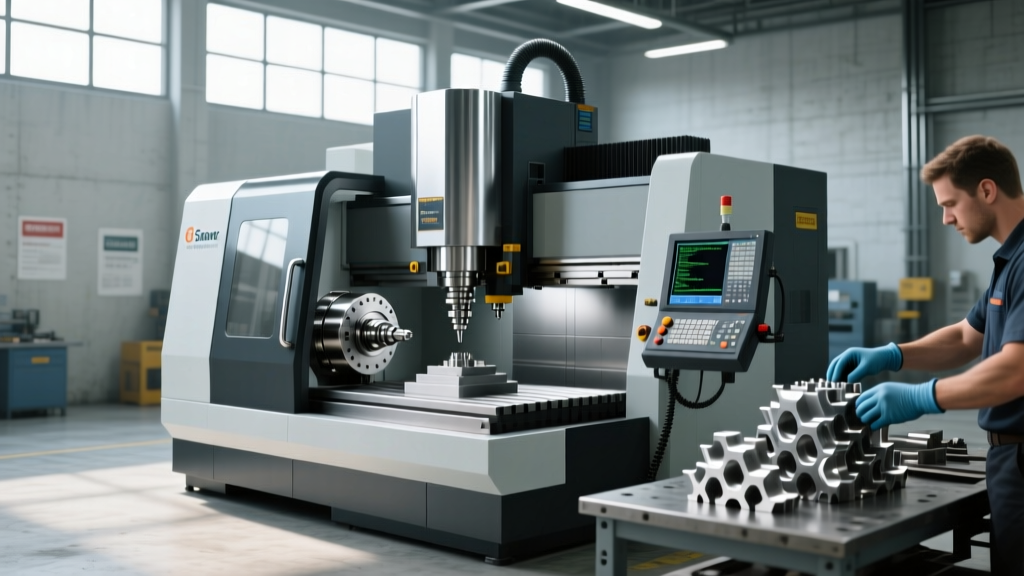
Establishing an in-house CNC facility capable of producing FDA-compliant, implantable-grade components requires navigating a severe capital expenditure (CapEx) gauntlet. Medical devices frequently demand complex geometries from unforgiving materials like Nitinol, PEEK (Victrex 450G), and Titanium Ti-6Al-4V ELI (Grade 23). Machining these materials reliably at scale requires top-tier equipment.
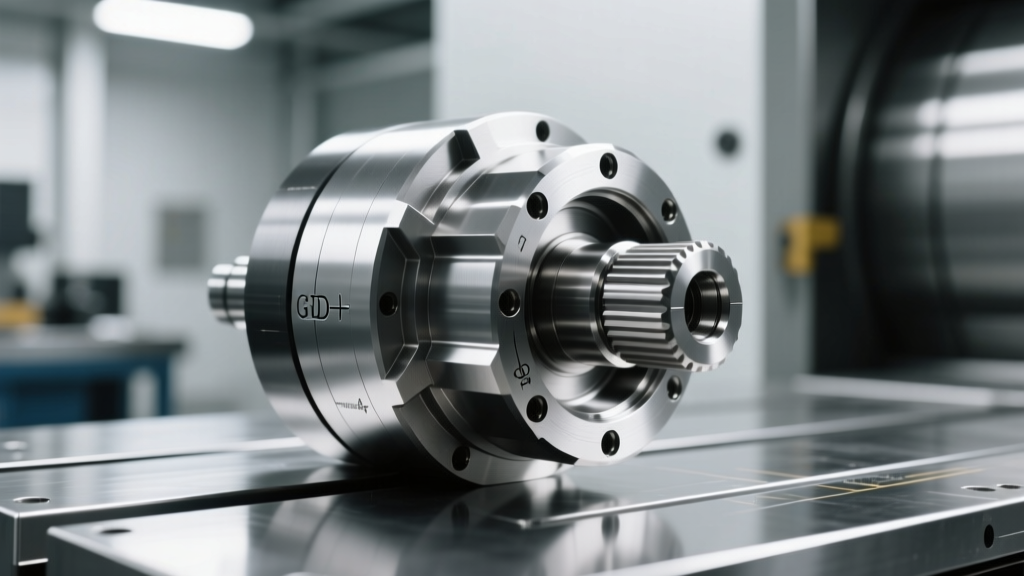
Consider the baseline machinery required for orthopedic bone screws or cardiovascular stents. A high-end Swiss-type CNC lathe, such as the Citizen L200XII or Tsungami S255-II, carries a base price between $450,000 and $520,000. However, the machine is only the beginning. To hold the strict GD&T tolerances (often ±0.0002 inches) required for implantable joints, you must pair the CNC with a coordinate measuring machine (CMM) like the Zeiss Contura, adding another $140,000 to $180,000 to the initial outlay.
The Cleanroom and Facility Overhead
Unlike standard aerospace or automotive parts, many medical components require final machining, deburring, and packaging within an ISO Class 7 (Class 10,000) cleanroom to prevent particulate contamination. Building a modular cleanroom environment costs between $150 and $250 per square foot. For a modest 2,000-square-foot machining and inspection cell, facility preparation alone will consume $300,000 to $500,000 before a single chip is cut.
2026 Technology Trends: Why Contract Shops Hold the Edge
The technological gap between in-house R&D shops and specialized medical contract manufacturers has widened significantly. Tier-1 medical machine shops are leveraging advanced manufacturing technologies that are cost-prohibitive for single-product OEMs to implement internally.
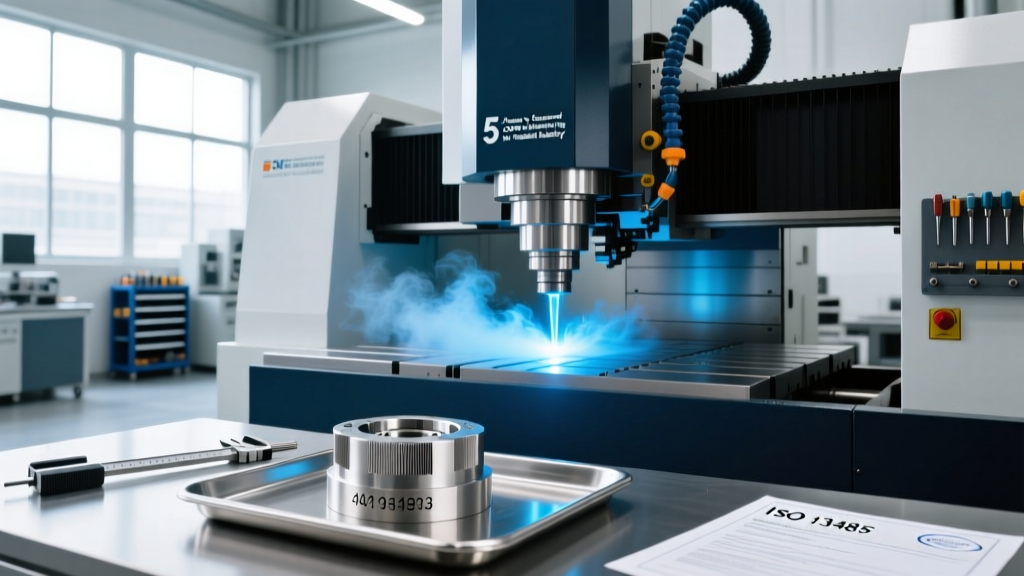
- Closed-Loop AI Metrology: Leading contract shops now utilize in-machine probing systems, such as the Renishaw Equator, integrated with AI-driven SPC (Statistical Process Control) software. When machining PEEK—which is highly susceptible to thermal expansion and springback—the system automatically adjusts tool offsets in real-time based on ambient temperature and tool wear data, reducing scrap rates from 8% to under 1.5%.
- Automated Lights-Out Swiss Machining: Medical contract shops are heavily investing in automated bar feeders and robotic part-washing stations. This allows 72-hour weekend lights-out production on multi-axis Swiss machines, effectively driving the per-part cost of high-volume spinal screws down by 22% compared to manually tended in-house shifts.
- Advanced Toolpath Optimization: Utilizing AI-enhanced CAM modules (like Mastercam's AI add-ons or Hexagon's ESPRIT), specialized shops can dynamically adjust feed rates when transitioning from the hard exterior crust of a titanium forging to its softer core, extending $400 solid carbine endmill lifespans by up to 40%.
"In 2026, the barrier to entry in medical machining isn't just buying a 5-axis mill; it's the data infrastructure. If your CNC machines aren't generating real-time telemetry that maps directly to your device history record (DHR), you are fundamentally uncompetitive in the implantable space."
— Director of Manufacturing Engineering, Tier-1 MedTech Contract Manufacturer
Comparative Matrix: In-House vs. Specialized Contract Shop
The following matrix illustrates the operational realities of managing medical-grade CNC production internally versus outsourcing to an established partner.
| Metric | In-House Captive Shop | Tier-1 Medical Contract Shop |
|---|---|---|
| Initial CapEx (1 Cell) | $850,000 - $1.2M | $0 (NRE setup fees: $5k-$15k) |
| Hourly Shop Rate (5-Axis) | $95 - $130 (Fully burdened) | $145 - $195 (Includes QMS overhead) |
| Material Scrap Risk | High (Learning curve on Nitinol/PEEK) | Low (Absorbed by shop during quoting) |
| IQ/OQ/PQ Validation | Must manage internally ($40k+/machine) | Pre-validated platforms; shared cost |
| Lead Time (Prototypes) | 1 - 2 Weeks (Immediate priority) | 3 - 5 Weeks (Queue dependent) |
The Regulatory Burden: ISO 13485 and FDA Traceability
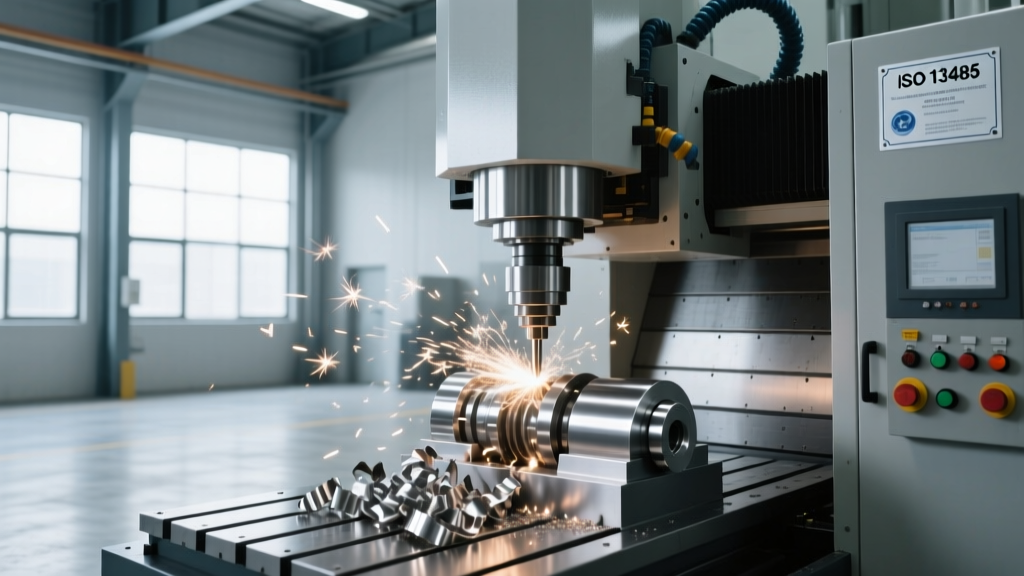
The most frequently underestimated factor in the build-vs-buy decision is the regulatory overhead. Manufacturing medical devices requires strict adherence to ISO 13485:2016 standards and the FDA 21 CFR Part 820 Quality System Regulation.
Achieving and maintaining ISO 13485 certification for a new in-house facility typically takes 12 to 18 months and costs between $35,000 and $60,000 in consulting, documentation, and audit fees. Furthermore, every CNC machine, CMM, and even the specific cutting fluid used must undergo rigorous IQ/OQ/PQ (Installation, Operational, and Performance Qualification) validation. Validating a single 5-axis mill for an implantable production line can cost upwards of $45,000 and take three months of engineering time. When you outsource to an established medical machine shop, you are effectively renting their validated QMS, bypassing years of regulatory friction.
Material Traceability and UDI Compliance
Medical CNC machining requires absolute material traceability. If a batch of Ti-6Al-4V ELI bar stock is found to have an inclusion defect, the manufacturer must be able to trace every single bone screw machined from that heat lot. Specialized contract shops utilize integrated ERP systems (like Epicor or Plex) tied directly to Unique Device Identification (UDI) databases, ensuring that the raw material mill cert is permanently linked to the final serialized part. Replicating this digital thread in-house requires significant software investment and dedicated IT administration.
Decision Framework: When to Keep It In-House
Despite the overwhelming advantages of outsourcing for scaled production, maintaining an in-house CNC capability remains the correct strategic choice under specific conditions.
Keep In-House If:
- R&D and Prototyping: You are in the iterative design phase of a novel surgical instrument and need same-day design-for-manufacturability (DFM) tweaks.
- Highly Proprietary IP: The geometry or manufacturing method constitutes your core patent, and the risk of IP leakage outweighs the cost of internal production.
- Low-Volume/High-Mix: You produce custom, patient-specific implants (e.g., 3D-printed titanium cranial plates that require secondary CNC facing) where volumes never exceed 50 units per month.
Outsource If:
- Scaling to Commercialization: You are transitioning from clinical trial batches to full commercial FDA release and require guaranteed capacity.
- Exotic Materials: Your BOM includes Nitinol, bioresorbable polymers, or cobalt-chrome, which require specialized tooling, cryogenic cooling, and specific chip-evacuation strategies.
- Audit Fatigue: Your core competency is biomedical engineering, not supply chain management and QMS administration.
The Hybrid 'Core-Competency' Model
The most successful MedTech startups in 2026 are adopting a hybrid model. They maintain a small, agile in-house prototyping cell equipped with a single 3-axis mill and a desktop CMM for rapid iteration and DFM validation. Once the design is frozen and the IQ/OQ/PQ protocols are drafted, the entire production package is handed off to a Tier-1 contract manufacturer for scaled, FDA-compliant CNC machining. This approach minimizes early-stage CapEx while ensuring the eventual supply chain is robust, auditable, and technologically advanced.