Budgeting High-Volume CNC: A CNC Machining Engineer's Strategy
Discover high-volume CNC production strategies. Learn how a CNC machining engineer optimizes cycle times, tooling, and capital budgets for 10k+ runs.
Transitioning from prototype fabrication to high-volume production (10,000+ units annually) requires a fundamental shift in unit economics. At scale, a one-second reduction in cycle time or a 5% increase in tool life dictates profitability. For a senior CNC machining engineer, budget planning is no longer just about securing the lowest initial machine quote; it is about modeling the total cost of ownership (TCO), automation integration, and design for manufacturability (DFM) interventions that compound over tens of thousands of cycles.
The Capital Expenditure (CapEx) Matrix for High-Volume Cells
Selecting the right machine architecture is the first critical budget decision. While 3-axis Vertical Machining Centers (VMCs) dominate job shops, high-volume production demands architectures that minimize non-cutting time and maximize spindle utilization. Below is a 2026 CapEx comparison for high-volume cell architectures.
| Architecture | Representative Model | Est. Base CapEx (2026) | Automation Readiness | Ideal Volume Breakeven |
|---|---|---|---|---|
| 500mm Horizontal (HMC) | Makino a61nx | $480,000 - $550,000 | Native Pallet Pool | 5,000+ parts/year |
| VMC w/ Rotary Table | Brother Speedio R-650X2 | $260,000 - $310,000 | Cartesian/Gantry | 20,000+ parts/year |
| Mill-Turn Center | DMG MORI NLX 2500 | $620,000 - $750,000 | Bar Feeder / Gantry | Complex shafts > 10k |
The Cycle Time Multiplier: Tooling and Toolpath Economics
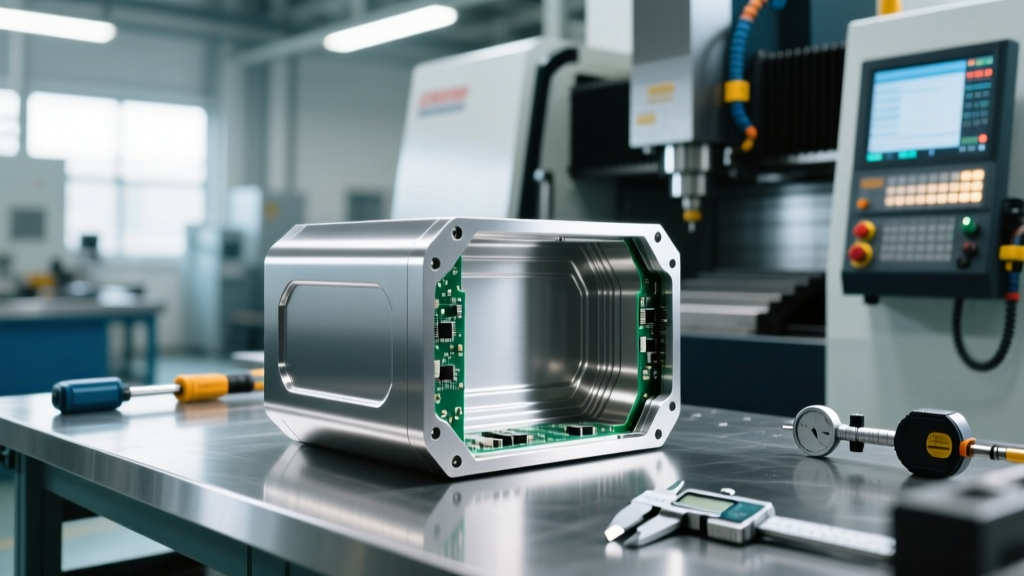
In high-volume CNC production, cycle time is the primary cost driver. A CNC machining engineer must quantify the exact financial impact of toolpath optimization. Consider a scenario where dynamic milling strategies reduce the roughing cycle of an aluminum 6061-T6 housing from 112 seconds to 98 seconds.
- Annual Volume: 100,000 parts
- Time Saved per Part: 14 seconds
- Total Annual Spindle Time Saved: 388.8 hours
- Burdened Shop Rate: $125/hour
- Annual Gross Savings: $48,600 per part number
To achieve these reductions, engineers must invest in premium tooling and advanced CAM software. According to Sandvik Coromant's milling knowledge base, utilizing specialized high-feed cutters and trochoidal toolpaths can increase metal removal rates (MRR) by up to 50% while extending tool life by reducing radial engagement forces.
The Tooling Budget Reallocation
High-volume budgets must shift from purchasing cheap, generic end mills to investing in application-specific tooling. Allocating an extra $12,000 annually for Kennametal HARVI or Sandvik CoroMill 390 tooling yields exponential returns by eliminating mid-cycle tool breakages. A single broken tap in a high-volume transfer line or HMC cell can scrap a $400 casting and cost 45 minutes of downtime to extract.
Design for Manufacturability (DFM) Interventions
The most effective cost-reduction strategy occurs before the CNC program is even written. A CNC machining engineer must aggressively negotiate DFM changes with the product design team to eliminate non-value-added machining time.
- Standardize Internal Corner Radii: A design specifying a 0.187" deep pocket with a 0.093" floor radius forces the use of a fragile 3/16" end mill. This tool deflects, requires conservative feed rates, and breaks every 60 parts. Changing the drawing to a 0.250" radius allows the use of a robust 1/2" end mill, increasing feed rates by 300% and extending tool life from 60 parts to 800+ parts.
- Eliminate Deep, Small-Diameter Bores: Drilling a 0.250" diameter hole to a depth of 2.0" (8:1 L/D ratio) requires peck drilling, specialized coolant-through drills, and immense cycle time. Redesigning the part to step the bore or reducing the depth to 0.75" (3:1 L/D ratio) allows standard drilling cycles, saving 18 seconds per hole.
- Tolerance Rationalization: Holding a +/- 0.0005" tolerance across an entire 12-inch aluminum extrusion requires slow finishing passes, temperature-controlled environments, and manual CMM inspection. Restricting the tight tolerance only to critical bearing journals and relaxing the rest to +/- 0.005" reduces finishing cycle time by 40%.
Automating the Load/Unload Bottleneck
At volumes exceeding 50,000 parts, manual load/unload becomes the primary constraint. A machine capable of a 45-second cycle time is rendered useless if an operator takes 60 seconds to swap the part and clean the fixture. Budgeting for automation is mandatory, but the architecture must match the part geometry.
'Automation without process stability is just a faster way to produce scrap. A CNC machining engineer must ensure gauge repeatability and chip evacuation are flawless before integrating robotics.' — Advanced Manufacturing Guidelines, NIST Advanced Manufacturing Portal.
Pallet Pools vs. Cartesian Gantries
For prismatic parts machined on HMCs, pallet pool systems (e.g., Fastems FPC or Makino MMC2) are the gold standard. Budget approximately $180,000 to $250,000 for a 12-pallet system. This allows the machine to run untended for 12-18 hours over weekends, effectively increasing annual spindle hours from 4,000 to 6,500 without adding a third-shift labor burden.
For high-speed, small-footprint VMCs like the Brother Speedio series, a Cartesian gantry robot (e.g., RoboDrill integrated i-COBOT or standalone Erowa) is more cost-effective, typically adding $85,000 to $110,000 to the cell CapEx, while maintaining the rapid 1.2-second tool change speeds that define the machine's ROI.
Hidden Costs: Coolant and Chip Management
Budget proposals frequently overlook the peripheral systems required to sustain high-volume cutting. When running 24/7, standard machine configurations fail.
Budget Warning: Do not accept the OEM standard coolant pump for high-volume steel or titanium machining. Upgrading from a standard 20-bar (290 psi) pump to a 70-bar (1000 psi) or 150-bar (2200 psi) high-pressure coolant (HPC) system adds $15,000 - $25,000 to the initial machine cost. However, HPC breaks chips effectively in stringy materials like 304 Stainless Steel, preventing bird-nesting that causes unmanned automation crashes.Similarly, chip conveyors must be sized for the specific material. Brittle chips (cast iron, gray iron) require standard hinge-belt conveyors. Stringy chips (aluminum, stainless steel) require scraper-style or specialized auger conveyors to prevent jamming. Budget an additional $8,000 for heavy-duty, high-capacity conveyor upgrades on any machine slated for 24/7 aluminum production.
Frequently Asked Questions
How does a CNC machining engineer calculate the true breakeven point for a new HMC cell?
The breakeven calculation must include the machine CapEx, automation integration, tooling inventory, and the cost of floor space. Divide the total first-year capital outlay by the margin generated per hour of spindle time. For a $600,000 HMC cell generating $150/hour in gross margin, the machine must run approximately 4,000 billable hours (roughly 14 months of single-shift operation, or 7 months of double-shift) to achieve capital breakeven.
Should secondary operations (deburring, washing) be included in the CNC cycle budget?
Yes. In high-volume production, off-machine deburring is a massive hidden cost. Engineers should budget for spindle-mounted deburring tools (like Heule COFA) or high-pressure coolant deburring probes to perform edge-breaking inside the CNC cycle. Adding 8 seconds to the CNC cycle is vastly cheaper than paying a bench operator $22/hour to manually deburr 100,000 parts.
Where can I find reliable data on machine tool utilization benchmarks?
Industry organizations such as AMT (The Association For Manufacturing Technology) publish regular research intelligence and benchmarking reports on machine utilization, automation ROI, and shop floor economics, providing critical data for validating CapEx requests to financial stakeholders.