CNC Machining vs Injection Molding for Defense Parts
Evaluate CNC machining vs injection molding for defense parts. Compare MIL-SPEC tolerances, PEEK tooling costs, and DFARS compliance.
The Core Dilemma in Military Manufacturing
When sourcing components for aerospace and defense platforms, engineering teams face a strict matrix of material, tolerance, and compliance constraints. The debate of CNC machining vs injection molding for defense parts is rarely about which process is universally superior; it is about matching the manufacturing method to the specific operational environment, production volume, and regulatory framework of the component. In 2026, as the Department of Defense (DoD) accelerates the Replicator initiative and demands faster Low-Rate Initial Production (LRIP) cycles, understanding the precise technical and economic thresholds between subtractive and formative manufacturing is critical for defense contractors.
Material Constraints: MIL-SPEC Metals vs. Engineering Polymers
Defense applications dictate material selection long before the manufacturing process is chosen. CNC machining dominates when components require the ballistic resistance, thermal stability, and structural rigidity of aerospace-grade metals. Conversely, injection molding is reserved for high-performance engineering polymers that reduce weight in avionics housings, radar assemblies, and soldier-worn systems.
| Material | Process | MIL-SPEC / Standard | Achievable Tolerance | Primary Defense Application |
|---|---|---|---|---|
| 7075-T6 Aluminum | 5-Axis CNC | QQ-A-250/12 | ±0.0005" (0.012mm) | Optic mounts, UAV airframes |
| Ti-6Al-4V (Grade 5) | 5-Axis CNC | AMS 4911 | ±0.001" (0.025mm) | Actuator housings, rotorcraft linkages |
| PEEK (Victrex 450G) | Injection Molding | ASTM D638 / MIL-P-46112 | ±0.003" (0.076mm) | Connector backshells, drone gears |
| Ultem (PEI 1000) | Injection Molding | ASTM D5205 | ±0.004" (0.101mm) | Avionics bezels, radar transparent covers |
The thermal realities of molding defense-grade polymers are severe. PEEK (Polyether ether ketone) requires mold temperatures between 160°C and 200°C to achieve the necessary crystallization for optimal chemical and mechanical resistance. Standard aluminum mold bases cannot withstand these thermal cycles without warping. Consequently, PEEK injection molds must be machined from hardened H13 tool steel or utilize beryllium-copper inserts for localized cooling, driving initial tooling costs to $35,000–$65,000 per cavity. CNC machining, while carrying a higher per-part cost, requires zero dedicated tooling, making it the default for prototyping and initial field-testing phases.
Tolerance and Precision Under Combat Conditions
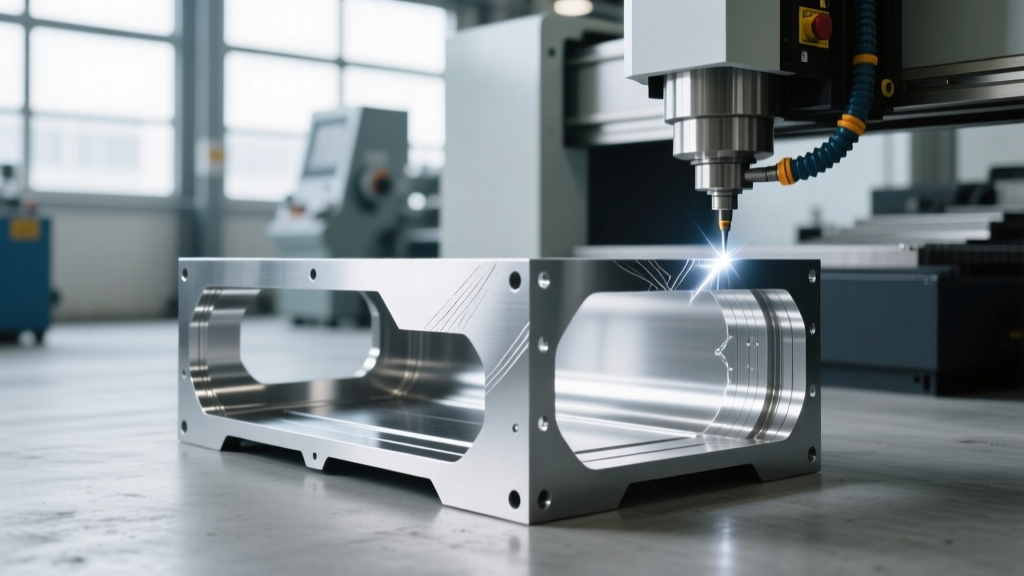
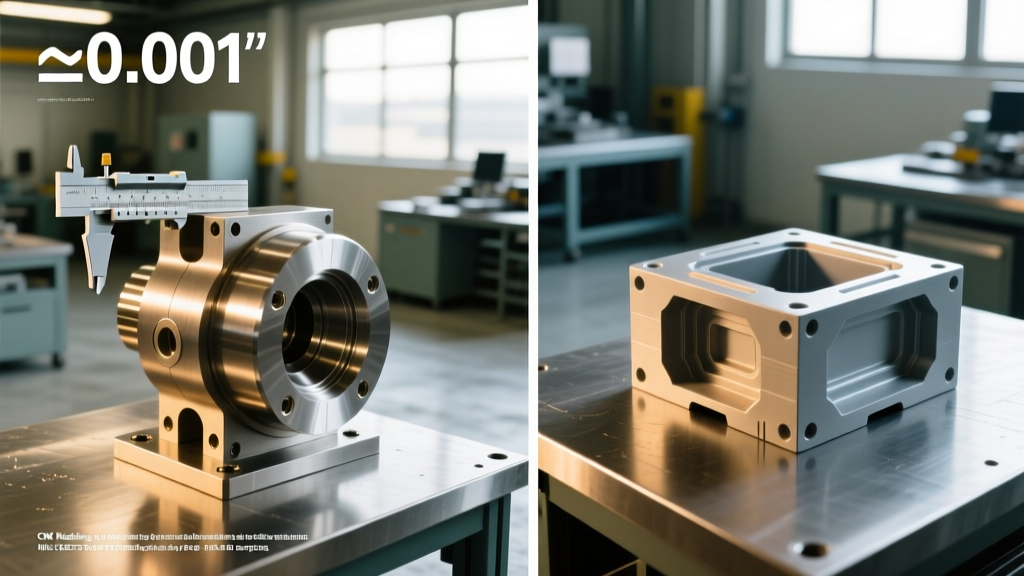
Military hardware operates in environments characterized by extreme shock, vibration, and thermal cycling. The dimensional stability of a component is non-negotiable. Modern 5-axis CNC machining centers, such as the DMG Mori DMU 50 3rd Generation or the Haas UMC-750SS, routinely hold geometric dimensioning and tolerancing (GD&T) true position callouts within 0.0005 inches over complex 3D contours. This level of precision is mandatory for fire-control systems and guided munition guidance fins where aerodynamic flutter must be eliminated.
Injection molding, limited by polymer shrinkage rates (PEEK shrinks approximately 1.2% to 1.5% during cooling), struggles to maintain tolerances tighter than ±0.002 inches without secondary CNC finishing operations. When a defense contractor requires a polymer component with metal-like precision, the industry standard is to injection mold the part near-net-shape and subsequently run it through a 3-axis CNC mill to bore critical pin-holes and face mating surfaces.
Critical DFARS & ITAR Compliance Warning
When evaluating CNC machining vs injection molding for defense parts, supply chain provenance is as important as the manufacturing method. Under DFARS 252.225-7009, specialty metals (including specific grades of titanium and high-strength steel) used in CNC machined parts must be melted or produced in the United States or a qualifying country. Injection molded polymers generally bypass this specific specialty metal clause, but the CAD data and tooling for both processes are strictly governed by ITAR (International Traffic in Arms Regulations). Ensure your machine shop or molder is registered with the Directorate of Defense Trade Controls (DDTC) and maintains a secure, air-gapped digital thread for CUI (Controlled Unclassified Information).
Volume Economics: Prototyping to LRIP
The financial crossover point between CNC machining and injection molding in the defense sector differs vastly from commercial consumer goods. In commercial markets, injection molding breakeven might occur at 2,000 units. In defense manufacturing, due to the low annual volume of platforms (e.g., producing 40 fighter jets or 500 advanced UAVs per year), the breakeven point is often pushed to 5,000 or 10,000 units, a volume many defense programs never reach.
The Breakeven Analysis for PEEK vs. Titanium
- CNC Machined Ti-6Al-4V: Material cost is roughly $25-$35 per pound. Machining time for a complex actuator housing is 4.5 hours at $185/hour. Total part cost: ~$850. Tooling cost: $0.
- Injection Molded PEEK: Resin cost is approximately $120 per pound. Cycle time is 90 seconds. Total part cost: ~$45. Tooling cost: $55,000.
- Crossover Point: At a savings of $805 per part, the $55,000 tooling investment is recouped at exactly 69 units. However, if the program only requires 30 units annually for a 5-year lifecycle (150 total units), molding is vastly more economical over the program's life, provided the polymer meets the structural requirements.
2026 Technology Trends: Hybrid Manufacturing in the Armory
The rigid binary of choosing between subtractive and formative processes is dissolving. The DoD's push for agile manufacturing has accelerated the adoption of hybrid workflows. According to advanced manufacturing frameworks outlined by the National Institute of Standards and Technology (NIST), the integration of in-line metrology and automated secondary operations is redefining production floors.
"The future of defense manufacturing does not lie in choosing one process over another, but in the seamless digital integration of near-net-shape molding with high-precision robotic CNC finishing, creating a unified digital thread from CAD to final MIL-SPEC inspection."
Furthermore, the use of conformal cooling channels—created via metal additive manufacturing (SLM/DMLS) and then finished via CNC machining—has revolutionized the injection molds used for defense polymers. These 3D-printed mold inserts reduce PEEK cycle times by up to 30% and eliminate internal stresses that cause warping, directly addressing the historical tolerance limitations of molded military components.
Decision Framework: Selecting the Right Process for Your Component
Use this step-by-step engineering matrix to definitively resolve the CNC machining vs injection molding debate for your specific defense application:
- Assess the Load-Bearing Requirement: If the component experiences high shear stress, ballistic impact, or serves as a primary structural node in an airframe, select 5-axis CNC machining with 7075-T6 or Ti-6Al-4V. Polymers will creep under sustained mechanical load.
- Evaluate Thermal and RF Signatures: If the part must be transparent to radar frequencies (radomes) or requires extreme electrical insulation in avionics bays, select injection molding with Ultem (PEI) or specialized PTFE compounds.
- Calculate the True Lifecycle Volume: Do not use commercial breakeven calculators. Multiply the annual platform production rate by the expected 20-year service life, plus a 15% buffer for field replacements. If the total is under 500 units, default to CNC machining to avoid tying up capital in hardened steel mold tooling.
- Verify Coating and Finishing Needs: If the part requires MIL-DTL-5541 Type II chemical conversion coating or MIL-A-8625 Type III hard anodizing for corrosion resistance in maritime environments, CNC machined aluminum is mandatory. These anodizing processes cannot be applied to injection-molded thermoplastics.
- Audit the Supply Chain for DFARS 252.225-7009: If your CNC material supplier cannot provide the required melt-origin certificates for specialty metals, your part will be rejected at Defense Contract Management Agency (DCMA) inspection. Secure your metal supply chain before committing to a subtractive manufacturing strategy.
By rigorously applying these material, economic, and regulatory filters, defense procurement engineers can eliminate process ambiguity, reduce LRIP delays, and ensure mission-critical hardware performs exactly as specified in the field.