HDPE CNC Machining for Oil & Gas: 2026 Equipment Guide
Select the right CNC equipment, tooling, and workholding for HDPE CNC machining of oil and gas components like scraper pigs and isolation sleeves.
The Role of HDPE in Upstream and Downstream Infrastructure
While the oil and gas sector is heavily associated with machining exotic alloys like Inconel and Duplex stainless steels, High-Density Polyethylene (HDPE) is a critical, non-metallic workhorse. HDPE is specified for its exceptional chemical resistance, low moisture absorption, and high impact strength in corrosive environments. For contract machine shops targeting the energy sector, mastering HDPE CNC machining opens lucrative contracts for pipeline pigging components, flange isolation sleeves, chemical injection skids, and offshore buoyancy modules.
Machining HDPE requires fundamentally different equipment parameters than metal removal. With a low melting point of approximately 130°C (265°F) and a low yield strength (26–33 MPa), standard metal-cutting setups will melt the plastic, crush the workpiece, or induce severe dimensional instability. This 2026 equipment selection guide details the exact machinery, tooling, and fixturing required to produce API-compliant HDPE components profitably.
Common O&G HDPE Components and Material Grades
| Component Type | Typical HDPE Grade | Critical Tolerance Zone | Primary Machining Challenge |
|---|---|---|---|
| Pipeline Scraper Pigs | Marineboard / Orthoplast HDPE | +/- 0.005 in (OD sealing) | Maintaining roundness without vacuum crush |
| Flange Isolation Sleeves | Virgin HDPE (ASTM D1248) | +/- 0.002 in (Bore fit) | Chip evacuation in deep, narrow bores |
| Chemical Skid Manifolds | GF-30 HDPE (Glass-Filled) | +/- 0.003 in (Port alignment) | Abrasive wear on cutting edges from glass fill |
| Offshore Buoyancy Modules | Syntactic Foam / HDPE Matrix | +/- 0.015 in (Profile) | High material removal rates (MRR) and dust control |
Primary Machine Selection: VMC vs. CNC Router
Choosing the right platform for HDPE CNC machining depends entirely on the geometry of your target O&G components. Shops must decide between a Vertical Machining Center (VMC) and a high-speed CNC Router.
When to Deploy a High-Speed VMC
If your shop focuses on high-precision flange isolation sleeves, valve seats, and tight-tolerance chemical manifold blocks, a VMC is mandatory. However, a standard 8,000 RPM spindle is insufficient. HDPE requires high surface footage to achieve a clean shear cut rather than tearing the polymer chains.
- Recommended Models: Haas VF-2SS (12,000 RPM spindle) or Brother Speedio S1000X1 (16,000 RPM).
- Spindle Requirement: Minimum 12,000 RPM; 15,000+ RPM preferred for finishing passes.
- Guideway Type: Linear guides are preferred over box ways for the rapid traverse rates needed to clear chips before they re-weld to the part.
- 2026 Pricing: Expect to invest $65,000 to $85,000 for a base high-speed VMC equipped with a high-volume air-blast system.
When to Deploy a 3-Axis CNC Router
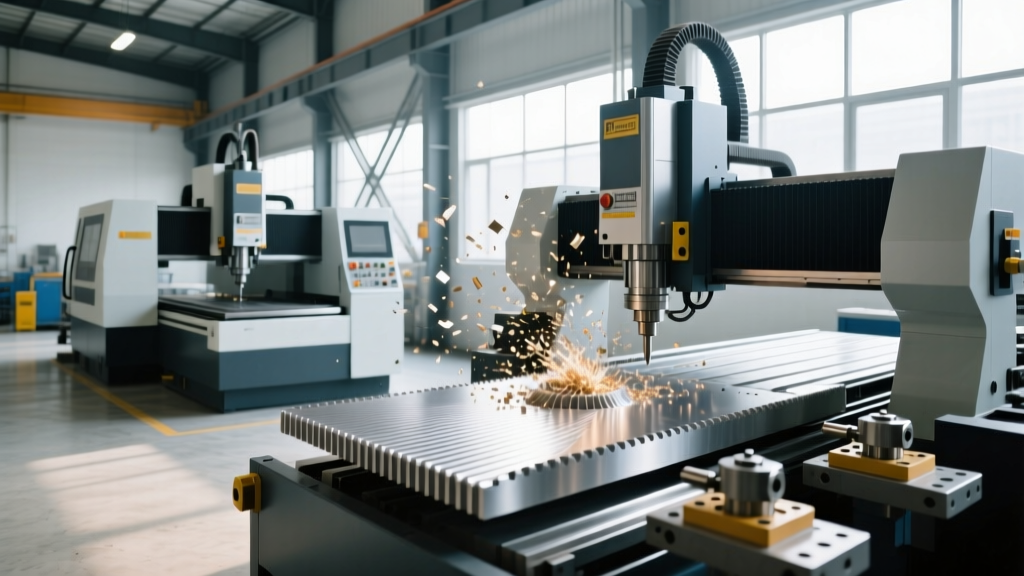
For large-diameter scraper pigs, buoyancy module profiling, and sheet-based gasket cutting, a CNC router provides the necessary bed size and spindle speeds. Routers inherently operate at much higher RPMs, which is ideal for the small-diameter O-flute cutters used in plastics.
- Recommended Models: AXYZ Millennium Series or Thermwood CS93.
- Spindle Requirement: 18,000 to 24,000 RPM HSD or Colombo spindles.
- Bed Size: 4x8 ft or 5x10 ft beds to accommodate large pigging discs and nested sheet gaskets.
- 2026 Pricing: Industrial 3-axis routers with vacuum hold-down tables range from $45,000 to $70,000.
Tooling Specifications: The O-Flute Imperative
Standard 2-flute or 4-flute carbide end mills designed for aluminum or steel will generate excessive heat in HDPE due to inadequate chip gullets. The polymer chips will pack into the flutes, melt, and weld to the cutter, ruining the part surface finish.
According to tooling geometry data from Harvey Tool and Onsrud Cutters, plastic machining requires specialized single-flute or double-flute 'O-flute' geometries.
Tooling Selection Matrix for HDPE
- Roughing (High MRR): Single O-flute solid carbide up-cut end mills. The massive gullet evacuates stringy HDPE chips efficiently. Use a 1/2-inch or 3/8-inch diameter with a 1.5x diameter depth of cut.
- Finishing & Edge Profiling: Single O-flute down-cut end mills. The downward shearing action prevents top-surface fraying and burring, which is critical for O-ring sealing surfaces on pipeline pigs.
- Drilling: Standard 118-degree twist drills will grab and shatter HDPE. Use specialized plastic-cutting drill bits with a 60-to-90-degree point angle and relieved web thickness to reduce axial thrust.
- Coatings: Uncoated, highly polished solid carbide is mandatory. TiAlN or AlCrN coatings increase cutting friction and heat retention, accelerating plastic melting.
Workholding: Avoiding the Crush Factor
HDPE yields at roughly 4,000 PSI. A standard Kurt DX6 vise clamping at 5,000 PSI with serrated steel jaws will permanently deform the workpiece, resulting in out-of-round parts once unclamped.
- Profiled Soft Jaws: Machine 6061 aluminum soft jaws to match the exact contour of the HDPE part. This distributes clamping force over a maximum surface area, reducing localized PSI below the yield threshold.
- Vacuum Fixturing: For CNC routers machining pig discs or gaskets, a 100+ CFM vacuum pump system with a porous MDF spoil board and rubber gasketing is the industry standard. It provides zero-distortion holding.
- Collet Selection: Avoid standard ER collets that apply uneven radial pressure. Use high-precision TG or O-ring sealed collets to prevent the cutter from pulling out during high-feed routing passes.
Thermal Management and Chip Evacuation
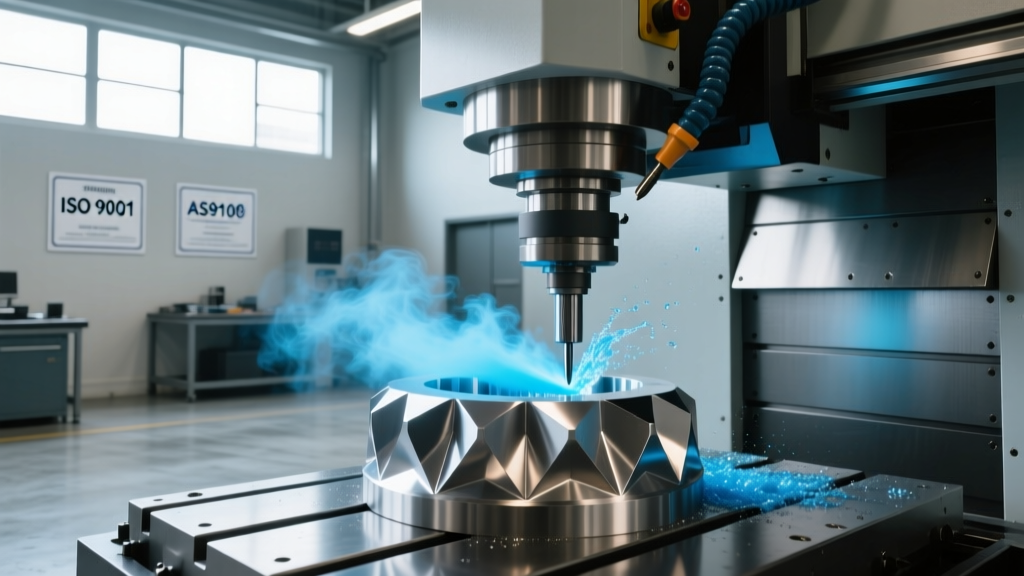
Heat is the enemy of HDPE CNC machining. Without liquid coolant, shops must rely on advanced pneumatic cooling to keep the cutting zone below the material's glass transition temperature.
| Defect Symptom | Root Cause | Equipment / Parameter Fix |
|---|---|---|
| Melted / Burred Edges | Low RPM / High Feed Rate generating friction | Increase RPM to 15,000+; switch to single O-flute geometry |
| Dimensional Swelling | Liquid Coolant Absorption | Eliminate flood coolant; switch to Vortex cold air gun (-20°C) |
| Part Crush / Yielding | Vise Over-clamping with steel jaws | Use vacuum table or profiled aluminum soft jaws |
| Chatter / Vibration | Long Tool Overhang in deep bores | Use stub-length end mills; reduce stick-out to max 2x diameter |
| Stringy Chip Rewelding | Inadequate chip evacuation in deep pockets | Add programmable air-blast nozzles; use peck-drilling cycles |
Invest in a Vortex cold air gun system. These devices use compressed air and a vortex tube to generate a localized stream of sub-zero air (typically -20°C to -30°C) directly at the cutting edge. This freezes the HDPE slightly, allowing it to shear cleanly into brittle chips rather than gummy strings, while simultaneously cooling the tool.
2026 CapEx and ROI Analysis for O&G Contract Shops
Transitioning a machine shop to handle American Petroleum Institute (API) compliant HDPE components requires a targeted capital expenditure. Below is a realistic 2026 equipment budget for a shop adding a dedicated HDPE machining cell:
- High-Speed VMC (Used/Refurbished 12k RPM): $45,000
- Vortex Cold Air Gun & Pneumatic Lines: $1,200
- Specialized Plastic Tooling (Initial Inventory): $2,500
- Custom Aluminum Soft Jaw Blanks: $800
- Industrial Dust/Chip Extraction System: $3,500 (HDPE dust is combustible; standard metal chip conveyors are insufficient for fine plastic particulates).
- Total Cell CapEx: ~$53,000
With O&G contractors frequently paying 30% to 50% premiums for certified, non-metallic isolation and pigging components due to the scarcity of shops willing to run plastics on precision mills, the ROI on a dedicated HDPE cell typically falls between 6 and 9 months, assuming a steady pipeline of energy sector RFQs.