Delrin CNC Machining Maintenance: Prototyping vs Production Runs
Compare Delrin CNC machining maintenance schedules for rapid prototyping versus high-volume production. Learn tooling, chip, and spindle service intervals.
Machining polyoxymethylene (POM), universally known by the DuPont trade name Delrin, presents a unique paradox on the CNC shop floor. While it is highly prized for its exceptional tensile strength (10,000 psi), low friction, and tight dimensional stability, its physical behavior during cutting demands highly specific machine maintenance. Delrin does not conduct heat well; instead, heat concentrates in the tool and the chip. Furthermore, it produces stringy, splinter-like chips that aggressively invade machine seals and way covers.
When transitioning from CNC rapid prototyping to high-volume production machining, the maintenance and service schedules of your CNC equipment must fundamentally shift. A maintenance protocol designed for short-run prototyping will lead to catastrophic spindle failure or chip-conveyor burnout in a production environment. This guide details the exact service intervals, tooling inspections, and machine care routines required for Delrin CNC machining across both operational modes.
Material Profile: Why Delrin is Hard on CNC Equipment
- Melting Point: ~175°C (347°F). Dull tools cause localized melting, leading to built-up edge (BUE) and out-of-tolerance parts.
- Chip Morphology: Long, wiry, and needle-sharp. These chips bypass standard telescopic way covers and jam ball screw wipers.
- Thermal Conductivity: Extremely low (0.37 W/m·K). Heat must be evacuated via the chip or air-blast, not the workpiece.
The Prototyping Maintenance Schedule: High-Mix, Low-Volume
Rapid prototyping in Delrin involves frequent setup changes, diverse toolpaths, and low part counts per operation. The machine enclosure is opened constantly, and tool changes are frequent. Maintenance in this environment is driven by changeover frequency rather than continuous cutting time.
Spindle Taper and Toolholder Servicing
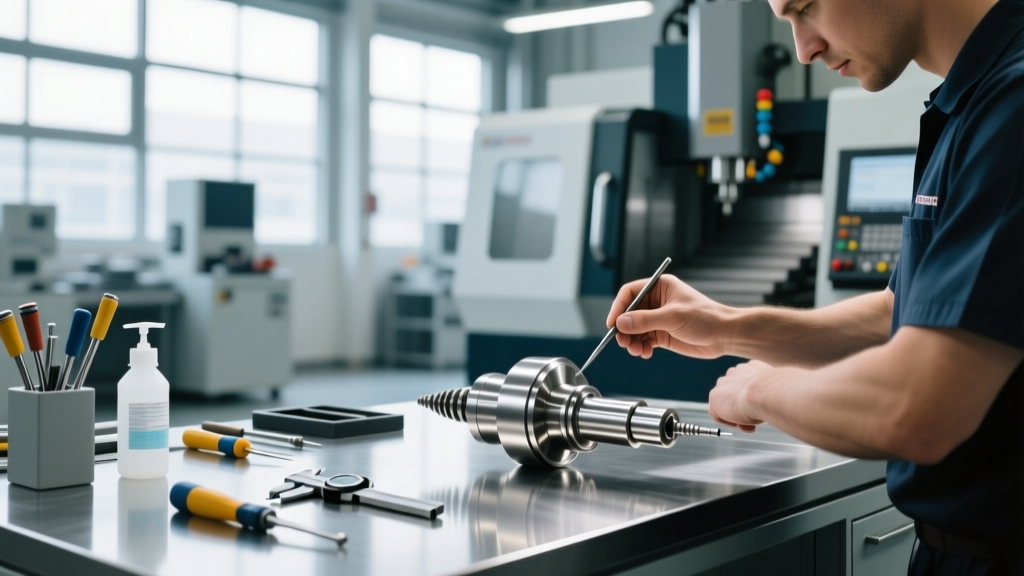
In a prototyping environment, operators may swap toolholders 15 to 20 times per shift. Delrin dust is exceptionally fine and statically charged, easily clinging to the CAT40 or BT30 spindle taper. If a chip or dust buildup is trapped between the toolholder flange and the spindle face, it causes Z-axis height errors and radial runout. For Delrin prototyping, the spindle taper must be wiped with an isopropyl alcohol-dampened lint-free cloth every 10 tool changes. Additionally, retention knob pull-studs should be inspected for micro-cracks every 30 days, as the constant clamping and unclamping fatigues the steel.
Way Cover and Bellows Inspection
Because prototyping requires manual fixture adjustments and frequent part probing, operators often lean on or brush against the machine's way covers. Delrin chips, which resemble stiff plastic bristles, easily pierce the rubber wiper seals on telescopic covers. Maintenance personnel must inspect and replace way cover wipers every 40 machine hours to prevent plastic splinters from embedding in the linear guide rail bearings.
The Production Run Maintenance Schedule: High-Volume, Continuous Cutting
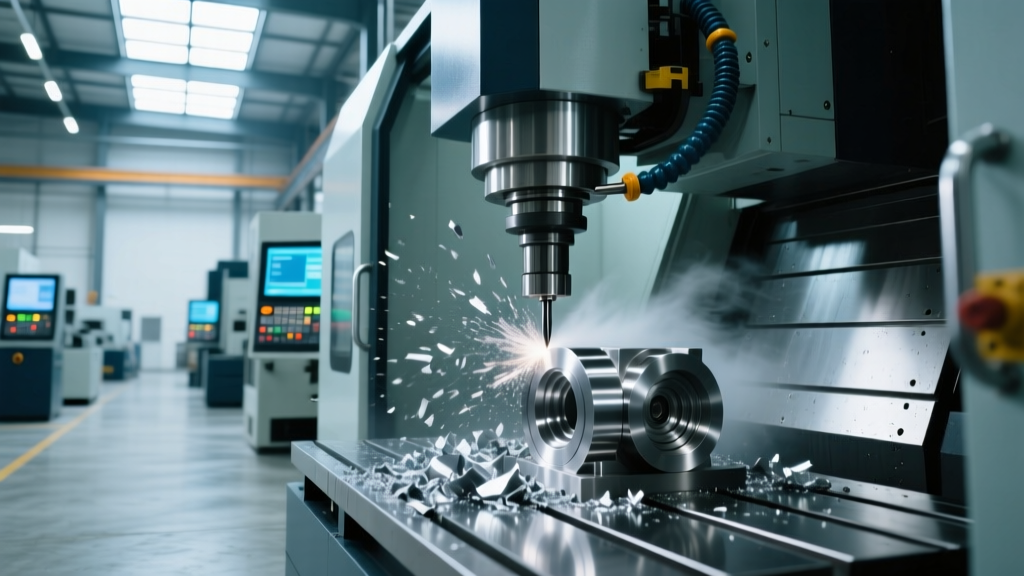
Production machining of Delrin (runs exceeding 5,000 parts) shifts the maintenance focus from changeover-wear to thermal management and chip evacuation. Continuous cutting generates massive volumes of stringy chips and sustained thermal loads on the spindle bearings.
Chip Conveyor and Auger Servicing
The most common cause of unplanned downtime in high-volume Delrin production is chip conveyor failure. Delrin chips do not break easily; they wrap tightly around the conveyor auger and the hinge-belt drive shafts. If left unchecked, this wrapping creates immense drag, tripping the conveyor motor overload or snapping the drive chain. Production maintenance schedules mandate a complete conveyor belt tension check and auger wrap-clearing every 48 hours of continuous runtime. Upgrading to a scraper-style conveyor with a high-torque slip clutch is highly recommended for dedicated Delrin production cells.
Air-Blast and Thermal Management Calibration
Flood coolant is generally avoided in Delrin machining because the material can absorb moisture, altering its dimensions post-machining. Instead, shops use high-pressure air-blast or cold-air gun systems (like vortex tubes) to evacuate chips and cool the cutting zone. In production, air nozzles vibrate out of alignment, leading to localized heat buildup and part melting. Maintenance teams must calibrate and lock down air-blast nozzle positions every 500 parts produced, verifying that the air stream intersects the exact tool-workpiece contact point.
Maintenance Interval Comparison Matrix
| Maintenance Task | Prototyping (Short Runs) | Production (High Volume) |
|---|---|---|
| Spindle Taper Wiping | Every 10 tool changes | Every 8-hour shift |
| Way Cover Wiper Inspection | Every 40 machine hours | Every 120 machine hours |
| Chip Conveyor Clearing | End of shift (manual) | Every 48 hours (automated check) |
| Air-Blast Nozzle Alignment | Per new setup / fixture | Every 500 parts produced |
| Tool Edge Inspection (BUE) | Every 10 parts | Every 1,000 parts (via IoT load monitoring) |
| Coolant Skimming (if used) | Weekly | Daily (plastic fines clog skimmers) |
Tooling Wear and Edge Service Life for Delrin
Tool maintenance for Delrin is less about catastrophic edge chipping and more about microscopic edge rounding and built-up edge (BUE). According to Sandvik Coromant's plastic machining guidelines, polymers require exceptionally sharp cutting edges with high positive rake angles (typically 15° to 20°) and polished flutes to prevent chip adhesion.
In prototyping, standard uncoated micro-grain carbide end mills suffice, but they must be inspected under a 20x loupe every 10 parts to ensure the edge hasn't rounded. A rounded edge will burnish the Delrin rather than shear it, inducing residual stresses that cause the part to warp hours after machining. In production runs exceeding 10,000 parts, shops must transition to diamond-coated carbide tooling. While the upfront cost is 300% higher, diamond-coated tools maintain their sub-micron edge sharpness for up to 15,000 linear inches of cut in POM, drastically reducing the maintenance overhead associated with tool-change downtime and first-article re-inspections.
Warning: Formaldehyde Off-GassingIf maintenance schedules are ignored and cutting tools are allowed to dull, the friction at the cutting zone will exceed Delrin's 175°C melting point. Overheating polyoxymethylene releases formaldehyde gas, a known respiratory irritant and carcinogen. As noted by the NIOSH guidelines on polymer machining safety, adequate local exhaust ventilation (LEV) and strict tool-wear maintenance are mandatory to protect CNC operators from toxic off-gassing during high-volume production.
The Cost of Deferred Maintenance in Delrin Machining
Ignoring the distinct maintenance needs of Delrin machining directly impacts the bottom line through scrap rates and machine degradation. Delrin is highly sensitive to clamping forces and thermal expansion. If a machine's ball screw backlash compensation is not updated regularly (a casualty of poor way-cover maintenance allowing plastic dust into the nut), the resulting Z-axis drift will push tight-tolerance bushings and gears out of the ±0.0005-inch tolerance band.
Furthermore, utilizing Harvey Tool's technical guides on plastic end mills reveals that specialized polymer cutters feature delicate, razor-sharp edges. If the machine's spindle bearings are worn and exhibit more than 0.0002 inches of radial runout—a symptom of deferred spindle maintenance—these fragile cutting edges will micro-chip instantly, turning a $120 specialty end mill into scrap within the first pass.
Frequently Asked Questions
Can I use standard flood coolant for Delrin production runs?
It is highly discouraged. Delrin (POM) is slightly hygroscopic and can absorb moisture from water-soluble flood coolants, leading to dimensional swelling and surface blemishes. High-pressure air-blast combined with a vortex cold-air gun is the industry standard for production runs. If flood coolant must be used for extreme heat dissipation, maintain a strict daily skimming schedule, as Delrin fines will rapidly clog standard coolant filters and promote bacterial growth.
How do I clean Delrin dust from the CNC enclosure safely?
Never use compressed air to blow out a CNC machine after machining Delrin. The fine plastic dust will be forced into the spindle labyrinth seals and electrical cabinet cooling fans. Instead, use an industrial HEPA-filtered vacuum with a static-dissipative nozzle to extract chips and dust from the enclosure and way covers at the end of every shift.
What is the best toolholder for high-speed Delrin prototyping?
For prototyping, standard ER32 collets are acceptable if cleaned frequently. However, for high-speed finishing passes where surface finish is critical, a shrink-fit or hydraulic toolholder is superior. These holders provide superior damping and guarantee a TIR (Total Indicator Runout) of less than 0.0001 inches, which prevents the delicate polished flutes of plastic-cutting end mills from chattering and leaving witness lines on the Delrin surface.