Defense Electronics CNC Machining: 2026 MIL-SPEC Innovations
Explore 2026 innovations in defense electronics CNC machining. Discover MIL-SPEC trends, 5-axis RF waveguide milling, and ruggedized housing production.
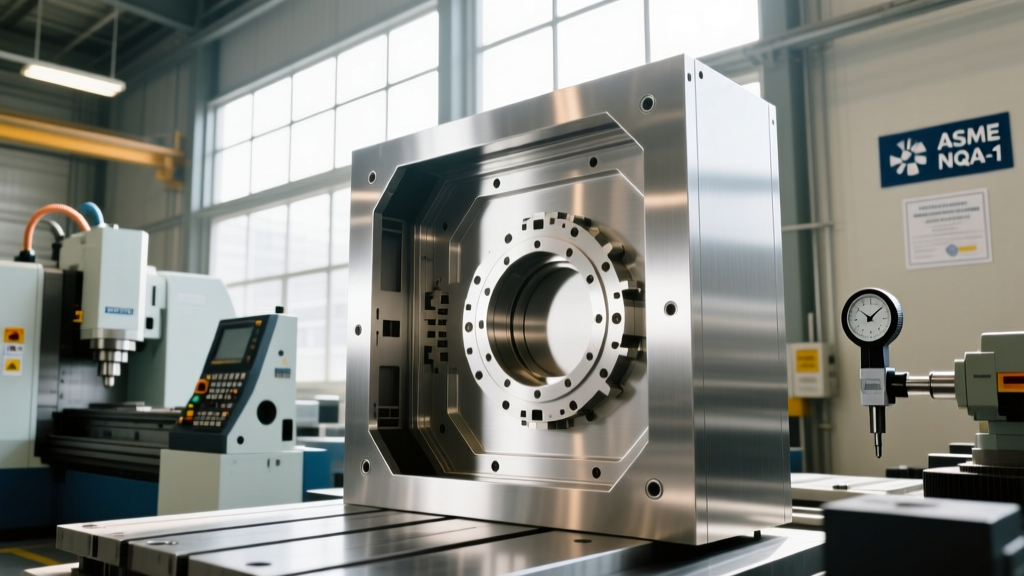
The modernization of electronic warfare (EW) and active electronically scanned array (AESA) radar systems has fundamentally altered the requirements for defense contract manufacturing. When executing electronics cnc machining for next-generation military platforms, the primary directive is SWaP-C optimization (Size, Weight, Power, and Cost). Defense contractors are no longer simply milling aluminum boxes; they are producing complex, high-frequency RF waveguides, hermetically sealed sensor housings, and conformal-cooled directed energy enclosures that must survive MIL-STD-810H shock and vibration profiles.
The Shift to 5-Axis Micromachining for RF and EW Components
Modern radar and communication systems operate in the Ka-band (26.5–40 GHz) and V-band (40–75 GHz). At these frequencies, the internal geometry of a waveguide or RF cavity directly dictates signal attenuation and phase shift. Standard 3-axis milling with multiple setups introduces micro-stepping and part-handling errors that are unacceptable for high-frequency defense electronics.
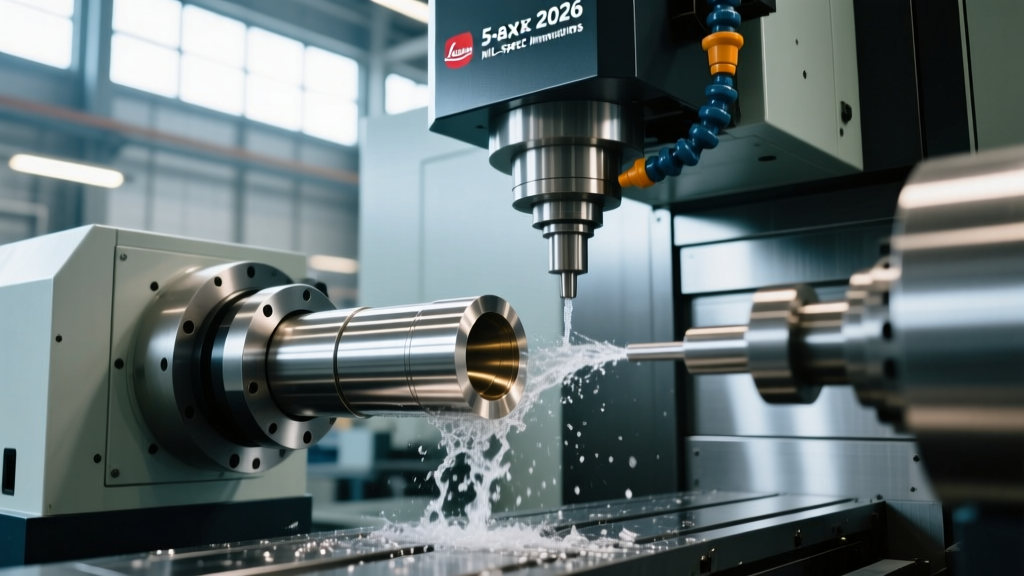
In 2026, tier-one defense machine shops have standardized on 5-axis continuous simultaneous machining centers—such as the DMG MORI Ultrasonic series and Kern Micro machines—to produce these components in a single clamping. The critical metrics for these operations include:
- Internal Surface Finish: Ka-band waveguides require an internal surface roughness of Ra 8 µin (0.2 µm) or better to minimize skin-effect signal loss. This is achieved using high-feed, diamond-coated (PCD) end mills followed by automated abrasive flow machining (AFM).
- Flange Flatness: Waveguide mating flanges demand a flatness tolerance of ±0.0002 inches across a 3-inch span to prevent RF leakage, which could compromise the stealth profile of a 5th-generation fighter jet.
- Corner Radii Control: Internal sharp corners cause electromagnetic field concentration and arcing. 5-axis trochoidal milling allows for the precise generation of continuous, tangent-blended internal radii as small as 0.015 inches.
Material Innovations: Beyond Standard 6061-T6 Aluminum
While 6061-T6 and 7075-T6 aluminum remain staples for general ruggedized enclosures, the thermal density of modern AESA radar transmit/receive (T/R) modules requires advanced materials. Defense electronics CNC machining now heavily features metal matrix composites (MMCs) and specialized alloys to manage heat dissipation without adding weight.
| Material | Thermal Conductivity (W/m·K) | Density (g/cm³) | Machinability & Tooling Requirement | Primary Defense Electronics Application |
|---|---|---|---|---|
| AlSi10Mg (Additive/Wrought) | 168 | 2.67 | High; requires carbide with specific rake angles to prevent built-up edge (BUE). | Lightweight UAV sensor housings, EW jammer chassis. |
| Al/SiC MMC (e.g., Alcoa Supra) | 180 - 220 | 2.95 | Extremely abrasive; mandates CVD diamond or PCD tooling. High tool wear. | AESA radar T/R module baseplates, high-power laser diode mounts. |
| Kovar (ASTM F15) | 17 | 8.36 | Moderate; gummy, requires sharp HSS or uncoated carbide and high-pressure coolant. | Hermetic seals for cryogenic IR sensors and satellite RF feeds. |
| Beryllium (I-220H) | 216 | 1.85 | Excellent but highly toxic; requires strict OSHA containment and specialized extraction. | Gimbaled targeting system housings, space-based optics mounts. |
AI-Driven In-Process Metrology for MIL-SPEC Compliance
The cost of scrapping a complex, 40-hour machined EW housing due to an out-of-tolerance internal bore is catastrophic for defense supply chains. The integration of AI-driven in-process metrology has become a baseline requirement for precision defense manufacturing.
Systems like the Renishaw REVO 5-axis CMM head, integrated directly into the machine tool via probing cycles, now perform real-time adaptive machining. If thermal expansion causes a deep RF cavity to drift by 0.0004 inches during a long cycle, the machine's control algorithm automatically updates the tool offset on the fly. This closed-loop manufacturing ensures 100% first-pass yield on complex MIL-SPEC geometries, drastically reducing the bottleneck of post-process CMM inspection.
CRITICAL COMPLIANCE: ITAR and CMMC 2.0
Machining defense electronics is not just a technical challenge; it is a legal one. All CAD/CAM data, toolpaths, and G-code for ITAR-controlled components (regulated under 22 CFR § 120-130) must remain on air-gapped or strictly controlled servers. Furthermore, as the Department of Defense enforces Cybersecurity Maturity Model Certification (CMMC) 2.0, machine shops must prove that their CNC network infrastructure protects Controlled Unclassified Information (CUI). A shop lacking Level 2 CMMC certification is entirely locked out of the prime contractor supply chain, regardless of their machining capabilities.
Hybrid Manufacturing for Conformal Cooling Channels
Directed energy weapons (DEWs) and high-power microwave (HPM) systems generate immense localized heat. Traditional cross-drilled cooling channels in CNC-machined heat sinks create dead zones and turbulent flow, leading to thermal hotspots that degrade electronic performance.
The 2026 solution is hybrid additive-subtractive manufacturing. The NextFlex manufacturing innovation institute has heavily promoted the integration of laser powder bed fusion (LPBF) with 5-axis CNC milling. A shop will 3D print a copper or AlSi10Mg heat sink with complex, mathematically optimized conformal cooling channels that follow the exact contour of the electronic component. The part is then transferred to a 5-axis CNC mill, which machines the mating surfaces, RF interfaces, and mounting flanges to sub-micron tolerances. This hybrid approach reduces the thermal resistance of the heat sink by up to 35% compared to traditional subtractive methods.
Frequently Asked Questions: Defense Electronics Machining
What surface treatments are required after CNC machining military electronics?
Raw machined aluminum is rarely used in defense. Components typically undergo MIL-DTL-5541 Type II (clear chemical conversion coating) for EMI/RFI shielding and corrosion resistance, or MIL-A-8625 Type III (hard anodize) for wear surfaces. For RF cavities where conductivity is paramount, silver or gold plating per ASTM B700 is applied post-machining to minimize insertion loss.
How do machine shops manage chip evacuation in deep-cavity EW housings?
Deep, thin-walled cavities for electronic warfare receivers are prone to chip packing, which causes tool deflection and surface gouging. Advanced shops utilize through-spindle coolant (TSC) at pressures exceeding 1,000 PSI, combined with specialized chip-breaker geometries on their end mills. Additionally, high-frequency ultrasonic vibration-assisted milling is used to break chips into manageable, needle-like fragments that evacuate easily.
What is the typical lead time for prototyping MIL-SPEC electronic housings?
While commercial electronics enclosures might turn around in 1–2 weeks, defense prototypes require extensive material certification (DFARS 252.225-7009 for specialty metals), first-article inspection (FAI per AS9102), and ITAR compliance checks. Expect a realistic lead time of 6 to 10 weeks for fully documented, MIL-SPEC compliant first articles from a qualified defense machine shop.