Complex CNC Machining for Medical Implant Manufacturing
Discover how complex CNC machining enables the production of high-precision medical implants, featuring material specs, tolerances, and real-world case studies.
The Stakes of Precision: Medical Implant Manufacturing
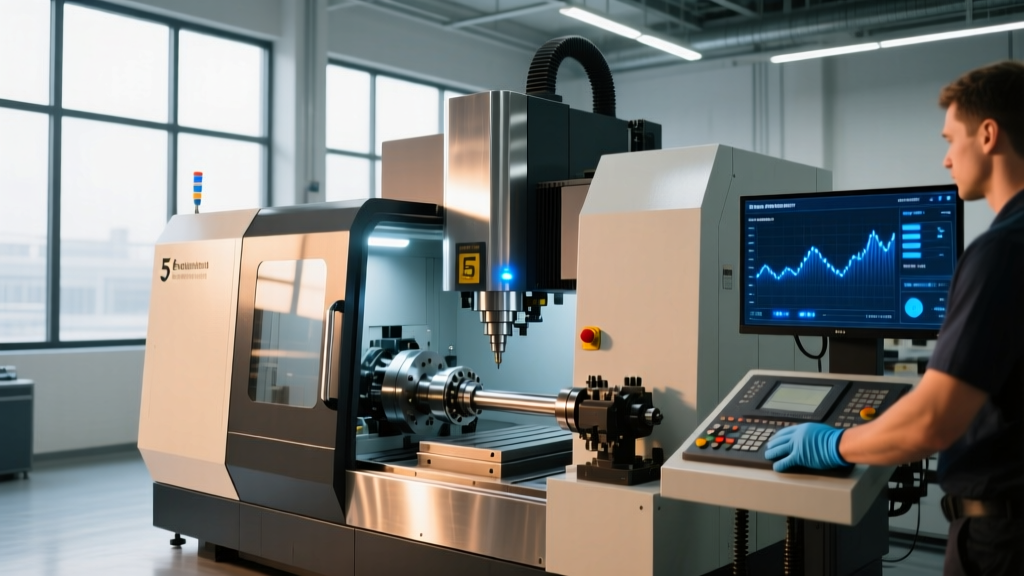
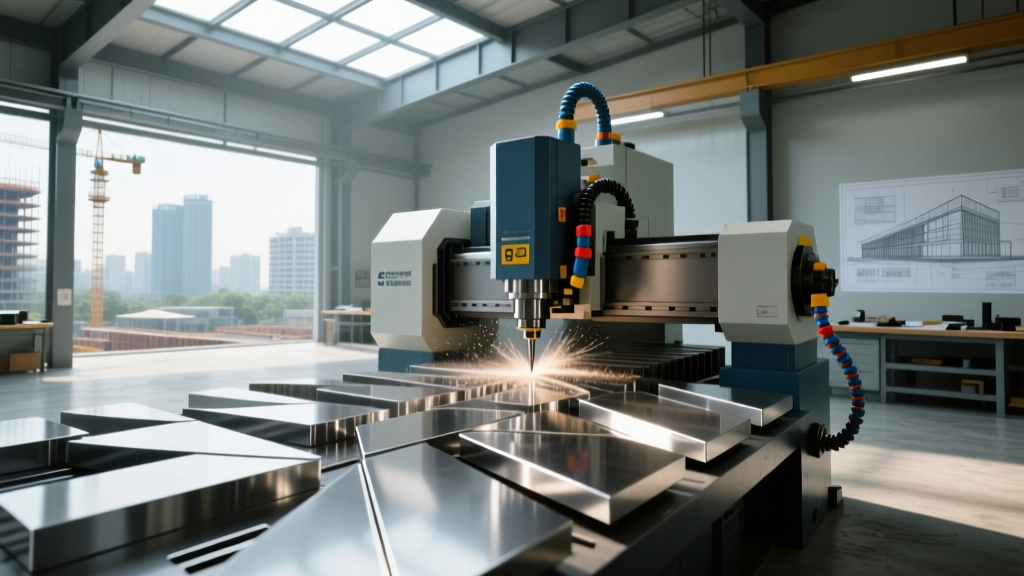
Manufacturing orthopedic and spinal implants leaves zero margin for error. A deviation of 0.0005 inches in a knee replacement articulating surface can lead to premature polyethylene wear, osteolysis, and catastrophic joint failure. Complex CNC machining for medical devices requires mastering the intersection of extreme metallurgical challenges, sub-micron surface finish requirements, and rigorous regulatory traceability. As of 2026, the shift toward patient-specific implants (PSIs) and porous osseointegrative structures has pushed 5-axis milling and multi-tasking CNC turning to their absolute limits.
This guide deconstructs the technical realities of machining biocompatible alloys, providing actionable frameworks for material selection, toolpath strategies, and quality assurance protocols required for FDA-compliant production.
Biocompatible Material Matrix: Machinability vs. Performance
Selecting the right biomaterial dictates your entire CNC strategy. Medical-grade alloys are notoriously abrasive, work-harden rapidly, and exhibit poor thermal conductivity, trapping heat at the cutting zone. Below is a technical breakdown of the three dominant implant materials and their specific machining parameters.
| Material (ASTM Standard) | Primary Application | Hardness / Tensile Strength | Cutting Speed (SFM) | Machining Challenges & Tooling |
|---|---|---|---|---|
| Ti-6Al-4V ELI (ASTM F136) | Spinal cages, trauma plates, dental implants | 32 HRC / 120 ksi | 150 - 200 SFM | Severe galling and built-up edge (BUE). Requires high-pressure coolant (1000+ PSI) and AlTiN-coated carbide end mills. |
| CoCrMo (ASTM F75 / F1537) | Femoral heads, knee articulating surfaces | 25-35 HRC / 135 ksi | 100 - 150 SFM | Extreme abrasive wear. Demands ceramic insert turning for roughing and rigid setups to prevent chatter during finishing. |
| PEEK Victrex 450G (ASTM F2026) | Interbody fusion devices, suture anchors | Shore D 85 / 14 ksi | 400 - 600 SFM | Thermal melting and burr formation. Requires sharp, high-positive rake tools, air-blast cooling, and strict chip evacuation. |
Case Study: 5-Axis Milling of Titanium Interbody Spinal Cages
Consider the production of a porous titanium interbody spinal cage. The geometry features a 0.5mm wall thickness, internal lattice structures for bone ingrowth, and aggressive 45-degree lordotic angles. Machining this on a standard 3-axis VMC requires multiple setups, introducing cumulative tolerance stack-up and risking part scrap.
The 5-Axis Simultaneous Strategy
Using a Haas UMC-750SS with a 15,000 RPM spindle and integrated Renishaw probing, the entire cage can be completed in two operations. The critical success factor is thermal management. Titanium’s thermal conductivity is roughly 1/6th that of steel, meaning 80% of the cutting heat transfers directly into the tool.
- Roughing: Trochoidal milling with a 1/2-inch, 5-flute Kennametal HARVI III end mill. Maintaining a constant tool engagement angle (radial depth of cut at 5% of tool diameter) prevents heat spikes.
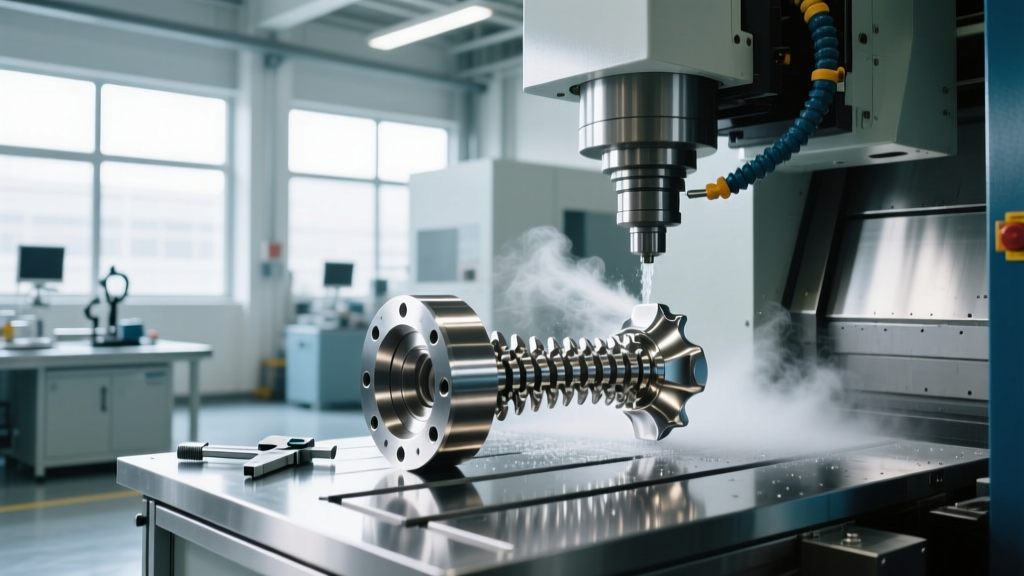
- Coolant Delivery: Through-spindle coolant (TSC) at 1,000 PSI is non-negotiable. It penetrates the cutting zone, breaks the titanium chip, and prevents the re-welding of chips to the flute valleys.
- Finishing: Barrel cutters (lens-shaped end mills) are utilized for the contoured lordotic surfaces. By tilting the B-axis, the large radius of the barrel cutter maintains a step-over of 0.015 inches while achieving an Ra 0.4 µm surface finish, eliminating the need for secondary manual polishing.
Critical Regulatory Alert: Traceability & ISO 13485
According to ISO 13485:2016 standards and FDA 21 CFR Part 820 (CGMP), every implant must be traceable back to the original mill heat lot. Your CNC shop floor must utilize barcode-driven tool tracking and material serialization. If a batch of Ti-6Al-4V ELI fails a post-market tensile test, the manufacturer must be able to identify and recall every specific spinal cage machined from that exact billet within 24 hours.
Achieving Sub-Micron Surface Finishes for Articulating Joints
While spinal cages rely on osseointegration (bone growing into a rough surface), articulating joints like total knee replacements (TKR) require mirror finishes to prevent the abrasion of ultra-high-molecular-weight polyethylene (UHMWPE) bearings. The CoCrMo femoral component must achieve a surface roughness of Ra 0.05 µm or better.
Complex CNC machining alone cannot achieve this directly off the machine. The standard workflow integrates CNC multi-tasking turning with automated robotic polishing or magnetic abrasive finishing (MAF).
- CNC Turn-Mill Roughing: The CoCr forging is turned on a DMG MORI NTX 2000. Heavy depths of cut (0.150 inches) are taken with silicon nitride (Si3N4) ceramic inserts to bypass the work-hardened surface layer of the forging.
- Hard Turning Finishing: Switching to CBN (Cubic Boron Nitride) inserts, the machine executes a finishing pass at 0.002-inch depth of cut and a 0.003-inch/rev feed rate, bringing the part to Ra 0.2 µm.
- MAF Post-Processing: The part is transferred to a Magnetic Abrasive Finishing cell. A magnetic field drives iron-bonded diamond abrasives across the complex condylar curves, removing the microscopic turning marks and achieving the final Ra 0.05 µm mirror finish without altering the macro-geometry.
Cost Drivers in Low-Volume, High-Mix Medical Production
Medical contract machining rarely involves runs of 10,000 identical parts. Surgeon-specific cutting guides and custom trauma plates often run in batches of 1 to 50. Understanding the cost architecture is vital for design engineers and procurement managers.
| Cost Category | Description & Impact on Unit Price | Typical Range / Metric |
|---|---|---|
| NRE & CAM Programming | 5-axis toolpath simulation, collision checking, and custom fixture design. Amortized heavily in batches under 20 units. | $1,500 - $4,000 per unique part number |
| IQ/OQ/PQ Validation | Installation, Operational, and Performance Qualification protocols required by the FDA for the specific CNC process. | $5,000 - $15,000 per process setup |
| First Article Inspection (FAI) | CMM (Coordinate Measuring Machine) programming and full dimensional reporting per AS9102/medical standards. | $300 - $800 per part |
| Cleanroom Packaging | Class 7 cleanroom washing, passivation, and double-pouching for terminal sterilization (EtO or Gamma). | $45 - $120 per unit |
Pro-Tip for Procurement: To reduce unit costs on complex CNC machined medical components, design engineers should standardize internal corner radii to match off-the-shelf end mill diameters (e.g., using 0.125" or 0.187" radii) rather than specifying arbitrary dimensions that require custom-ground tooling.
Frequently Asked Questions (Technical Deep-Dive)
Why is Ti-6Al-4V ELI (Grade 23) preferred over standard Grade 5 titanium for implants?
While Grade 5 (Ti-6Al-4V) offers slightly higher tensile strength, the ELI (Extra Low Interstitial) variant restricts oxygen, nitrogen, carbon, and iron impurities. This reduction in interstitial elements significantly improves fracture toughness and fatigue crack propagation resistance at body temperature, which is critical for load-bearing implants subjected to millions of cyclic loads.
How do machine shops handle the burr problem when CNC machining PEEK?
PEEK is highly ductile at the micro-level during cutting, leading to stubborn burrs. Shops mitigate this by utilizing uncoated, ultra-sharp carbide tools with high-positive rake angles (15° to 20°). Furthermore, replacing traditional flood coolant with high-volume compressed air or cryogenic CO2 cooling keeps the polymer below its glass transition temperature (143°C) at the shear zone, resulting in brittle chip formation rather than ductile smearing.
What is the role of EDM in complex CNC medical machining?
Wire and Sinker EDM (Electrical Discharge Machining) are heavily integrated into medical CNC workflows for features that milling cannot reach. For example, the intricate locking mechanisms inside modular orthopedic revision stems, or the micro-slots in bone-cutting saw blades, are often rough-milled and finished via Wire EDM to achieve zero-burr, perfectly square internal corners with tolerances held to ±0.0001 inches.