CNC Machining PEEK Services vs Metal for Architectural Facades
Compare CNC machining PEEK services against aluminum and steel for architectural facades. Discover thermal, structural, and cost trade-offs for 2026 builds.
The Thermal Bridging Crisis in Modern Curtain Walls
Architectural metalwork and facade engineering are currently undergoing a radical material shift. As global energy codes tighten and the push for Net Zero and Passive House certifications dominates 2026 commercial construction, the traditional reliance on aluminum and stainless steel for every facade component is no longer viable. The primary culprit is thermal bridging: the phenomenon where highly conductive metals create a direct path for heat transfer through the building envelope, severely compromising HVAC efficiency and causing interior condensation.
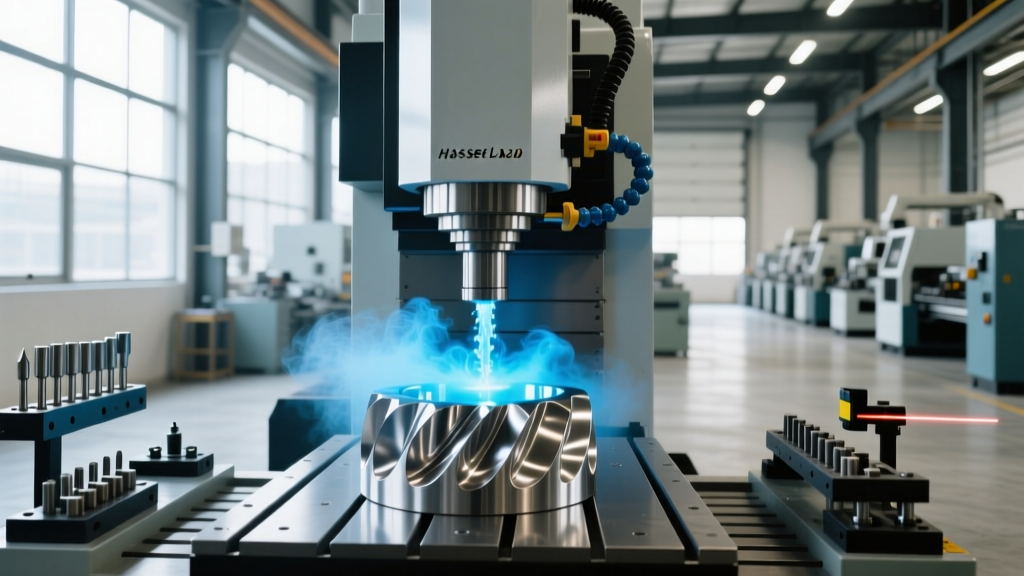
To solve this, facade engineers and architectural metalwork fabricators are increasingly integrating high-performance polymers into their metal assemblies. Specifically, sourcing CNC machining PEEK services (Polyether ether ketone) has emerged as a superior alternative to traditional metal thermal breaks for complex, custom connection nodes, kinetic facade bearings, and structural standoffs. This analysis compares PEEK against standard architectural metals, providing a technical framework for deciding when to machine in-house from aluminum and when to outsource to specialized PEEK machining services.
2026 Energy Code Context: According to the U.S. Department of Energy's Building Technologies Office, continuous insulation and thermal break mandates in the latest IECC and ASHRAE 90.1 updates require facade assemblies to achieve U-values that are virtually impossible with uninterrupted aluminum mullions. Eliminating point-thermal-bridges at custom bracket connections is now a mandatory engineering requirement, not an optional upgrade.Material Matrix: PEEK vs. Architectural Metals
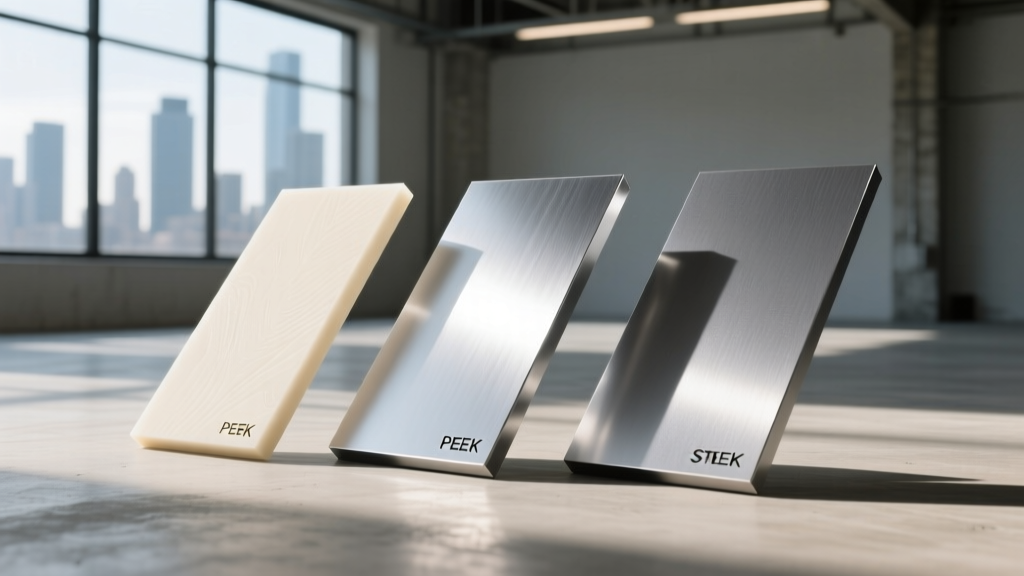
When designing custom facade brackets, standoffs, or kinetic hinges, material selection dictates both the thermal performance and the manufacturing methodology. Below is a direct comparison between carbon-filled PEEK (the standard for exterior architectural use), 6061-T6 Aluminum, and 316 Stainless Steel.
| Property | Victrex PEEK 450CA30 | 6061-T6 Aluminum | 316 Stainless Steel |
|---|---|---|---|
| Thermal Conductivity (W/m·K) | 0.43 (Excellent Insulator) | 167.0 (High Conductor) | 16.3 (Moderate Conductor) |
| Density (g/cm³) | 1.40 | 2.70 | 8.00 |
| Tensile Strength (MPa) | 212 | 310 | 515 |
| UV Resistance (Uncoated) | Poor (Requires shielding) | Good (Anodized) | Excellent |
| Raw Material Cost Index | 100x (Approx. $400/kg) | 1x (Approx. $4/kg) | 8x (Approx. $32/kg) |
| CNC Machinability | Requires specialized tooling | Excellent | Difficult (Work hardens) |
As detailed in Victrex PEEK material specifications, the addition of 30% carbon fiber (CA30) drastically improves the compressive strength and wear resistance of the polymer, making it suitable for load-bearing architectural nodes while maintaining a fraction of the thermal conductivity of aluminum.
Strategic Applications: Where PEEK Replaces Metal
Architectural metalwork contractors should not view PEEK as a wholesale replacement for aluminum extrusions or steel mullions. Instead, CNC machined PEEK components serve as high-value, precision inserts within larger metal assemblies.
1. Custom Thermal Break Standoffs and Isolators
In complex parametric facades, standard extruded polyamide thermal break strips cannot accommodate the multi-axis geometry of custom connection nodes. By utilizing CNC machining PEEK services, fabricators can produce complex, 5-axis machined isolator blocks that sit between the exterior aluminum cladding and the interior steel substructure. These PEEK nodes reduce point-thermal bridging by up to 95% compared to direct metal-to-metal bolted connections, effectively eliminating interior condensation risks in high-humidity environments like museums or aquatic centers.
2. Kinetic Facade Bearings and Bushings
Dynamic, sun-tracking facades require thousands of moving joints. Using stainless steel or aluminum bearings requires continuous lubrication, which attracts dust, degrades over time, and stains the facade. PEEK is inherently self-lubricating and highly wear-resistant. Machined PEEK bushings integrated into aluminum hinge assemblies provide a maintenance-free, frictionless pivot point that survives decades of wind-load cycling without seizing or galling.
3. Galvanic Isolation Fasteners
When connecting dissimilar metals on a facade (e.g., carbon fiber reinforced panels to aluminum frames), galvanic corrosion is a severe risk. Machined PEEK washers, sleeves, and custom captive fasteners provide absolute electrical isolation between the metals, preventing the electrolytic degradation that plagues coastal architectural installations.
Sourcing CNC Machining PEEK Services: A Buyer’s Checklist
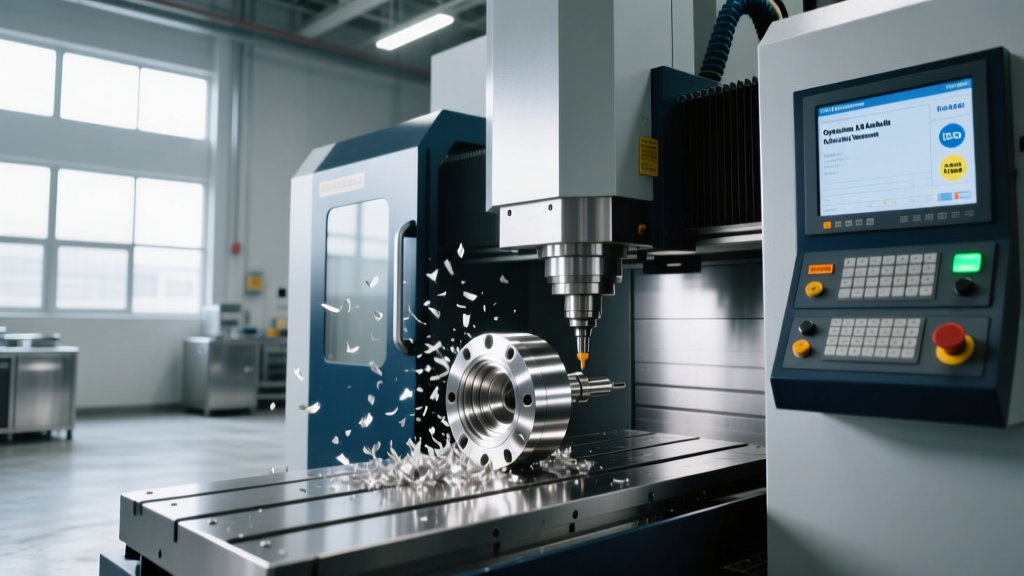
Machining PEEK is fundamentally different from machining aluminum. If your architectural metalwork shop is considering outsourcing these components, you must vet the machine shop's polymer expertise. A shop that only cuts metal will likely produce defective PEEK parts. Demand the following capabilities:
- Pre- and Post-Machining Annealing: PEEK stock contains internal stresses from the extrusion process. If machined without annealing, the parts will warp out of tolerance as soon as the clamps are released. The shop must anneal the blanks at roughly 200°C before roughing, and again after roughing before the final finishing passes.
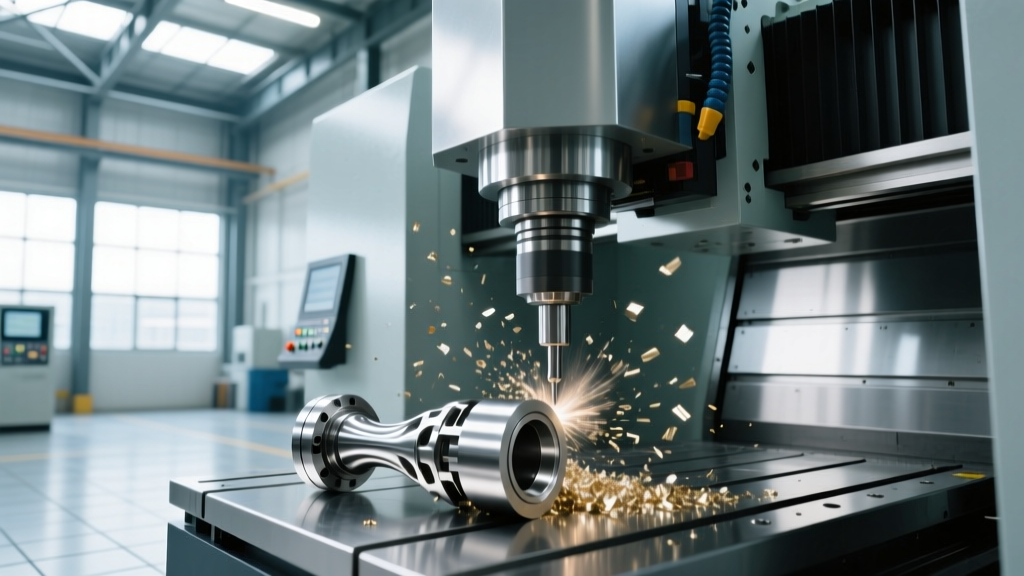
- Specialized Tooling Geometry: Standard aluminum endmills will generate excessive friction, melting the PEEK and leaving a burr-heavy, poor surface finish. The shop must use sharp, uncoated carbide or diamond-coated tooling with high positive rake angles and highly polished flutes to evacuate chips efficiently.
- Coolant vs. Air Blast Strategies: While flood coolant is standard for metal, PEEK can absorb certain water-soluble coolants, altering its dimensional stability. Expert shops use high-pressure air blasts or specialized mist systems to keep the cutting zone clear of chips without saturating the polymer.
- UV Stabilization Planning: Unfilled and even carbon-filled PEEK will degrade under prolonged, direct ultraviolet exposure. If the machined node is exposed to direct sunlight, the shop or fabricator must apply a specialized UV-blocking architectural coating, or design the assembly so the PEEK is fully shielded by the exterior aluminum cladding.
Cost-Benefit Framework for Facade Engineers
The raw material cost of PEEK is undeniably high. However, evaluating the cost solely on a per-part basis ignores the systemic HVAC and structural savings it provides. Consider a 2026 commercial high-rise project requiring 4,500 custom parametric connection nodes.
Scenario Analysis: 4,500 Custom Facade Nodes
Option A: 6061-T6 Aluminum (In-House CNC)
Material & Machining Cost: $65,000
Thermal Penalty: High conductivity requires the building's HVAC system to be upsized by 12% to compensate for winter heat loss and summer heat gain at the connection points. Estimated HVAC capital premium: $140,000. Annual energy penalty: $22,000.
Option B: Victrex PEEK 450CA30 (Outsourced CNC Machining PEEK Services)
Material & Machining Cost: $185,000
Thermal Penalty: Near-zero thermal bridging. HVAC system operates at baseline design capacity.
Net Result: While the PEEK components cost $120,000 more upfront, they yield $140,000 in immediate HVAC capital savings, resulting in a net positive ROI of $20,000 on day one, before factoring in decades of operational energy savings and the elimination of condensation-related mold remediation risks.
When to Reject PEEK and Stick to Metal
Despite its thermal and tribological advantages, PEEK is not a panacea. Architectural metalwork fabricators must avoid specifying PEEK in the following scenarios:
- Primary Structural Mullions and Cantilevers: PEEK's tensile strength (approx. 212 MPa for CA30) is significantly lower than 6061-T6 aluminum (310 MPa) and vastly inferior to structural steel. It will experience creep (deformation under continuous load) over time if used as a primary, continuous load-bearing beam.
- High-Temperature Fire Barrier Zones: While PEEK has an excellent continuous use temperature of 250°C and low flammability, architectural fire-stop requirements often demand non-combustible, intumescent, or solid steel barriers. PEEK cannot replace steel in fire-rated compartmentalization nodes.
- Large-Span, Low-Tolerance Extrusions: PEEK is a machined billet material. If your facade design relies on 20-foot continuous linear profiles, CNC machining PEEK is economically unfeasible. Stick to thermally broken aluminum extrusions for linear runs, and reserve machined PEEK for the complex, multi-axis intersection nodes.
Summary: Integrating Polymers into Metalwork
The future of architectural metalwork lies in hybrid assemblies. By strategically leveraging CNC machining PEEK services for thermal isolators, kinetic bearings, and galvanic barriers, facade contractors can meet the stringent energy codes of 2026 and beyond without sacrificing structural integrity. The key to success lies in understanding the material's limitations, designing for its specific load-bearing characteristics, and partnering with machine shops that possess verified expertise in high-performance polymer manufacturing.