Applying Defense Industry CNC Precision Machining to Medical Devices
Explore how defense industry CNC precision machining standards, tolerances, and materials are transforming complex medical device manufacturing.
The Tolerance Paradigm: MIL-SPEC Meets Bio-Compatibility
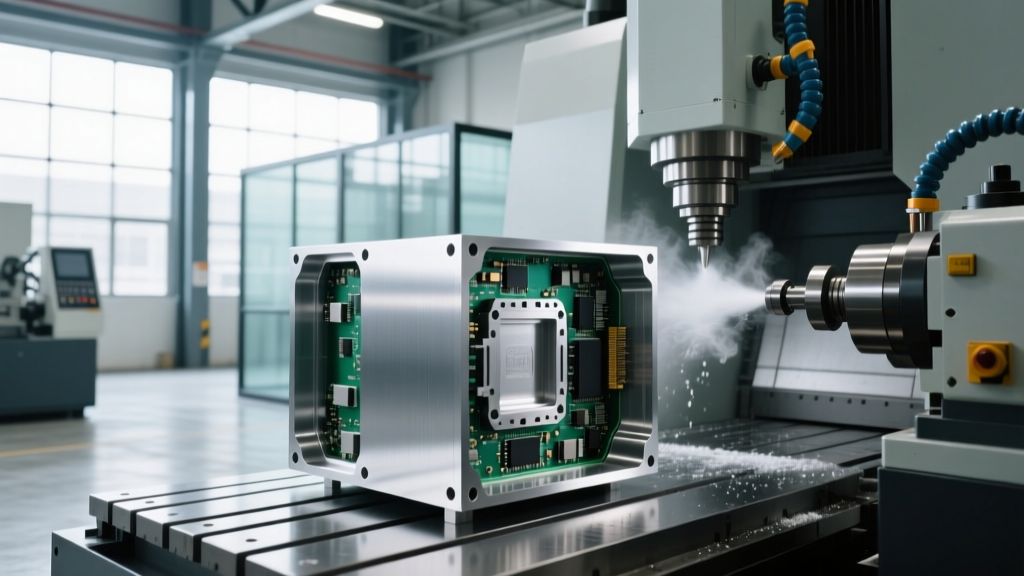
Historically, medical device manufacturing operated on standard CNC tolerances of ±0.0005 inches (12.7 µm). However, the integration of defense industry CNC precision machining methodologies has forced a paradigm shift, particularly in surgical robotics and implantable micro-pumps. Facilities utilizing 5-axis mill-turn centers like the DMG MORI NTX 1000 or the Willemin-Macodel 408S2 now routinely hold true position tolerances of ±0.0002 inches (5 µm) on complex titanium geometries.
This crossover is driven by the miniaturization of surgical instruments. Robotic end-effectors and micro-steppers require the same extreme geometric fidelity as guided missile actuators. When sourcing a contract manufacturer, OEMs must verify that the shop's environmental controls and machine calibration protocols align with military-grade specifications, not just standard commercial job-shop baselines.
| Parameter | Standard Medical Machining | Defense-Crossover Precision |
|---|---|---|
| Dimensional Tolerance | ±0.0005" (12.7 µm) | ±0.0002" (5.0 µm) |
| Surface Finish (Ra) | 32 µin | 8 µin (Mirror Polish) |
| True Position (TP) | 0.001" | 0.0003" |
| Spindle Runout | < 5 µm | < 1.5 µm |
Metallurgical Protocols and Toolpath Strategies
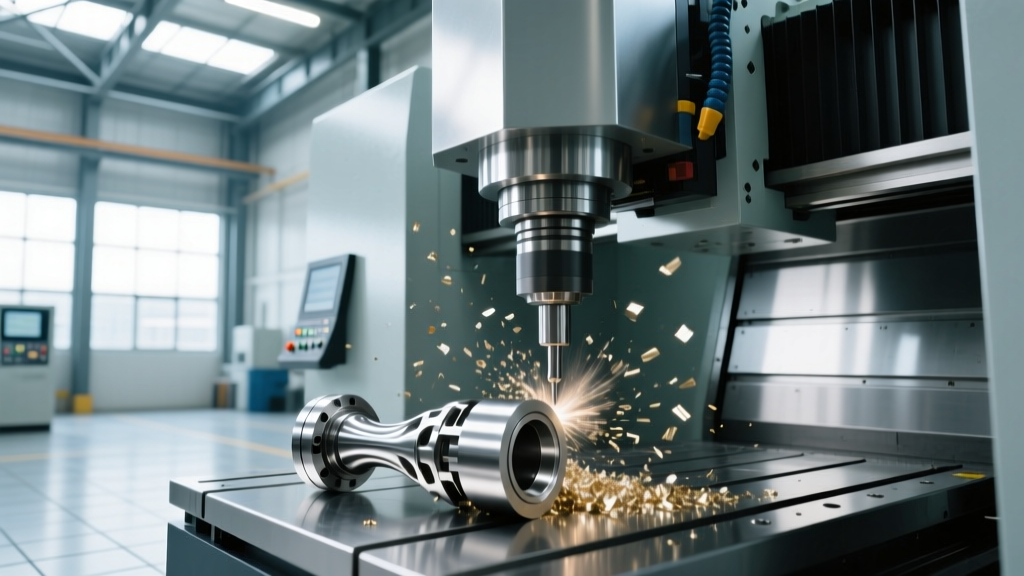
When machining Ti-6Al-4V ELI (ASTM F136) for spinal cages or orthopedic joints, traditional climb milling generates excessive localized heat, leading to work hardening and accelerated tool wear. Defense-grade machining protocols mandate trochoidal milling and dynamic chip-thinning toolpaths. By maintaining a constant radial engagement angle (typically 10-15% of tool diameter) and utilizing high-pressure through-spindle coolant (1,000+ PSI), shops can extend the life of Sandvik Coromant CoroMill 390 cutters by up to 40% while preventing alpha-case formation on the titanium surface.
For Swiss-type machining of surgical bone screws on platforms like the Tsugami B0386, coolant selection is critical. Shops must utilize high-lubricity, low-foam formulations like Master Chemical TRIM MicroSol 585XT to manage the extreme friction of thread-whirling operations without leaving toxic chemical residues that could fail biocompatibility testing (ISO 10993).
Metrology and Thermal Compensation
Metrology for defense-crossover medical parts requires rigorous environmental control. Titanium (Ti-6Al-4V) has a coefficient of thermal expansion (CTE) of 8.6 µm/m·°C. A 100mm part measured at 25°C instead of the standard 20°C will exhibit a 4.3 µm (0.00017") expansion error—enough to fail a ±0.0002" tolerance check.
Inspection Protocol Requirement: Inspection cells housing Zeiss Contura G3 CMMs must be climate-controlled to 20°C ± 0.1°C. Parts must soak in the metrology lab for a minimum of 4 hours prior to scanning to achieve thermal equilibrium. Non-contact optical scanning via Keyence VR-6000 3D macroscopes is required for micro-texture verification on porous implant surfaces.Traceability: Merging DFARS with FDA UDI
Defense manufacturing relies on DFARS compliance for material sourcing; medical manufacturing relies on the FDA Unique Device Identification (UDI) system. Dual-capable machine shops merge these frameworks by utilizing laser etching (e.g., via FOBA M200-X systems) to apply 2D DataMatrix codes directly onto the implant surface. This satisfies both the Department of Defense's item unique identification (IUID) mandates and FDA tracking requirements without compromising the passive oxide layer that protects titanium from bodily fluid corrosion.
Quality Systems: AS9100D vs. ISO 13485
A shop cannot simply apply aerospace standards to medical parts. They must integrate AS9100 Rev D with ISO 13485:2016 and FDA 21 CFR Part 820 Quality System Regulations. The overlap lies in risk management—AS9100's Process Failure Mode Effects Analysis (PFMEA) aligns closely with ISO 14971 for medical devices. However, the divergence is stark in process validation: medical shops must execute rigorous IQ/OQ/PQ (Installation, Operational, and Performance Qualification) protocols, particularly for secondary operations like passivation and gamma sterilization, which have no direct equivalent in standard defense machining.
Contamination Warning: Machine shops transitioning from heavy defense contracts (which may involve beryllium, lead, or depleted uranium) to medical devices must implement strict physical and HVAC segregation. Cross-contamination of heavy metals into biocompatible implant lines will result in catastrophic FDA audit failures and potential patient harm. Dedicated cleanrooms and separate chip-recycling streams are non-negotiable.OEM Decision Matrix: Selecting a Dual-Capable Machine Shop
Procurement teams evaluating contract manufacturers for high-precision medical devices should utilize the following framework to verify true defense-grade capabilities:
- Machine Asset List: Verify the presence of sub-micron feedback scale machines (e.g., Heidenhain TNC 640 controls with linear glass scales).
- Certification Overlap: Demand proof of dual-certification (AS9100D and ISO 13485) under the exact same quality manual, not siloed departments.
- Coolant Management: Audit the fluid management system. Medical-grade shops utilize continuous centrifugal separation and UV sterilization to prevent bacterial growth in coolant tanks, which is a common vector for post-machining bioburden failures.
- Material Pedigree: Require certified mill test reports (CMTRs) verifying vacuum arc remelting (VAR) for titanium alloys, ensuring the absence of type-1 alpha defects that can cause catastrophic fatigue failure in load-bearing orthopedic implants.