CNC Machine Programming Language Costs: 2026 Budget Guide
Analyze the true costs of adopting a CNC machine programming language in 2026. Compare G-code, CAM, and conversational ROI for machine shops.
The Financial Reality of CNC Machine Programming Language Adoption
When manufacturing managers evaluate shop floor capabilities, the focus often lands on spindle speeds, rapid traverse rates, and axis travel. However, the most critical bottleneck in modern machining is rarely mechanical; it is digital. The choice of a cnc machine programming language and its surrounding software ecosystem dictates your labor burden, time-to-first-part, and overall overhead. In 2026, the cost disparity between manual G-code editing, proprietary conversational interfaces, and advanced CAM (Computer-Aided Manufacturing) suites can swing a shop's annual programming budget by over $120,000.
Budgeting for CNC programming requires looking past the sticker price of software licenses. You must account for burdened labor rates, post-processor customization, IT infrastructure, and the opportunity cost of machine downtime during program prove-outs. This guide breaks down the exact capital and operational expenditures associated with the primary programming languages used in subtractive manufacturing today.
2026 Shop Floor Programming Snapshot
- Average Burdened CNC Programmer Rate: $68 - $84 per hour (US Midwest/Northeast)
- Custom 5-Axis Post-Processor Cost: $3,500 - $6,000 per machine model
- Average Program Prove-Out Scrap Rate (Manual G-Code): 4.2% vs. 0.8% (Simulated CAM)
Standard G-Code (ISO 6983) vs. Proprietary Conversational Languages
The foundation of CNC machining remains G-code, standardized under the ISO 6983-1 standard. Because the language itself is open and universally recognized by virtually every CNC control on the market, there are zero direct licensing fees to use it. However, the 'free' nature of manual G-code programming carries massive hidden labor costs.
The True Cost of Manual G-Code Programming
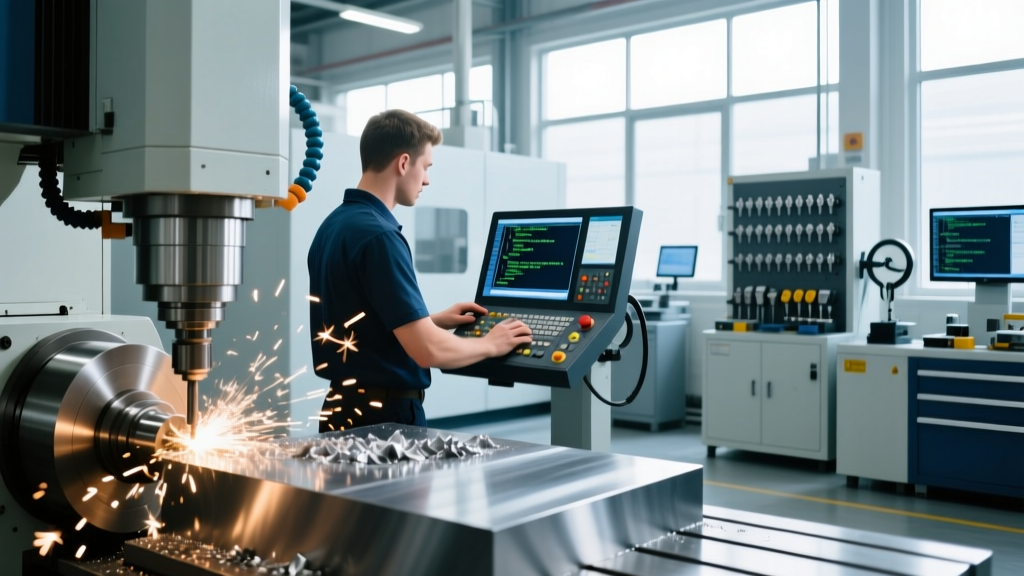
Writing complex 3D contouring or 5-axis simultaneous toolpaths manually in G-code is practically obsolete for production environments. Shops relying on manual G-code editing at the control panel face severe machine utilization drops. If a senior machinist earning a burdened rate of $75/hour spends three hours manually calculating and typing incremental coordinates for a complex pocket, the programming cost for that single part is $225. Furthermore, manual editing lacks integrated kinematic simulation, increasing the risk of a $40,000 spindle crash during the prove-out phase.
Conversational Programming: Mazatrol, OSP, and Intuitive
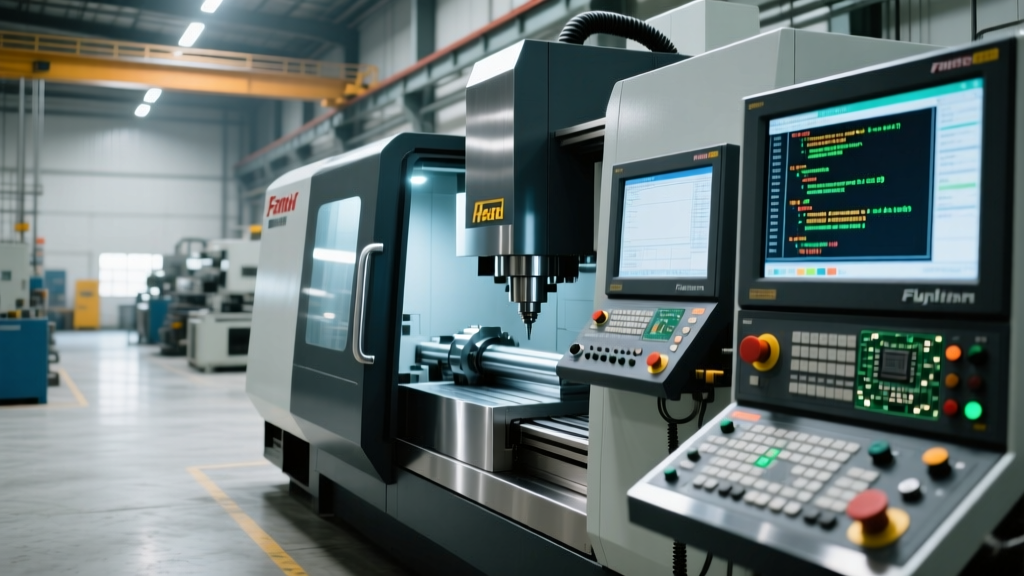
Conversational languages—such as Mazak’s Mazatrol, Okuma’s OSP, and Haas Intuitive Programming System (IPS)—are designed for shop-floor, point-and-click part creation.
- Upfront Cost: Typically bundled into the machine tool purchase price (e.g., a $185,000 Mazak INTEGREX).
- Training Cost: OEM-certified training courses cost between $1,200 and $1,800 per operator for a 3-day intensive session.
- Limitation: Conversational code is generally locked to the specific OEM control. A program written in Mazatrol cannot be run on a Haas or Okuma machine without a specialized CAM translation layer, reducing your shop's scheduling flexibility.
CAM Software Ecosystems: Licensing, Seats, and Maintenance
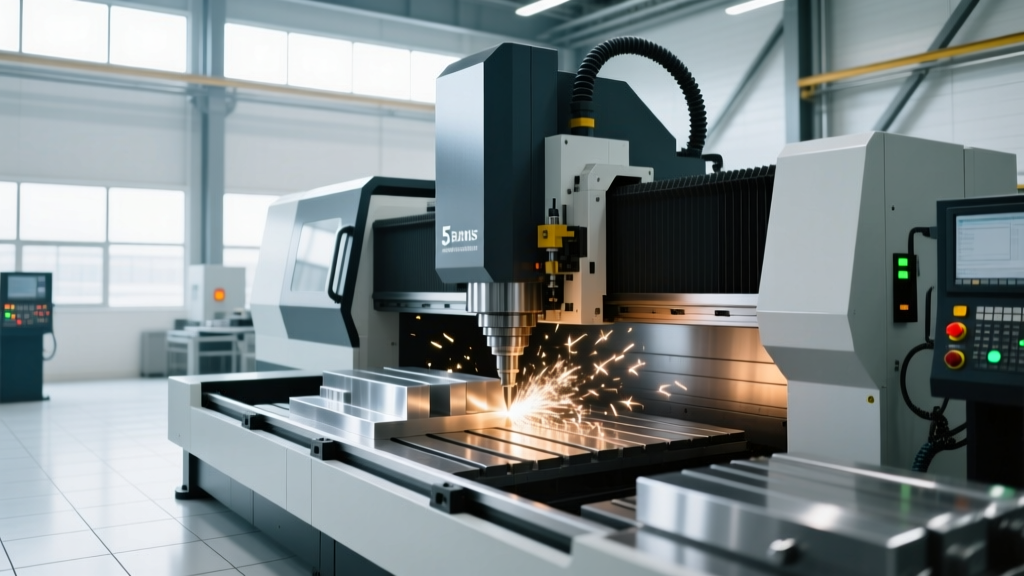
For shops producing complex geometries, multi-axis parts, or high-volume production runs, dedicated CAM software is mandatory. The CAM system translates CAD models into the specific cnc machine programming language dialect required by your post-processor. The financial commitment here is substantial and recurring.
| CAM Ecosystem | Target Market | Base License Cost (2026) | Annual Maintenance | Hidden Cost Factors |
|---|---|---|---|---|
| Mastercam (Mill 3D / Lathe) | General Job Shops, Production | $4,500 - $7,000 / seat | ~$1,600 / yr | Reseller support contracts; 5-axis add-on modules ($10k+) |
| Siemens NX CAM | Aerospace, Complex 5-Axis | $15,000 - $25,000+ / seat | 18-22% of license | Requires high-end IT infrastructure; steep learning curve |
| Autodesk Fusion | Prototyping, Light Production | $545 / yr (Base) | Included | Advanced extensions (e.g., Multi-Axis, Probing) cost extra |
| ESPRIT (Hexagon) | Swiss-type, Mill-Turn | $6,500 - $9,000 / seat | ~$1,800 / yr | Highly specialized for B-axis and Y-axis mill-turn kinematics |
When evaluating Autodesk Fusion 360 licensing or Mastercam packages, shops frequently miscalculate the total cost of ownership (TCO). A $545 annual subscription for cloud-based CAM appears negligible compared to Mastercam's upfront capital expenditure. However, if your shop requires advanced 5-axis simultaneous toolpaths, automated CMM probing cycles, or specialized multi-blade impeller strategies, you must purchase tier extensions or upgrade to enterprise tiers, pushing the actual annual cost closer to $2,500 per seat.
Hidden Budget Killers: Post-Processors and IT Infrastructure
The CAM software is only half the equation. The post-processor is the critical translation engine that converts generic CAM toolpath data into the exact cnc machine programming language syntax your specific control requires.
⚠️ The Post-Processor Trap
Never assume a generic post-processor will safely run a 5-axis machine. A poorly configured post can output G-code that commands the spindle to move in a straight line through a rotary table, causing catastrophic collisions. Budget $3,500 to $6,000 for a reseller or specialized engineering firm (like Postability) to build, simulate, and verify a custom post-processor for every unique machine-control combination on your floor.
On-Premise vs. Cloud Computing Costs
Advanced CAM systems like Siemens NX or Mastercam require significant computational power to calculate toolpaths for complex surfacing.
- On-Premise Hardware: Equipping three programmers with Dell Precision or Lenovo ThinkStation workstations (64GB RAM, NVIDIA RTX Ada Generation GPUs) costs approximately $4,200 per unit, plus $1,500 annually in IT maintenance and local server hosting.
- Cloud Computing: Cloud-native platforms offload toolpath calculation to remote servers, allowing shops to use standard $1,200 laptops. However, this introduces data security concerns for defense contractors (requiring ITAR-compliant cloud environments) and relies heavily on uninterrupted, high-bandwidth internet connections.
Framework: Calculating Your Cost Per Programmed Part (CPPP)
To make an objective decision on which programming language and software ecosystem to fund in your 2026 budget, use the Cost Per Programmed Part (CPPP) framework. This metric moves beyond software sticker prices and measures actual operational efficiency.
"Shops that fixate solely on CAM license fees often bleed money on the shop floor through excessive setup times and manual G-code overrides. The ROI of a programming language is measured in spindle uptime, not software receipts."
— Manufacturing Technology Analyst, NIST Advanced Manufacturing Portal insights on digital thread integration.
- Calculate Annual Amortized Software Cost: (Total License Cost / 3 Years) + Annual Maintenance + Post-Processor Amortization.
- Calculate Annual Labor Burden: (Average Programming Hours per Part × Number of Parts per Year) × Burdened Hourly Rate ($75).
- Factor in Prove-Out Scrap: Estimate the cost of scrapped material and broken tooling during the first-article run. Manual G-code shops should apply a 4% scrap multiplier; simulated CAM shops apply a 0.8% multiplier.
- Divide by Total Annual Parts: (Amortized Software + Labor Burden + Scrap Cost) / Total Parts Programmed.
Example Scenario: A shop programming 500 complex aerospace brackets annually. Using manual G-code, the software cost is $0, but labor and scrap costs total $112,000 (CPPP = $224). By investing $12,000 annually in a Mastercam ecosystem, programming time drops by 60%, and scrap nears zero. The new total cost is $71,200 (CPPP = $142). The CAM software pays for itself in the first quarter.
Strategic Recommendations Based on Shop Profile
High-Mix, Low-Volume Job Shops
Invest heavily in versatile, feature-rich CAM software (like Mastercam or Fusion with extensions) and standardized post-processors. Your primary cost driver is programming time, not cycle time. The ability to quickly import a STEP file, apply recognized feature machining (hole milling, pocket clearing), and post out to multiple different machines is worth the premium software licensing.
High-Volume, Dedicated Production Shops
If you are running 50,000 identical automotive fasteners on a dedicated Okuma or Mazak mill-turn, investing in CAM software is a waste of capital. Rely on the machine's proprietary conversational cnc machine programming language. The upfront OEM training cost ($1,500) is negligible, and conversational code allows operators to make rapid, safe offsets at the control panel without needing to return to the CAM programmer's desk, keeping the spindle running continuously.
Macro and Parametric Programming Investments
For shops producing families of parts (e.g., varying sizes of the same valve body), investing in Custom Macro B (Fanuc) or Variable Parameter programming is highly cost-effective. While it requires a senior-level programmer commanding $95,000+ annually, a single well-written parametric program can replace hundreds of individual CAM files, drastically reducing data management overhead and shop-floor confusion.