How to Troubleshoot CNC Machine Spindle Vibration, Heat, and Runout
Learn how to troubleshoot CNC machine spindle issues. Diagnose vibration, overheating, and runout with exact tolerances, repair costs, and step-by-step fixes.
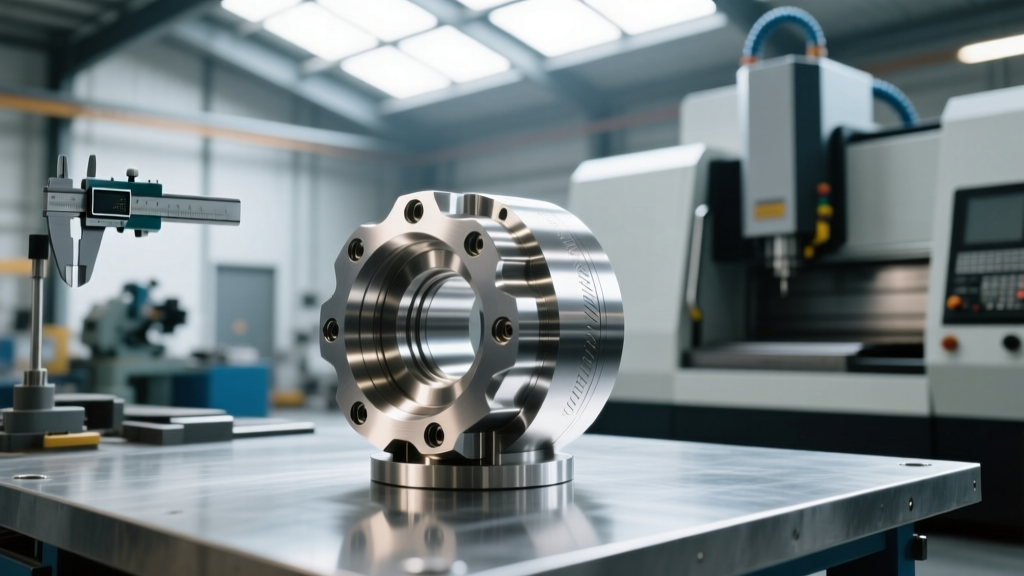
Spindle downtime on a 5-axis VMC or horizontal machining center costs $150 to $400 per hour in lost production. A catastrophic failure of a 24,000 RPM HSK-63A CNC machine spindle can result in $35,000+ replacement bills and 12-week lead times. Troubleshooting must isolate the fault before secondary damage destroys the stator, rotor, and machine casting. This guide provides exact diagnostic thresholds, measurement protocols, and repair decision frameworks for maintenance engineers and machine operators.
Diagnostic Triage: Mapping Symptoms to Root Causes
Before tearing down the spindle head, map the primary symptom to its most likely mechanical or electrical origin. Use this triage matrix to direct your initial inspection.
| Primary Symptom | Immediate Suspect | Secondary Suspect | Required Diagnostic Tool |
|---|---|---|---|
| High-Frequency Vibration (>100 Hz) | Bearing race defect (BPFO/BPFI) | Tool holder imbalance | Accelerometer / FFT Analyzer |
| 1x RPM Synchronous Vibration | Rotor unbalance or bent shaft | Drawbar pull-stud failure | Proximity probe / Dial indicator |
| Housing Temp > 65°C (149°F) | Lubrication starvation | Cooling jacket flow restriction | Infrared thermography / Flow meter |
| TIR > 0.0003" at Gauge Line | Taper fretting or contamination | Bearing preload loss | Grade 1 Test Arbor & 0.00005" Indicator |
| Spindle Motor Overload Alarm | VFD parameter mismatch | Mechanical binding / Preload spike | Amperage clamp meter / VFD logs |
Thermal Runaway: Overheating and Lubrication Breakdown
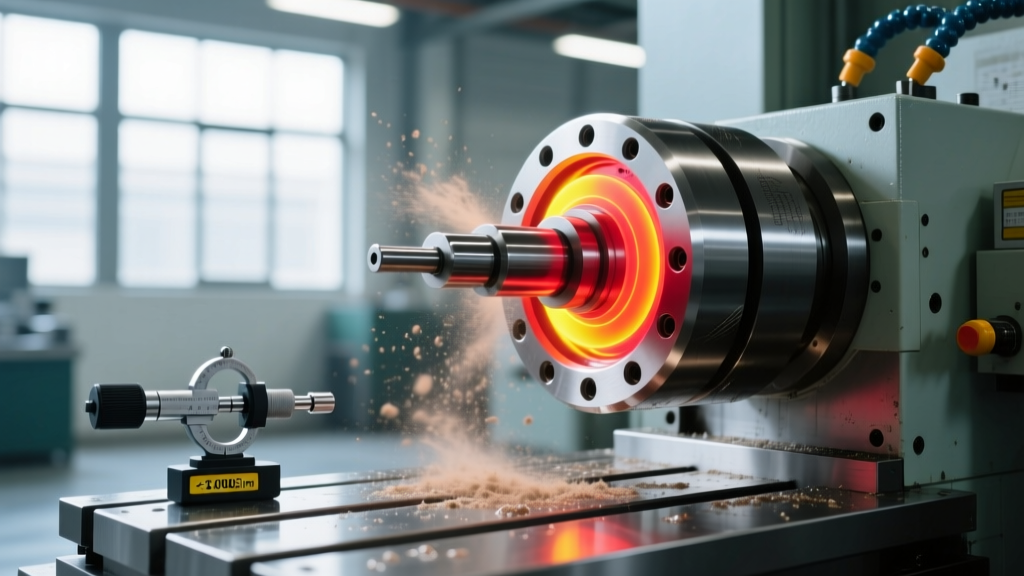
Thermal growth in a CNC machine spindle is a primary driver of scrapped parts. Steel expands at approximately 1.5 µm per °C. If the spindle housing exceeds ambient temperature by more than 45°C (113°F), the machine's thermal compensation algorithms will fail, resulting in Z-axis drift.
CRITICAL WARNING: Never use compressed air to clean an exposed spindle taper or blow out chips near the spindle nose. Compressed air forces abrasive particulates past the labyrinth seals directly into the bearing pack, causing immediate micro-pitting on the ceramic balls.Grease-Packed vs. Oil-Air Lubrication Systems
The failure mode of the lubrication system dictates the repair timeline. According to SKF's super-precision bearing guidelines, lubrication accounts for over 36% of all premature bearing failures.
- Grease-Packed Spindles (Typical for BT40/CAT40 up to 12,000 RPM): Sealed for life using polyurea or barium-complex greases (e.g., Kluber Isoflex NBU 15). Expected lifespan is 8,000 to 12,000 hours. If a grease-packed spindle overheats, the grease has likely degraded or separated due to centrifugal force. Fix: The spindle must be removed and sent for a full rebuild and repack. Field repair is impossible without a cleanroom.
- Oil-Air Systems (Typical for HSK-63A up to 24,000+ RPM): Uses minimal quantity lubrication (MQL). A metering valve injects precise micro-droplets (e.g., 0.05 cc per shot every 15 minutes) into the bearing race. Fix: If overheating occurs, check the metering unit for clogged capillary tubes and verify air pressure is exactly 4.5 to 5.5 bar. Do not increase oil volume to 'cool' the spindle; excess oil causes churning, which generates more heat than it removes.
Vibration Analysis: Isolating Bearing vs. Imbalance Faults
Vibration in a CNC machine spindle must be analyzed in the frequency domain using Fast Fourier Transform (FFT). Measuring overall velocity in mm/s RMS is insufficient for pinpointing the exact failing component. Reference the NIST Precision Engineering laboratory standards for machine tool dynamic testing protocols.
Frequency Signature Breakdown
- 1x Rotational Frequency (RPM / 60): Indicates mass unbalance. If the vibration spikes only when a specific tool is loaded, the tool holder is out of balance (check for missing balance clips or dirty retention knobs). If the vibration persists with a certified balanced arbor, the spindle rotor is unbalanced or the shaft is bent from a crash.
- Ball Pass Frequency Outer Race (BPFO): Calculated based on bearing geometry and contact angle. A spike here indicates a defect on the stationary outer race. This is often caused by improper housing fits or contamination entering the load zone.
- Ball Pass Frequency Inner Race (BPFI): Indicates a defect on the rotating inner race. Because the inner race rotates, this fault is often amplitude-modulated by the shaft speed. BPFI defects usually stem from excessive preload or thermal expansion crushing the bearing.
- 2x Line Frequency (120 Hz in North America): This is not a mechanical fault. It indicates an electrical issue, typically a VFD switching frequency anomaly, rotor bar defect in the induction motor, or improper grounding causing circulating currents through the bearings (electrical discharge machining effect).
Expert Insight: Circulating currents from poorly shielded VFD cables can arc through the spindle bearings, creating microscopic 'fluting' patterns on the races. Always verify that the spindle motor grounding strap has less than 1 ohm of resistance to the machine chassis, and use symmetrical shielded VFD cables to prevent common-mode voltage from seeking a path to ground through the bearings.
TIR Measurement Protocol: The 4-Point Dial Indicator Test
Total Indicated Runout (TIR) is the ultimate measure of CNC machine spindle health. Standard vertical machining centers require a TIR of less than 0.0003" (7.5 µm) at the gauge line. High-speed mold-making machines demand less than 0.0001" (2.5 µm). Follow this exact protocol to eliminate false readings.
Step-by-Step Measurement Procedure
- Clean the Taper: Use 99% isopropyl alcohol and a lint-free cleanroom wipe. Do not use shop rags or standard WD-40, which leaves a film that alters the tool seating depth by up to 0.0002".
- Insert a Certified Test Arbor: Use a Grade 1 or Grade 0 test arbor with a known runout of < 0.00005". Standard end mills or drill holders are unacceptable for diagnostic TIR testing.
- Mount the Indicator: Attach a high-resolution dial indicator (0.00005" or 0.0001" graduation) to a heavy magnetic base on the machine table. Ensure the indicator stylus is perpendicular to the arbor surface.
- Measure at the Gauge Line: Position the stylus just below the V-flange or HSK face. Rotate the spindle by hand (in neutral, power off) through 360 degrees. Record the max-min deviation.
- Measure at 150mm Extension: Move the indicator 150mm down the arbor. A TIR that is acceptable at the gauge line but exceeds 0.0008" at 150mm indicates a bent spindle nose or severe taper fretting, even if the bearings are perfectly intact.
The Repair vs. Replace Decision Matrix
Deciding whether to rebuild a CNC machine spindle or purchase a new OEM replacement requires analyzing the extent of internal damage and current market lead times. As of 2026, supply chain stabilization has reduced OEM lead times for standard BT40 spindles to 4-6 weeks, but high-frequency HSK spindles still face 10-14 week delays.
Financial & Technical Thresholds
| Condition | Action | Estimated Cost (2026) | Expected Turnaround |
|---|---|---|---|
| Bearing failure only; shaft and housing pristine. | Rebuild | $6,000 - $12,000 | 1 - 2 Weeks |
| Labyrinth seal damage; minor shaft scoring. | Rebuild (with metal spray/machining) | $10,000 - $16,000 | 2 - 3 Weeks |
| Rotor rubbed against stator; cooling jacket breached. | Replace | $25,000 - $45,000+ | 6 - 14 Weeks |
| HSK/BT taper face scored > 0.0005" deep. | Replace (Regrinding compromises gauge line) | $25,000 - $45,000+ | 6 - 14 Weeks |
Preventative Maintenance to Extend Spindle Life
To maximize the interval between rebuilds, implement a strict warm-up cycle. Running a cold spindle at 20,000 RPM causes the inner bearing race to expand faster than the outer race, instantly spiking preload and crushing the ceramic balls. Program a 10-minute stepped warm-up macro: 2,000 RPM for 3 minutes, 6,000 RPM for 3 minutes, 12,000 RPM for 2 minutes, and max RPM for 2 minutes before initiating the cutting cycle. Additionally, consult resources from organizations like the Machinery Lubrication bearing hub to ensure your facility's oil-air metering valves are calibrated annually.
By adhering to strict thermal thresholds, utilizing FFT vibration analysis, and executing flawless TIR measurement protocols, maintenance teams can accurately diagnose CNC machine spindle faults, avoid catastrophic secondary damage, and make financially sound repair decisions.