2026 Tech Trends in Smart CNC Milling Machine Components
Explore 2026 technology trends in smart CNC milling machine components, from IoT-enabled spindles to AI-driven tool holders and predictive maintenance.
The transition from passive mechanical hardware to active, data-generating nodes represents the most significant shift in machining over the last decade. In 2026, the premium for smart CNC milling machine components is no longer justified solely by Industry 4.0 buzzwords; it is driven by a documented 22% to 30% reduction in unplanned downtime and a 15% increase in overall equipment effectiveness (OEE). Modern machine shops are replacing legacy parts with cyber-physical systems that monitor their own health, communicate tool wear in real-time, and adjust cutting parameters dynamically.
2026 Market Snapshot: The global market for condition-monitoring machine tool components has surpassed $4.2 billion. Shops upgrading to intelligent spindles and linear guides report an average ROI payback period of 14 months, primarily through the elimination of catastrophic spindle crashes and scrapped aerospace titanium parts.Cyber-Physical Spindle Architectures
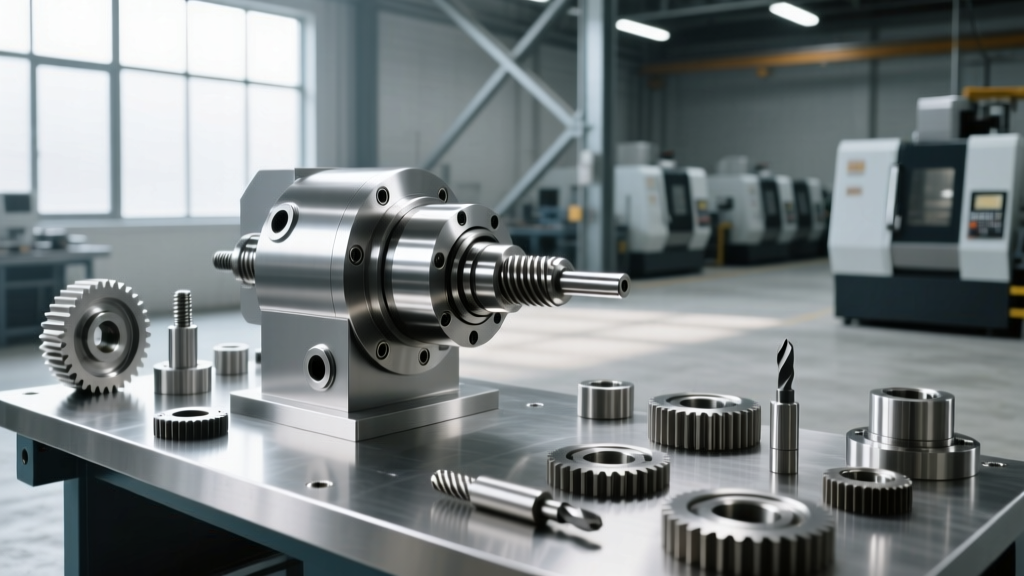
The spindle remains the most critical and expensive CNC milling machine component. Traditional spindles rely on external vibration probes that suffer from signal attenuation through the machine casting. Next-generation smart spindles from manufacturers like GMN, Kessler, and Setco now embed sensors directly into the rotating assembly and bearing housings.
Sensor Integration and Telemetry Specifications
Modern intelligent spindles utilize embedded piezoelectric accelerometers and eddy-current displacement sensors. These sensors measure radial runout down to 0.1 μm and detect acoustic emissions (AE) at sampling rates exceeding 100 kHz. This high-frequency telemetry allows the machine control to detect micro-chipping on carbide end mills within milliseconds, triggering an immediate feed-hold before the tool shatters and damages the workpiece.
| Component Metric | Legacy HSK-A63 Spindle | 2026 Smart HSK-A63 Spindle |
|---|---|---|
| Runout Measurement | Manual dial indicator (static) | Eddy-current sensor (dynamic, 0.1 μm res) |
| Vibration Monitoring | External housing probe (1 kHz) | Embedded piezoelectric (100 kHz) |
| Thermal Compensation | Fixed algorithm | Real-time AI-driven Z-axis offset |
| Average Replacement Cost | $16,500 - $19,000 | $24,000 - $28,500 |
The ISO 13399 Shift in Intelligent Tool Holding
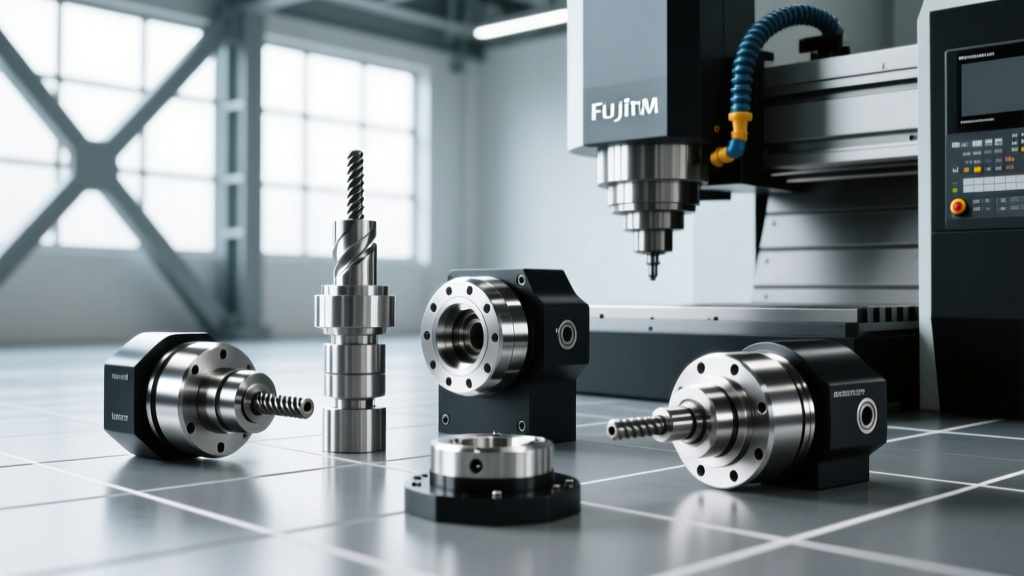
Tool holders are no longer just mechanical interfaces; they are data carriers. The widespread adoption of the ISO 13399 standard for cutting tool data representation has forced component manufacturers to integrate RFID and near-field communication (NFC) directly into the holder flange. Companies like Haimer and Schunk now produce hydraulic and shrink-fit holders with embedded 13.56 MHz RFID tags capable of 100,000 read/write cycles.
"The true value of an RFID-equipped tool holder isn't just identifying the tool in the carousel. It's about writing the exact measured Z-length and radial runout directly to the chip at the presetter, ensuring the CNC control receives verified geometry data without manual operator input, effectively eliminating data-entry crashes."
— Advanced Manufacturing Research Consortium, 2025 Tooling Report
For shops machining high-value alloys like Inconel 718, the $85 to $120 premium per smart tool holder is easily justified. The embedded strain gauges in advanced milling chucks can detect harmonic chatter frequencies, communicating directly with the machine's adaptive control system to adjust spindle speed and avoid resonant frequencies that degrade surface finish.
Condition Monitoring in Linear Motion Systems
While spindles and tooling get the most attention, the degradation of linear guides and ball screws is responsible for the majority of gradual geometric inaccuracies in CNC milling. In 2026, condition-monitoring linear motion components have become standard for high-precision mold and die shops.
Calibration Warning: When retrofitting smart linear guides (such as THK OMNIedge or NSK condition monitoring units), ensure the sensor baseline is captured at the machine's operational temperature. Cold-start calibration will result in false-positive pre-load loss alarms due to thermal expansion of the ball screw shaft, which can grow up to 0.050mm over a 1000mm travel during heavy roughing cycles.These systems utilize 3-axis MEMS accelerometers mounted directly on the carriage block. By analyzing the Ball Pass Frequency Outer (BPFO) and Ball Spin Frequency (BSF) via edge-computing gateways, the system can pinpoint exactly which raceway or rolling element is spalling, weeks before the defect causes visible surface dwell marks on the milled part.
2026 CapEx Framework: Retrofitting vs. OEM Smart Components
Deciding how to integrate smart CNC milling machine components requires a structured capital expenditure approach. Purchasing entirely new smart machines is often cost-prohibitive, making targeted retrofits the preferred strategy for mid-sized machine shops.
According to guidelines established by NIST Smart Manufacturing Systems, facilities should prioritize upgrades based on the cost of failure rather than the ease of installation. Follow this decision matrix for 2026 component upgrades:
- Phase 1: Spindle Telemetry (High Risk/High Impact). Install external acoustic emission (AE) sensor rings on existing spindles if OEM smart spindle replacement exceeds $25,000. Cost: $2,800 - $4,500 per machine. This immediately prevents catastrophic crashes in 5-axis simultaneous milling.
- Phase 2: Tool Data Automation (Medium Risk/High Volume). Upgrade the tool carousel RFID read/write heads and transition to ISO 13399-compliant tool management software. Eliminate manual tool offset entry. Cost: $3,500 - $6,000 per cell, including software licensing.
- Phase 3: Linear Motion Edge Nodes (Low Risk/Chronic Drift). Retrofit ball screw support bearings with wireless vibration and temperature nodes. Integrate with MTConnect or OPC-UA protocols to feed data into your existing ERP/MES system. Cost: $1,200 - $1,800 per axis.
Integration and Data Standardization
The hardware is only half the equation. The proliferation of smart CNC milling machine components has created a fragmented data landscape. To prevent data silos, ensure all new component sensors support open protocols like MTConnect or OPC-UA, rather than proprietary, locked-ecosystem formats. The Society of Manufacturing Engineers (SME) heavily advocates for open-architecture sensor integration to ensure long-term viability of the data pipeline.
Furthermore, research from the Fraunhofer Institute for Machine Tools and Forming Technology (IWU) highlights that edge-computing gateways are now mandatory for high-frequency spindle data. Transmitting 100 kHz vibration data directly to a cloud server will overwhelm standard shop-floor networks and incur massive latency. Processing the Fast Fourier Transform (FFT) locally at the machine cabinet and only transmitting the resulting anomaly alerts to the central dashboard is the only scalable architecture for 2026.
Final Sourcing Directives
When procuring next-generation CNC milling machine components, demand transparent data dictionaries from the supplier. If a smart tool holder or condition-monitoring ball screw cannot output raw, unfiltered sensor data via a standard API, it is a closed-loop novelty, not a true cyber-physical component. Invest in hardware that treats sensor data as an open asset, ensuring your machining processes remain adaptable to the AI-driven optimization algorithms that will define the next decade of subtractive manufacturing.