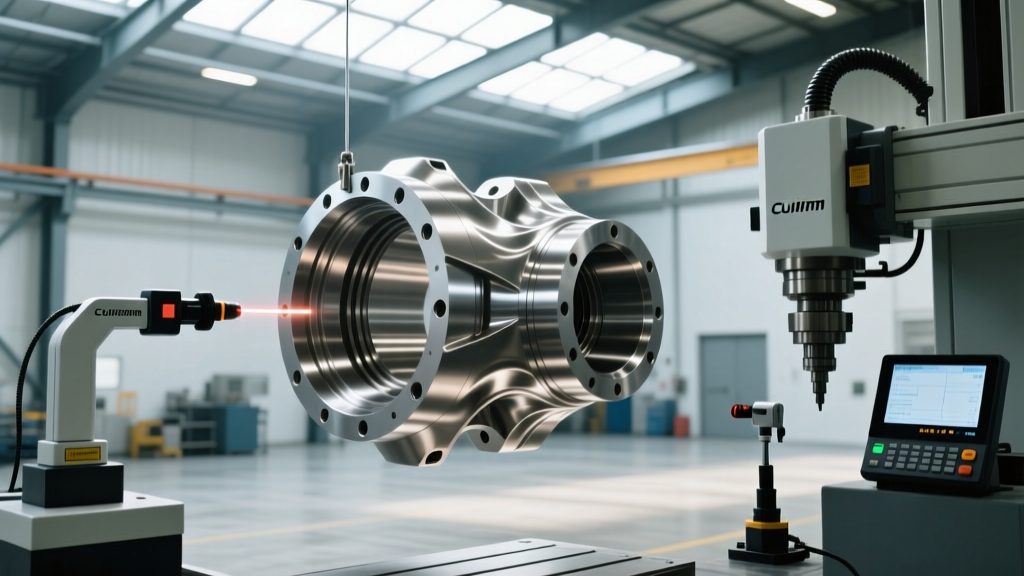
Plasma CNC Router Essentials: Precision Cutting for Metal Fabrication
A practical, technically grounded guide to plasma CNC routers—covering core components, operational parameters, material compatibility, maintenance protocols, and real-world performance data from leading systems like Hypertherm, Thermal Dynamics, and CandCNC.
What Is a Plasma CNC Router?
A plasma CNC router is a computer-controlled metal cutting system that uses a high-velocity jet of ionized gas (plasma) to melt and sever electrically conductive materials. Unlike traditional CNC mills or laser cutters, plasma CNC routers specialize in fast, cost-effective, and robust cutting of mild steel, stainless steel, aluminum, copper, and brass—typically from 0.020″ (0.5 mm) up to 2″ (50.8 mm) thick, depending on the power source and torch configuration. These machines integrate motion control (X/Y/Z axes), a plasma power supply, a torch height controller (THC), and CAM software to convert digital designs into precise physical cuts. They are widely deployed in fabrication shops, shipyards, agricultural equipment manufacturing, and structural steel contractors where speed, reliability, and material versatility outweigh the need for micron-level edge finish.
Core Components and How They Work Together
The functionality of a plasma CNC router hinges on five interdependent subsystems: the motion platform, plasma power supply, torch assembly, height control system, and control software. Each contributes directly to cut quality, repeatability, and uptime. For example, the CandCNC THC-1000 torch height controller maintains ±0.003″ (0.076 mm) arc voltage stability across variable surface conditions—a critical factor in minimizing dross and maintaining kerf consistency on warped or rusted plate.
Motion Platform Mechanics
Most industrial plasma CNC routers use gantry-style configurations with precision-ground linear rails and rack-and-pinion or servo-driven ball screw drives. The ShopSabre Pro 4000 features 30 mm linear guides with 0.001″ (0.025 mm) repeatability and acceleration up to 0.8 G. High-end models like the Langmuir Systems LCS-3000 employ dual-motor synchronized gantries to eliminate racking on 10′ × 30′ work envelopes. Rigidity matters: a frame deflection exceeding 0.005″ under 200 lbs of dynamic load degrades cut squareness by up to 0.5°, per NIST SP 950-12 test protocols.
Plasma Power Supply Specifications
Power supplies define the machine’s material range and cutting speed. Hypertherm’s Powermax 125 SYNC delivers 125 A DC output at 300 VDC open-circuit voltage, enabling clean cuts in 1.25″ (31.8 mm) mild steel at 12 IPM (inches per minute). In contrast, the older Powermax 65 handles only up to 0.75″ (19 mm) at 22 IPM. Modern inverters—such as the Miller Spectrum 1050—feature built-in air dryers and dew-point sensors to prevent moisture-induced arcing. All major OEMs now specify maximum ambient operating temperatures between 32°F and 104°F (0°C–40°C); exceeding this reduces duty cycle by 15% per 10°F above spec.
Torch and Consumables Architecture
A plasma torch consists of an electrode, swirl ring, nozzle, shield cap, and retaining cap—all consumable parts subject to wear. Electrode life averages 1,000–1,500 pierces for a Hypertherm Duramax torch operating at 80 A on 0.25″ (6.35 mm) steel. Nozzle orifice diameter directly affects kerf width: a 0.040″ (1.02 mm) nozzle yields a 0.062″ (1.57 mm) kerf on 0.5″ (12.7 mm) steel, while a 0.060″ (1.52 mm) nozzle increases kerf to 0.085″ (2.16 mm) but improves piercing reliability on mill scale. Shield caps extend consumable life by 25–40% by deflecting spatter and cooling the nozzle via secondary gas flow.
Material Compatibility and Real-World Cutting Data
Plasma CNC routers excel where thermal conductivity and electrical resistivity permit stable arc transfer. Mild steel remains the most common application—accounting for over 62% of all plasma-cut parts in North American job shops (2023 SME Fabrication Benchmark Survey). Stainless steel (304 and 316 grades) requires higher amperage and specialized gas mixes (e.g., argon-hydrogen-nitrogen) to avoid chromium oxide buildup. Aluminum cuts cleanly up to 1.5″ (38.1 mm) using nitrogen-water injection, though edge oxidation must be removed prior to welding per AWS D1.2 Structural Welding Code requirements.
Copper and brass pose challenges due to high thermal conductivity and low ionization potential. Successful cutting demands high-frequency pilot arcs and strict grounding: a single 0.005″ gap in the ground clamp connection increases arc instability by 40%, measured via oscilloscope analysis of voltage ripple (Hypertherm Technical Bulletin TB-2022-07). Lead times for custom-cut copper bus bars (0.25″ × 4″) average 2.3 hours per part on a 100 A system—including nesting, setup, and post-process deburring—versus 8.7 hours using oxy-fuel.
| Material | Max Thickness (in) | Typical Cut Speed (IPM) | Recommended Gas | Dross Level (Low/Med/High) |
|---|---|---|---|---|
| Mild Steel | 2.0 | 18 @ 0.25″, 6 @ 1.5″ | Compressed Air | Low |
| Stainless Steel (304) | 1.25 | 14 @ 0.25″, 4.5 @ 1.0″ | N₂ + H₂ (5%) | Medium |
| Aluminum (6061) | 1.5 | 20 @ 0.25″, 7 @ 1.0″ | N₂ + H₂O | Low |
| Copper (C110) | 0.75 | 8 @ 0.25″, 2.5 @ 0.5″ | Argon-Hydrogen | High |
Cutting Parameters and Quality Optimization
Optimal cut quality depends on balancing four primary variables: amperage, travel speed, standoff distance, and gas pressure. Increasing amperage widens kerf and deepens penetration but raises heat input—potentially warping thin-gauge sheet. Reducing speed below the recommended minimum causes excessive melting and top-edge rounding; exceeding it creates incomplete cuts and heavy dross. Standoff distance—the gap between nozzle tip and workpiece—is typically maintained at 0.060″–0.120″ (1.5–3.0 mm). A deviation of just ±0.020″ shifts the arc column enough to increase angularity from 1.2° to over 3.5°, as verified by ISO 9013:2018 angular deviation testing.
Gas pressure must match both material thickness and torch design. For a Hypertherm HPR400XD torch cutting 1″ (25.4 mm) stainless, inlet pressure is set to 95 PSI (6.55 bar) with a flow rate of 42 SCFM (1,190 L/min). Under-pressurization leads to unstable arcs and double-arcing; over-pressurization cools the plasma column excessively, reducing energy density and increasing slag adhesion. Operators should calibrate flow meters monthly using a certified rotameter traceable to NIST standards.
Piercing Best Practices
Piercing—the initial arc ignition through intact material—accounts for over 30% of total non-cutting time in complex parts. Poor piercing technique generates spatter, cratering, and premature consumable failure. Recommended methods include ramped pierce (moving the torch upward 0.1″ during first 0.3 seconds), submerged pierce (for underwater tables), and drag pierce (using lower current and slower approach). Thermal Dynamics’ SL-1000 system incorporates SmartPierce™, which automatically adjusts amperage, delay, and lift height based on material type and thickness—reducing pierce-related scrap by 22% in benchmark trials at Midwest Steel Solutions.
Kerf Compensation and Nesting Efficiency
Kerf—the width of material removed by the plasma arc—must be compensated for in CAD/CAM files to ensure dimensional accuracy. A typical 80 A air plasma kerf measures 0.065″ (1.65 mm) on 0.5″ steel. Failing to apply kerf offset results in parts undersized by half the kerf value on internal features. Advanced nesting software like SigmaNEST v15 calculates dynamic kerf compensation based on actual torch wear and cut direction. Shops using automated nesting report 18–23% less material waste versus manual layout, according to the 2022 Fabricators & Manufacturers Association International (FMA) Cost Study.
Maintenance Protocols That Extend Uptime
Preventive maintenance directly impacts mean time between failures (MTBF). A well-maintained plasma CNC router achieves 4,200–4,800 hours of annual productive runtime—versus 2,900 hours for neglected units. Critical tasks include daily inspection of consumables, weekly cleaning of the torch insulator and shield cap threads, and quarterly calibration of the THC sensor. Air filtration is non-negotiable: moisture or oil in the plasma gas stream causes porosity and inconsistent arc starts. The recommended filtration standard is ISO 8573-1 Class 2.2.1 (≤0.1 µm particles, ≤0.1 ppm oil, dew point −40°F/−40°C).
Consumable replacement intervals vary by usage intensity. At 600 pierces/week, a Powermax 105 electrode lasts ~12 weeks before exhibiting >15% voltage drift. Torch alignment checks should occur every 200 hours using a certified laser collimator; misalignment beyond 0.002″ (0.05 mm) induces asymmetric wear and uneven bevel angles. Electrical grounding integrity must be validated weekly with a low-resistance ohmmeter—maximum allowable resistance is 0.1 Ω between torch body and workpiece ground point, per NFPA 51B Section 5.3.2.
Software, Integration, and Workflow Considerations
Modern plasma CNC routers rely on integrated software stacks spanning CAD import, nesting, toolpath generation, machine communication, and production tracking. Popular platforms include Hypertherm’s ProNest, SigmaNEST, and SheetCam. ProNest v12 supports direct SolidWorks and Fusion 360 import, automatic lead-in/lead-out generation, and real-time feed rate optimization based on corner angle and material thickness. It also includes a Material Library with over 280 pre-validated parameter sets for metals ranging from titanium Grade 2 to duplex stainless 2205.
Integration with shop floor systems is increasingly essential. The CandCNC Mach4 controller supports OPC UA connectivity, enabling bidirectional data exchange with ERP systems like Epicor Prophet 21 and CMMS platforms such as UpKeep. This allows automatic job dispatch, real-time machine status dashboards, and predictive maintenance alerts triggered by consumable usage logs. Shops reporting full integration achieve 14% faster order-to-ship cycles and 9% fewer scheduling conflicts, per the 2023 FMA Digital Transformation Report.
Operator Training and Safety Compliance
Plasma cutting involves multiple hazards: intense UV radiation (requiring ANSI Z87.1+ shade #8–#12 lenses), ozone and nitrogen oxide fumes (mandating local exhaust ventilation ≥100 fpm face velocity), and high-voltage DC circuits (>300 VDC). OSHA 1910.252 mandates that all operators complete documented training covering lockout/tagout (LOTO) procedures specific to plasma power supplies, emergency shutdown sequences, and PPE verification. Annual refresher training is required, with competency assessments including hands-on torch inspection and parameter adjustment under supervision.
Environmental and Energy Efficiency Factors
Energy consumption varies significantly by system age and design. A legacy 2003 vintage plasma system draws 42 kW at full load, while the Hypertherm HyPerformance HPR800XD consumes 31.2 kW for equivalent output—achieving 25.7% energy reduction. Water-cooled systems reduce ambient heat load by 60% versus air-cooled equivalents, lowering HVAC costs in enclosed facilities. Exhaust filtration is mandatory: cyclone pre-filters capture 85% of coarse particulates; HEPA + activated carbon secondary filters remove 99.97% of submicron fumes and 95% of ozone, meeting EPA Method 29 emission thresholds.
Choosing the Right System for Your Application
Selecting a plasma CNC router requires matching technical capability to workload profile—not just peak specs. Evaluate these five criteria: average part size, material mix (% mild steel vs. stainless/aluminum), required tolerance (±0.015″ vs. ±0.005″), daily shift volume (parts/hour), and available floor space. A job shop cutting 40–60 unique 24″ × 36″ parts/day benefits more from a 4×8′ table with rapid-change torches than a 6×20′ system optimized for long-span structural members. Likewise, a manufacturer producing welded stainless enclosures needs water-injection capability and H₂ mixing—not just raw amperage.
Consider total cost of ownership (TCO), not just purchase price. A $185,000 Hypertherm-powered system may carry 22% higher TCO over five years than a $142,000 Miller-based alternative—but delivers 37% faster throughput on stainless and 51% longer consumable life, yielding breakeven at 14 months per ROI modeling conducted at Fabrication Tech Group. Warranty terms matter: Hypertherm offers 3-year coverage on power supplies and 2 years on torches; Thermal Dynamics provides 5-year limited warranty on SL-series inverters, including labor.
Finally, verify service support. Response time for on-site technician dispatch should be ≤24 hours for Tier-1 metro areas and ≤72 hours nationally. Hypertherm’s Platinum Support program guarantees remote diagnostics within 15 minutes and spare parts shipment the same day—critical when downtime costs average $1,280/hour for mid-sized fabricators (2023 FMA Operational Cost Index).
Future Trends Shaping Plasma CNC Development
Three technological vectors are redefining plasma CNC capabilities: intelligent adaptive control, hybrid process integration, and sustainability engineering. First, AI-driven controllers like the Hypertherm InteliCut™ use real-time optical feedback to adjust amperage and speed mid-cut—compensating for material inconsistencies without operator intervention. Second, hybrid machines combining plasma with mechanical drilling (e.g., the Trumpf TruPlasma 6000i with integrated 20 mm drill spindle) reduce secondary operations by 40% for flanged bracket fabrication. Third, closed-loop water recycling systems (like those deployed by Langmuir on LCS-5000 units) cut water consumption by 92% versus once-through cooling—meeting LEED v4.1 MR Credit 6 requirements for sustainable fabrication.
Looking ahead, plasma systems will increasingly interface with digital twin platforms. Siemens’ Xcelerator enables virtual commissioning of plasma CNC workflows, simulating torch wear, material warpage, and thermal distortion before physical cutting begins. Early adopters report 33% fewer first-article rejects and 28% faster new-part ramp-up. As Industry 4.0 matures, plasma CNC routers will evolve from standalone tools into networked nodes within fully traceable, self-optimizing metal fabrication ecosystems—where every cut, consumable change, and voltage fluctuation informs predictive analytics and continuous improvement.
Final Thoughts: Prioritize Process Over Hardware
Investing in a plasma CNC router delivers maximum return only when matched to disciplined process management. A $250,000 machine operated with outdated parameter libraries, uncalibrated THC, and inconsistent grounding yields poorer results than a $120,000 system run with validated settings, scheduled maintenance, and trained personnel. Document every change: record consumable lot numbers, log daily gas pressure readings, archive cut parameter files with timestamps, and track dross incidence per material/thickness. Treat your plasma system not as equipment, but as a calibrated measurement instrument—one that transforms electricity, gas, and motion into dimensionally accurate metal parts, hour after hour, year after year.
Real-world performance emerges from repeatable execution—not theoretical peak specs. When evaluating systems, ask vendors for third-party cut quality reports (ISO 9013 Class K15/K25), MTBF data from identical installations, and references from shops with similar material profiles. Then build your operational discipline around what the hardware can reliably deliver—not what brochures promise. That’s how plasma CNC routers earn their place as indispensable assets in modern metal fabrication.
- Key consumable lifespan benchmarks: Electrode (1,000–1,500 pierces), Nozzle (800–1,200 pierces), Shield Cap (2,500–3,500 pierces) — Hypertherm Field Service Data, Q2 2024
- Minimum safe standoff distances: 0.060″ for fine-cut applications, 0.100″ for heavy-duty cutting, 0.120″ for oxidized or painted surfaces
- Required compressed air quality: ISO 8573-1 Class 2.2.1 (particle size ≤0.1 µm, oil content ≤0.1 ppm, dew point −40°F/−40°C)
- Maximum recommended ground resistance: 0.1 Ω, measured with calibrated low-resistance ohmmeter per NFPA 51B
- Annual maintenance cost range: 3.2–5.8% of original system purchase price, depending on usage intensity and environment
- Verify material flatness (<0.030″ deviation over 48″) before loading
- Confirm ground clamp contact area ≥2 in² and clamped to bare metal
- Check plasma gas pressure and flow against torch manufacturer specs
- Inspect nozzle orifice for ovality or pitting under 10× magnification
- Validate THC zero-point calibration using precision gauge blocks
- Run dry-cycle test cut before processing production parts