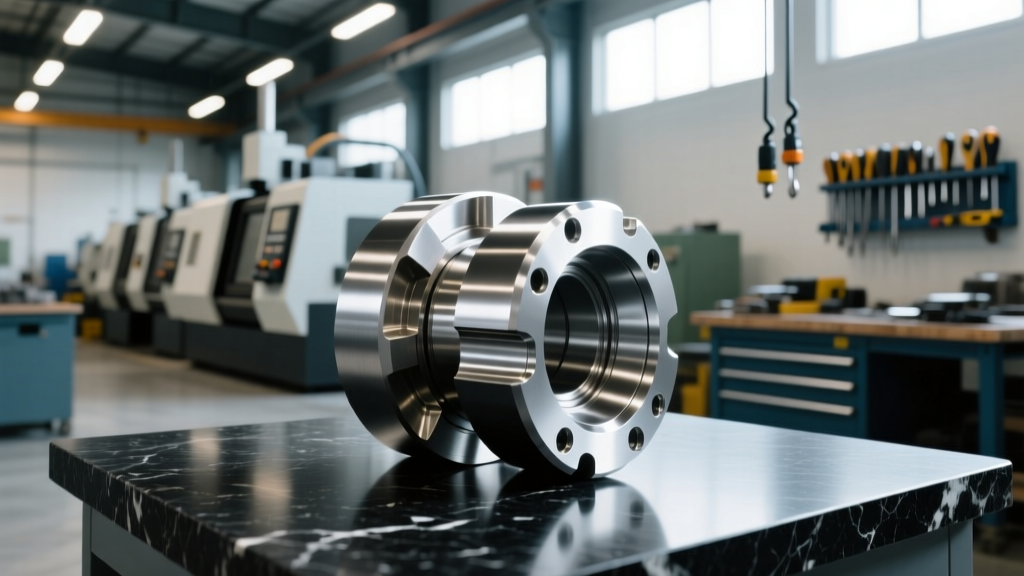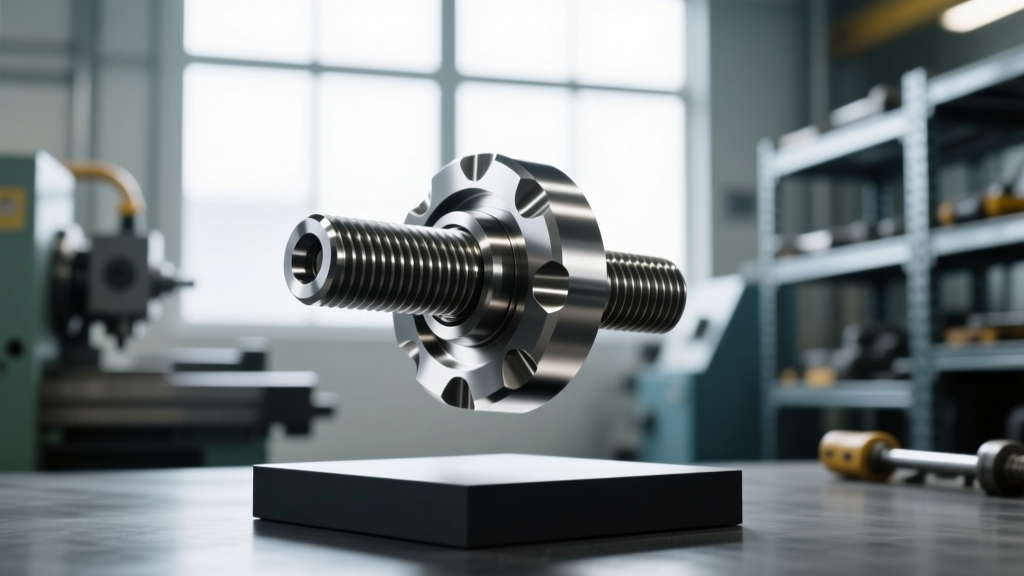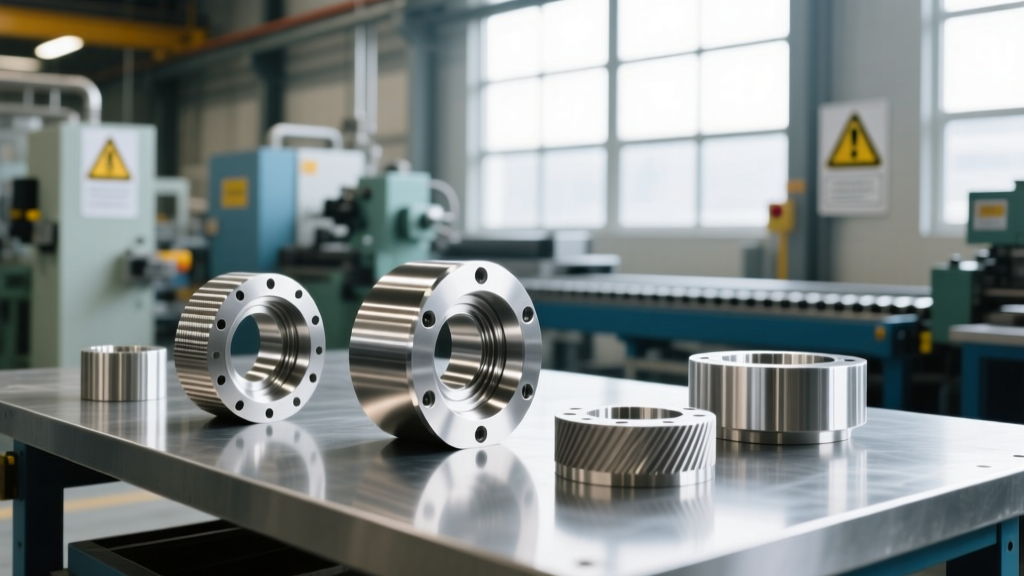
CNC Machined Parts for Oil & Gas: API Technical Specs
Explore the technical specifications, API standards, and material science behind CNC machined parts for oil & gas extraction and refining.
Downhole and subsea environments subject components to extreme mechanical and chemical stresses: 15,000+ PSI pressures, 350°F+ bottom-hole temperatures, and highly corrosive H2S and CO2 gases. When engineering CNC machined parts for oil & gas—such as wellhead bodies, Christmas tree valves, drill string subs, and frac manifolds—standard manufacturing tolerances are insufficient. Component failure in these applications does not merely result in downtime; it risks catastrophic blowouts and severe environmental contamination.
This technical guide details the metallurgical requirements, API governing standards, and precision machining strategies required to produce reliable oilfield components in 2026.
Material Metallurgy: Alloys That Survive the Downhole Environment
The baseline requirement for any metallic component exposed to sour gas (H2S) is compliance with ISO 15156 / NACE MR0175. This standard dictates strict limits on hardness, heat treatment, and cold working to prevent Sulfide Stress Cracking (SSC). CNC machine shops must understand how specific alloys react to both the downhole environment and the cutting tool.
Inconel 718 (UNS N07718)
Used extensively in subsea wellheads and high-pressure valve stems, Inconel 718 maintains a yield strength of 160 ksi at room temperature and retains structural integrity up to 1,300°F. However, it is notoriously difficult to machine due to severe work hardening and abrasive carbide inclusions.
- Roughing Parameters: 50-70 SFM (Surface Feet per Minute) using uncoated or PVD-coated carbide inserts with a positive rake angle.
- Finishing Parameters: 70-90 SFM using whisker-reinforced ceramic inserts to achieve the required surface finish without inducing residual tensile stresses.
- Coolant Strategy: High-pressure through-tool coolant at 1,000+ PSI is mandatory to break the stringy, work-hardened chips and prevent built-up edge (BUE).
Super Duplex Stainless Steel (UNS S32750)
With a Pitting Resistance Equivalent Number (PREN) greater than 40, Super Duplex is the standard for subsea manifolds and flowline hubs. It contains roughly 25% chromium, 7% nickel, and 4% molybdenum. The primary machining challenge is its high ferrite content, which causes rapid tool flank wear. Machining requires rigid setups and variable helix endmills to dampen harmonic chatter during deep-cavity milling.
17-4 PH Stainless Steel (Condition H1150)
⚠️ Critical Warning: NACE Compliance for 17-4 PHMachining 17-4 PH stainless steel to Condition H900 yields maximum tensile strength but strictly violates NACE MR0175 for sour gas environments due to extreme SSC susceptibility. For oilfield sour service, procurement specs must explicitly mandate Condition H1150 (double-aged), which limits hardness to 33 HRC maximum while providing adequate yield strength (115 ksi minimum).
API 6A and API 17D: The Governing Technical Standards
The manufacturing of CNC machined parts for oil & gas is strictly governed by the American Petroleum Institute (API). API Specification 6A (Wellhead and Christmas Tree Equipment) and API 17D (Subsea Wellhead and Tree Equipment) define the Product Specification Levels (PSL) that dictate the rigor of quality control, NDE (Non-Destructive Examination), and testing.
| PSL Level | Application Scope | Mandatory NDE & Testing Requirements |
|---|---|---|
| PSL-1 | Low-pressure, non-critical surface equipment | Visual inspection, standard hydrostatic testing |
| PSL-2 | Standard surface wellheads | Surface NDE (Magnetic Particle / Liquid Penetrant) on all wetted surfaces |
| PSL-3 | High-pressure, critical service, subsea components | Volumetric NDE (Ultrasonic / Radiographic) on all load-bearing areas, full material traceability |
| PSL-4 | Extreme HPHT (High-Pressure High-Temperature) environments | PSL-3 requirements plus extreme thermal cycling and fatigue testing |
For PSL-3 and PSL-4 components, CNC machine shops must maintain unbroken chain-of-custody documentation from the raw forging or billet to the final machined part, often requiring heat-number stamping via low-stress dot peening to avoid introducing stress concentrators.
Precision Tolerances and Surface Finish Requirements
Geometric Dimensioning and Tolerancing (GD&T) in oilfield machining goes beyond standard linear dimensions. Sealing surfaces, in particular, require microscopic precision to prevent hydrocarbon leakage under extreme thermal expansion.
Ring Type Joint (RTJ) Grooves
RTJ grooves (used with API 6BX flanges) rely on metal-to-metal sealing. The angled sidewalls of the groove must compress the soft iron or Inconel ring gasket to create a plastic deformation seal.
- Surface Finish: Maximum 32 µin (0.8 µm) Ra. Any tool marks running circumferentially can act as leak paths.
- Profile Tolerance: The 23-degree angled sealing surfaces must hold a profile tolerance of 0.002 inches (0.05 mm).
- Machining Technique: Finish turning must be performed with a custom-ground form tool with a nose radius perfectly matching the groove bottom radius to eliminate step-over lines.
Valve Stems and Gate Seats
Slab gate valves used in Christmas trees require the gate and seats to lap together perfectly. The CNC-machined seats must achieve a 16 µin Ra finish and a flatness tolerance of 2 helium light bands (approximately 0.000022 inches) to ensure bubble-tight shutoff against 10,000 PSI gas pressure.
How 5-Axis CNC Milling Solves Complex Wellhead Geometries
Modern monoblock wellheads integrate multiple casing spools and tubing head spools into a single massive forging, reducing the number of flanged connections (and potential leak paths) by up to 60%. Machining these 10,000+ lb components requires advanced 5-axis simultaneous milling capabilities.
'The shift toward monoblock HPHT wellheads has forced machine shops to adopt extended-reach 5-axis machining. We are now milling 40-inch deep internal bores with complex intersecting side-outlets in a single setup to maintain concentricity within 0.003 inches.' — Lead Manufacturing Engineer, Subsea Equipment Tier 1 Supplier
Strategic Setup Sequence for Monoblock Wellheads:
- Operation 10 (Base Setup): Face and turn the bottom flange profile. Bore the main internal diameter to within 0.050 inches of final size to relieve bulk forging stresses.
- Operation 20 (Stress Relief): Remove from the machine and perform a sub-critical thermal stress relief cycle to prevent dimensional shifting during finish machining.
- Operation 30 (5-Axis Intersecting Bores): Utilize a horizontal 5-axis machining center with a tombstone fixture. Mill the intersecting side-outlets and machine the internal API 6BX seal preparation profiles using long-reach hydraulic toolholders to minimize deflection.
- Operation 40 (Finish Boring): Perform the final internal boring pass using a custom anti-vibration boring bar equipped with a tuned mass damper to achieve the final 125 µin Ra bore finish.
Failure Mode Analysis: Why Machined Parts Fail in the Field
Understanding how CNC machined parts for oil & gas fail informs the manufacturing process. The most common field failures trace back to subtle machining errors or improper surface preparations.
1. Galling on API Thread Connections
Premium rotary shouldered connections (like VAM TOP or Tenaris Hydril) rely on precise thread lead and taper tolerances. If the CNC lathe experiences thermal growth during a long threading cycle, the thread taper can drift outside the 0.0005-inch tolerance. In the field, this causes localized high-stress contact during makeup, leading to catastrophic galling and connection seizure.
2. Crevice Corrosion in Poorly Machined Pockets
Subsea equipment is coated with specialized epoxy or thermal-sprayed aluminum (TSA). If internal pockets, O-ring grooves, or thread relief undercuts are left with sharp internal corners (instead of the specified 0.030-inch minimum radius), the protective coating will pool and crack at the apex. This exposes the bare metal to seawater, initiating rapid crevice corrosion.
3. Hydrogen Embrittlement from Improper Grinding
When finish-grinding high-strength steel valve stems, excessive heat generation can alter the local metallurgy, creating untempered martensite on the surface. This brittle layer is highly susceptible to hydrogen embrittlement when exposed to cathodic protection systems used on subsea trees, leading to sudden, brittle fracture under tensile load.
Sourcing and Quality Verification
When procuring CNC machined parts for oil & gas, buyers must look beyond standard ISO 9001 certifications. Require evidence of API Q1 or Q2 certification, and verify that the machine shop utilizes closed-loop probing systems (such as Renishaw Equator) for in-cycle GD&T verification. Furthermore, ensure that all wetted surface NDE is performed by ASNT Level II or Level III certified technicians, as mandated by Bureau of Safety and Environmental Enforcement (BSEE) guidelines for offshore operational integrity. Demanding this level of technical rigor is the only way to ensure survival in the harshest environments on Earth.