Best CNC Machine Tool Manufacturer Alternatives Compared (2026)
Compare top CNC machine tool manufacturer ecosystems for 2026. Analyze OEM vs aftermarket parts, spindle costs, and tooling alternatives.
The Hidden Cost of Proprietary CNC Machine Tool Manufacturer Ecosystems
Selecting a CNC machine tool manufacturer is rarely just about the initial capital expenditure of a vertical machining center (VMC) or horizontal machining center (HMC). It is a binding, decade-long commitment to a proprietary parts and accessories ecosystem. In 2026, as global supply chains for precision bearings and linear encoders continue to experience micro-disruptions, the accessibility of OEM replacement parts, spindle rebuild kits, and automated tool changer (ATC) components dictates true machine profitability.
While shops often compare machines based on rapid traverse rates and spindle RPM, the long-term financial viability hinges on tooling interfaces, coolant union compatibility, and the availability of third-party alternative parts. According to industry data tracked by The Association for Manufacturing Technology (AMT), unplanned downtime related to spindle and ATC failures accounts for nearly 22% of all lost production hours in mid-sized job shops.
⚠️ Downtime Cost Warning: At an average shop rate of $125/hour, a 14-day lead time for an OEM-only proprietary spindle cartridge costs a shop upwards of $42,000 in lost revenue and delayed deliveries. Always audit the aftermarket parts ecosystem before signing a purchase order.Matrix Comparison: OEM vs. Aftermarket Parts Accessibility
The table below contrasts the parts ecosystems of the four most dominant CNC machine tool manufacturers in the North American market, focusing specifically on accessory compatibility and replacement costs for high-wear components.
| Manufacturer | Flagship Model (2026) | Spindle Taper / Interface | OEM Spindle Replacement Cost | Aftermarket ATC Arm Availability | Coolant Union Standard |
|---|---|---|---|---|---|
| Haas | VF-2SS YT | CAT40 (Open Standard) | $5,800 - $6,500 | High (Multiple 3rd-party options) | Standard 70 bar OEM |
| Mazak | VARIAXIS i-600 | KM63 / Capto C6 | $14,500 - $18,000 | Low (Strictly OEM / Licensed) | Proprietary high-pressure |
| DMG Mori | DMC 80 H linear | HSK-A63 | $19,000 - $24,000 | Medium (Specialized rebuilders) | Integrated rotary union |
| DN Solutions | DVF 5000 | BT40 / HSK-A63 | $8,500 - $11,000 | Medium (Growing aftermarket) | Standard 30/70 bar |
Spindle Rebuilds and Bearing Alternatives
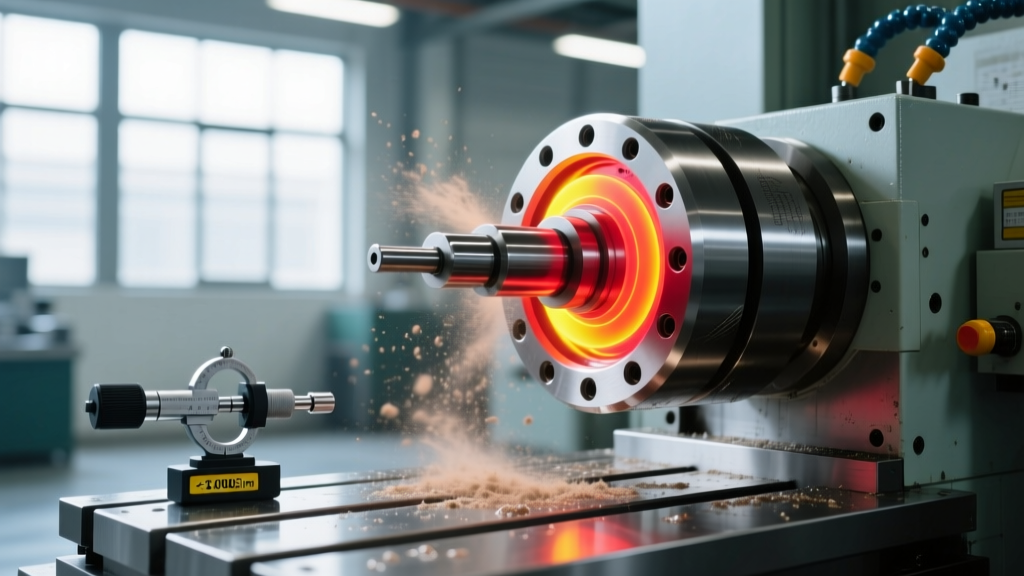
The spindle is the highest-wear accessory on any CNC mill. When a machine tool manufacturer utilizes a proprietary spindle cartridge design, they effectively monopolize the repair market. However, understanding the internal architecture allows maintenance teams to source alternative precision bearings and bypass OEM markups.
The Ceramic Hybrid Advantage in Rebuilds
OEMs frequently ship replacement spindles with standard ABEC-7 or ABEC-9 steel angular contact bearings. For high-speed applications (12,000+ RPM), upgrading to Silicon Nitride (Si3N4) ceramic hybrid bearings during an aftermarket rebuild extends spindle life by 35% to 50%. According to machining research published by the Society of Manufacturing Engineers (SME), ceramic balls reduce thermal expansion and require less preload, which directly mitigates the primary cause of premature spindle failure: thermal seizure.
- OEM Route: Buy a complete factory-sealed cartridge. Cost: $18,000. Lead time: 6-10 weeks.
- Alternative Route: Send the existing cartridge to a certified independent spindle rebuilder (e.g., High Speed Technologies or GMN USA). They will replace the ceramic bearings, re-grind the taper, and balance the assembly to ISO 1940 G0.4 standards. Cost: $6,500. Lead time: 2-3 weeks.
Coolant Union O-Ring Degradation
A non-obvious failure mode in 2026 machine tool accessories is the breakdown of through-spindle coolant (TSC) unions. When running 70 bar (1,000 PSI) coolant for deep-hole drilling, standard Buna-N O-rings degrade rapidly, allowing fluid to bypass the seal and rust the internal spindle taper from the inside out. When sourcing replacement coolant unions, mandate PTFE (Teflon) or FKM (Viton) seals from third-party fluid power suppliers, which resist synthetic coolants up to 120°C, vastly outperforming standard OEM rubber seals.
ATC Mechanisms: Cam, Geneva, and Matrix Sourcing
The Automated Tool Changer is a complex assembly of gripper arms, pre-load springs, and cam boxes. The CNC machine tool manufacturer's choice of mechanism heavily influences your ability to source spare parts.
Decision Framework: ATC Maintenance Sourcing
If your machine uses a Geneva-wheel ATC (Common in older or entry-level VMCs):
Geneva wheels are prone to shock loading and pin wear. Replacement Geneva indexers are widely available from third-party automation suppliers like Camco or Destaco. Do not buy OEM; the markup is typically 300% over the base component.
If your machine uses a Roller-Gear Cam ATC (Standard on Haas, DN Solutions, and modern Mazaks):
These offer smoother, faster tool changes (sub-2 seconds). The cam boxes are sealed and require specific synthetic greases (e.g., Kluber Isoflex). If the cam box fails, alternative sourcing is difficult due to proprietary mounting flanges. Budget for OEM exchange programs rather than attempting third-party reverse engineering.
Navigating the 2026 Supply Chain for Linear Drives and Encoders
High-end CNC machine tool manufacturers like DMG Mori and Okuma heavily integrate linear motor drives and high-resolution absolute encoders into their HMC and 5-axis platforms. When a linear scale fails or a drive amplifier faults, the OEM part numbers are often custom-flashed firmware versions of standard industrial components.
For example, a proprietary linear encoder branded by a machine OEM may internally be a Heidenhain LC 400 series or a Renishaw RESOLUTE scale. By identifying the underlying component manufacturer via the data plate hidden beneath the machine way covers, maintenance engineers can order replacement read-heads and scale tapes directly from the metrology supplier, cutting costs by up to 60% and reducing lead times from months to days.
Tooling Interface Compatibility Check
Before purchasing alternative tooling accessories, verify the clamping force specifications of your machine's drawbar mechanism.
- CAT40 / BT40: Requires 12 kN to 15 kN of drawbar pull force. Standard retention knobs (pull studs) must match the exact thread pitch and flange angle (e.g., 45-degree vs. 90-degree). Using the wrong retention knob will cause the tool to eject at 10,000 RPM.
- HSK-A63: Relies on a dual-contact face-and-taper clamping system requiring exactly 18 kN of hollow-shank clamping force. HSK tooling alternatives must be manufactured to DIN 69893 tolerances; cheap import HSK holders frequently fail the face-contact seal test, leading to chatter and taper fretting.
- Coromant Capto C6: Utilizes a polygonal coupling with high torsional rigidity. While the interface is now an ISO standard (ISO 26623), the internal clamping wedges inside the spindle remain highly proprietary to the original CNC machine tool manufacturer.
Strategic Sourcing: Final Recommendations for Shop Owners
Optimizing your CNC parts inventory requires decoupling your maintenance strategy from the OEM catalog. For standard wear items like way wipers, bellows, and chip conveyor hinges, utilize direct-to-manufacturer industrial fabricators. For critical rotating assemblies like spindles and rotary tables, leverage ISO-certified independent rebuilders who utilize premium ceramic bearings and dynamic balancing equipment. By auditing your machine tool manufacturer's ecosystem for open standards versus proprietary traps, you can reduce annual accessory and maintenance expenditures by 30% to 45% while maintaining sub-micron machining tolerances.