2026 CNC Machined Component Innovations: AI & Hybrid Machining
Explore 2026 innovations in CNC machined component manufacturing, including AI toolpaths, hybrid additive-subtractive tech, and closed-loop metrology.
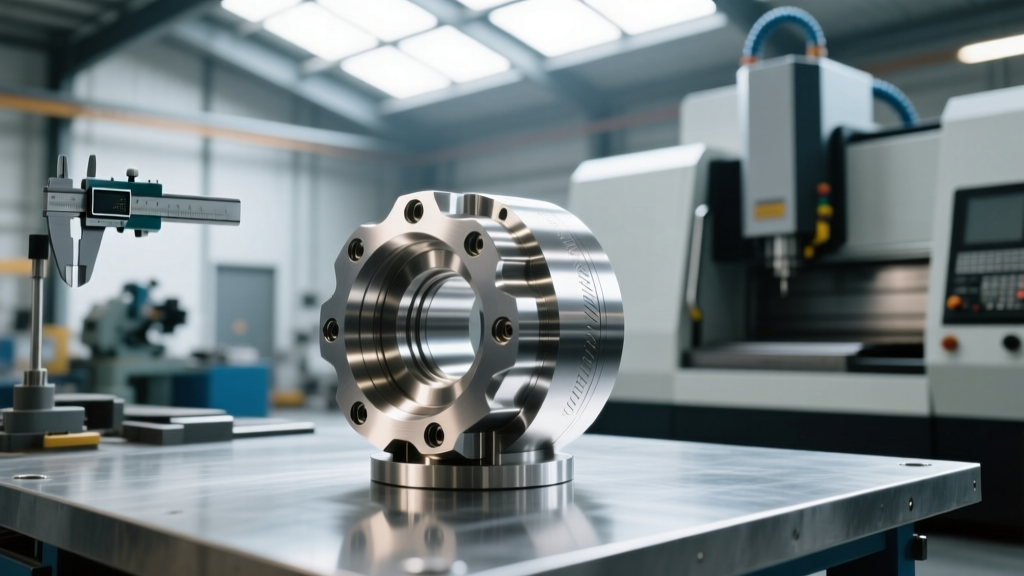
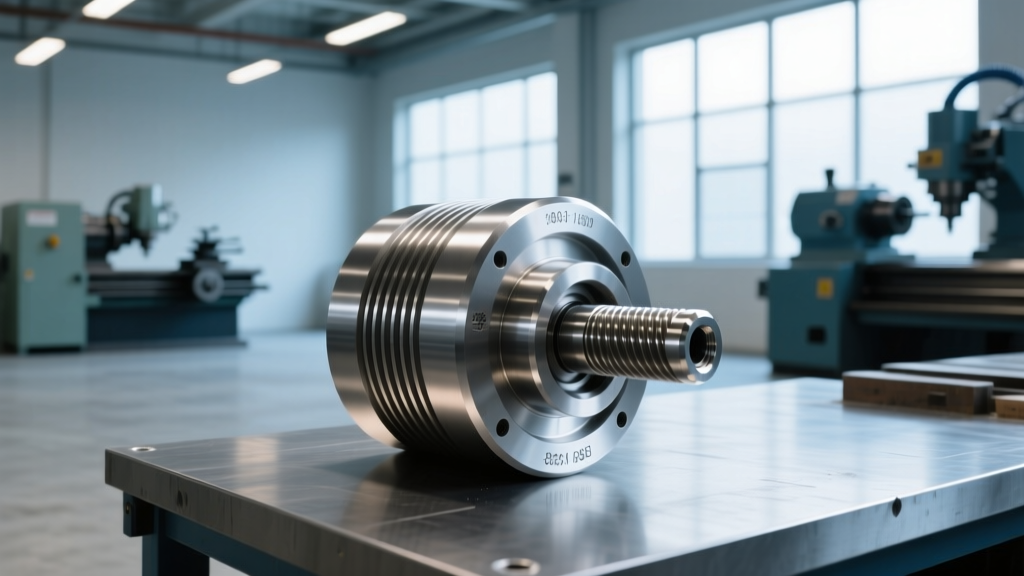
The engineering definition of a CNC machined component has fundamentally shifted. In 2026, high-precision parts are no longer the exclusive domain of pure subtractive milling. The convergence of artificial intelligence in toolpath generation, hybrid additive-subtractive platforms, and closed-loop metrology has redefined what is geometrically possible, economically viable, and metallurgically stable. For manufacturing engineers and procurement specialists, understanding these technological levers is critical for optimizing part cost, lead time, and performance.
The AI Revolution in Toolpath Generation and Spindle Dynamics
Legacy CAM programming relied on static, conservative feed rates to prevent tool deflection and chatter. Modern AI-driven CAM modules, such as the latest iterations of Mastercam Dynamic Motion and Siemens Sinumerik ONE's digital twin environments, utilize machine learning algorithms to analyze real-time acoustic and vibration data. This allows for dynamic, micro-second adjustments to spindle speed and feed rates during the cut.
When machining high-strength aerospace alloys like Titanium Ti-6Al-4V, AI-optimized toolpaths maintain a constant tool engagement angle. This eliminates the sudden load spikes that traditionally cause carbide end mills to micro-chip. By integrating Sandvik Coromant's CoroMill 390 cutters with AI-adaptive feeds, shops are achieving material removal rates (MRR) exceeding 180 cm³/min in titanium, a 35% increase over 2023 baselines, while extending tool life by up to 40%.
Data Highlight: AI Toolpath Efficacy
Material: Aluminum 7075-T6
Traditional CAM Cycle Time: 14.5 minutes
AI-Optimized Cycle Time: 9.2 minutes (36.5% reduction)
Surface Finish Improvement: Ra 0.8 µm down to Ra 0.3 µm without secondary polishing.
Hybrid Manufacturing: Additive Meets Subtractive
For complex CNC machined components requiring internal conformal cooling channels or localized wear-resistant features, 5-axis hybrid machines have moved from niche prototyping to serial production. Platforms like the DMG MORI LASERTEC series combine Laser Metal Deposition (LMD) with 5-axis subtractive milling in a single work envelope.
The workflow begins by milling the base geometry. The machine then switches to the LMD head, depositing layers of powdered metal—such as Inconel 625 or Stellite—directly onto the substrate at rates up to 1.5 kg/hr. Finally, the CNC mill returns to machine the deposited features to final net-shape tolerances. This eliminates the need for secondary EDM (Electrical Discharge Machining) operations and complex fixturing.
Cost and Lead Time Matrix: Aerospace Valve Body (Inconel 718)
The following matrix compares manufacturing methodologies for a complex, 4.5 kg aerospace valve body featuring deep internal cavities and hardened seating surfaces.
| Manufacturing Method | Total Lead Time | Machine Hourly Rate | Total Part Cost | Geometric Freedom |
|---|---|---|---|---|
| Traditional 5-Axis + EDM | 18 Days | $160 / $120 (EDM) | $4,850 | Low (Requires split-body design) |
| Casting + 5-Axis Finish | 45 Days | $160 / hr | $3,200 (at volume) | Medium (Draft angles required) |
| 5-Axis Hybrid (LMD + Mill) | 6 Days | $310 / hr | $4,100 | High (True conformal channels) |
Closed-Loop Metrology and Thermal Compensation
Holding sub-micron tolerances on a CNC machined component is impossible if thermal drift and tool wear are not managed dynamically. In 2026, the integration of in-machine probing and non-contact tool setting has created closed-loop manufacturing cells. Systems like the Renishaw NC4+ non-contact tool setting system measure tool length and diameter to within 0.5 µm, automatically updating the machine's offset tables between operations.
Furthermore, volumetric thermal compensation is now standard on high-end controllers. By placing temperature sensors directly on the spindle housing, ball screws, and casting, the CNC controller maps the thermal expansion of the machine in real-time. The MIT Laboratory for Manufacturing and Productivity has extensively documented how algorithmic thermal compensation can reduce spatial errors by up to 85% in large-format gantry mills, ensuring that a bore machined at 8:00 AM matches a bore machined at 4:00 PM, regardless of ambient shop floor temperature fluctuations.
Edge Case: Machining Thin-Walled Titanium Structures
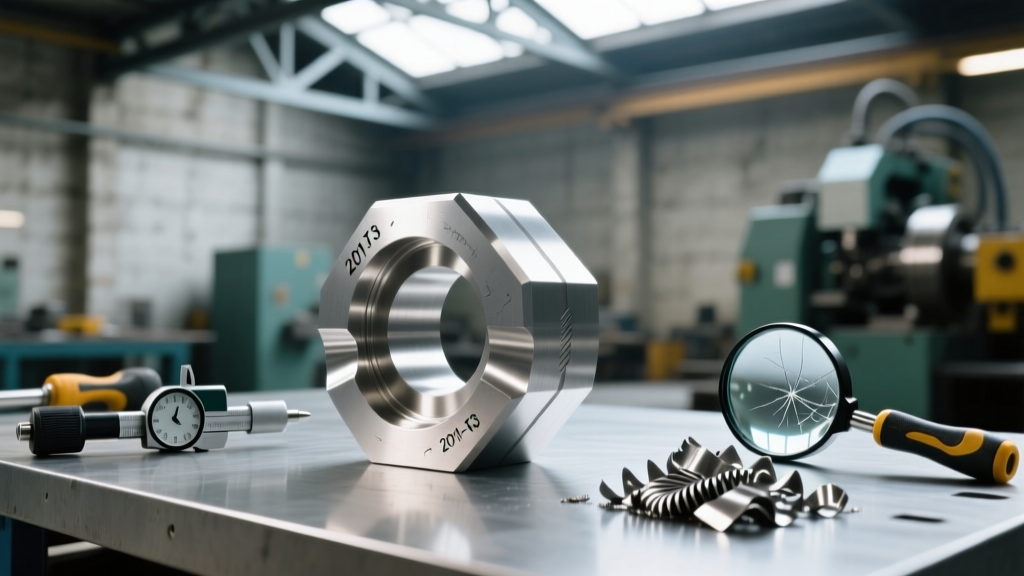
When machining thin-walled aerospace structural components (e.g., 1.2 mm wall thickness in Ti-6Al-4V), residual stress from the forging process causes the part to warp as material is removed. Advanced shops now utilize predictive AI models that simulate stress relaxation. The CNC program intentionally leaves 0.5 mm of stock, pauses for a localized laser stress-relief cycle, and then performs a final 5-axis spring-pass to achieve the final ±0.005 mm tolerance.
Material Innovations: High-Entropy Alloys and Scalmalloy
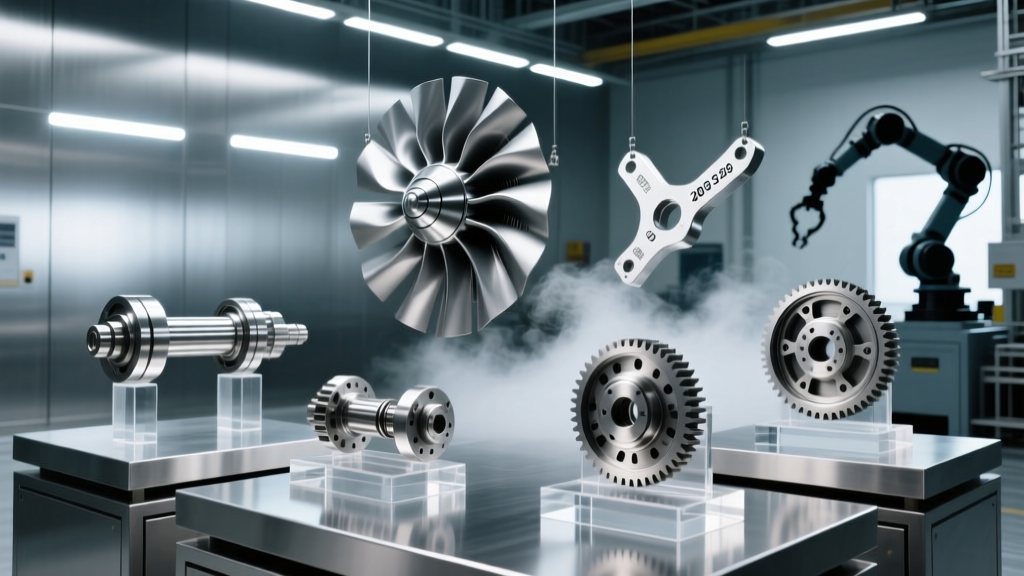
The innovation in CNC machined components is not limited to the machines; the materials themselves are evolving. High-Entropy Alloys (HEAs), such as CoCrFeMnNi (Cantor alloy), are entering the CNC space for extreme cryogenic and high-temperature applications. Unlike traditional alloys that soften at high temperatures, HEAs exhibit increased yield strength as temperatures rise.
Machining HEAs requires specific parameter adjustments:
- Cutting Speed (Vc): Keep strictly between 40-60 m/min to avoid rapid work-hardening.
- Feed per Tooth (fz): Maintain a minimum of 0.1 mm to ensure the cutting edge engages beneath the work-hardened surface layer.
- Tooling: PVD-coated AlTiN carbide with a high positive rake angle to reduce cutting forces and prevent built-up edge (BUE).
'The supply chain for critical aerospace and medical components is no longer bottlenecked by machine availability, but by the engineering capability to program hybrid toolpaths and manage closed-loop metrology data. Shops that treat the CNC machine as an isolated subtractive tool will lose bids to those utilizing it as a comprehensive, data-driven manufacturing node.'
— Dr. Elena Rostova, Advanced Manufacturing Systems Analyst
Actionable Decision Framework for 2026 Sourcing
When designing or sourcing a new CNC machined component, use the following framework to determine the optimal manufacturing technology:
- Evaluate Internal Complexity: If the part requires internal channels that cannot be drilled or milled via intersecting axes, mandate a Hybrid LMD/Mill process or redesign for a two-piece brazed assembly.
- Assess Tolerance Stack-Up: For features requiring ±0.003 mm or tighter over a distance greater than 300 mm, specify that the vendor must utilize in-machine volumetric thermal compensation and Renishaw Equator gauging for 100% inspection.
- Volume vs. Hourly Rate: Do not default to 5-axis machining for prismatic parts. If a part can be completed in two setups on a 3-axis mill with a tombstone and hydraulic clamping, the $85/hr machine rate will vastly outperform the $160/hr 5-axis rate, even accounting for the secondary setup labor.
- Material Selection: For components operating in corrosive, high-wear environments, transition from standard 316L stainless to additively deposited Stellite 6 on critical wear surfaces via hybrid machining, reducing overall part weight and material cost.
By aligning component design with these advanced 2026 manufacturing capabilities, engineering teams can drastically reduce part mass, eliminate assembly steps, and achieve performance metrics that were physically impossible with legacy subtractive methods.