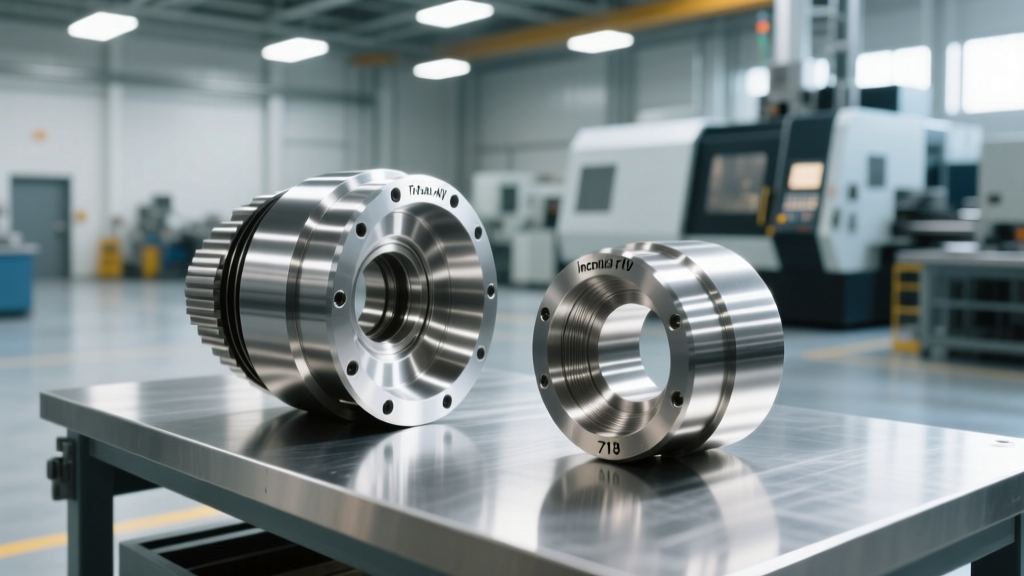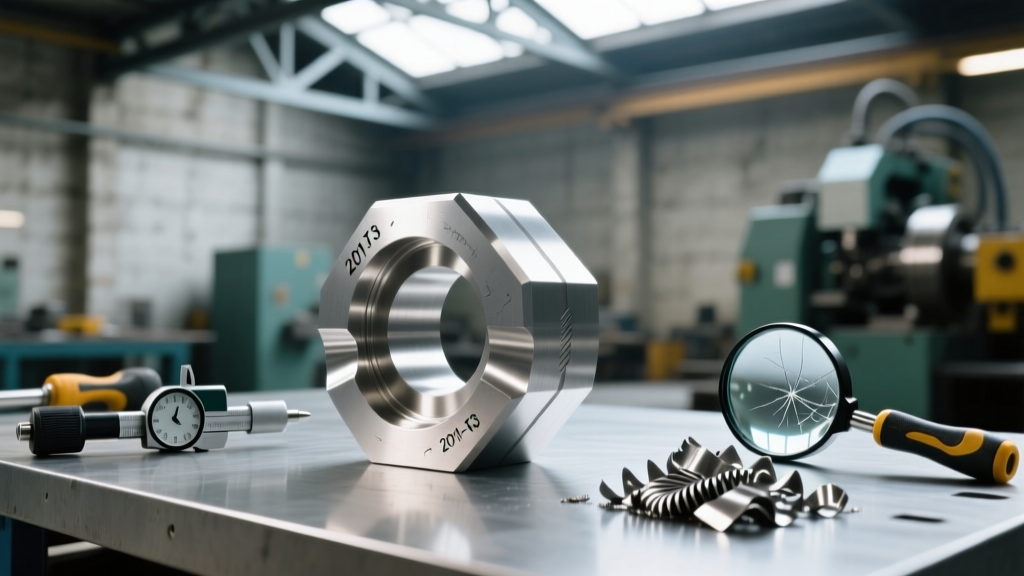
Troubleshooting 2011-T3 CNC Machined Components: Chicago Shop Guide
Expert troubleshooting guide for 2011-T3 CNC machined components. Fix tool wear, surface defects, and chip issues in Chicago production shops.
Mastering 2011-T3 Aluminum in High-Volume Production
Operating a 2011-T3 CNC machined components shop in Chicago presents a unique intersection of metallurgical challenges and environmental variables. Alloy 2011 in the T3 temper condition (solution heat-treated, cold-worked, and naturally aged) is a 2000-series aluminum alloy heavily favored for high-speed screw machining and CNC turning due to its exceptional free-machining properties. With a machinability rating of 85% relative to 12L14 steel, it produces small, easily broken chips rather than the long, stringy nests typical of 6061-T6.
However, the very elements that make 2011-T3 so machinable—specifically the additions of 0.20–0.60% lead and 0.20–0.60% bismuth—create distinct troubleshooting hurdles regarding surface finish degradation, tool edge smearing, and chip conveyor jamming. Furthermore, Chicago's manufacturing corridors, from Elk Grove Village to Cicero, often feature older facilities where seasonal temperature and humidity swings can wreak havoc on tight-tolerance aerospace and automotive fittings. This guide provides actionable, shop-floor-tested repair and troubleshooting protocols for 2011-T3 production runs.
⚠️ Environmental & Compliance Note: Because 2011-T3 contains lead and bismuth, it is not RoHS compliant. Chicago shops must ensure proper coolant filtration and chip recycling protocols are in place, as municipal wastewater regulations strictly prohibit lead-contaminated coolant discharge.Diagnosing Surface Finish Degradation and BUE
The most frequent complaint when machining 2011-T3 is sudden surface tearing or a cloudy, smeared finish on turned diameters. This is rarely a machine rigidity issue; it is almost always a chemical and geometric interaction between the cutting tool and the bismuth/lead inclusions in the alloy matrix.
Symptom: Smearing on the Workpiece
When the cutting edge dulls microscopically, it stops shearing the material and begins plowing through the lead/bismuth pockets. These soft inclusions smear across the workpiece surface rather than being cleanly severed.
- Cause 1: Incorrect Coolant Chemistry. 2011-T3 requires a semi-synthetic coolant maintained at an 8–10% concentration. If the pH drops below 8.5, the coolant loses its ability to lubricate the bismuth inclusions, leading to Built-Up Edge (BUE).
- Cause 2: Wrong Tool Coating. Using TiAlN (Titanium Aluminum Nitride) coated inserts on 2011-T3 is a critical error. The aluminum in the workpiece chemically bonds with the aluminum in the coating at high cutting temperatures, causing severe BUE.
The Fix: Tool Geometry and Coolant Calibration
To eliminate smearing, transition to uncoated micro-grain carbide (C2/C3 grade) or TiB2 (Titanium Diboride) coated tooling. TiB2 provides a highly polished, chemically inert surface that prevents aluminum adhesion. Ensure your turning inserts feature a high positive rake angle (15° to 20°) and a polished rake face. On the maintenance side, check your coolant refractometer daily. Many semi-synthetic fluids require a refractometer multiplier of 1.5 to 2.0; failing to apply this multiplier results in running a 4% actual concentration while the refractometer reads 8%, starving the cut of necessary lubricity.
Tool Wear Matrix: Selecting the Right Insert for 2011-T3
Tool life in 2011-T3 is heavily dependent on matching the insert substrate to your specific cycle times. Below is a decision matrix for Chicago production shops balancing cycle speed against tooling costs.
| Tool Material / Coating | Recommended SFM | Estimated Tool Life (Parts) | Best Application Scenario |
|---|---|---|---|
| Uncoated Micro-Grain Carbide | 1,200 - 1,800 | 800 - 1,200 | Low-to-medium volume runs; complex form tools where sharp edges are mandatory. |
| TiB2 Coated Carbide | 1,500 - 2,200 | 2,500 - 4,000 | High-volume turning; excellent resistance to BUE and smearing. |
| PCD (Polycrystalline Diamond) | 2,500 - 4,000+ | 20,000+ | Mass production (Swiss/CNC); high initial cost but lowest cost-per-part. |
| TiAlN / TiCN Coated | N/A | N/A (Premature Failure) | AVOID. Chemical affinity with aluminum causes immediate BUE and edge breakdown. |
"When machining 2000-series alloys like 2011, the goal isn't just to cut the metal; it's to manage the thermal load so the lead and bismuth inclusions shear cleanly rather than melt and redeposit on the flank of the tool." — Advanced Machining Materials Guide, Sandvik Coromant
Troubleshooting Chip Conveyor Jams and Turret Packing
Unlike 6061, which produces long, continuous chips that wrap around spindles, 2011-T3 generates short, needle-like or '6'-shaped chips. While this seems advantageous, these tiny chips act like abrasive sand. They easily bypass standard way-covers, pack tightly into the crevices of turret mechanisms, and jam hinge-belt chip conveyors by wedging between the belt hinges and the conveyor housing.
Step-by-Step Conveyor and Turret Repair Protocol
If your chip conveyor is stalling or the turret indexing is sluggish, follow this mechanical repair sequence:
- Lockout/Tagout and Drain: Isolate the conveyor motor. Drain the coolant tank to expose the conveyor's lower return sprocket.
- Clear the Hinge Wedge: Use a narrow flathead screwdriver and compressed air to blow out the packed 2011-T3 chips from the hinge pin gaps. Do not use a hammer to force the belt; the chips act as a cement-like binder when mixed with dried semi-synthetic coolant.
- Inspect Tension Springs: 2011 chips are heavy and dense. Check the conveyor's take-up springs. If they have stretched beyond 15% of their nominal length, the belt will slip on the drive sprocket when under load. Replace with heavy-duty die springs.
- Turret Wiper Replacement: Remove the turret end-covers. The needle chips from 2011-T3 will embed in the polyurethane wiper seals. Extract the chips with a brass wire brush (never steel, which will score the mating surfaces) and apply a fresh coat of way oil before reassembly.
Dimensional Instability: Managing Chicago's Thermal Swings
A hidden variable for any 2011-T3 CNC machined components shop in Chicago is the drastic seasonal temperature shift. Alloy 2011 has a coefficient of thermal expansion (CTE) of approximately 12.8 µm/m-°C (or 23.2 x 10^-6 in/in/°F), which is notably higher than steel and slightly higher than 6061 aluminum. According to material data from MakeItFrom, this high CTE means a 10-inch diameter aluminum ring will expand or contract by roughly 0.0023 inches for every 10°F change in ambient temperature.
Troubleshooting Out-of-Tolerance Bores
If your shop relies on morning warm-up cycles but lacks full climate control (common in older industrial parks), you will see bore diameters shrink in the winter afternoons and expand in the summer. The Fix: Implement a mid-shift thermal compensation macro in your CNC controller. Measure the ambient shop temperature and the coolant temperature at 10:00 AM and 2:00 PM. If the coolant temperature rises by more than 4°F due to the heat exchanger struggling against summer ambient heat, apply a negative tool wear offset of -0.0002" per inch of bore diameter to compensate for the thermal growth of the workpiece. For high-precision aerospace fittings, shops must invest in spindle chillers that maintain coolant at a strict 68°F (20°C), regardless of the season.
Peck Drilling and Chip Evacuation in Deep Holes
While 2011-T3 chips break easily, deep-hole drilling (depths exceeding 5x diameter) still poses evacuation risks. The short chips can pack tightly into the flutes of a standard twist drill, causing coolant starvation at the cutting edge and subsequent drill snapping.
- Optimize Peck Cycles: Avoid standard G83 deep hole peck cycles with constant peck depths. Instead, use a variable peck cycle (often a custom macro or G73 equivalent depending on the control) where the first peck is 2x diameter, and subsequent pecks reduce by 15% each time. This accounts for the decreasing coolant pressure and chip flushing efficiency as the hole gets deeper.
- Through-Tool Coolant Pressure: For 2011-T3, through-spindle coolant (TSC) must be maintained at a minimum of 450 PSI to effectively blast the dense, needle-like chips out of the flutes. If your shop's pump is degrading and dropping below 300 PSI, switch to parabolic flute drills which offer 30% more flute volume for chip clearance.
Summary Maintenance Checklist for 2011-T3 Runs
To maintain profitability and minimize scrap, post this checklist at the operator station for all 2011-T3 production cells:
- [ ] Coolant Check: Refractometer reading verified with multiplier; pH strictly between 8.5 and 9.2.
- [ ] Tooling Audit: Confirm no TiAlN coated inserts are loaded in the turret; verify high-rake, polished geometries.
- [ ] Chip Conveyor: Lower sprocket cleared of needle-chip packing; belt tension verified.
- [ ] Thermal Baseline: Machine warm-up cycle completed; ambient and coolant temperatures logged for offset compensation.
- [ ] Filtration: Magnetic separators and drum filters checked for lead-heavy sludge buildup.
By respecting the unique metallurgy of 2011-T3 and proactively managing the environmental and mechanical realities of your facility, you can achieve cycle times and surface finishes that consistently beat industry benchmarks. For further reading on non-ferrous machining strategies, consult the Modern Machine Shop aluminum machining archives.