Top CNC Machining Industry News Today: 2026 Tech Trends
Explore CNC machining industry news today: 2026 AI spindle monitoring, hybrid 5-axis additive tech, and closed-loop metrology frameworks.
The landscape of precision manufacturing has shifted from incremental mechanical upgrades to software-defined machining. Tracking the most critical CNC machining industry news today reveals that 2026 is defined by three converging technologies: edge-AI spindle telemetry, directed energy deposition (DED) hybrid mills, and closed-loop metrology. For shop floor managers and manufacturing engineers, understanding these shifts is no longer optional; it is the baseline for maintaining competitive cycle times and aerospace-grade tolerances.
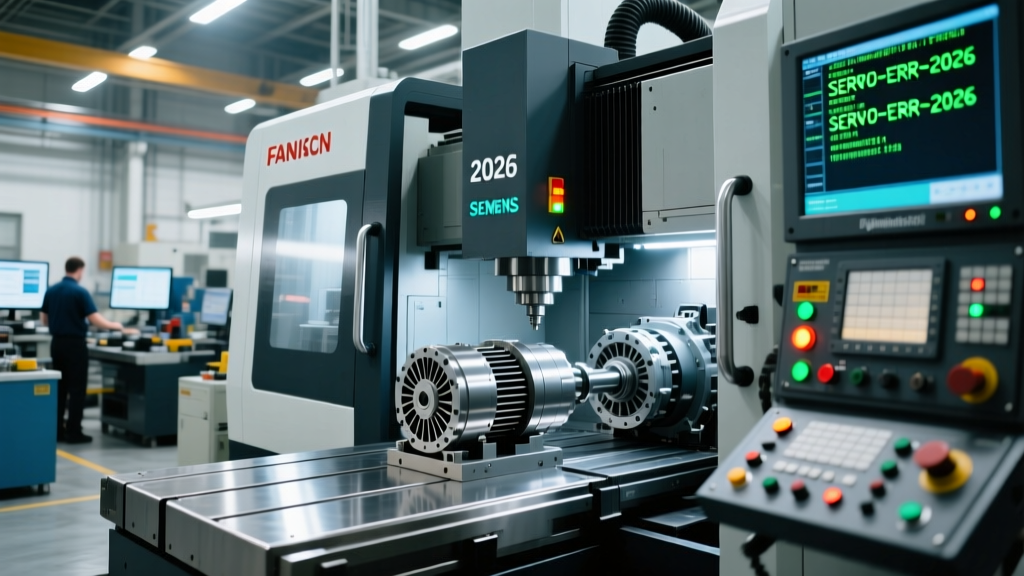
Edge-AI Spindle Telemetry: Beyond Basic Vibration Monitoring
Historically, spindle monitoring relied on threshold-based vibration alerts that triggered only after catastrophic bearing degradation had begun. The latest generation of edge-computing sensors, such as the Kistler Piezotron IQS900 and the Siemens Sinumerik One integrated AI modules, process acoustic emission (AE) and multi-axis vibration data locally at 10 kHz sampling rates.
Data Highlight: According to recent analyses by the Society of Manufacturing Engineers (SME), implementing edge-AI spindle monitoring reduces unplanned downtime by 34% and extends spindle life by an average of 18,000 cutting hours by detecting micro-chatter anomalies as low as 0.05g before they propagate to the tool holder.Comparing 2026 Predictive Sensor Architectures
| Sensor System | Data Processing | Tool Breakage Latency | Est. Retrofit Cost |
|---|---|---|---|
| Kistler Piezotron IQS900 | Edge AI (Acoustic + Vibration) | < 2 milliseconds | $18,500 - $22,000 |
| Marposs Optoquick | Cloud/Local Hybrid (Optical) | 45 milliseconds | $28,000 - $35,000 |
| Heidenhain TNC7 (Native) | Native CNC Controller AI | 8 milliseconds | Included in $95k+ Control |
When evaluating these systems, prioritize acoustic emission sensors for hard-metal milling (e.g., Inconel 718 or Titanium Ti-6Al-4V). Acoustic sensors detect the high-frequency stress waves generated by micro-fractures in carbide end mills long before macro-vibration sensors register the physical shake of a broken flute.
Hybrid Additive-Subtractive CNC: The 2026 Reality
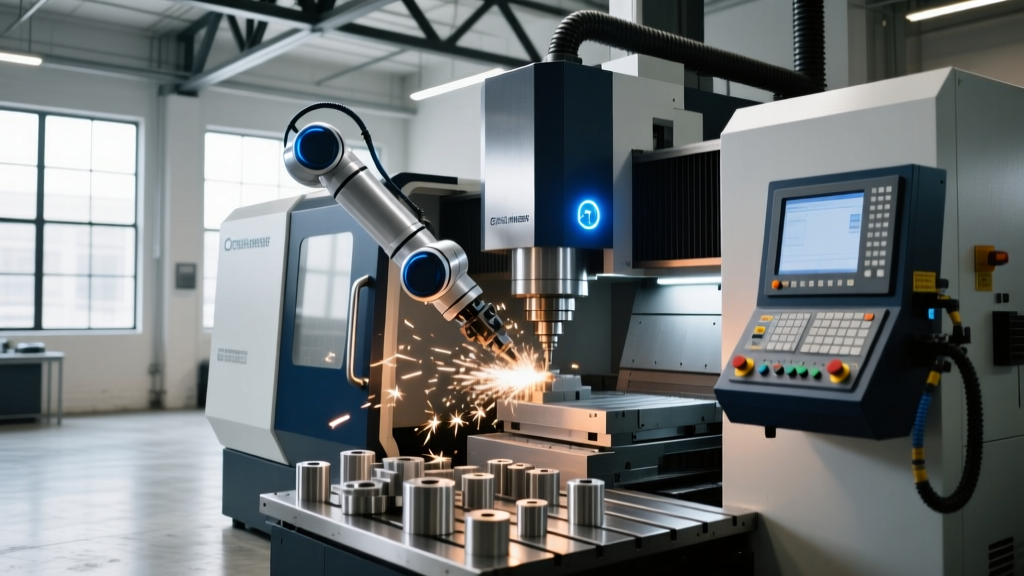
The integration of Directed Energy Deposition (DED) with 5-axis subtractive milling has matured from a prototyping novelty to a production-ready repair and complex-geometry solution. Machines like the DMG MORI Lasertec 65 DED hybrid are currently dominating aerospace MRO (Maintenance, Repair, and Overhaul) sectors.
Unlike powder-bed fusion, DED allows for the deposition of material onto existing 3D surfaces. A standard application in 2026 involves rebuilding worn turbine blade tips using Stellite 6 powder, followed immediately by a 5-axis contouring pass to achieve final net-shape tolerances.
Material Deposition and Shielding Requirements
- Powder Feed Rates: Modern DED heads achieve 1.2 to 1.8 kg/hr for nickel-based superalloys, a 40% increase over 2023 baseline models.
- Shielding Gas: High-purity Argon (99.999%) delivered at 15-20 L/min through a localized coaxial nozzle is mandatory to prevent oxidation in the melt pool, which otherwise leads to porosity rates exceeding the 2% aerospace rejection threshold.
- Thermal Management: Active chiller units maintaining the substrate at a constant 20°C (±1°C) are now standard to prevent thermal warping during the subtractive finishing pass.
For a deeper understanding of federal standards governing hybrid manufacturing processes, the National Institute of Standards and Technology (NIST) Advanced Manufacturing portal provides extensive frameworks on additive-subtractive qualification protocols.
Closed-Loop Metrology and Automated Tool Compensation
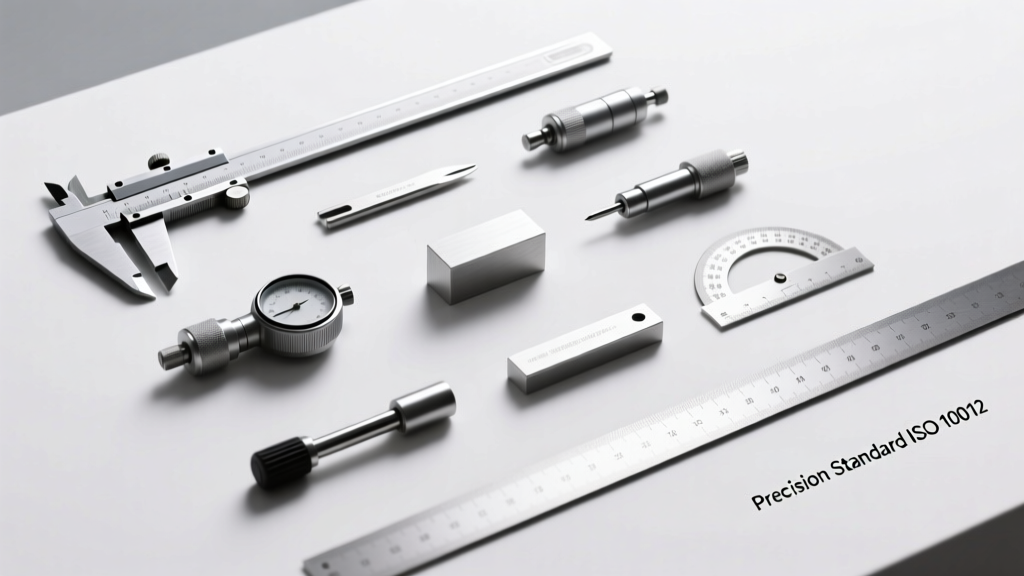
Scrap reduction in high-volume CNC turning and milling is now heavily reliant on closed-loop metrology. The Renishaw Equator 300 gauging system, paired with Intelligent Process Control (IPC) software, represents the current benchmark for automated feature verification.
Instead of an operator manually measuring a bore diameter with an air gauge and typing an offset into the Fanuc or Mazatrol control, the Equator system automatically probes the part post-cycle. The IPC software calculates the deviation, applies the wear offset directly to the specific tool axis via a hardwired RS232 or Ethernet/IP connection, and updates the control in under 2.5 seconds.
Implementation Matrix: When to Automate Metrology
| Production Scenario | Tolerance Band | Recommended Action | Est. Payback Period |
|---|---|---|---|
| High-Volume Automotive (100k+ parts/yr) | ± 0.015 mm | Full Closed-Loop IPC Automation | 4 - 6 Months |
| Mid-Volume Medical (10k - 50k parts/yr) | ± 0.005 mm | In-Machine Probing (Renishaw OMP60) | 8 - 11 Months |
| Low-Volume Aerospace (Job Shop) | ± 0.025 mm | Manual CMM / Air Gauging | N/A (Manual) |
Industry data published by Modern Machine Shop indicates that shops implementing automated closed-loop compensation see an average scrap rate reduction of 18% within the first quarter of deployment, primarily by eliminating human transcription errors during manual offset entry.
Strategic Framework: Upgrading Your Shop Floor in 2026
Navigating the influx of CNC machining industry news today requires a disciplined approach to capital expenditure. Do not adopt technology simply because it is trending. Use the following decision framework to audit your shop's readiness for 2026 tech integrations:
- Audit Your Spindle Replacement Costs: If your shop operates 5+ high-speed spindles (20,000+ RPM) and experiences more than two unplanned spindle failures annually, the ROI for edge-AI acoustic monitoring (approx. $20k per machine) is immediate. The cost of a single HSK-A63 spindle rebuild often exceeds $35,000.
- Evaluate Hybrid Additive Viability: Only invest in DED hybrid mills if your revenue stream includes high-margin MRO contracts or complex internal cooling channels that cannot be machined via traditional 5-axis subtractive methods. For standard structural components, traditional 5-axis machining remains 60% faster and significantly more cost-effective.
- Digitize Your Metrology: If your scrap rate due to tool wear and thermal drift exceeds 3%, prioritize the integration of in-machine probing or automated external gauging with IPC software before investing in faster cutting tools. Fixing the measurement loop yields a higher margin improvement than increasing feed rates.
By filtering daily industry developments through this technical and financial lens, manufacturing leaders can separate genuine productivity multipliers from marketing hype, ensuring their CNC operations remain profitable and precise in an increasingly automated market.