Complete Maintenance Schedule for a Vertical CNC Milling Machine
Maximize uptime and spindle life with this exact maintenance schedule for a vertical CNC milling machine, covering daily, weekly, and annual service tasks.
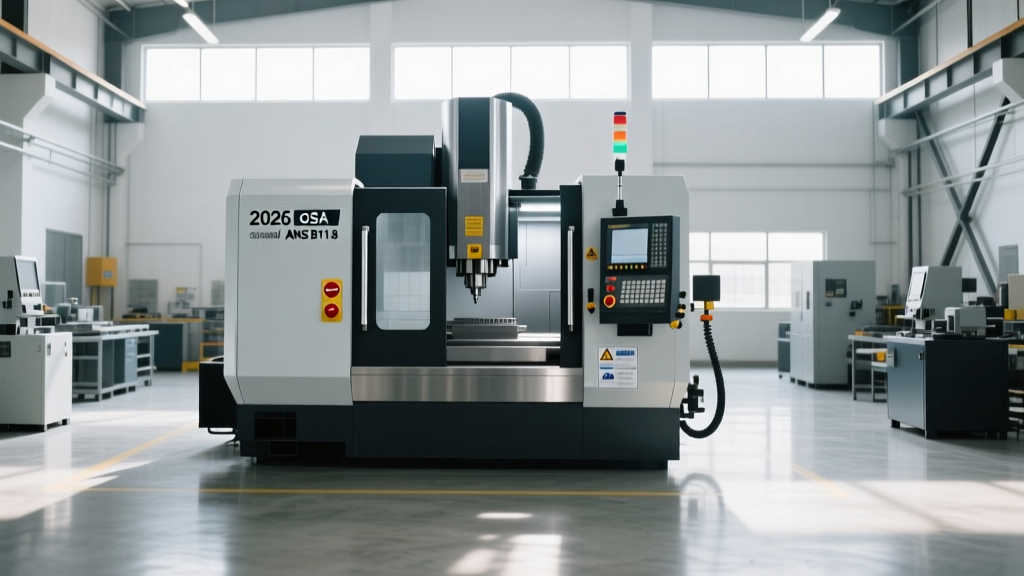
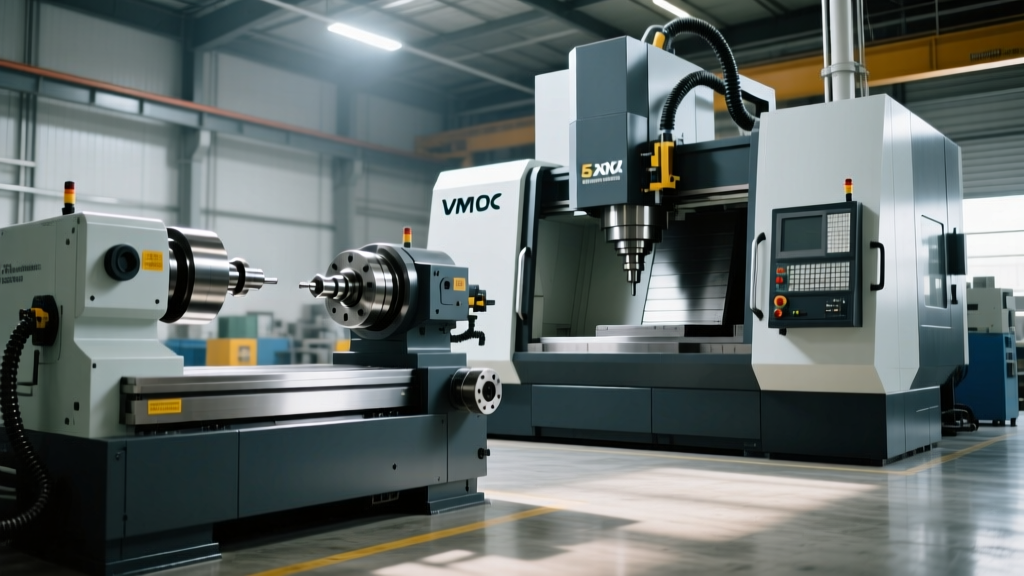
Unplanned downtime on a vertical CNC milling machine costs modern machine shops between $150 and $250 per hour in lost production, scrapped parts, and expedited shipping fees. While operators often focus on cycle times and toolpaths, the foundation of profitability is a rigid, data-driven preventative maintenance (PM) schedule. Whether you are running a workhorse Haas VF-2, a DMG MORI CMX V, or a Doosan DNM series, adhering to precise fluid, mechanical, and calibration intervals is non-negotiable in 2026's high-tolerance manufacturing environment.
Warning: The Hidden Cost of Skipped Way LubeRunning a vertical mill with a depleted way lube reservoir doesn't just cause squeaking axes. It accelerates way liner wear (like Turcite-B or Rulon) by up to 400%. Once the linear guideways or box ways score, a simple $50 fluid top-off turns into a $12,000+ geometry rebuild requiring a specialized rigger and laser interferometer.
Daily Operator Maintenance (Shift Start & End)
Daily tasks should take no more than 15 minutes but are critical for catching micro-failures before they cascade. Operators must perform these checks before the first spindle start and after the final cycle.
Start-of-Shift Checklist
- Way Lube Reservoir: Verify the sight glass is above the minimum line. Most 3-axis verticals require ISO VG 68 way oil (e.g., Mobil Vactra Oil No. 2). Do not substitute with standard hydraulic fluid, which lacks the tackiness agents needed to cling to vertical surfaces.
- Shop Air Supply: Check the machine's air pressure regulator. It must read between 85 and 95 PSI. Low air pressure causes incomplete tool changer actuation, leading to CAT40 or BT30 tool retention failures mid-cycle.
- Spindle Warm-Up: Execute a 10-minute automated warm-up macro. Start at 500 RPM and step up to 8,000 RPM (or 75% of max spindle speed) to evenly distribute spindle bearing grease and stabilize column thermal expansion.
End-of-Shift Checklist
- Chip Evacuation: Clear chips from the way covers and tool magazine. Cast iron and abrasive composite chips can easily bypass worn way wipers and embed in the linear bearings.
- Coolant Skimming: Run the coolant skimmer for 15 minutes to remove tramp oil. Tramp oil starves the emulsion of oxygen, breeding anaerobic bacteria that drop coolant pH and cause severe skin irritation and machine corrosion.
Weekly & Bi-Weekly Service Intervals
Weekly maintenance shifts focus to fluid chemistry and moving mechanical linkages. This is where data logging becomes essential for predictive analysis.
Coolant Chemistry Management
Do not rely on the 'smell test' for coolant health. Use a digital refractometer to check the concentration of your semi-synthetic or synthetic coolant (such as Master Fluid Solutions TRIM E709). Target a concentration of 8.0% to 9.5%. Below 7%, rust inhibitors fail and flash rust will appear on the cast iron base within 48 hours. Above 11%, the fluid becomes overly aggressive, degrading rubber seals and leaving sticky residues on tool holders.
Fluid & Lubricant Specification Matrix
| Application | Recommended Fluid Type | ISO Grade / Spec | Change Interval |
|---|---|---|---|
| Way Lubrication | Tackified Way Oil | ISO VG 68 (e.g., Mobil Vactra No. 2) | Top-off daily; Flush annually |
| Spindle Chiller | Spindle Cooling Oil | ISO VG 2 or VG 5 (Check OEM) | Every 24 months |
| Gearbox (if equipped) | Synthetic Gear Oil | ISO VG 220 | Every 5,000 hours |
| Tool Magazine Cam | Lithium EP Grease | NLGI Grade 2 | Every 6 months |
Monthly & Quarterly Deep-Dive Inspections
Monthly maintenance requires a trained technician and involves verifying mechanical tolerances that directly impact part geometry and surface finish.
Way Wiper and Belt Inspection
Inspect the polyurethane way wipers on the X and Y axes. If you are machining abrasive materials like 316 stainless steel or Inconel, replace way wipers every 3 to 4 months rather than the standard 12-month interval. For machines utilizing drive belts instead of direct-drive motors, check belt tension. A properly tensioned V-belt should deflect exactly 1/64th of an inch per inch of span when pressed with moderate thumb pressure. Loose belts cause chatter during heavy roughing passes; overtightened belts destroy spindle bearing preloads.
Quarterly Spindle Pull-Stud Retention Force
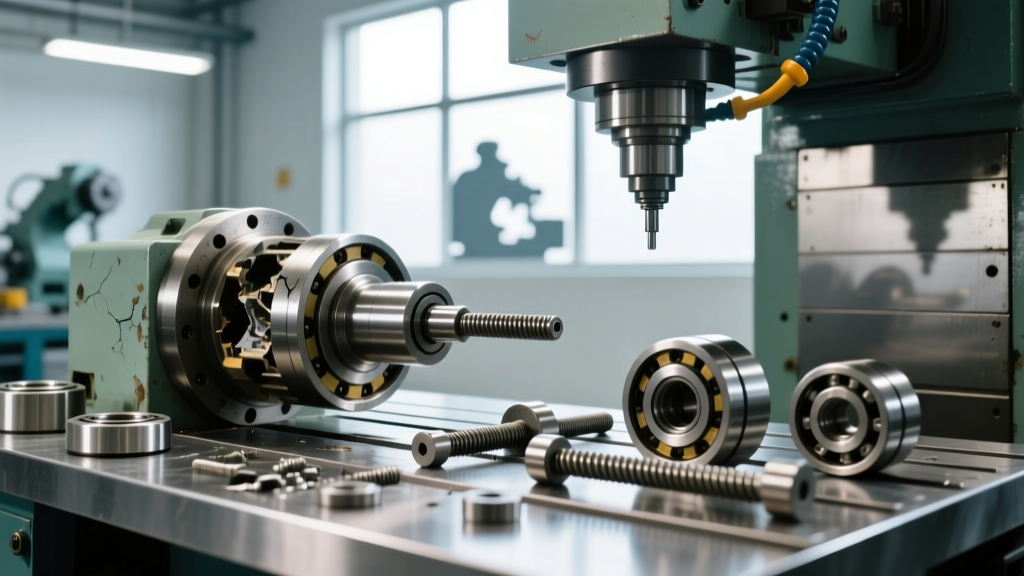
The tool retention mechanism inside the spindle is a high-wear item. Use a mechanical force gauge (such as those from Command Tool or Tec-Supply) to measure the drawbar pull force. According to Sandvik Coromant's milling knowledge base, a standard CAT40 spindle must maintain a minimum retention force of 2,500 lbf (11,120 N). If the force drops below 2,000 lbf, the tool holder will vibrate under heavy radial loads, causing accelerated spindle taper fretting and poor surface finishes. Rebuild the drawbar assembly with new Belleville washers immediately if readings are low.
Annual Preventative Maintenance (PM) & Calibration
Annual PM is a capital investment that preserves the machine's volumetric accuracy. Expect to pay between $1,800 and $3,000 for an OEM-certified technician to perform a full geometry and servo-leveling service. According to Haas Automation's service guidelines, skipping annual PMs voids specific warranty extensions and guarantees axis drift over time.
Pro Tip: Demand Ballbar TestingEnsure your annual PM includes a telescoping ballbar test (e.g., Renishaw QC20-W). This 15-minute diagnostic plots circular interpolation errors, revealing backlash, stick-slip, and servo mismatch that standard laser calibration often misses. It provides a visual polar plot of your machine's true 3D positioning capability.
"In 2026, the gap between shops that do reactive maintenance and those that do predictive maintenance is measured in spindle lifespans. Monitoring spindle vibration signatures and motor current draw allows us to replace bearings before they catastrophically fail, saving roughly $15,000 per incident."
— Lead Maintenance Engineer, Tier 1 Aerospace Machine Shop
Troubleshooting Common Maintenance Failures
When maintenance schedules slip, specific mechanical symptoms emerge. Use this decision tree to diagnose and correct common vertical mill anomalies.
- Symptom: Loss of tram (spindle out of square to the table) after heavy roughing.
Cause: Column thermal expansion or Y-axis gib wear. Vertical columns lean forward when the spindle head generates heat.
Fix: Never indicate a cold machine. Run a 20-minute warm-up cycle before checking tram. If the error persists when hot, adjust the Y-axis gibs to remove backlash without inducing stick-slip. - Symptom: Tool changer arm stalls at the 90-degree rotation point.
Cause: Low shop air pressure, clogged pneumatic filter, or worn Geneva mechanism cam.
Fix: First, check the inline pneumatic filter for moisture and particulate buildup. If air flow is adequate, inspect the tool changer cam box oil level (often overlooked) and lubricate the Geneva mechanism with ISO VG 220 gear oil. - Symptom: Chatter marks on the floor of a pocket during finishing passes.
Cause: Spindle taper contamination or fretting corrosion.
Fix: Clean the spindle taper and tool holder taper with a dedicated taper cleaning tool and isopropyl alcohol. Inspect the pull-stud for micro-cracks. As noted by the NIST Manufacturing Engineering Laboratory, even 5 microns of debris in the taper can cause radial runout that destroys surface finish and tool life.
Final Thoughts on Machine Longevity
A vertical CNC milling machine is a dynamic system of thermodynamics, fluid dynamics, and precision mechanics. By strictly enforcing daily fluid checks, quarterly retention force verifications, and annual ballbar calibrations, shops can easily extend the operational life of a mill from a standard 10 years to over 20 years, maintaining tight tolerances well into the machine's second decade of service.