CNC Turn Mill Machine vs. 5-Axis VMC: 2026 Buyer's Guide
Compare CNC turn mill machines against 5-axis VMCs and discrete lathes. Explore 2026 pricing, ROI, B-axis contouring, and part mix decision frameworks.
The Core Dilemma: Multitasking Centers vs. Discrete Machine Cells
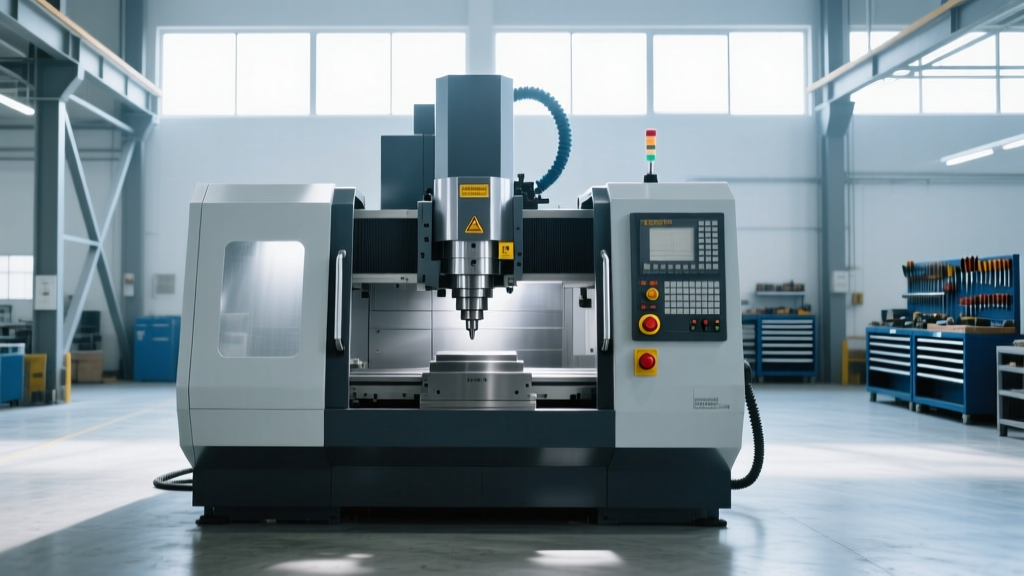
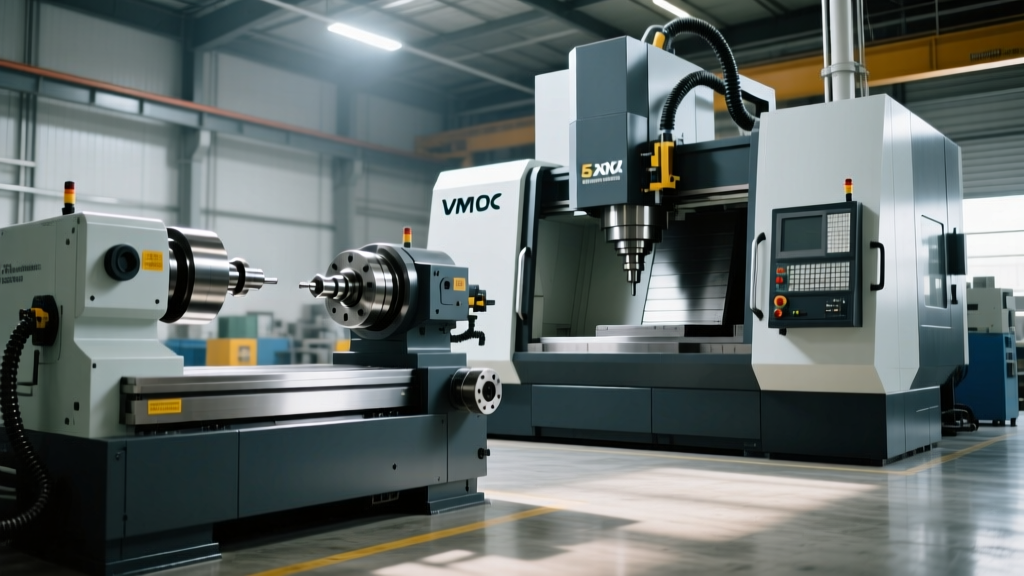
For complex rotational parts featuring off-center holes, contoured flats, and helical profiles, machine shops face a critical capital equipment decision: invest in a dedicated CNC turn mill machine or maintain a discrete cell comprising a CNC lathe and a 5-axis vertical machining center (VMC). While the traditional two-machine approach offers redundancy, the modern mill-turn center eliminates secondary setups, drastically reducing cumulative tolerance stack-up and work-in-process (WIP) inventory.
According to Sandvik Coromant's machining guidelines, completing a part in a single chucking on a multitasking machine can reduce total lead time by up to 80% compared to multi-setup workflows. However, the premium attached to turn-mill technology requires a rigorous analysis of your specific part mix, lot sizes, and CAM programming capabilities before committing capital in 2026.
Quick Decision Framework
- Choose a CNC Turn Mill Machine if: Your parts are primarily rotational (shafts, valves, aerospace fittings), require strict concentricity between turned ODs and milled features (<0.0002" TIR), and fit within a 2.5-inch to 8-inch diameter envelope.
- Choose a Discrete Cell (Lathe + 5-Axis VMC) if: Your part mix includes large prismatic blocks, non-rotational components, or if you require extreme redundancy for high-volume production where machine downtime is unacceptable.
- Choose a Swiss-Type Lathe if: Your parts are sub-1.25" diameter, high-aspect-ratio medical or electronic components requiring guide-bush support.
Capital Expenditure and ROI Matrix (2026 Pricing)
The financial barrier to entry for a true mill-turn center is significantly higher than assembling a discrete cell from mid-tier brands. Below is a comparative analysis of three common shop configurations, reflecting Q1 2026 market pricing for base models equipped with standard chip conveyors and high-pressure coolant (HPC) packages.
| Configuration | Representative Models | Est. CapEx (USD) | Floor Space (sq ft) | Setup Time Reduction |
|---|---|---|---|---|
| Premium Mill-Turn | Mazak INTEGREX i-200S | $485,000 - $550,000 | ~110 | 75% - 85% |
| Mid-Tier Mill-Turn | Okuma MULTUS U3000 | $620,000 - $700,000 | ~135 | 80% - 90% |
| Discrete Cell | Haas ST-20Y + UMC-500SS | $280,000 - $310,000 | ~160 | Baseline (0%) |
The Break-Even Analysis
While the Haas discrete cell costs nearly 50% less upfront, the ROI for the Mazak INTEGREX accelerates when lot sizes drop below 50 pieces and part complexity increases. In a discrete cell, a complex aerospace valve body requires Op 10 (turning), Op 20 (5-axis milling), and Op 30 (deburring/inspection). Moving the part between machines introduces a 0.001" to 0.003" datum shift. The mill-turn center completes the valve in Op 10 alone, eliminating inter-operation queuing, secondary fixturing costs, and CMM re-certification of datums.
Technical Deep Dive: B-Axis Contouring vs. C-Axis Indexing
Not all machines marketed with milling capabilities are true CNC turn mill machines. The distinction lies in the milling spindle configuration.
C-Axis Indexing with Live Tooling (The Compromise)
Machines like the Haas ST-20Y utilize a C-axis that locks the main spindle at specific degrees, combined with Y-axis travel and live (driven) tooling in the turret. This is excellent for drilling cross-holes, milling flats, and tapping. However, it cannot perform 5-axis simultaneous contouring. You are limited to 3-axis milling on the part's periphery or face. Furthermore, standard turret live tooling relies on BMT or VDI interfaces, which lack the rigidity for heavy milling cuts in hardened steels or Inconel.
B-Axis Contouring (The True Mill-Turn)
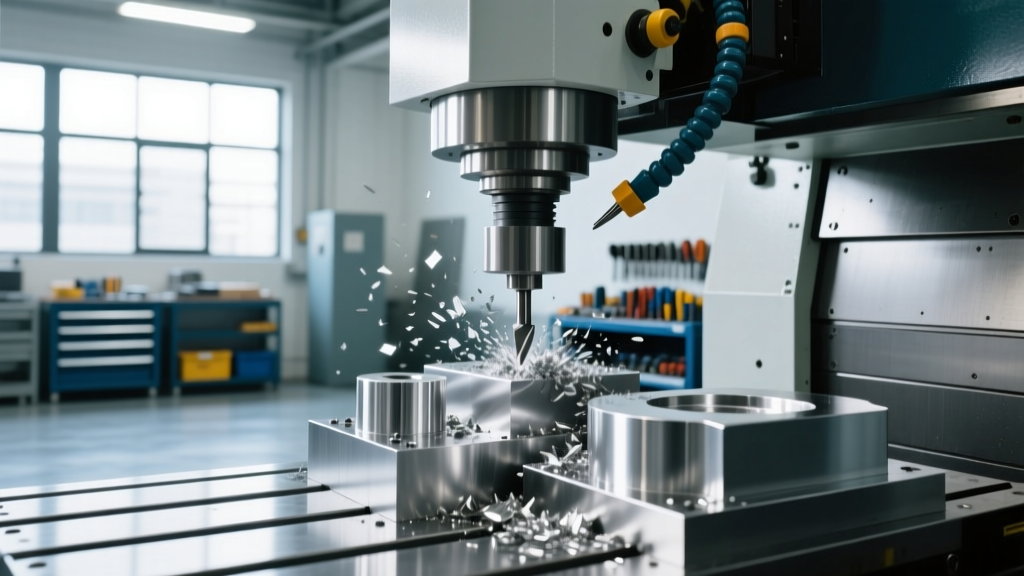
True multitasking centers, such as those detailed in Mazak's Multi-Tasking machine portfolio, feature an independent B-axis milling head. This head can tilt continuously (usually up to 240 degrees) and perform full 5-axis simultaneous machining while the main spindle rotates. This allows for complex impeller profiling, angled porting, and helical interpolation without re-fixturing. The B-axis head typically utilizes a Coromant Capto C6 or KM63 tooling interface, which provides vastly superior bending moment resistance compared to standard lathe turret tooling.
Warning: Tool Interference ZonesWhen programming 5-axis simultaneous moves on a B-axis turn-mill, CAM software must account for the physical footprint of the main spindle housing and the sub-spindle. Unlike an open-table 5-axis VMC, the working envelope of a mill-turn is highly constrained. A 150mm face mill might clear the part but crash into the sub-spindle nose during a retract move. Always run full kinematic simulations in software like Mastercam or HyperMill before executing G-code on the shop floor.
Hidden Operational Costs: Tooling, Maintenance, and CAM
The purchase price of a CNC turn mill machine is only the beginning of the financial commitment. Shops transitioning from discrete machines frequently underestimate the ancillary costs.
- CAM Software Licensing: Standard 3-axis mill and 2-axis lathe CAM packages are insufficient. You will need a dedicated Mill-Turn module (e.g., Mastercam Mill-Turn or GibbsCAM Multi-Tasking), which typically adds $12,000 to $18,000 to your software CapEx. Furthermore, post-processor generation for specific B-axis kinematics can cost an additional $3,000 to $5,000 per machine.
- Premium Tooling Interfaces: Equipping a B-axis head with Capto C6 toolholders is expensive. A single Capto C6 ER32 collet chuck costs upwards of $800, and the cutting units themselves are 30-50% more expensive than standard CAT40 or BMT equivalents.
- Maintenance and Calibration: The B-axis head contains complex internal clamping mechanisms, coolant unions, and high-precision angular encoders. If a collision occurs, realigning the B-axis centerline to the main spindle requires specialized laser calibration equipment and often a factory service technician, costing $2,500+ per day.
Alternative Configurations: When to Look Outside the Mill-Turn
If a CNC turn mill machine does not align with your production requirements, consider these specialized alternatives.
Swiss-Type CNC Lathes
For parts under 1.25" (32mm) in diameter with lengths exceeding 4x their diameter (such as bone screws or connector pins), a Swiss-type lathe like the Citizen L32 or Tsugami BS32 is the superior choice. The guide bushing provides extreme rigidity directly adjacent to the cutting tool, eliminating deflection. While modern Swiss machines feature B-axis milling heads and back-working spindles, they are fundamentally designed for high-volume, small-diameter bar work, not the heavy interrupted cuts required for larger aerospace fittings.
Twin-Spindle, Twin-Turret Lathes with Y-Axis
If your parts are primarily rotational but require secondary operations on the back side (e.g., back-boring, rear cross-drilling), a twin-spindle lathe like the Nakamura-Tome NTY3-100 offers a compelling middle ground. The sub-spindle picks up the part from the main spindle, allowing Op 10 and Op 20 to occur simultaneously on the same machine. This drastically reduces cycle time compared to a single-spindle lathe, without the massive footprint and B-axis complexity of a full mill-turn center.
Final Verdict: Matching the Machine to Your Part Mix
The decision to purchase a CNC turn mill machine in 2026 should not be driven by the desire to own flagship technology, but by a ruthless analysis of your part geometry and workflow bottlenecks. If your shop is drowning in WIP, struggling to hold tight geometric tolerances across multiple setups, and machining complex aerospace or medical components in lot sizes of 1 to 100, the mill-turn center is an indispensable investment. The single-chucking paradigm will permanently alter your quality metrics and lead times.
Conversely, if your production runs exceed 500 pieces, or your part mix is heavily skewed toward large, non-rotational prismatic blocks, a discrete cell of high-speed 5-axis VMCs and twin-spindle lathes will yield a faster ROI and offer greater operational flexibility. Evaluate your CAM readiness, tooling budget, and maintenance capabilities before signing the purchase order.
For further insights on advanced manufacturing workflows and machine tool standards, refer to the Society of Manufacturing Engineers (SME) machining technology resources.