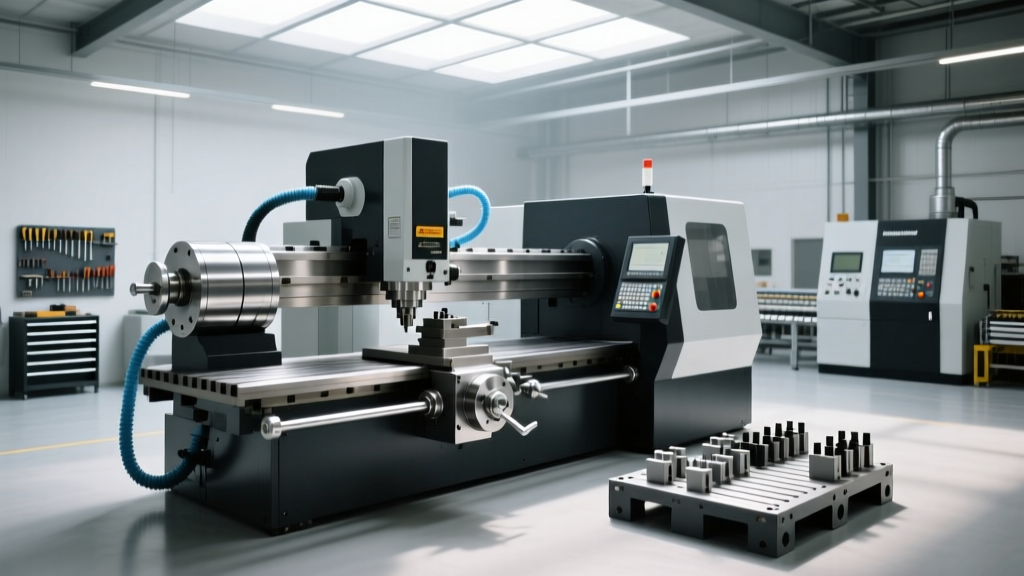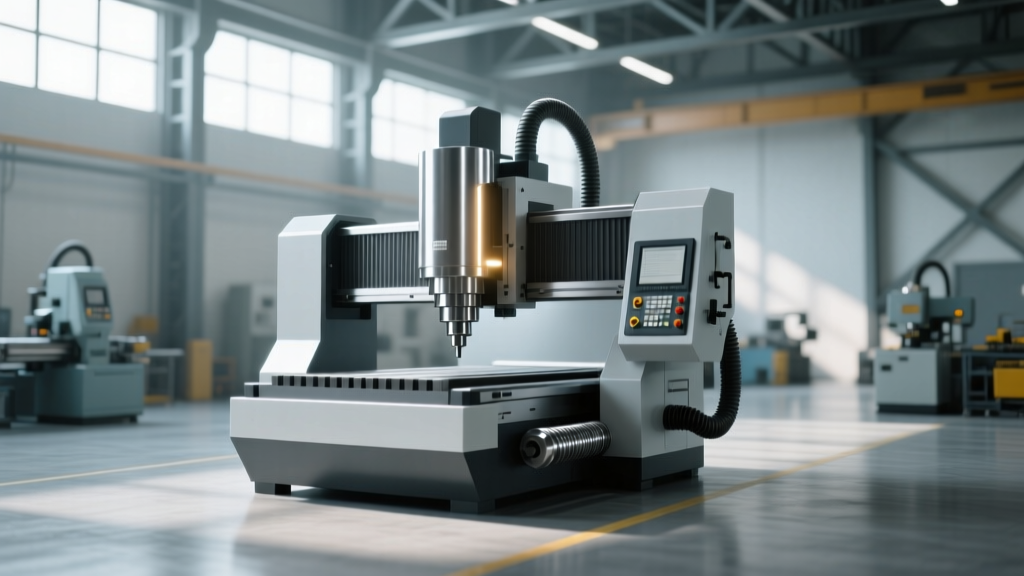
Selecting a Mill CNC Machine: 2026 Buyer's Guide
Compare spindle tapers, axis travels, and 2026 pricing tiers to select the right mill CNC machine for prototyping, job shops, or aerospace production.
The Capital Allocation Reality of CNC Milling
Purchasing a mill CNC machine is rarely just an equipment transaction; it is a decade-long commitment to a specific spindle taper, controller ecosystem, and work envelope. A miscalculation in axis travel or a misunderstanding of spindle torque curves will bottleneck your shop floor and destroy profit margins on complex 3D contouring or heavy roughing cycles. The goal of this guide is to bypass generic marketing specs and focus on the mechanical realities, hidden integration costs, and precise pricing tiers you will encounter when commissioning a new vertical machining center (VMC) in 2026.
The Spindle Taper Decision Matrix
The spindle interface dictates your tooling budget, maximum RPM, and rigidity. While CAT40 remains the undisputed standard for North American job shops, BT30 and HSK-A63 are carving out specialized niches. According to Sandvik Coromant's milling guidelines, matching the toolholder interface to your primary material removal rate (MRR) is critical for preventing tool pull-out and minimizing runout.
| Taper Type | Max Practical RPM | Tooling Cost (Relative) | Pull-Out Force | Ideal 2026 Application |
|---|---|---|---|---|
| BT30 | 15,000 - 24,000 | Low | Moderate | High-speed aluminum finishing, micro-milling, medical implants. |
| CAT40 (V-Flange) | 8,000 - 12,000 | Medium | High | General job shop work, steel/aluminum roughing, standard 3D profiling. |
| HSK-A63 | 12,000 - 18,000 | High | Extremely High | 5-axis aerospace machining, simultaneous contouring, high-RPM steel finishing. |
Sizing the Envelope: Travel vs. Table Load
A common purchasing error is evaluating a mill CNC machine based on table dimensions rather than actual axis travel and Z-axis clearance. A machine may boast a 40-inch table, but if the X-axis travel is only 30 inches and the spindle nose-to-table distance is constrained by a 20-inch Z-axis, your effective work envelope is severely limited.
WARNING: The Table Load TrapDo not confuse table load capacity with axis thrust limits. A machine rated for a 2,500 lb table load can physically support the weight of a large steel die. However, if the axis servo motors and ball screws are not sized for high-thrust acceleration of that mass, you will experience following errors, surface finish degradation, and premature way wear. Always calculate the combined weight of the raw material, fixture plate, and vise before committing to a model.
Linear Guideways vs. Box Ways: The Damping Debate
Your choice of way system defines the machine's dynamic stiffness. Linear guideways (using recirculating ball or roller bearings) dominate the 2026 market due to their high rapid traverse rates (often exceeding 48 m/min) and low friction, which yields excellent surface finishes on aluminum and pre-hardened steels. However, hardened box ways provide superior vibration damping. If your primary workload involves heavy interrupted cuts in titanium, Inconel, or hardened tool steels, the chatter resistance of box ways will yield longer tool life and better dimensional accuracy, albeit at the cost of slower rapid movements.
Tiered Buying Guide: Matching the Machine to Your Shop
Tier 1: Prototyping and Light Production (Under $25,000)
For R&D labs, startups, and custom fabricators, the Tormach 1100MX machining center represents the ceiling of entry-level viability. Priced between $16,000 and $22,000 (including the enclosure, stand, and basic tooling), it features a BT30 spindle and a 24-tool automatic tool changer (ATC). The PathPilot controller is highly intuitive for operators transitioning from manual mills or 3D printing. Limitation: The cast-iron frame and lower spindle torque make it unsuitable for aggressive MRR in steel. It excels in 6061 aluminum, engineering plastics, and light brass work.
Tier 2: The Job Shop Workhorse ($65,000 - $95,000)
The mid-market VMC is the backbone of North American manufacturing. The Haas VF-2 and its high-speed variant, the VF-2SS, remain the benchmark. Expect to pay $65,000 for a base VF-2 with a 8,100 RPM spindle, and upwards of $85,000 for a VF-2SS equipped with a 12,000 RPM inline direct-drive spindle, high-speed machining (HSM) look-ahead, and through-spindle coolant (TSC). The Doosan DNM series offers a compelling alternative, often featuring heavier castings and FANUC controls, appealing to shops that prioritize rigidity over rapid traverse speeds. At this tier, ensure the machine includes a minimum 300 PSI coolant pump and a 24+1 side-mount tool changer to minimize non-cut time.
Tier 3: 5-Axis and Aerospace Precision ($180,000+)
When machining complex aerospace structural components or medical implants, 3-axis VMCs require multiple setups, introducing cumulative tolerances. Machines like the DMG MORI DMU 50 3rd Generation integrate a direct-drive torque motor tilt/rotary table and an HSK-A63 spindle. These machines utilize volumetric compensation and thermal stability algorithms to maintain tolerances within 5 microns over a 24-hour cycle. The investment here is not just in the iron, but in the CELOS or Siemens Sinumerik controllers, which handle complex 5-axis tool center point control (TCP) and collision avoidance natively.
Hidden Costs in the 2026 Equipment Budget
Shop owners frequently underbudget the integration phase. When securing capital for a new mill CNC machine, add a minimum of 20% to the base machine price to cover the following non-negotiable expenses:
- Rigging and Placement: $1,500 to $4,500 depending on crane access, floor reinforcement, and precision leveling with a master machinist level.
- Power Conversion: If your facility lacks 240V or 480V 3-phase power, a digital phase converter (e.g., Phase Perfect) will cost $2,500 to $4,000. Never run a CNC VMC on a static or rotary phase converter; the voltage imbalance will trip drive alarms and damage servo motors.
- Tooling and Workholding: A bare machine cannot cut chips. Budget $8,000 to $15,000 for a starter package: CAT40 pull studs, ER32 collet chucks, hydraulic or precision milling vises, a Renishaw or Haimer tool presetter, and edge finders.
- Through-Spindle Coolant (TSC) Retrofits: If not ordered from the factory, retrofitting high-pressure TSC (1000 PSI) for deep-hole drilling or titanium machining can exceed $6,000 and requires significant machine downtime.
Coolant Pressure and Chip Evacuation Strategies
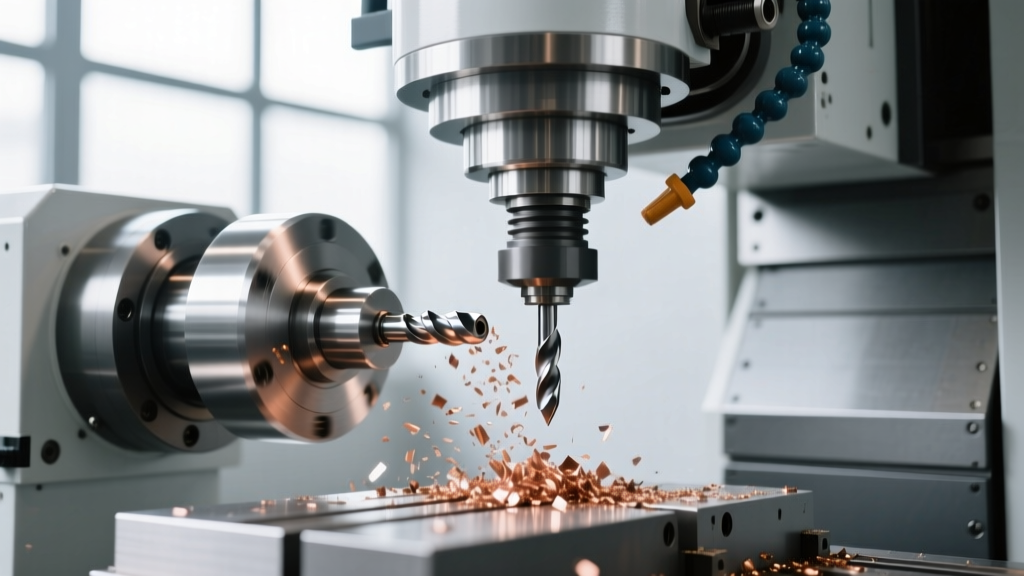
In modern milling, flood coolant is no longer sufficient for high-performance toolpaths. Standard 300 PSI systems are adequate for flushing aluminum chips and cooling standard steel cuts. However, if your 2026 roadmap includes deep-cavity milling or drilling, you must spec a 1000 PSI TSC system. High-pressure coolant penetrates the cutting zone, breaks chips at the source, and prevents chip welding on deep-hole drills and thread mills. When evaluating a mill CNC machine, verify that the rotary union and spindle drawbar mechanism are rated for continuous high-pressure use, as cheaper aftermarket retrofits often lead to catastrophic coolant leaks inside the spindle cartridge.