Horizontal CNC Milling Machine Mechanics and Technical Specs
Explore the internal mechanics, kinematics, and technical specifications of a horizontal CNC milling machine for high-volume production.
When engineering a production cell, selecting the right horizontal milling machine CNC requires a strict analysis of kinematics, torque curves, and pallet throughput. Unlike vertical machining centers (VMCs) where chips fall onto the workpiece and require aggressive air blasts or flood coolant to clear, a horizontal configuration leverages gravity for natural chip evacuation. This fundamental mechanical difference dictates everything from spindle bearing selection to the geometry of the workholding tombstones used in high-volume automotive and aerospace manufacturing.
The Kinematic Core: Spindle and B-Axis Mechanics
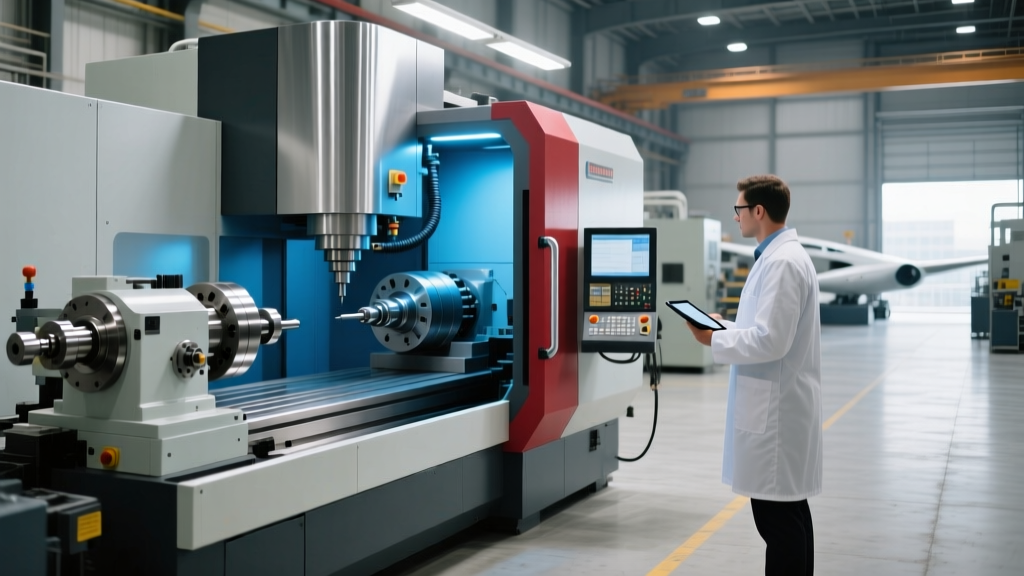
The defining characteristic of the horizontal milling machine CNC is the Z-axis spindle orientation, which protrudes horizontally from a rigid column. This layout shifts the center of gravity closer to the machine bed, significantly reducing the cantilever effect seen in VMCs when the spindle extends fully in the Z-axis.
Spindle Bearing and Thermal Management
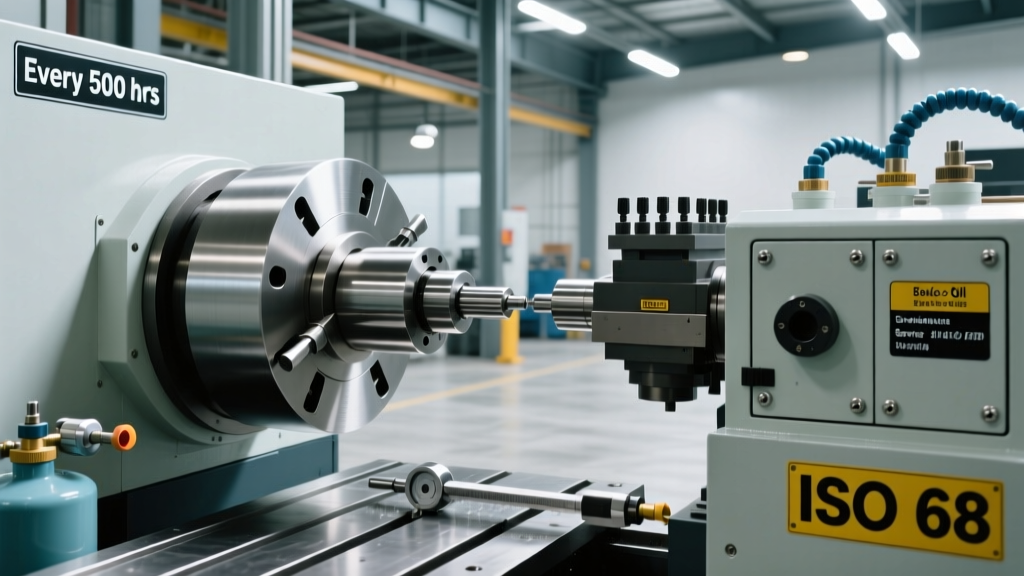
Modern horizontal machining centers (HMCs) utilize ABEC-9 class ceramic hybrid angular contact ball bearings. These bearings feature silicon nitride (Si3N4) balls that are 40% lighter than steel, reducing centrifugal force at high RPMs. For heavy-duty cutting in materials like Inconel 718 or titanium Ti-6Al-4V, machines prioritize torque over speed, employing dual-contact, face-and-taper clamping systems (like BIG-PLUS or HSK-A100) to maximize rigidity.
Thermal Growth Warning: A horizontal spindle is highly susceptible to Z-axis thermal growth because the entire spindle cartridge expands forward toward the workpiece. High-end HMCs employ closed-loop spindle chillers that maintain the cooling oil at exactly 20°C (68°F) ± 0.5°C. If your facility lacks climate control, you must factor in a 15-minute warm-up macro program to stabilize the spindle bearings before executing tight-tolerance boring operations.The B-Axis Rotary Table
The workpiece mounts to a pallet that locks into a B-axis rotary table. High-precision HMCs use direct-drive torque motors or high-ratio worm gears with absolute encoders to achieve positioning accuracies of ±0.001 degrees. The table must withstand immense downward cutting forces while maintaining zero backlash during simultaneous 4-axis contouring.
2026 Technical Specifications Matrix: Mid-Range vs. High-End
To understand the current market landscape, it is necessary to compare the technical specifications of a standard mid-range production HMC against a high-end aerospace-tier machine. The data below reflects current 2026 configurations and pricing estimates.
| Parameter | Mid-Range Production (e.g., Haas EC-400) | High-End Aerospace (e.g., Okuma MA-600HII) |
|---|---|---|
| Pallet Size | 400 x 400 mm | 630 x 630 mm |
| Spindle Taper | 40 Taper (CAT40 / BT40) | 50 Taper (CAT50 / HSK-A100) |
| Max Spindle Speed | 12,000 RPM | 6,000 RPM (High Torque) |
| Peak Torque | 150 ft-lb @ 2,000 RPM | 450 ft-lb @ 1,200 RPM |
| Rapid Traverse Rates | 1,400 ipm (35.6 m/min) | 2,362 ipm (60 m/min) |
| ATC Capacity | 40 to 100 Tools | 60 to 324 Tools (Matrix) |
| Estimated Base Price (2026) | $165,000 - $195,000 | $380,000 - $450,000+ |
Tombstone Geometry and Workholding Mathematics
The true ROI of a horizontal milling machine CNC is unlocked through multi-face tombstone workholding. By mounting parts on all four sides of a vertical tombstone, a single pallet load can yield dozens of finished parts per cycle, drastically reducing the spindle-to-operator load time ratio.
Calculating the Swing Diameter and Interference Zones
A common mistake in HMC programming is ignoring the machine's maximum swing diameter. On a 500mm pallet machine, the maximum diagonal swing is typically around 700mm to 800mm. If you design a tombstone that is 600mm wide and mount parts on the face, the diagonal rotation during the B-axis index will crash into the machine column or the automatic tool changer (ATC) doors.
- The 45-Degree Rule: Always simulate the B-axis rotation at 45 degrees (the point of maximum diagonal extension) in your CAM software before sending the G-code to the floor.
- Z-Axis Clearance: Account for the longest tool in the ATC. A 12-inch face mill extending from the spindle will reduce your available tombstone height by at least 6 inches to prevent a collision during a tool change.
Mitigating Tombstone Nodding
When taking heavy roughing passes at the top of a tall tombstone, the lever arm effect creates a massive moment load on the B-axis table bearings. This deflection, known as 'nodding,' ruins perpendicularity. To counteract this, programmers must reduce radial depth of cut (RDOC) at the highest Z-points or utilize tombstones cast with internal ribbing to increase the moment of inertia without adding weight.
Chip Evacuation and High-Pressure Coolant Dynamics
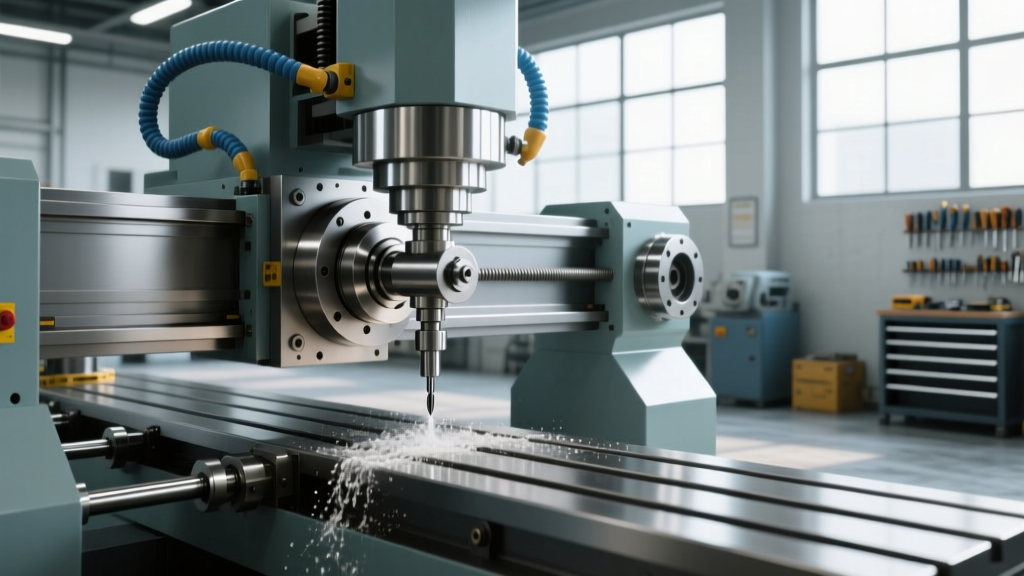
According to Sandvik Coromant, effective chip control is the primary bottleneck in unattended machining. In a horizontal configuration, chips fall directly away from the cut zone into the bed way covers. However, stringy chips from materials like 304 stainless steel or gummy aluminum alloys can wrap around the tool and the tombstone base.
High-Pressure Coolant (HPC) Integration: To achieve true lights-out machining, specify an HMC with a minimum of 1,000 PSI (70 bar) through-spindle coolant. This pressure is required to break chips at the shear zone when machining deep pockets with extended-reach carbide end mills. Ensure the machine's rotary union is rated for continuous 1,000 PSI operation, as standard 300 PSI unions will fail prematurely under 24/7 cycle conditions.Furthermore, the chip conveyor must be matched to the material. Cast iron produces fine, abrasive dust that destroys standard hinge-belt conveyors; scraper or auger-style conveyors are mandatory for cast iron and graphite. For long, stringy aluminum chips, a heavy-duty hinge belt with cleats is required to pull the mass up the incline without slipping.
Capital Deployment Framework: HMC vs. VMC vs. 5-Axis
Determining whether to invest in a horizontal milling machine CNC requires a strict operational audit. Use the following decision framework to justify the capital expenditure:
- Part Volume & Family Size: If you are machining prismatic parts (valves, pump housings, transmission cases) in batches of 50+ per month, the HMC's pallet pool and tombstone density will yield a 40-60% lower cost-per-part compared to a VMC.
- Feature Access: If a part requires machining on 4 or more distinct orthogonal faces, an HMC with a B-axis indexer completes the part in one setup. A VMC would require multiple manual flip-ops, introducing cumulative stack-up tolerances and increasing scrap rates.
- The 5-Axis Alternative: Do not default to a 5-axis HMC unless the part features complex organic contours (e.g., impellers, blisks, or aerospace structural nodes). For standard orthogonal prismatic parts, a 4-axis HMC with a high-capacity pallet pool is significantly more rigid, faster to program, and cheaper to maintain than a full 5-axis trunnion or swivel-head machine.
Ultimately, the horizontal milling machine CNC is a volume and efficiency engine. Its mechanical superiority lies not in cutting faster than a vertical mill, but in cutting longer without operator intervention, leveraging gravity, and maximizing spindle utilization through automated pallet exchange systems.