Railroads Fittings CNC Plastic Machining: Houston Industry Case Study
Explore how Houston machine shops leverage CNC plastic machining for railroad fittings, detailing material selection, tolerances, and transit case studies.
The Gulf Coast Corrosion Problem and the Polymer Solution
Houston’s rail infrastructure is a critical artery for North American logistics, moving over 200 million tons of freight annually through the Port of Houston and connecting major Class I railroads like Union Pacific and BNSF. However, the region's coastal environment presents a severe operational challenge: high ambient humidity and saline air accelerate galvanic corrosion in traditional metal track components and transit fittings.
To combat this, regional transit authorities and freight operators are increasingly specifying advanced engineered plastics for non-load-bearing and dielectric fittings. The specialized niche of railroads fittings cnc plastic machining houston machine shops has evolved to meet strict Federal Railroad Administration (FRA) safety standards while delivering components that outlast aluminum and steel in corrosive environments. Applications include third-rail insulators, switch blade rollers, cable management cleats, and signal housing brackets.
Industry Insight: Replacing metallic switch insulators with glass-filled nylon reduces component weight by up to 65% and eliminates the need for secondary anodizing or galvanic isolation pads, cutting total lifecycle costs by an estimated 42% over a 10-year deployment.2026 Material Matrix for Railroad Fittings
Selecting the correct polymer is the most critical step in railroad fitting fabrication. Materials must withstand heavy vibrational loads, UV exposure, and extreme thermal cycling. Below is the current material matrix utilized by Houston-based CNC facilities for rail applications.
| Material | Grade / Brand | Primary Rail Application | Tensile Strength | 2026 Est. Cost/lb |
|---|---|---|---|---|
| UHMWPE | Tivar® 88 | Wear pads, guide rollers | 6,000 psi | $14 - $18 |
| Glass-Filled Nylon | Nylatron® GS (30% GF) | Switch insulators, structural brackets | 21,000 psi | $20 - $26 |
| PEEK | Victrex® 450G | High-temp sensor housings, aerospace rail | 14,000 psi | $160+ |
| Polycarbonate | Makrolon® AR | Signal light lenses, protective covers | 9,500 psi | $9 - $12 |
Case Study: High-Volume Switch Insulator Production
In late 2025, a Houston-based precision CNC shop secured a contract to produce 25,000 switch insulator brackets for a regional freight line expansion near the Englewood rail yard. The part required complex 3D contouring, tight dielectric properties, and high compressive strength.
Tooling and Spindle Parameters
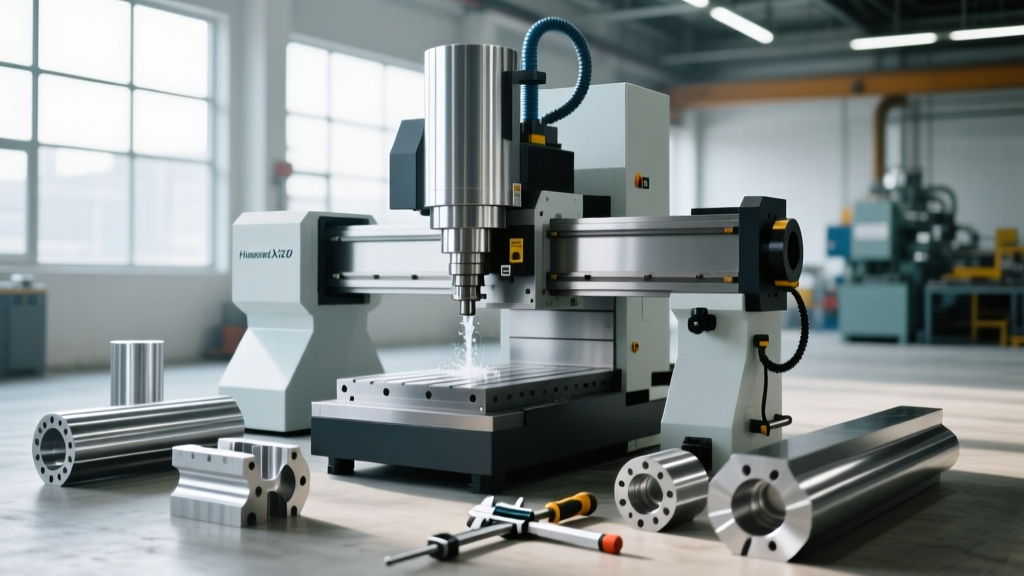
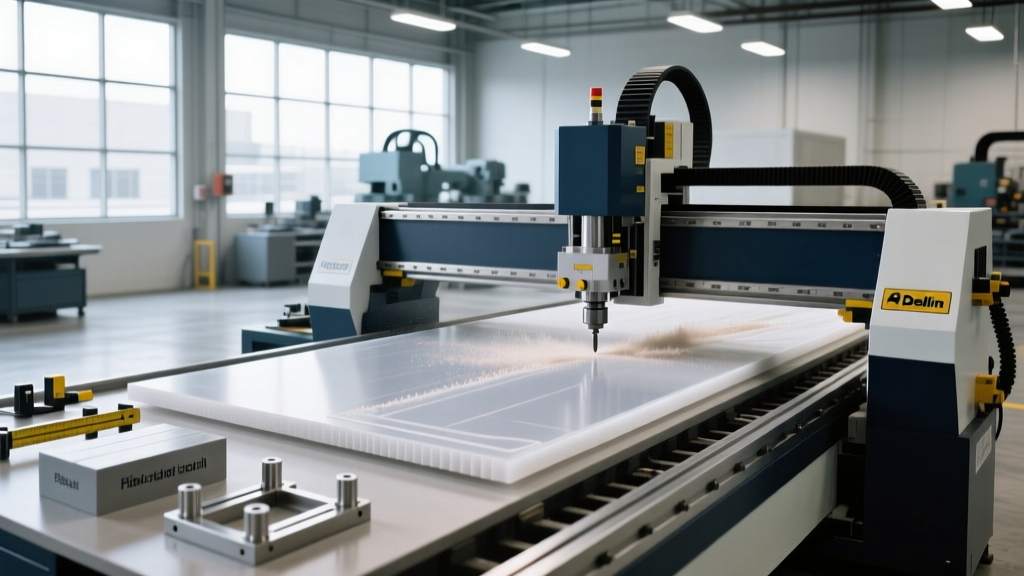
Machining 30% glass-filled nylon (PA6-G30) is highly abrasive. Standard high-speed steel (HSS) or uncoated carbide tools degrade within minutes, leading to delamination and poor surface finishes. The shop deployed the following setup on their Haas VF-2SS high-speed mills:
- Tooling: Onsrud solid carbide O-flute routers (1/2" diameter) designed specifically for plastic chip evacuation.
- Spindle Speed: 14,000 RPM to ensure clean shearing without melting the polymer matrix.
- Feed Rate: 180 IPM (inches per minute) to prevent work-hardening and glass-fiber tearing.
- Depth of Cut (DOC): Maximum 0.125" per pass to manage heat generation.
Managing Houston's Hygroscopic Challenges
Houston’s average annual humidity hovers around 75%, frequently exceeding 90% near the Ship Channel. Nylon polymers act like sponges, absorbing ambient moisture which can cause parts to expand up to 2% in volume post-machining.
To guarantee the required ±0.002" tolerances, the facility implemented a strict climate-control protocol:
- Material Conditioning: Raw nylon stock is stored in a dehumidified vault (45% RH) for 72 hours prior to machining.
- Dry Machining Environment: The CNC enclosure is sealed and fitted with localized desiccant dehumidifiers.
- Immediate Sealing: Finished insulators are vacuum-sealed in UV-resistant polyethylene bags with silica gel desiccant packs within 15 minutes of final CMM inspection.
Quality Control and AREMA Compliance
Railroad components are governed by stringent safety and engineering standards. Fittings must comply with guidelines set forth by the American Railway Engineering and Maintenance-of-Way Association (AREMA), specifically Chapter 4 (Rail) and Chapter 5 (Track), which dictate the dielectric and mechanical requirements for insulated joint components and switch gear.
Furthermore, any fittings interacting with federal transit or freight networks must align with safety directives from the Federal Railroad Administration (FRA). To ensure compliance, Houston machine shops utilize coordinate measuring machines (CMM) programmed with thermal compensation algorithms. Because plastics have a high coefficient of thermal expansion (CTE) compared to metals, inspecting a nylon part at 78°F (a typical Houston shop floor temperature in summer) will yield false out-of-tolerance readings. CMM labs are strictly maintained at the ISO standard of 68°F (20°C).
"The transition to engineered plastics in rail fittings isn't just about corrosion resistance; it's about signal integrity. A properly machined glass-filled nylon insulator prevents track circuit leakage, which is the leading cause of phantom signal blocks in automated rail switching."
— Lead Applications Engineer, Gulf Coast Transit Authority
Economic Impact of Localized Supply Chains
Historically, specialized plastic rail fittings were sourced from overseas manufacturers or legacy machine shops in the Midwest, resulting in 8-to-12-week lead times. The localization of railroads fittings cnc plastic machining houston supply chains has fundamentally altered the procurement landscape for regional operators.
According to logistics data referenced by the Port of Houston Authority, regional manufacturing hubs reduce freight transit times and mitigate port congestion delays. By sourcing CNC machined polymer fittings locally, Houston-area rail yards have reduced emergency replacement lead times from 45 days to under 72 hours.
This localized capability is particularly vital for the ongoing 2026 METRO light rail expansion and the continuous maintenance of the heavily trafficked Port Terminal Railroad Association (PORTA) lines. When a switch insulator fails due to mechanical impact, the ability to have a 5-axis CNC machine shop produce a replacement batch within 48 hours prevents cascading freight delays that can cost operators upwards of $15,000 per hour in network bottlenecks.
Decision Framework: Metal vs. Polymer Fittings
For procurement engineers evaluating material transitions, use the following framework to determine if CNC plastic machining is the correct specification:
- Choose Metal (Ductile Iron / 6061-T6 Aluminum): If the fitting bears direct dynamic wheel loads, requires extreme impact resistance (e.g., switch points), or operates in continuous temperatures exceeding 350°F.
- Choose Engineered Polymers (Nylon / UHMWPE): If the fitting requires electrical isolation (dielectric strength > 1000 V/mil), operates in high-salinity/high-humidity environments, requires weight reduction for manual installation, or experiences high sliding friction (wear pads).
By aligning material science with precision CNC execution, Houston's manufacturing sector continues to provide critical, high-durability solutions that keep North America's rail networks moving safely and efficiently.