CNC Machined Aluminum Parts: Technical Specs of 6061 vs 7075
Compare technical specs for CNC machined aluminum parts. Analyze 6061-T6 vs 7075-T6 tensile strength, thermal limits, and 2026 pricing per board foot.
Metallurgical Baseline: 6061-T6 vs 7075-T6
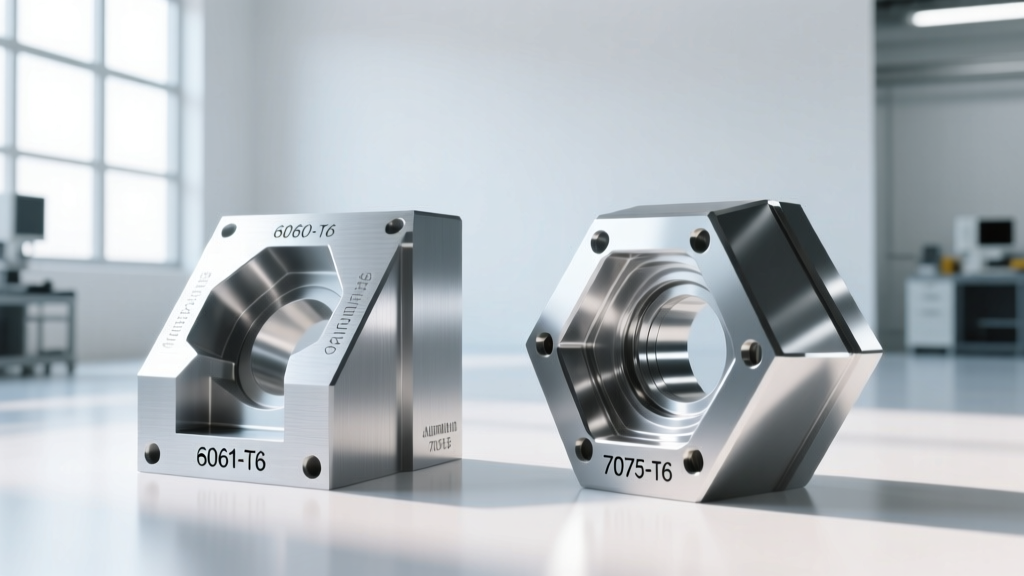
The mechanical behavior of CNC machined aluminum parts is dictated by alloying elements and precipitation hardening. 6061 aluminum relies on magnesium and silicon (Mg2Si precipitates) for its strength, while 7075 utilizes zinc, magnesium, and copper. This fundamental chemical difference alters how the material responds to cutting forces, thermal expansion, and post-machining stress relief.
Expert Insight: Never specify 7075-O (annealed) for high-stress structural parts. The T6 temper/td>Cutting Mechanics and Toolpath Strategies
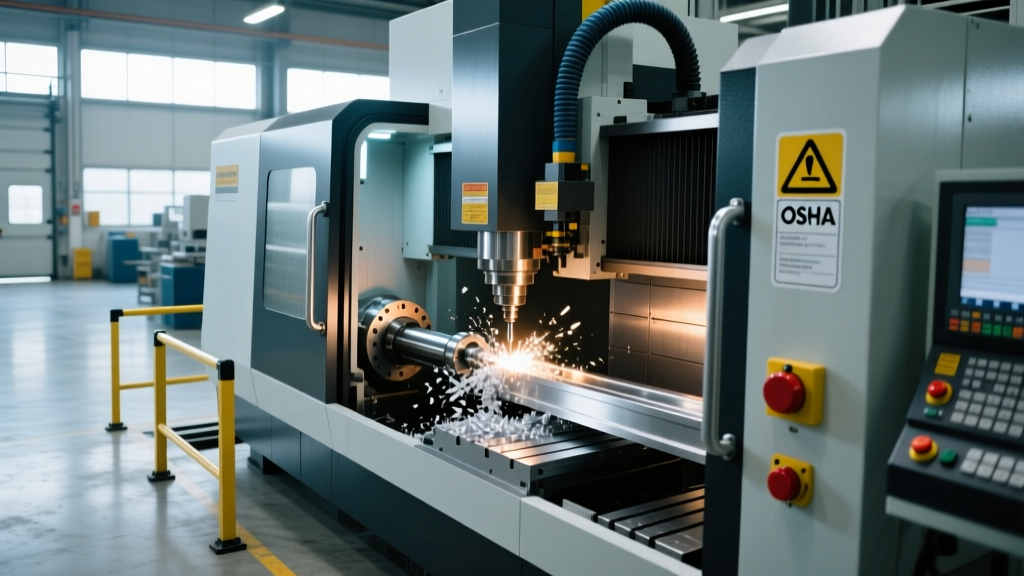
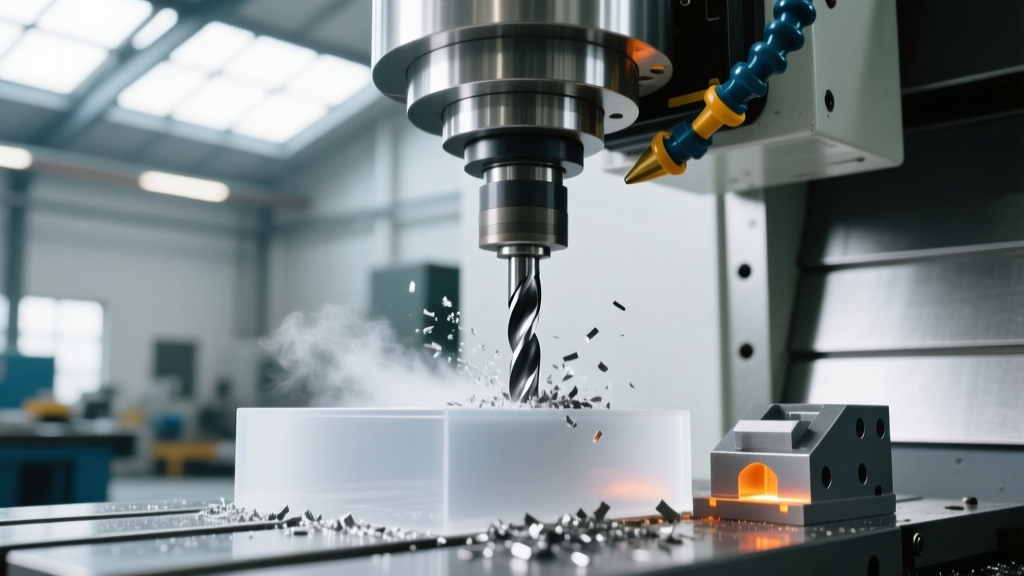
Machining aluminum requires managing the Built-Up Edge (BUE). Aluminum has a high affinity for cobalt and tungsten at elevated temperatures, meaning the chip will attempt to weld itself to the cutting edge if heat is not evacuated. For CNC machined aluminum parts, uncoated micro-grain carbide end mills with a high rake angle (15° to 18°) and polished flutes remain the industry standard.
Chip Load and Feed Rate Mathematics
Thinning the chip causes rubbing instead of shearing, generating excessive heat. To calculate the exact feed rate for a 1/2 inch (12.7mm) 3-flute carbide end mill in 6061-T6:
- Target Chip Load: 0.004 inches per tooth (IPT)
- Spindle Speed (SFM 1200): 9,167 RPM
- Feed Rate Formula: RPM × Number of Flutes × Chip Load
- Calculated Feed: 9,167 × 3 × 0.004 = 110 inches per minute (IPM)
Running below 90 IPM in this setup will cause work hardening and rapid tool degradation. Modern CAM software like Mastercam or Fusion 360 utilizes trochoidal milling (Dynamic Motion) to maintain a constant radial engagement angle, typically restricting stepover to 5-10% of the tool diameter while maximizing axial depth of cut (ADOC) up to 2x diameter.
Thermal Warning: Avoid flood coolant when roughing 7075-T6 at high MRR. The thermal shock from cold coolant hitting the localized heat of the cutting zone can induce micro-stress fractures in high-zinc alloys. Use mist coolant (MQL) or air blast for roughing, reserving flood for finishing passes.Dimensional Stability and Tolerancing
Achieving tight tolerances on CNC machined aluminum parts requires compensating for the material coefficient of thermal expansion (CTE). 6061-T6 expands at 23.6 µm/m-°C. If a shop floor is 30°C and the metrology lab is 20°C, a 500mm aerospace bulkhead will measure 0.118mm longer on the floor than in the lab. This CTE variance is the leading cause of false scrap in precision aluminum machining.
Stress Relief and Distortion Control
Wrought aluminum plate contains residual rolling stresses. When you remove 60% of the raw material mass during CNC milling, the remaining internal stresses rebalance, causing the part to warp. To prevent this in high-precision 7075 parts:
- Rough machine all features, leaving 0.020 inch (0.5mm) stock on all critical surfaces.
- Perform a sub-zero cryogenic stress relief cycle or thermal stabilization at 250°F (121°C) for 4 hours.
- Allow the part to normalize to room temperature (20°C) for 12 hours.
- Execute the finish pass with a sharp, high-flute-count finishing end mill to remove the final 0.020 inch.
Surface Finish and Post-Processing Limits
The metallurgical composition directly limits the achievable surface finish and anodizing quality. 6061 yields a consistent 1.5 Ra (micron) finish with standard carbide tooling. However, 7075 contains zinc inclusions that tear out during finishing passes, often leaving a 2.5 Ra surface unless specialized diamond-coated tooling is employed.
According to the Aluminum Association, Type III (hard) anodizing on 7075-T6 results in a brittle oxide layer prone to micro-cracking under dynamic fatigue loads. For parts subjected to cyclic stress, specify Type II anodizing with a dichromate seal, or transition to 6061-T6 if a thick hardcoat is mandatory.
Fast Decision Matrix: Alloy Selection
| Application Requirement | Optimal Alloy | Why? |
|---|---|---|
| High cycle fatigue / Aircraft fittings | 7075-T6 | Superior yield strength (73 ksi) handles peak loads. |
| Marine hardware / Corrosive environments | 6061-T6 or 5083 | 7075 suffers galvanic and exfoliation corrosion. |
| Consumer electronics enclosures (Anodized) | 6061-T6 | Uniform Mg/Si distribution prevents mottled anodize. |
| High-volume automated screw machining | 2011-T3 | Lead and bismuth additives create microscopic chip-breakers. |
Sourcing and 2026 Material Economics
When quoting CNC machined aluminum parts, raw material format dictates both cost and lead time. Standard 6061-T6 extrusions are heavily commoditized, trading near the LME (London Metal Exchange) base price plus a $0.80/lb conversion premium. Conversely, 7075-T6 forged rings or thick-plate (over 4 inches) carry a 40-60% premium due to specialized ultrasonic testing (UT) requirements mandated by aerospace primes like Lockheed Martin and Boeing.
For prototyping and low-volume production runs, specify MIC-6 cast aluminum tooling plate. While its tensile strength (24 ksi) is roughly one-third that of 6061-T6, its stress-free cast structure guarantees flatness tolerances of ±0.002 inch per 12 inches without post-machining distortion, saving hundreds of dollars in fixturing and stress-relief cycles.