CNC Machined Aluminum: Safety and Compliance Standards Guide
Discover essential safety standards and compliance requirements for CNC machined aluminum, including RoHS, REACH, and aerospace material specs.
Procuring or manufacturing CNC machined aluminum components for regulated industries requires navigating a dense matrix of material, environmental, and occupational safety standards. A failure in compliance does not merely result in rejected shipments; it can lead to catastrophic structural failures, toxic exposure, or severe workplace explosions. This guide details the exact regulatory frameworks, material certifications, and safety protocols governing CNC machined aluminum in 2026.
Material Traceability and Alloy Certification
The foundation of aluminum compliance begins before the material ever reaches the CNC spindle. Regulated sectors mandate strict traceability from the smelter to the final machined part. This is verified through Mill Test Reports (MTRs), which certify the chemical composition and mechanical properties of the raw billet or plate against specific ASTM or AMS standards.
For general industrial applications, ASTM B209 (sheet and plate) and ASTM B211 (bar and rod) are the baseline specifications. However, substituting alloys without engineering approval is a critical compliance violation. For example, 6061-T6 (governed by limits of 0.8-1.2% Magnesium and 0.4-0.8% Silicon) offers excellent corrosion resistance and weldability but lacks the sheer strength of 7075-T6 (5.1-6.1% Zinc, 1.2-2.0% Copper). Using 6061 in an aerospace structural application explicitly calling for 7075 or 2024-T3 violates FAA and EASA airworthiness directives.
⚠️ WARNING: The MTR MandateNever accept CNC machined aluminum parts for structural, medical, or aerospace use without a corresponding MTR tied to the specific heat lot of the raw material. 'Certificate of Compliance' (CoC) documents from distributors are insufficient for critical applications, as they do not provide the raw chemical spectroscopy data required by AS9100 Rev D auditors.
Environmental Compliance: Navigating RoHS and REACH in Surface Finishes
Raw aluminum alloys are inherently compliant with most environmental regulations. The compliance trap lies in the post-machining surface treatments. The Restriction of Hazardous Substances (RoHS) Directive and the European Chemical Agency's (ECHA REACH) regulations heavily restrict the use of specific chemicals in finishing processes.
The most common violation occurs with chromate conversion coatings (often referred to by the brand name Alodine). Traditional chromate processes rely on hexavalent chromium (Cr6+), a known carcinogen strictly limited to 0.1% (1000 ppm) by weight in homogeneous materials under RoHS. To maintain compliance, machine shops must transition to trivalent chromium (Cr3+) alternatives, such as Henkel Bonderite M-CR or SurTec 650, which provide similar corrosion resistance without the toxic profile.
| Finish Type | Common Spec | RoHS / REACH Status | Compliant Alternative |
|---|---|---|---|
| Chromate Conversion (Hexavalent) | MIL-DTL-5541F Type I | Non-Compliant (Contains Cr6+) | MIL-DTL-5541F Type II (Trivalent) |
| Clear Anodize (Type II) | MIL-A-8625F | Compliant | N/A (Inherently safe) |
| Hard Anodize (Type III) | MIL-A-8625F | Compliant | N/A (Requires PTFE sealing check) |
| Electroless Nickel Plating | AMS 2404 | Conditional (Lead/Cadmium limits) | Specify mid-phosphorus, lead-free bath |
Occupational Safety: Combustible Dust and NFPA 652
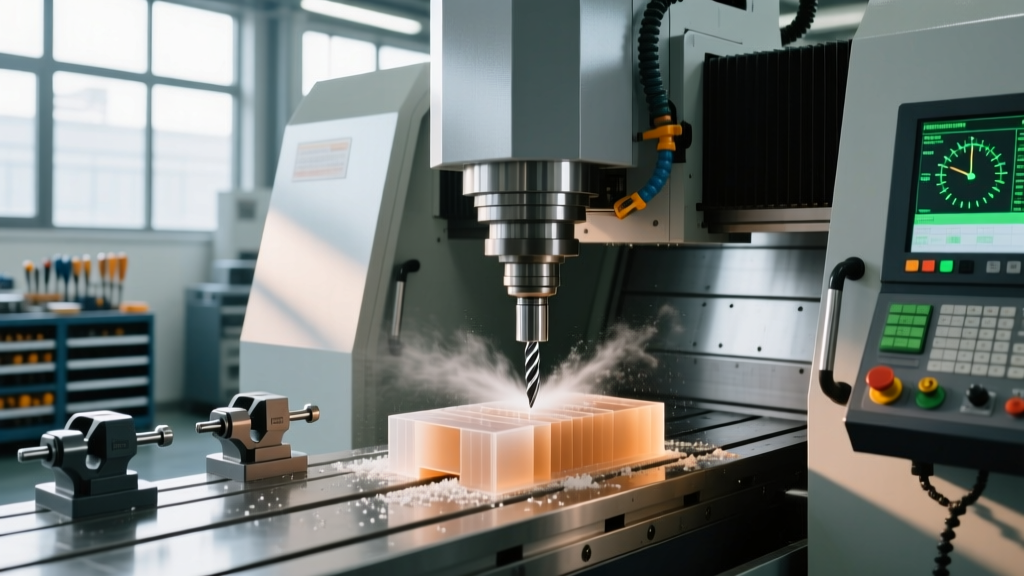
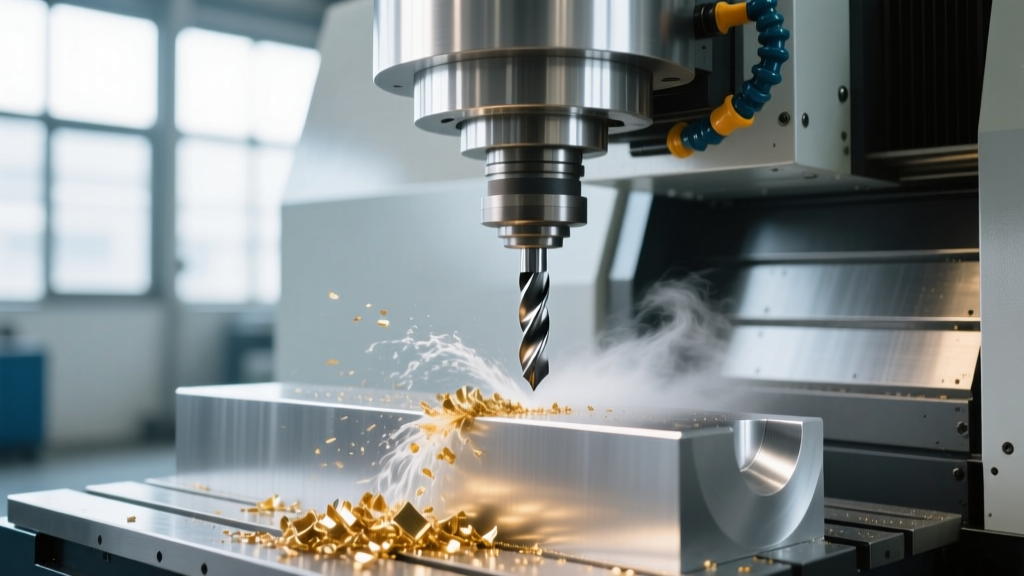
CNC machining aluminum generates fine chips, swarf, and airborne dust. Unlike steel or titanium, aluminum dust is highly combustible and poses a severe explosion risk in manufacturing environments. The Occupational Safety and Health Administration (OSHA) and the National Fire Protection Association strictly regulate how aluminum particulate is captured and managed.
Under NFPA 652 (Standard on the Fundamentals of Combustible Dust), aluminum dust typically exhibits a deflagration index (Kst) greater than 300 bar·m/s, placing it in the most explosive ST 3 class. Furthermore, the Minimum Ignition Energy (MIE) for fine aluminum powder can be as low as 1 to 10 millijoules, meaning a simple static discharge can trigger a detonation.
Mandatory Dust Collection Protocols
- Wet Dust Collectors: For aluminum, wet scrubbers (such as Torit or Donaldson wet systems) are heavily preferred. The dust is captured in a water bath, neutralizing the explosion risk. Current market rates for industrial-grade wet aluminum scrubbers range from $18,000 to $35,000 per unit, depending on CFM requirements.
- Hydrogen Venting: When aluminum reacts with water in a wet collector, it generates hydrogen gas. Collectors must be equipped with continuous exhaust vents and hydrogen sensors to prevent gas accumulation.
- Dry Collection Restrictions: If dry cartridge collectors are used, they must feature explosion venting, isolation valves, and strict grounding protocols. Mixing aluminum dust with steel or copper dust in a dry collector can create a thermite reaction, leading to catastrophic filter fires.
Industry-Specific Regulatory Frameworks
Beyond general environmental and occupational safety, CNC machined aluminum parts must adhere to vertical-specific regulations. The two most stringent sectors are medical devices and aerospace.
Medical Device Enclosures (IEC 60601-1)
While aluminum is rarely used for patient-contacting components (failing ISO 10993 biocompatibility tests without specialized coatings), it is the standard material for medical device enclosures, carts, and diagnostic housings. These enclosures must comply with IEC 60601-1 for medical electrical equipment.
"A common engineering failure in medical CNC aluminum enclosures is specifying Type III hard anodize for wear resistance. Hard anodize is an electrical insulator. If a grounding fault occurs inside the medical cart, the insulative anodize prevents the chassis from safely dissipating the current, resulting in an IEC 60601-1 leakage current failure. Engineers must specify clear Type II anodize or conductive chromate to maintain chassis ground continuity."
Aerospace Structural Components (NADCAP & AMS)
In aerospace, the machining of aluminum is governed by AS9100 quality management systems, but the post-processing requires NADCAP (National Aerospace and Defense Contractors Accreditation Program) certification. If a CNC shop machines a 7075-T6 aluminum landing gear component and sends it out for heat treatment or anodizing, the subcontractor must hold active NADCAP accreditation for that specific special process. Furthermore, aerospace anodizing must strictly adhere to AMS 2471 or AMS 2482 specifications, which dictate exact mil thicknesses, seal quality (tested via acid dissolution), and corrosion resistance (verified through 336-hour salt spray testing).
Procurement Compliance Checklist for Buyers
To ensure your supply chain meets current safety and compliance standards, implement this verification matrix before issuing Purchase Orders for CNC machined aluminum:
- Alloy Verification: Require MTRs for all raw material heat lots. Cross-reference the Cu, Mg, Si, and Zn percentages against ASTM B209/B211 limits for the specified alloy.
- Finish Specification: Explicitly ban hexavalent chromium (Cr6+) on all engineering drawings. Mandate MIL-DTL-5541F Type II or specific trivalent commercial equivalents.
- Grounding Continuity: For electrical or medical enclosures, add a note to the drawing: "Mask grounding studs and internal chassis contact points from anodize to ensure electrical continuity per IEC 60601-1."
- Subcontractor Audit: Verify that the machine shop's anodizing and heat-treat partners hold current NADCAP or ISO 13485 certifications, rather than relying solely on the primary machine shop's ISO 9001 status.
- Deburring and Edge Break: Specify exact edge break requirements (e.g., "Break all sharp edges 0.010" - 0.030" max"). In high-vibration aerospace applications, sharp internal CNC tool marks act as stress concentrators, leading to premature fatigue cracking in 2024 and 7075 alloys.
By enforcing these material, environmental, and operational standards, procurement and engineering teams can mitigate the severe risks associated with non-compliant CNC machined aluminum components, ensuring both regulatory approval and long-term operational safety.