CNC Machine Aluminum: 2026 Cost Analysis & Budget Guide
Master your 2026 budget for CNC machine aluminum projects. Breakdowns of 6061 vs 7075 material costs, tooling, shop rates, and hidden anodizing expenses.
2026 Raw Material Costs: 6061 vs. 7075 vs. 2024
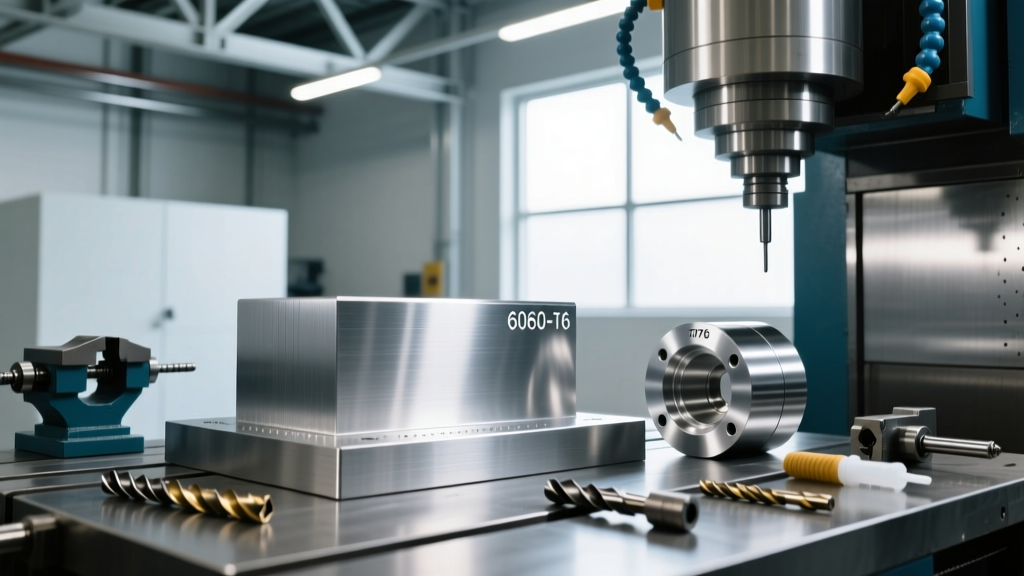
Allocating budget for raw stock is the first critical step when you CNC machine aluminum. In 2026, global supply chain stabilization has normalized extrusion and plate pricing, but alloy-specific premiums remain significant. Selecting the wrong alloy for your application can inflate material costs by over 80% without providing any functional benefit.
According to market data tracked by The Aluminum Association, the most common aerospace and commercial grades exhibit distinct pricing tiers based on their zinc, copper, and magnesium content.
| Alloy Grade | 2026 Avg. Cost (per lb) | Yield Strength | Primary Use Case | Anodizing Quality |
|---|---|---|---|---|
| 6061-T6 | $3.80 - $4.50 | 40,000 psi | General CNC, brackets, enclosures | Excellent (Clear & Color) |
| 7075-T6 | $6.50 - $8.20 | 73,000 psi | Aerospace fittings, high-stress tooling | Poor (Muddy/Yellow tint) |
| 2024-T3 | $5.20 - $6.10 | 50,000 psi | Fatigue-resistant structures, wings | Fair (Requires Alclad for best results) |
Tooling Budget: Overcoming Built-Up Edge (BUE)
Aluminum is notoriously soft and gummy, leading to Built-Up Edge (BUE) where material welds itself to the cutting tool. This destroys surface finishes and breaks end mills. Budgeting for the correct tooling upfront prevents catastrophic scrap rates and machine downtime.
Standard uncoated carbide end mills are insufficient for high-volume production. You must budget for specialized geometries and coatings. Industry leaders like Harvey Tool recommend specific parameters for aluminum machining:
- Flute Count: Stick to 3-flute end mills. Two flutes lack rigidity for aggressive roughing, while four flutes restrict chip evacuation, causing chip packing and tool breakage.
- Helix Angle: Specify a 35° to 45° high-helix angle to aggressively lift chips out of the cut zone.
- Coatings: Diamond-Like Carbon (DLC) or Zirconium Nitride (ZrN) are mandatory for production runs.
Coating Cost-Benefit Analysis
A standard 1/2-inch uncoated carbide end mill costs roughly $25-$35. A premium DLC-coated 3-flute aluminum cutter costs $75-$110. While the upfront tooling budget increases by 200%, DLC reduces friction coefficients to near-zero, extending tool life by 4x to 6x in abrasive cast aluminums (like 380 or 390 series). For pure wrought alloys (6061), ZrN ($50-$65) provides the best ROI.
CNC Machine Hourly Rates & Axis Complexity
Machine time dictates the bulk of your labor budget. In 2026, North American and European job shops have adjusted rates to account for energy costs and advanced CNC controller licensing. Data from Modern Machine Shop indicates the following baseline shop rates for aluminum machining:
| Machine Type | Typical Models | 2026 Hourly Rate | Best For |
|---|---|---|---|
| 3-Axis VMC | Haas VF-2, DMG Mori CMX V | $85 - $120 / hr | 2.5D prismatic parts, enclosures, brackets |
| 4-Axis VMC | Haas VF-2 with TRT100 | $110 - $145 / hr | Cylindrical parts, cam profiles, continuous indexing |
| 5-Axis Machining Center | DMG Mori DMU 50, Mazak Variaxis | $160 - $240 / hr | Complex aerospace contours, impellers, single-setup parts |
| Mill-Turn (Swiss/Lathe) | Willemin-Macodel, Citizen | $150 - $210 / hr | High-volume small aluminum shafts and fittings |
The Hidden Cost of Post-Processing & Finishing
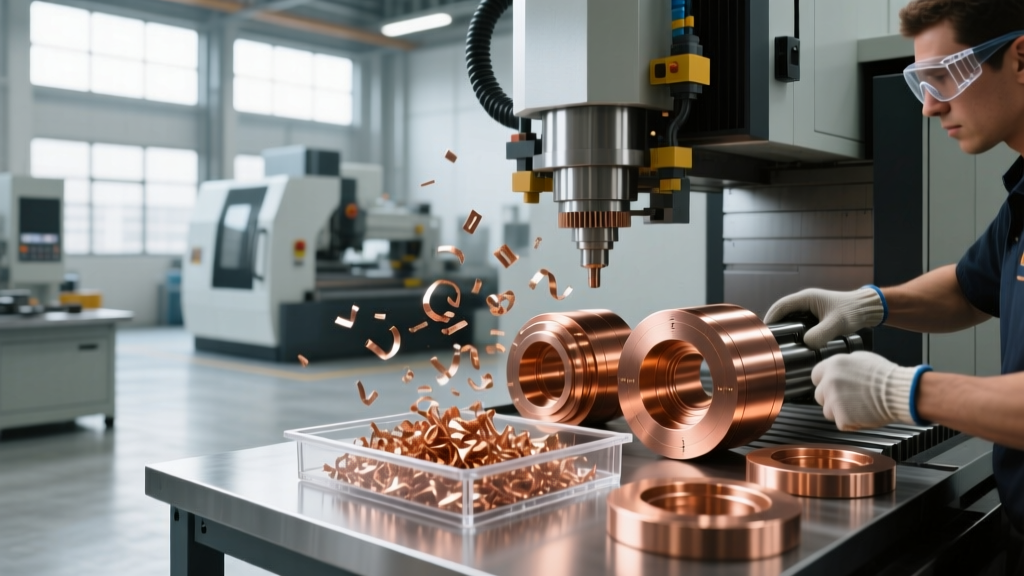
Raw CNC machining rarely yields a finished commercial product. Secondary operations often account for 20% to 35% of the total part cost. When budgeting, you must factor in deburring, tumbling, and anodizing.
Anodizing Cost Breakdown
- Type II (Standard Sulfuric): Adds $0.60 to $1.20 per square inch. Provides basic corrosion resistance and accepts cosmetic dyes (black, red, blue). Requires 6061-T6 for uniform color.
- Type III (Hardcoat): Adds $1.50 to $3.50 per square inch. Creates a 0.002-inch thick ceramic-like surface (Rockwell 60-70C). Essential for wear plates and sliding mechanisms. 7075-T6 and 2024-T3 accept hardcoat much better than 6061 due to their copper and zinc alloying elements.
- Chemical Film (Chromate/Alodine): Adds $0.20 to $0.50 per square inch. Used primarily as a primer for paint or for parts requiring strict electrical conductivity (anodizing is an insulator).
'The most common budgeting error in aluminum CNC projects is specifying tight tolerances on non-critical surfaces that will be media-blasted and anodized. Anodizing adds 0.0002 to 0.0005 inches of material thickness. If you hold a +/- 0.0005 inch tolerance on an outer profile and then send it to the anodizer, the part will fail final QC inspection. Always account for coating buildup in your CAD models.'
— Senior Manufacturing Engineer, Tier 1 Aerospace Supplier
Coolant Strategies: Flood vs. MQL
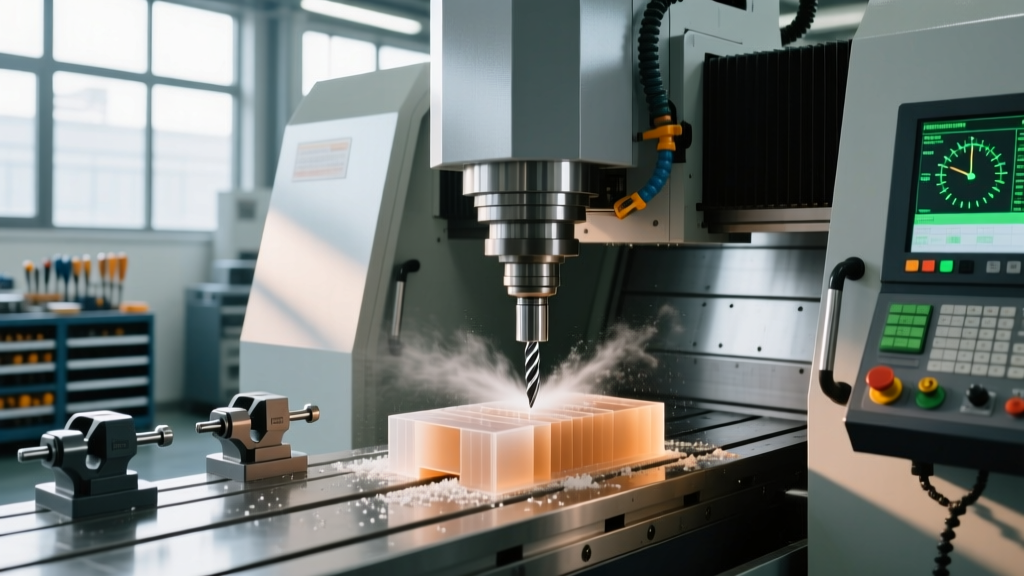
Chip evacuation is the primary limiting factor in aluminum machining cycle times. If chips recut, surface finishes degrade and cycle times must be slowed down to prevent tool failure.
Flood Coolant: The traditional method. High-pressure through-spindle coolant (TSC) at 300+ PSI is required to clear deep pockets. Budget for coolant maintenance, skimming, and disposal, which adds roughly $2.50 to $4.00 per machine hour in overhead.
Minimum Quantity Lubrication (MQL): MQL systems spray a micro-mist of biodegradable oil directly at the cutting edge. While the initial MQL retrofit costs $3,000 to $6,000, it eliminates coolant disposal costs, reduces part washing time, and allows chips to be recycled immediately without fluid contamination. For high-volume 6061 production runs, MQL reduces total consumable overhead by 18% annually.
Budget Planning FAQ
How much does it cost to CNC machine an aluminum prototype?
A standard 3x3x2 inch 6061-T6 prototype machined on a 3-axis VMC typically costs between $250 and $450 in 2026. This includes 1-2 hours of CAM programming, 1 hour of machine time, raw material, and basic manual deburring. Adding complex 5-axis contours or Type III hardcoat anodizing will push the prototype cost past $800.
Is it cheaper to machine aluminum or mild steel?
Aluminum is significantly cheaper to machine. While raw 1018 mild steel stock is cheaper per pound than 6061 aluminum, aluminum machines 3 to 4 times faster. You can run surface speeds (SFM) of 1,500-2,500 on aluminum compared to 400-600 on mild steel. The drastic reduction in machine hourly time makes the final CNC machined aluminum part 30% to 50% cheaper than an identical steel part.
What are the NRE (Non-Recurring Engineering) costs for aluminum fixtures?
If your aluminum part has complex organic geometry requiring custom workholding, budget $800 to $1,500 for the design and machining of custom 6061 soft-jaws or tombstone fixtures. For production runs exceeding 500 parts, investing in custom cast or extruded near-net-shape stock can reduce CNC cycle times by 40%, paying for the NRE tooling cost within the first two production batches.