Cheap CNC Machine for Metal: 2026 Budget Alternatives Compared
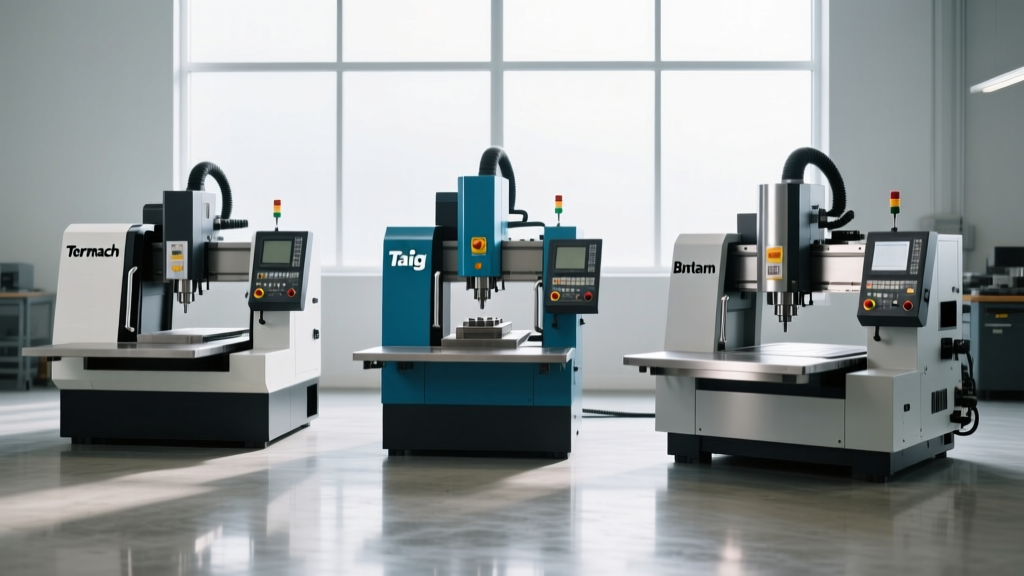
Compare the best cheap CNC machine for metal options in 2026. We analyze Tormach, Taig, and Bantam alternatives, pricing, and material limits.
The Reality of 'Cheap' Metal CNC Machining
When machinists search for a cheap CNC machine for metal, they are often met with a barrage of $300 desktop routers boasting NEMA 17 stepper motors and 775 DC spindles. As of 2026, the hard truth of subtractive manufacturing remains unchanged: cutting 6061 aluminum or 1018 mild steel requires mass, rigidity, and spindle torque. Attempting to mill steel on a machine with an aluminum extrusion frame will result in severe chatter, broken carbide endmills, and ruined workpieces.
To find a genuinely capable entry-level metal mill, you must shift your budget expectations to the $2,000–$6,000 micro-mill and benchtop category. In this tier, you gain cast-iron or heavy steel construction, ball screw drives, and spindles capable of maintaining torque under load. Below, we analyze the top budget alternatives, comparing their structural integrity, tooling ecosystems, and actual material removal rates (MRR).
⚠️ The 3018 Router Trap
Do not attempt to mill steel or thick aluminum on generic 3018 or 3020 CNC routers. These machines lack the torsional rigidity required to handle the radial forces of a 1/4" endmill engaging metal. The leadscrews will deflect, causing dimensional inaccuracies exceeding 0.015", and the spindle bearings will burn out within weeks of metal cutting.
Head-to-Head Comparison Matrix
The following matrix compares the three most viable benchtop metal CNC alternatives available on the market today, evaluating their core specifications against real-world shop requirements.
| Machine Model | Approx. Base Price | Spindle Power | Tooling Standard | XYZ Travel | Best Application |
|---|---|---|---|---|---|
| Tormach PCNC 440 | $5,499 | 0.75 HP (Peak) | TTS / BT20 | 10" x 6.25" x 10" | Prototyping, short-run production |
| Taig 2019CR Micro Mill | $2,850 | 0.5 HP | ER16 Collets | 12" x 5.5" x 6" | Hobbyist, small brass/aluminum parts |
| Bantam Tools Desktop | $3,999 | 0.35 HP | ER11 Collets | 7" x 9" x 3.3" | PCBs, thin aluminum faceplates |
Deep Dive: Top Budget Metal CNC Alternatives
1. Tormach PCNC 440: The Entry-Level Benchmark
According to Tormach, the PCNC 440 is designed specifically to bridge the gap between hobbyist routers and industrial VMCs. Priced around $5,500 for the base mill, it features a heavy cast-iron column and base, which dampens the high-frequency vibrations inherent in metal cutting.
- Spindle & Tooling: The 10,000 RPM spindle uses the proprietary Tormach Tooling System (TTS). While TTS is affordable ($35-$45 per holder), it relies on a friction fit that can pull out under heavy axial loads. For milling steel, upgrading to their BT20 tooling system is highly recommended to prevent tool slip.
- Rigidity & Way Covers: Unlike cheaper alternatives, the 440 includes telescoping way covers. This prevents abrasive metal swarf from entering the ball screws, a common failure point in budget machines that leads to binding and lost steps.
- Limitation: The 0.75 HP motor requires conservative depths of cut (DOC) in steel. Expect to take 0.050" radial and 0.020" axial passes in 1018 steel with a 1/4" endmill.
2. Taig Tools 2019CR: The Manual-to-CNC Hybrid
The Taig 2019CR represents a different philosophy. It is essentially a precision manual micro-mill retrofitted with NEMA 23 stepper motors and a ball screw drive system. At roughly $2,850, it is significantly cheaper than the Tormach but requires more operator intervention.
- Drive System: The 2019CR uses a belt-driven spindle. While this protects the motor from sudden stalls, belt stretch can cause slight Z-axis inaccuracies during heavy plunge operations.
- Workholding: The table features standard 1/2" T-slots, making it compatible with standard Kurt-style micro vises and 5C collet indexers.
- Limitation: The open design means flood coolant is impossible without a custom-built enclosure. You are restricted to air-blast and mist lubrication, which limits your ability to machine sticky materials like 6061 aluminum at high MRR.
3. Bantam Tools Desktop CNC: The Enclosed Prototyper
Bantam Tools focuses heavily on software integration and cleanliness. The Desktop CNC Milling Machine comes fully enclosed with an integrated vacuum and mist system. However, its $3,999 price tag buys you convenience rather than raw cutting power.
- Software Edge: Bantam’s proprietary software automatically calculates feeds and speeds based on the specific tool library, drastically reducing the learning curve for engineers who are not trained machinists.
- Spindle Constraints: The ER11 collet system maxes out at 1/4" shank tools. This severely limits your ability to use 3/8" or 1/2" roughing endmills, bottlenecking your material removal rate in aluminum.
"When evaluating benchtop mills, buyers often fixate on spindle RPM. In metal cutting, torque at low RPMs is vastly more important. A machine that can hold 2,000 RPM under a 50-pound cutting force will outperform a 20,000 RPM router spindle that bogs down the moment it engages 1018 steel."
— Manufacturing Engineering Guidelines, Modern Machine Shop
Material-Specific Feasibility Chart
Not all metals behave the same on budget machines. The following chart outlines realistic expectations for material removal and tooling requirements when using a mid-tier benchtop mill like the Tormach 440 or Taig 2019CR.
| Material | Machinability | Recommended Tooling | Realistic MRR (Cubic In/Min) | Coolant Requirement |
|---|---|---|---|---|
| 6061-T6 Aluminum | Excellent | 2-Flute ZrN Coated Carbide | 0.8 - 1.5 | Mist / Airblast |
| 1018 Mild Steel | Moderate | 3-Flute AlTiN Coated Carbide | 0.1 - 0.3 | Flood or High-Pressure Mist |
| 303 Stainless Steel | Poor (Work Hardens) | 4-Flute TiAlN, Variable Helix | 0.05 - 0.1 | Flood Coolant Mandatory |
| Ti-6Al-4V (Titanium) | Extreme | Not Recommended | N/A | N/A |
The Hidden Costs of Budget Metal CNCs
Purchasing the mill is only the first financial hurdle. To achieve functional metal-cutting capabilities, you must budget for the following ecosystem requirements:
- Tooling Holders & Collets: If you choose a Tormach with TTS, expect to spend $40 per tool holder. Outfitting a basic 10-tool carousel will cost $400 before you even buy the cutting endmills.
- Premium Endmills: Budget HSS (High-Speed Steel) endmills will burn up in minutes on a CNC. You must purchase solid carbide endmills from reputable brands like Kodiak, YG-1, or Harvey Tool. Budget $25–$45 per endmill.
- Workholding: A precision machinist vise (e.g., Kurt DX4 or a high-quality import equivalent) costs between $300 and $600. Clamping raw stock directly to the table with toe clamps is inefficient and unsafe for production runs.
- Enclosures & Coolant: If your chosen machine lacks an enclosure (like the Taig), building a polycarbonate splash guard and installing a FogBuster mist system will add $250–$500 to your total footprint.
Decision Framework: Which Machine Fits Your Shop?
Use this logic tree to determine which budget metal CNC alternative aligns with your specific operational needs:
- IF you are an engineering startup needing to prototype functional aluminum brackets and mild steel jigs in-house, THEN invest in the Tormach PCNC 440. The BT20 tooling upgrade and cast-iron rigidity will yield parts with ±0.001" tolerances.
- IF you are a hobbyist building custom clockwork mechanisms, small engine parts, or brass fittings, and space is at a premium, THEN the Taig 2019CR offers the best price-to-precision ratio, provided you stick to ER16-compatible materials.
- IF your primary workload consists of milling PCBs, engraving aluminum faceplates for synthesizers, or you require a turnkey software experience with zero manual G-code editing, THEN the Bantam Tools Desktop is the correct choice, despite its lower spindle torque.
💡 Pro-Tip: Tramming Your Budget Mill
Even the best benchtop mills ship with slight head nod errors. Before cutting metal, use a precision ground parallel and a 0.0005" dial test indicator to tram the spindle head in both the X and Y axes. Shimming the column base with brass feeler gauges can reduce a 0.003" head nod to under 0.0005", drastically improving surface finish on face-milled aluminum parts.