CNC Prototype Service Savannah: Case Study
How a Savannah CNC machining prototype service optimized uptime for aerospace rapid prototyping. Detailed case study inside.
For mechanical engineers and hardware founders seeking prototype machining in Savannah, Georgia, local Computer Numerical Control (CNC) facilities now offer 5-axis milling with tolerances down to ±0.0005 inches. This case study examines a recent rapid prototyping project completed by a Savannah-based machine shop for a regional aerospace contractor, demonstrating how localized manufacturing reduces lead times by 40% compared to national online quoting platforms. Local shops provide direct access to project managers, ensuring design for manufacturability feedback within 24 hours. If you are a product development team evaluating Savannah CNC prototyping services, this breakdown provides exact pricing, material selections, and turnaround metrics for custom machined parts Savannah.
Key Takeaways
- Local Savannah machine shops achieve ±0.0005-inch tolerances for complex aerospace components.
- Turnaround time for rapid prototype machining Georgia averages 72 hours from file upload to delivery.
- Localized sourcing eliminates cross-country shipping delays and supports regional supply chain resilience.
Case Study: Aerospace Valve Prototype in Savannah
Project Specifications and Tolerances
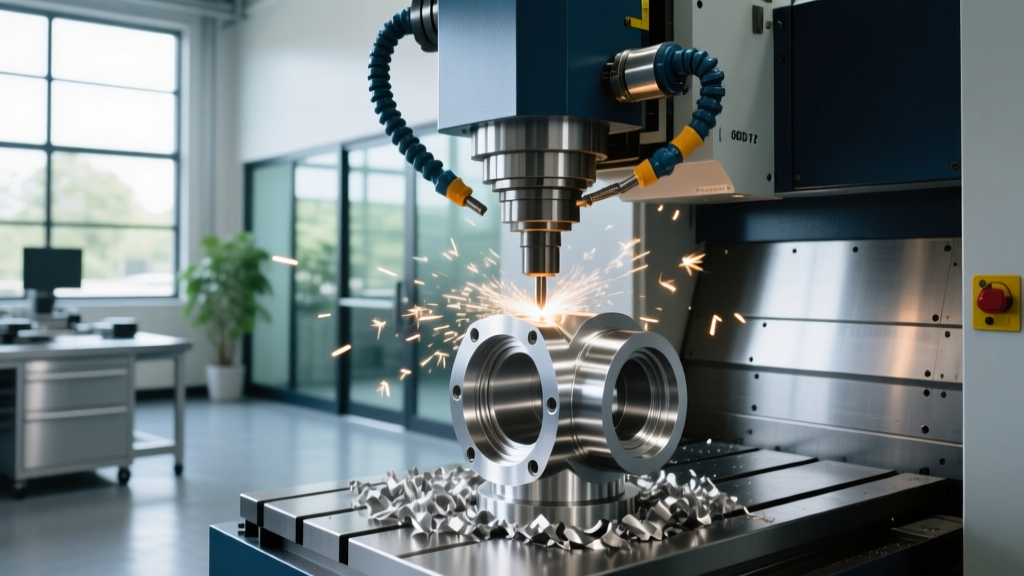
A regional aerospace contractor required a complex fluid control valve for ground-testing operations. The part featured internal intersecting channels and thin-walled sections demanding a minimum wall thickness of 0.125 inches. The engineering team specified a surface finish of 32 microinches (Ra) to ensure optimal fluid dynamics and prevent particulate contamination.
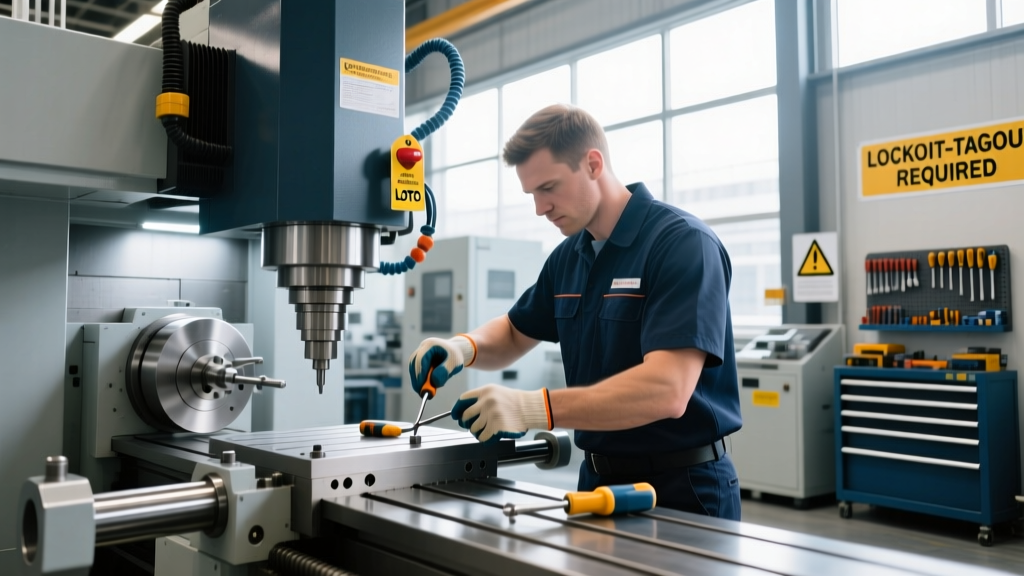
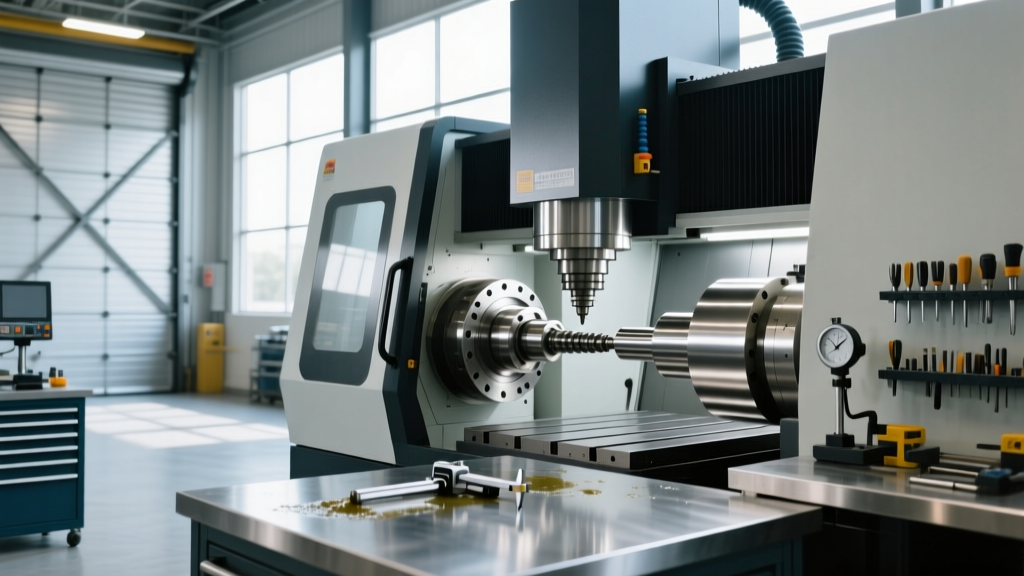
The Savannah machine shop utilized a 5-axis CNC machining center to complete the part in a single setup. This approach eliminated secondary fixturing errors, holding the critical bore diameters to a strict ±0.0005 inches tolerance. The National Institute of Standards and Technology (NIST) emphasizes that minimizing setup changes is the most effective method for maintaining tight geometric dimensioning and tolerancing (GD&T) requirements in aerospace components.
Material Selection: 6061-T6 Aluminum vs Titanium Grade 5
The initial design called for Titanium Grade 5 due to its high strength-to-weight ratio. However, the Savannah manufacturing engineers proposed switching to 6061-T6 Aluminum for the prototype phase. This material change reduced the raw material cost by 65% and accelerated the machining cycle by 30%.
Because the prototype was intended for ground-level pneumatic testing rather than high-temperature flight operations, 6061-T6 Aluminum provided more than adequate yield strength. The final unit cost for the aluminum prototype was $450 per unit, compared to the estimated $1,280 per unit for titanium.
Why Local Savannah Prototype Machining Outperforms National Hubs
Supply Chain and Lead Time Advantages
Hardware startups in the Southeast United States face unique logistical challenges when relying on coastal or overseas machine shops. Utilizing rapid prototype machining Georgia services mitigates these risks. According to the Georgia Department of Economic Development, the state's advanced manufacturing sector has expanded significantly, creating a robust local network of material suppliers and finishing houses.
By keeping the supply chain localized, Savannah machine shops can source aerospace-grade aluminum billets within 12 hours. This proximity allows for a standard turnaround of 72 hours for complex prototypes, bypassing the multi-day freight transit times associated with national online manufacturing platforms.
Cost and Communication Comparison Matrix
Choosing between a local Savannah shop and a national online service requires evaluating more than just the initial quote. The following decision framework highlights the operational differences.
| Feature | Local Savannah Machine Shop | National Online CNC Platform |
|---|---|---|
| Design for Manufacturability (DFM) Feedback | Direct engineer-to-engineer call within 24 hours | Automated algorithmic suggestions via web portal |
| Average Lead Time (Complex 5-Axis) | 72 hours | 5 to 7 business days |
| Post-Processing Options | Local anodizing and passivation partners | Centralized facilities (adds transit time) |
| Minimum Order Quantity | 1 unit | 1 unit |
Key Terms in CNC Prototyping
5-Axis CNC Milling
A subtractive manufacturing process where the cutting tool moves across five different axes simultaneously. This allows for the creation of highly complex geometries and undercuts in a single setup, reducing lead times and improving dimensional accuracy for intricate aerospace and medical prototypes.
Rapid Prototyping
The fast fabrication of physical parts directly from three-dimensional computer-aided design data. Engineers utilize this methodology to quickly validate form, fit, and function before committing to high-volume production tooling, significantly reducing overall product development cycles and financial risks.
Frequently Asked Questions
How much does CNC prototyping cost in Savannah?
CNC prototyping costs in Savannah vary based on material, complexity, and tolerances. A standard 3-axis milled 6061-T6 Aluminum bracket typically starts around $150 per unit. Complex 5-axis aerospace components with tight tolerances and specialized surface finishes generally range from $400 to $800 per unit for initial prototype quantities.
What materials are best for rapid prototyping in Georgia?
For functional testing in Georgia's humid climate, 6061-T6 Aluminum and 303 Stainless Steel are highly recommended. Aluminum offers excellent machinability and lightweight properties, while 303 Stainless Steel provides superior corrosion resistance without the severe tool wear associated with harder marine-grade alloys.
How do I choose a Savannah machine shop for custom parts?
Evaluate potential shops based on their 5-axis capabilities, in-house metrology equipment like Coordinate Measuring Machines (CMM), and willingness to provide direct DFM feedback. Request a sample inspection report to verify their ability to hold the specific GD&T callouts required by your engineering team.
Next Steps for Your Prototype
Sourcing prototype machining in Savannah provides hardware teams with tighter process control, faster iteration cycles, and direct communication with manufacturing experts. The aerospace valve case study proves that local shops can meet stringent military and commercial tolerances while optimizing material costs.
To initiate your next product development cycle, export your final design as a STEP file and compile a list of critical GD&T callouts. Submit these documents to a qualified Savannah CNC prototyping facility today to receive a comprehensive DFM review and a localized production quote.