Can a Wood Router CNC Machine Cut Stainless Steel? 2026 Cost Analysis
Is a wood router CNC machine viable for stainless steel? 2026 cost analysis covering spindle wear, tooling destruction, and dedicated metal CNC alternatives.
The Physics Mismatch: Why High RPM Fails on Austenitic Alloys
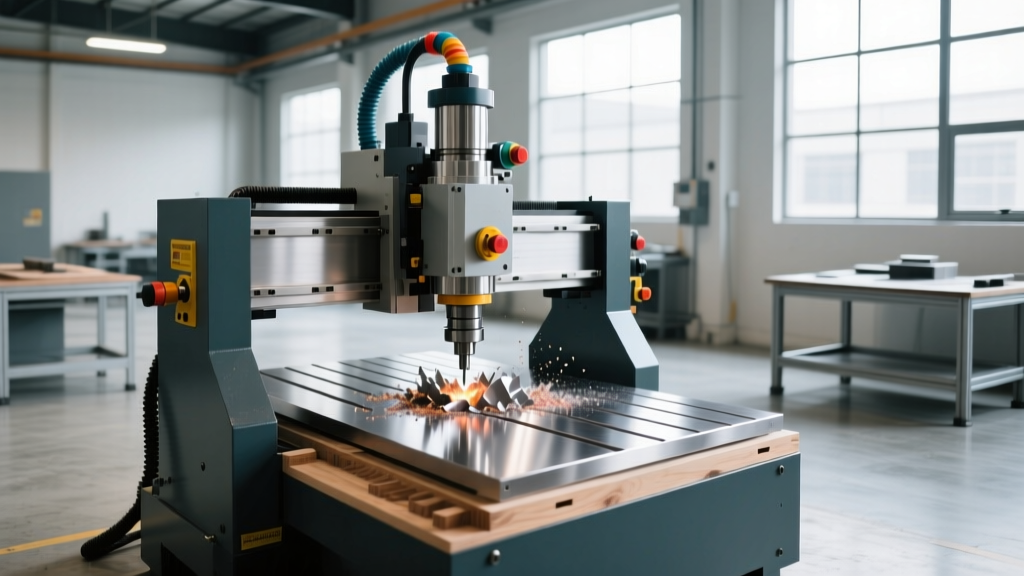
Small fabrication shops and sign makers frequently attempt to expand their service offerings by using a heavy-duty wood router CNC machine to mill soft metals like aluminum. When a client requests 304 or 316 stainless steel parts, the temptation is to push the router to its limits rather than invest in a dedicated metal-cutting machining center. From a 2026 budget planning perspective, this 'budget hack' is a financial trap.
The fundamental incompatibility lies in the spindle torque curve and machine rigidity. A standard industrial wood router utilizes an HSD or Colombo spindle (typically 9kW to 12kW) designed to operate between 12,000 and 24,000 RPM. These spindles generate peak horsepower at high RPMs but produce almost zero usable torque below 6,000 RPM. Conversely, machining austenitic stainless steel requires low surface speeds to prevent excessive heat generation. For a standard 1/2-inch (12.7mm) carbide endmill cutting 304 stainless, the optimal spindle speed is roughly 1,100 to 1,500 RPM. At this speed, a router spindle cannot generate the torque required to maintain the cut, leading to immediate stalling, severe chatter, and catastrophic tool failure.
⚠️ The Work Hardening Tax: Austenitic stainless steels (300-series) are notorious for work hardening. If the router spindle bogs down and the cutter rubs instead of shearing the material, the localized heat and friction instantly work-harden the stainless surface to over 40 HRC. This not only destroys the $65 carbide endmill but ruins the workpiece, forcing you to scrap a $200+ sheet of 316L marine-grade stainless.2026 Cost Analysis: The 'Router Hack' vs. Dedicated Metal CNCs
To understand the true financial impact of attempting stainless steel machining on a wood router CNC machine, we must compare the hidden operational costs against entry-level and production-grade metal CNC mills. The following matrix evaluates the Year 1 total cost of ownership (TCO) for a shop attempting to machine 500 hours of stainless steel annually.
| Cost Category | Heavy-Duty Wood Router (Retrofitted) | Tormach 15L (Entry Metal CNC) | Haas Mini Mill (Production CNC) |
|---|---|---|---|
| Base Machine Capital (2026 Pricing) | $28,000 - $35,000 | $11,500 | $58,000+ |
| Coolant Containment Retrofit | $2,500 (Custom pan & splash guards) | Included / $800 Enclosure | Fully Enclosed (Included) |
| Annual Tooling Budget (Endmills/Drills) | $5,400 (High breakage rate) | $1,400 (Standard wear) | $1,100 (Optimized chip loads) |
| Spindle Maintenance / Rebuilds | $2,200 (Bearing failure from side-load) | $0 (Belt-driven, low stress) | $0 (Under 2-year warranty) |
| Scrap Material Rate (Estimated) | 18% (Chatter & work hardening) | 4% | < 1% |
| Estimated Year 1 TCO | $41,000+ | $14,500 | $62,000 |
As detailed in the Tormach 15L CNC Mill specifications, entry-level metal mills utilize gear-driven or heavy belt-driven spindles that deliver peak torque at 1,000 RPM, precisely where stainless steel machining demands it. Attempting to replicate this on a router requires aggressive speed reduction via VFDs, which starves the spindle cooling fan and leads to premature thermal failure of the ER25 collet bearings.
Hidden Costs of Routing Stainless Steel
1. The Coolant Containment Nightmare
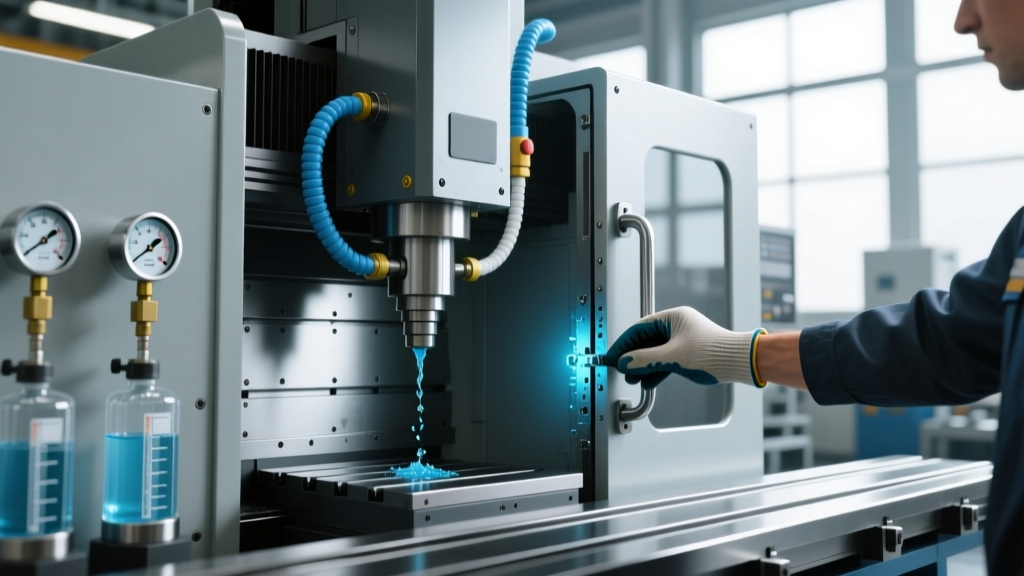
Wood routers are designed for dust extraction, utilizing 4-inch vacuum hoses to pull dry chips. Stainless steel machining strictly requires flood coolant (typically a 8-10% concentration of semi-synthetic fluid like Trim MicroSol 585XT) to manage heat and prevent built-up edge (BUE) on the cutter. Retrofitting a 4x8 foot router bed with a sealed catch-pan, way-covers to protect the linear guide rails from corrosive swarf, and a 50-gallon flood coolant pump system costs upwards of $3,000 and severely limits the machine's original woodworking utility.
2. Accelerated Way and Ballscrew Degradation
Stainless steel chips are notoriously stringy and sharp. On an open-frame router, these chips embed themselves into the lubrication grease on the HG25 linear guide blocks and ballscrews. Unlike cast-iron CNC mills equipped with telescopic steel way covers, a router's exposed rails will suffer micro-pitting and premature wear within 6 months of heavy stainless use, resulting in $1,500+ in axis realignment and bearing replacement.
Decision Framework: When to Upgrade Your Fleet
Shop owners must evaluate their stainless steel volume against capital expenditure. Use the following framework to determine your next equipment purchase:
- Scenario A: Engraving or V-Grooving Thin Sheet (16ga or thinner). If your work is limited to shallow pass engraving on thin stainless sheet metal for signage or nameplates, your existing wood router CNC machine is sufficient. Use a single-flute, uncoated carbide V-bit, high RPM (18,000+), and an air-blast mist system to clear chips.
- Scenario B: Prototyping and Low-Volume 3D Milling. If you need to pocket, drill, and tap 304/316 blocks up to 2 inches thick, but volume is under 20 hours a month, purchase a Tormach or similar benchtop metal mill. The ROI is realized within 8 months purely on saved tooling and eliminated scrap.
- Scenario C: Production Runs and Rigid Tapping. If your contracts require rigid tapping of stainless steel or running 50+ hours a week, you must invest in a production vertical machining center (VMC). The Haas Mini Mill remains the industry benchmark for this tier, offering the necessary 10,000 RPM inline direct-drive spindle and 20-tool carousel required for uninterrupted production.
Tooling Geometry: Why Standard Router Bits Fail
Standard 2-flute upcut spiral bits used for MDF and hardwood are entirely unsuited for stainless steel. The large gullets designed for chip evacuation in wood cause the cutting edge to dig too aggressively into steel, snapping the tool shank. For any manual or light CNC milling of stainless, you must utilize variable helix, 4-flute or 5-flute endmills with AlTiN (Aluminum Titanium Nitride) coatings. The variable helix disrupts harmonic chatter—a fatal issue on lightweight aluminum-extrusion router gantries—while the AlTiN coating provides the thermal barrier necessary to survive the 1,500°F cutting zone temperatures inherent to 316 stainless.
"Chip load is your only defense against work hardening in austenitic stainless. If you are not taking a minimum chip load of 0.002 to 0.004 inches per tooth (IPT) depending on the cutter diameter, you are not cutting; you are burnishing. A wood router spindle simply cannot maintain the feed rate required to sustain this chip load at low RPMs without stalling."
— Advanced Machining Dynamics, Sandvik Coromant Material Guidelines
The Verdict for 2026 Budget Planning
Attempting to force a wood router CNC machine into the role of a stainless steel machining center is a misallocation of capital. The initial savings on machine purchase price are rapidly eclipsed by the compounding costs of shattered carbide tooling, scrapped aerospace or marine-grade materials, and premature spindle bearing failures. For shops serious about entering the stainless steel fabrication market in 2026, the most financially sound strategy is to keep the router dedicated to wood, plastics, and non-ferrous soft metals, while allocating a dedicated $12,000 to $60,000 budget for a purpose-built metal cutting VMC.